Interview by Mary Smith
The global fashion industry is undergoing a structural transformation: the traditional linear production model is gradually giving way to circular design systems, while digitalization, commercialization, and sustainability have emerged as its three core development directions. For emerging designers, how to balance an individual design language, brand-driven commercial objectives, and broader social value has become a central question throughout their careers.
With many years of experience across full-category design, Zixuan Xu has a deeply personal understanding of this shift. She has previously worked for brands such as AG ADRIANO GOLDSCHMIED and QI COLLECTIVE, and now leads the product development of the Deluxity handbag line. Leveraging her mature commercial design capabilities, she has helped generate monthly sales of over one million US dollars. Meanwhile, RECOVER ZONE, which she co-founded, focuses on upcycling and reconstruction of second-hand garments, putting sustainable design principles into practice. Her diverse professional background has given her a distinctive perspective on design, market dynamics, and value reinvention.
It is a great pleasure to engage in this conversation with zixuan Xu, in which we explore her insights on design, the market, and sustainable fashion, and trace the journey and creative origins of this cross-disciplinary designer.
What first drew you to fashion design as a career, and when did you realize this was the path you wanted to commit to?
This question probably goes back to my childhood.
My mother carried an unfinished dream of fashion. At the time she was pursuing modeling, creative careers were often seen as impractical, almost incompatible with the realities of everyday life. The pursuit of beauty and self-expression was often treated as a luxury rather than something worth building a future around.
In a strange way, her unfinished dream became my obsession. What she couldn’t pursue freely became something I was able to continue. Looking back, it feels less like a decision and more like a coincidence of fate that completed itself through me.
What attracted me to fashion was never trends. Fashion, to me, has always been about transformation.
As Jean Paul Gaultier once said, clothing is a tool for expressing personality and spirit. I’ve always loved the idea that through dress, we can reveal different parts of ourselves, or even become someone else for a moment. Getting dressed has never felt like a routine to me. It feels more like stepping into an alternative reality. Every outfit is a different version of the same person. Every day is another chance to experiment with who you might become.
That fascination eventually led me from wearing clothes to creating them.
Even as a child, I was constantly collecting things and taking them apart. I would gather random objects, leftovers, discarded materials, and turn them into wearable pieces. I didn’t know it then, but that instinct never left me.
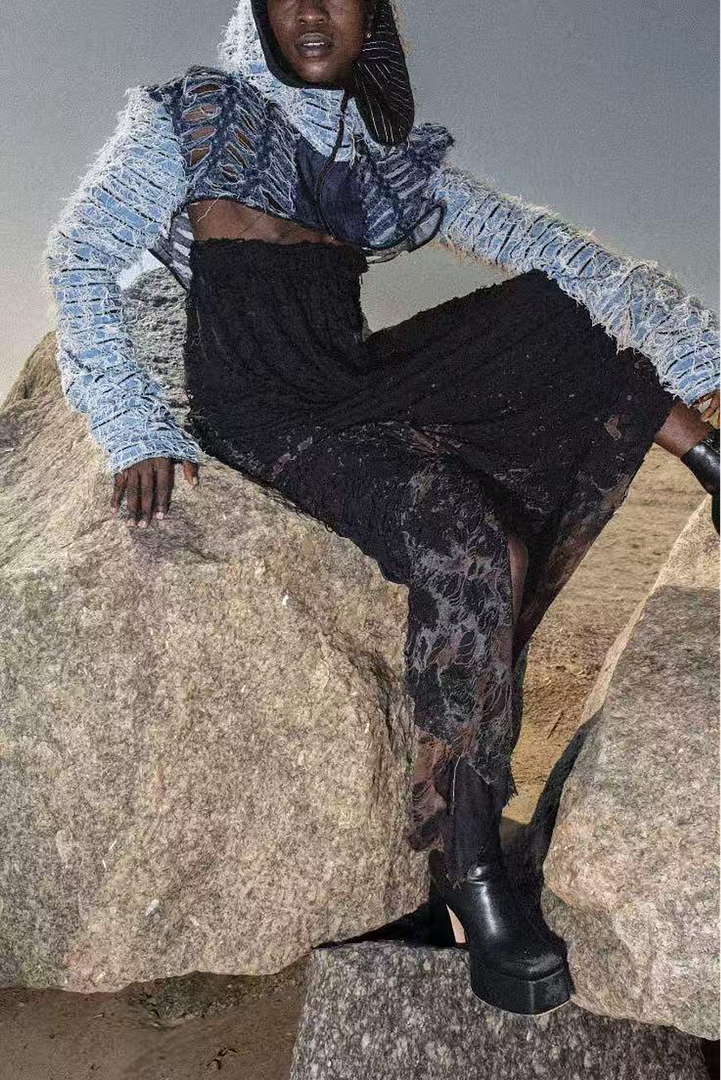
Years later, it evolved into ReCook, a project built around reconstructing used garments and giving them a second life. The motivation was never simply sustainability or saving resources. What excites me is the act of re-creation itself.
I genuinely believe that nothing is ever without value. Objects, materials, memories, ideas—everything still contains the possibility of becoming something else. Fashion, at its core, is an act of transformation. After all, even the most extraordinary couture piece begins as nothing more than a piece of fabric or a strip of leather.
What fascinates me is that moment in between: the moment when something ordinary becomes something meaningful. That is the reason I continue to make things.
how did you build your early aesthetic system and design logic? Which training experiences truly shaped your ability to translate design into commercial results?
My early aesthetic system was built from a very simple instinct: curiosity about people.
I’ve always found myself observing others almost unconsciously. Their identities, their lifestyles, their ambitions, dreams, and struggles—and ultimately, how all of those things are reflected in the way they dress. To me, clothing has always been more than an object. It is a visible trace of a person’s relationship with the world around them.
This curiosity became the foundation of my graduation collection, Desertopia. Through that project, I transformed those observations into a complete fictional world and used fashion as a language to explore the lives and circumstances of the people inhabiting it. At the time, that kind of pure self-expression was my understanding of fashion. It was a way of projecting my own thoughts, emotions, and imagination into physical form.
After entering the industry, however, I began looking at design from a different perspective: the perspective of market feedback and real-world validation.
I realized that an artist’s ego can bring energy, passion, and originality to a creative process, but it is rarely the reason a customer chooses to buy something. Understanding what people actually need, expect, and hope for from the things they wear became an equally important truth for me as a designer.
My professional experiences deepened my understanding of fashion and, interestingly, reignited my passion for ReCook. It led me to a question that continues to shape my work today: if a garment has already been discarded, rejected, or forgotten, how can it be transformed into something that resonates with a new person and a new moment?
In many ways, that question extends beyond second-hand clothing. It is also how I think about design itself. The most interesting challenge is not always creating something entirely new, but recognizing hidden value, reinterpreting it, and giving it another opportunity to connect with people.
You have achieved over $1 million monthly sales with your handbag designs. How do you balance creative expression, cost control and market demand behind such a successful commercial project?
Honestly, I don’t think the sales number belongs to me alone.
Deluxity had already built strong relationships with buyers, and our sales team worked incredibly hard to understand the market and secure opportunities. I was the sole designer, but I was still part of a much bigger system.
What made the experience valuable was the feedback loop.
Buyers would come to us with very specific directions—categories, trends, price points, and customer needs. I would develop the products, and then they would decide what to buy and how much to order. The response was immediate.
In previous roles, it could take months to know whether a product was successful. At Deluxity, I could see very quickly whether my decisions made sense to the market.
For me, that experience wasn’t really about hitting a sales number. It was about realizing that many of the things I had spent years learning—understanding customers, reading trends, and paying attention to how people actually shop—were working. It was the first time I felt those instincts being tested in real time.
More than anything, it gave me confidence that I wasn’t just designing based on personal taste anymore. I was learning how to connect design decisions with real customer behavior.
From readytowear to handbags, from in-house designer to founder, you have consistently turned experience into measurable results. What unique project methodology have you developed?
Looking back, my career probably makes very little sense on paper.
I’ve moved between conceptual collections, menswear, womenswear, occasion dressing, streetwear, handbags, and large-scale commercial development. None of those experiences seem connected at first glance.
The common thread is curiosity.
I’ve never been interested in staying in one lane simply because it’s familiar. Every project gives me access to a different way of thinking, a different customer, a different world. Part of the reason I’ve explored so many categories is because I genuinely enjoy discovering how people live, what they value, and how design functions in different contexts.
I don’t think of experience as something to collect. I think of it as something to absorb.
Over time, all of those influences begin to merge together. A lesson learned in handbag development might reappear in a fashion collection. A concept from a personal project might influence a commercial product. An idea from outside fashion might suddenly become relevant years later.
Diversity has become one of my greatest creative resources. The more perspectives, disciplines, and experiences I encounter, the richer my design vocabulary becomes.
If I have a methodology, it’s probably this: stay curious for as long as possible. Every project teaches me something new about people, about design, and about myself. My goal has never been to become one specific type of designer. It’s to keep exploring until I discover what I’m truly capable of creating.
At the end of the day, I think design should still be fun. The projects I’m most proud of are usually the ones where I allowed myself to experiment, take risks, and follow my curiosity without worrying too much about fitting into a predefined category. PLEASE HAVING FUN MY FASHION PEOPLE!
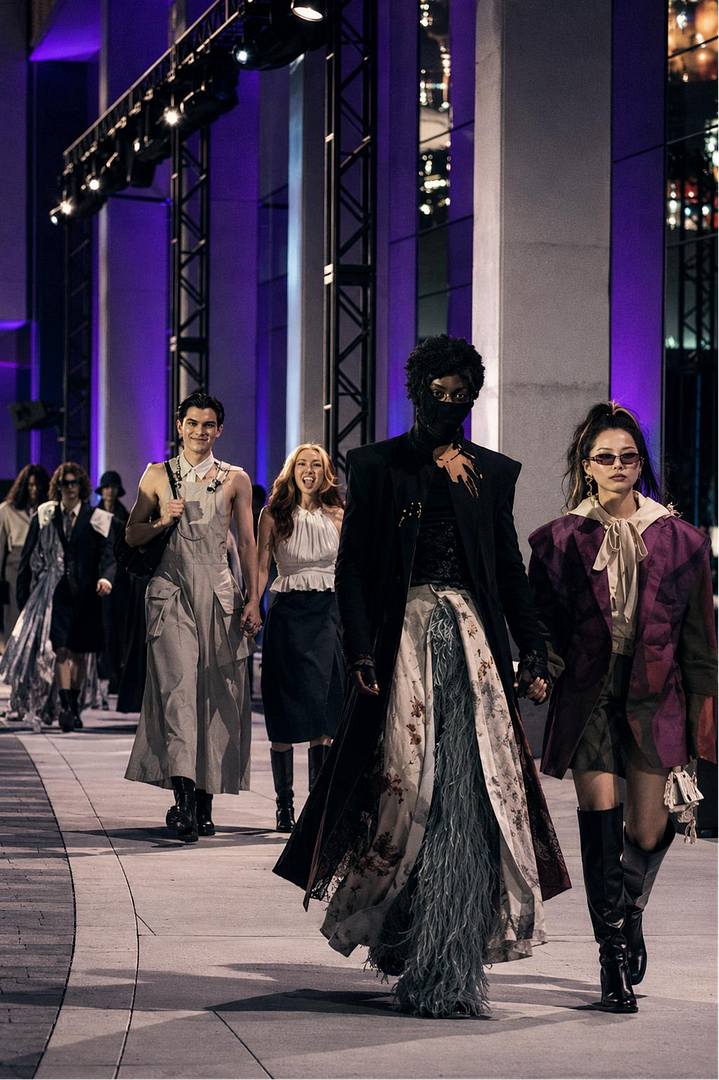
With your current achievements, how do you plan to unify your work, projects and personal brand at a higher level? What kind of designer do you aim to become?
At this stage of my career, I hope to continue developing along two parallel paths: my work at Deluxity and my ongoing creative practice through ReCook.
What makes Deluxity valuable to me is the immediacy of its feedback. Every design decision is tested against real customer behavior, real purchasing decisions, and real market demand. As someone still in the early stages of my career, that kind of feedback is incredibly important. It allows me to understand not only what people are drawn to, but also why. Being part of a larger commercial system—where consumer choices directly influence business outcomes—has given me a deeper understanding of the industry, and I hope those lessons eventually become instinct.
At the same time, I remain committed to building ReCook.
ReCook is where many of my personal questions, obsessions, and creative impulses continue to live. It allows me to experiment, to reconstruct, and to explore ideas that may not begin with a market demand. The project is rooted in the transformation of second-hand garments, but at its core it is really about value—how something discarded, overlooked, or consumed can be reimagined and given another life. The fact that this approach also aligns with contemporary conversations around sustainability makes it even more meaningful.
Together, these two paths represent the kind of designer I hope to become.
I am not interested in choosing between self-expression and market relevance. I am more interested in the space where the two can challenge and strengthen one another. I want commercial experience to sharpen my understanding of people, and I want creative experimentation to keep my perspective open and evolving.
Ultimately, I see design as an ongoing process of adaptation. The industry changes, people change, and I change alongside them. My goal is not to arrive at a fixed identity, but to continue reinventing myself through the dialogue between creation and reality. If those two forces can resonate with one another, then I believe the work will remain alive.