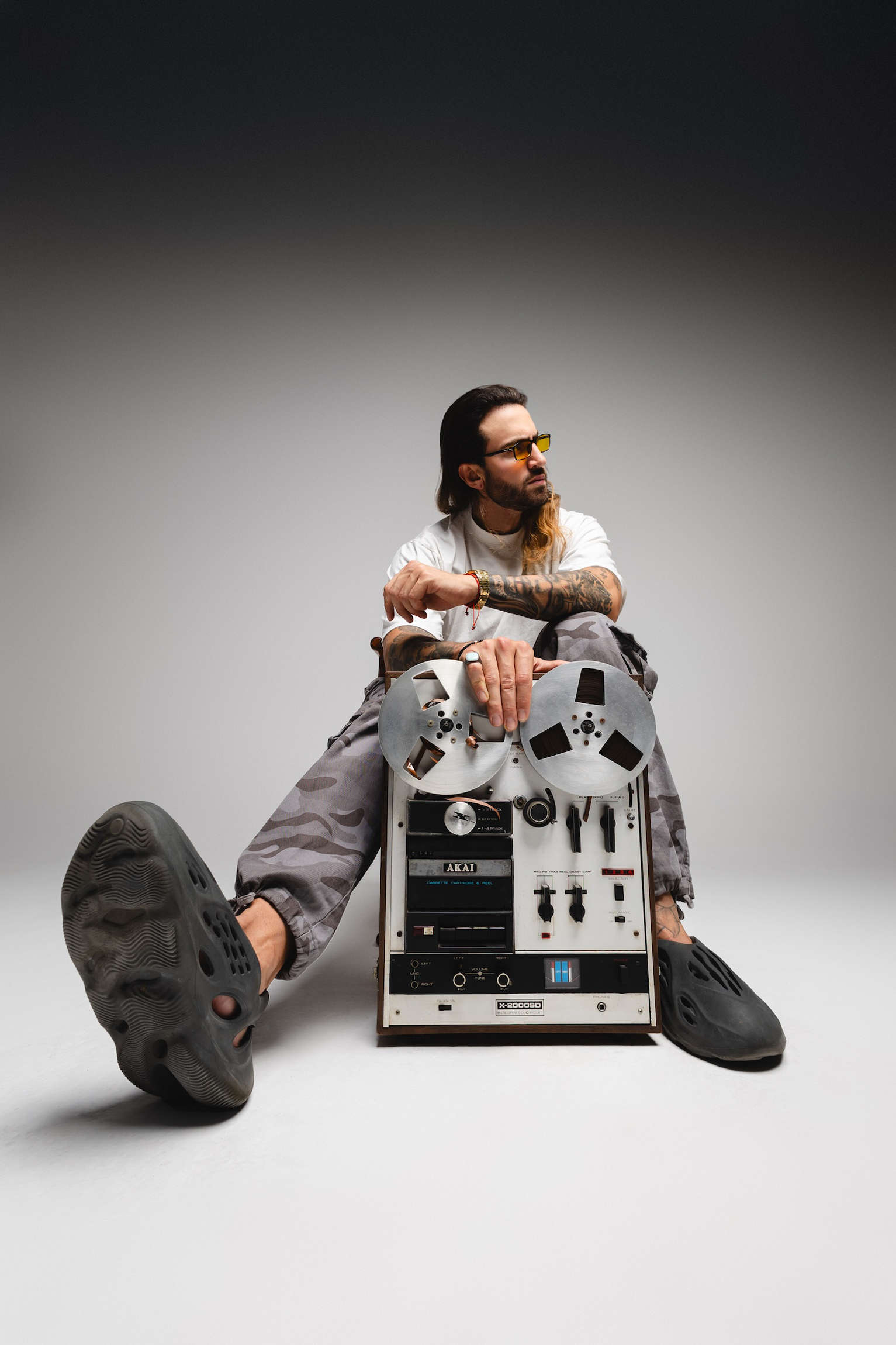
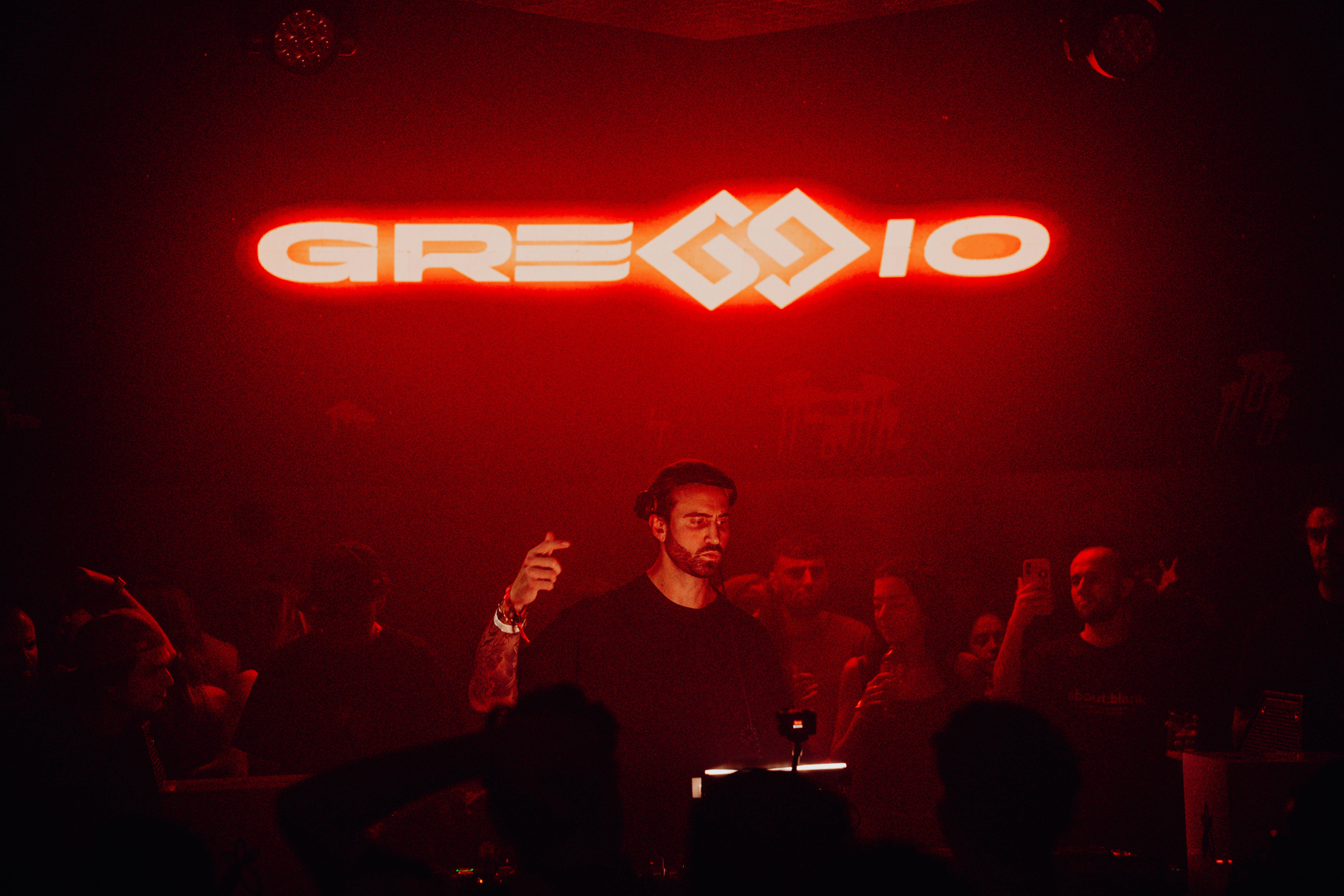
Greggio’s summer has had more stamps in the passport than free evenings. Between Brazil, London, Ibiza and stops across Europe, the Brazilian DJ and producer has spent the past few months chasing dancefloors, and he’s come back with a story that sounds like it was written for a film. He sent a track to Meduza. Then he was playing it alongside them in Ibiza.
That track is “Let’s Go Down”, a physical, hypnotic cut that Greggio describes as a dark room at 3am, where nobody is checking their phone and the groove does most of the talking. It’s a neat summary of the world he has built from his London base: stripped-back, groove-led tech house, with old-school electro textures and a sound built on tension, swing and controlled energy.
It’s a sound with two homes. Brazil’s percussive electronic heritage sits alongside Europe’s club-focused minimalism, and Greggio has moved between both circuits, from early Ibiza appearances to Universo Paralello and the Warung Tour. Releases on Nu Moda, Diynamic, Hottrax and Material Series have steadily widened his reach, and his Higher EP on Solomun’s Diynamic marked a confident step into 2026. More is on the way, including collaborations with Max Styler, Vintage Culture and Beltran, plus an EP on a label that’s especially close to his heart, with Amsterdam and ADE on the horizon.
Away from the booth, he’s just as compelling. Brazil feels more important the longer he lives away from it, nostalgia only gets exciting when it isn’t a copy, and in the studio he trusts his first reaction. His camera roll is full of studio screenshots, airport snaps and, of course, his dogs, who he sees as his kids.
We caught up with Greggio to talk Brazilian rhythm, London’s underground, the pressure of being constantly visible, and the one creative icon he’d spend 24 hours with. Spoiler: it’s David Bowie.
Hey Greggio, great to meet you! How has your summer just been?
It’s been amazing, honestly. I’ve been travelling a lot between Brazil, London, Ibiza and different places around Europe, so it’s been a busy few months, but in the best possible way. I’ve had some incredible shows and met a lot of great people along the way. Ibiza was definitely a highlight, especially getting to share a moment with artists I’ve looked up to for a long time and getting to actually know them personally. At the same time, I’m trying to enjoy everything that’s happening rather than just moving from one thing to the next. It’s been a summer full of new experiences, and I’m really grateful for that.
You’ve been moving between Brazil, London, Ibiza and some of the world’s biggest dance floors. How do different cities change the way you think, dress, socialise and ultimately make music?
Every city has its own energy, and I think you naturally absorb some of that when you spend time there. Brazil has a strong connection to rhythm, movement and social energy, while London has exposed me to so many different underground sounds, creative scenes and influences. Ibiza is different again, with its own relationship between music, fashion and nightlife. Even the way people dress or interact can influence how you see things creatively. I don’t consciously change my music depending on where I am, but all those experiences become part of you and influence your perspective. I think moving between different environments keeps me curious and helps me develop my own identity without getting stuck in one way of thinking.

There’s something very Brazilian running through your music, even when the production is rooted in European underground sounds. What parts of Brazil do you think you carry with you wherever you go?
I think rhythm and groove are probably the biggest things. Brazil has such a rich musical culture, and growing up around that energy gives you a different relationship with music and movement. There’s also a certain warmth and spontaneity that I think naturally comes through in the way I make music. Even when I’m producing something more rooted in European underground sounds, those Brazilian influences are still there in some way. I don’t try to force them into a track because they’re simply part of who I am. Living in London and discovering different scenes has added other influences, and I think that combination is what makes my sound feel personal to me.
Your new single “Let’s Go Down” has a very physical, late-night energy to it. If the track were a place rather than a song, where would we find ourselves, and what time is it?
I’d say somewhere dark at around 3am, when the night has really taken over. It would be a packed dancefloor, probably in a room where you don’t immediately know where you are because everything is focused on the music. There’s a certain point in the night when people stop checking their phones and thinking about what comes next, and they’re just completely in the moment. That’s the feeling I associate with the track. It’s physical and energetic, but there’s also something hypnotic about it that keeps you locked in. I wanted it to have that late-night feeling where the groove does most of the talking.
The story behind the single going from sending a track to Meduza to actually playing it alongside them in Ibiza feels almost cinematic. What was going through your head in that moment?
Honestly, it was a crazy feeling. When you send a track to an artist you respect, you hope they’ll connect with it, but you never really know where it might lead. Going from sending the music to actually playing it alongside them in Ibiza was one of those moments where you have to stop for a second and take it all in. These are artists I’ve admired for years, so sharing that experience with them meant a lot to me. It also reminded me that things can move quickly when you stay consistent, keep making music and put yourself in the right situations. Moments like that give me confidence, but they also make me more motivated to keep improving and see where the music can take me.
If we opened your camera roll right now, what would we find more of: studio screenshots, airport moments, nights out, food, fashion or completely random things?
Probably a bit of everything, to be honest. There are definitely a lot of studio screenshots because I’m always saving ideas, sounds or little details I want to come back to. Then there are plenty of airport and travel photos because travelling has become such a big part of my everyday life. I also take pictures of places, food, architecture and random things that catch my attention. Sometimes I don’t even know why I’m taking a picture, but it might remind me of a particular feeling later. And of course my dogs! I really see them as my kids and if you follow me on Instagram you see how much they mean to me, they are my world. So my camera roll is probably quite chaotic, but I think that’s a fair reflection of my life at the moment.
How important is personal style to you? Do you think the way an artist dresses and presents themselves should be an extension of their sound?
I think personal style matters, but it should feel natural rather than something you create because you think an artist is supposed to look a certain way. For me, music and style both come down to identity. You can be influenced by other people, but eventually you have to find what feels right for you. I think the way you dress, the places you spend time in and the way you present yourself all become part of how people understand you as an artist. At the same time, I don’t think everything needs to match perfectly or follow a specific concept. I’d rather have something that feels authentic and evolves naturally than an image that’s been designed around a trend.
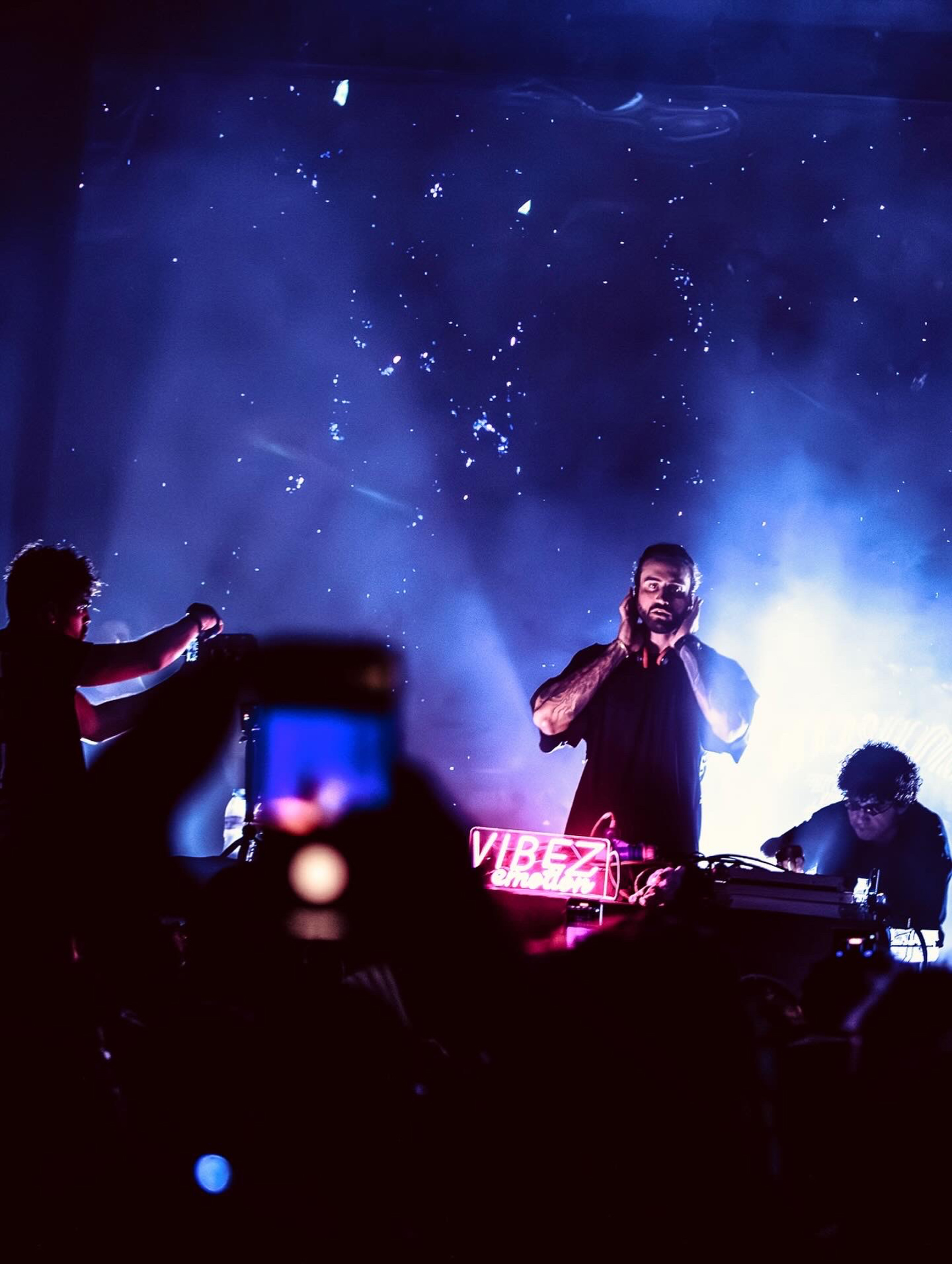
You’ve built a sound around groove, instinct and movement. What else in life gives you that same feeling of being completely locked into a rhythm?
Travelling and discovering new places definitely give me that feeling. Sometimes you’re walking through a city, listening to music and watching everything happening around you, and you just get completely absorbed in the moment. Dancing is an obvious one because it’s such a direct connection between music and the body. I also enjoy those situations where you’re doing something physical and don’t have time to overthink every little detail. That connects to the way I produce music, actually. I often trust my first reaction to a sound or groove rather than analysing it too much. I think the best moments, whether in music or in life, often happen when you stop trying to control everything and just let things flow.
What does your perfect night out actually look like when you’re not the person behind the decks?
Good friends, good food and somewhere with a great atmosphere would be a pretty good start. I like going somewhere where you can actually talk, laugh and enjoy being around people before eventually ending up somewhere with good music. I don’t necessarily need the biggest club or the most exclusive place. If the crowd is right and the music is good, that’s what makes a night special for me. Of course, I love being in clubs, but it’s nice sometimes to experience the night without thinking about the next track or what I need to do behind the decks. And if the music is really good, there’s always a chance I’ll end up staying much later than I planned.
London is now home, but Brazil is such an important part of your identity. Has living away from home made you more connected to Brazilian culture, rather than less?
Definitely. I think being away from home can make you appreciate where you come from in a different way. When you’re in Brazil, certain things feel completely normal because they’re part of everyday life. Once you’re living somewhere else, you start noticing the things you miss, whether that’s the food, the music, the way people socialise or simply the general energy. London has given me so much creatively and introduced me to different perspectives, but living there has also made me more conscious of what I carry with me from Brazil. I don’t see the two places as competing influences. They’re both important parts of who I am, and I think my music benefits from having those different worlds in it.
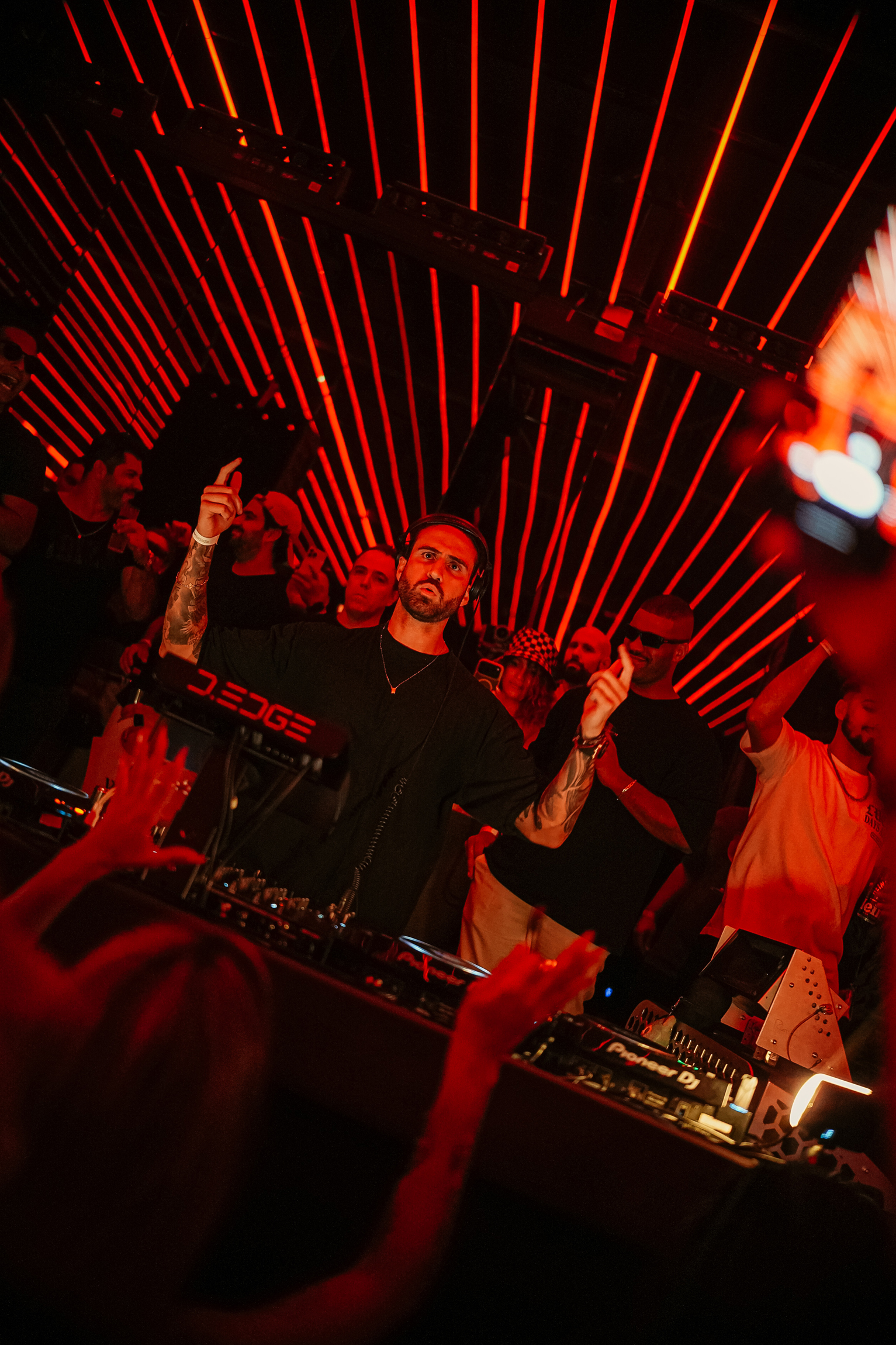

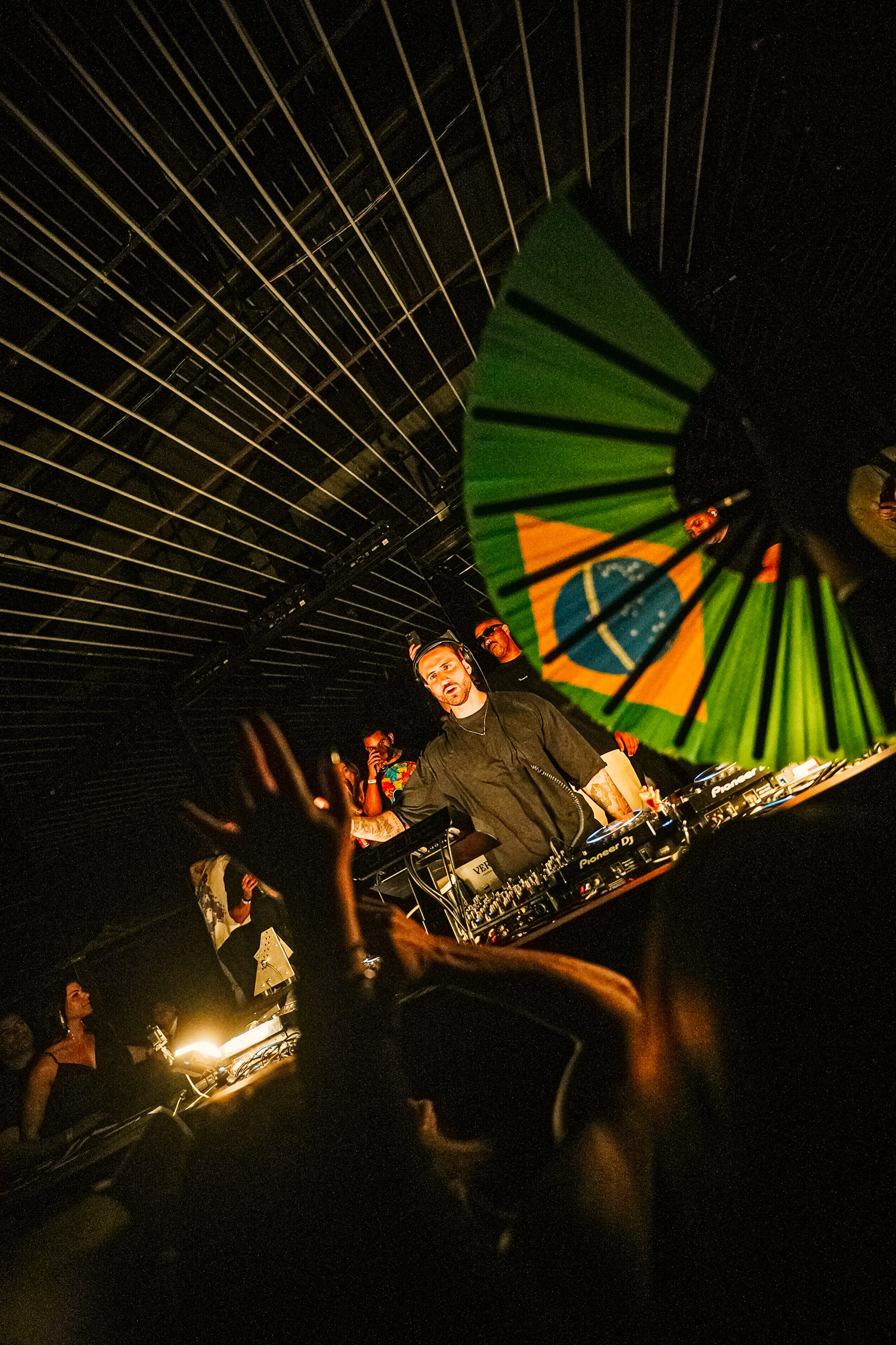
Your music sits somewhere between old-school references and a very contemporary club sound. Where do you think nostalgia becomes exciting rather than simply retro?
I think nostalgia becomes exciting when you take something familiar and give it a new context. I’m inspired by older music, but I’m not interested in simply recreating something that already exists. Certain sounds, grooves and musical ideas have a timeless quality, and there’s a reason people keep coming back to them. The interesting part is finding a way to combine those references with your own perspective and the way people experience music today. When you can bring back a feeling without making something sound like a copy of the past, that’s where it becomes exciting. I’m always experimenting with different influences, but the goal is to make them part of my own sound rather than follow a formula.
What’s one thing you’ve discovered about yourself through travelling for music that you probably wouldn’t have learned by staying in one place?
I’ve realised how important it is for me to keep experiencing new things. When you’re in one place for too long, it’s easy to get comfortable with the same routines and the same perspectives. Travelling puts you in different environments, introduces you to people you might never otherwise meet and forces you to adapt. Every crowd is different too, and playing in different rooms teaches you to pay attention to what’s happening in front of you rather than relying on one approach. I’ve also learned that you don’t need to have everything figured out before you arrive somewhere. Some of the best opportunities come from being open to unexpected situations. All of that has made me more adaptable, both as a person and as an artist.
There’s a lot of pressure around being an artist right now, be it constant content, releases, social media, networking, being visible. How do you switch off from “Greggio” and just be yourself?
I think having clear goals and the right people around me helps a lot. My team and I are quite strategic about the direction we’re taking, so we’re not trying to react to every trend or opportunity that comes along. That allows me to focus on making music and to understand what we’re actually working towards. Outside of that, I try to spend time with friends, explore new places and enjoy experiences that have nothing to do with being an artist. I also remind myself that this is a long-term journey, so I don’t need to be visible every second of the day. The music is still the most important thing for me, and everything else should support that rather than take over. Sometimes you need to step away from the project to come back with a fresh perspective.
What’s your most underrated source of inspiration outside music, maybe architecture, photography, food, fashion, people-watching, films, travel?
I’d probably say people-watching and travelling. I’m curious about how people dress, how they interact and how different cultures create their own atmosphere. You can learn a lot just by spending time somewhere new and paying attention to what’s happening around you. Architecture and fashion also interest me because they influence the way you see shapes, textures and the overall feeling of a place. Food is another way of experiencing a culture, and it’s often connected to the way people socialise and spend time together. I don’t necessarily look at these things and immediately think about making a track, but they all add to the way I see the world. Sometimes an idea comes directly from music, and sometimes it starts with a feeling you can’t quite explain.
If you could spend 24 hours with any creative person from any era, musician, designer, filmmaker, artist or otherwise, who would it be, and what would you want to talk about?
I’d choose David Bowie. I’ve always found it interesting how he could keep reinventing himself and exploring different creative directions without losing his identity. I’d love to understand how he approached change and how he knew when it was time to move on to something new. I’d also want to talk about more than music, especially fashion, art, culture and the people who influenced him. I think the most interesting creative people are the ones who take inspiration from everywhere rather than limiting themselves to one discipline. I’d probably spend most of the 24 hours asking questions and trying to understand how his mind worked. I think that kind of conversation would give you a completely different perspective on creativity.
What’s next for Greggio for the rest of the year?
There’s a lot coming. We have a busy release schedule, with solo records, some exciting collaborations and an EP on a label that’s particularly special to me. I’m also looking forward to continuing to play in different places and meet new people through the music. Amsterdam and ADE are always exciting because you get to connect with so many people from across the industry in one place. Behind the scenes, my team and I have clear goals and we’re working strategically towards them, making sure each release and opportunity contributes to the bigger picture. I want to keep developing my sound, reach new audiences and build a catalogue that people will still want to listen to years from now. It feels like there’s still so much to explore, which is what makes this stage of the journey so exciting.
Greggio’s “Let’s Go Down” is out now, follow via @_greggio