
Fall is a time of change for houseplants. The days become shorter, outdoor temperatures begin to drop, and many plants that spent the summer on a patio, balcony, or porch need to come back indoors. For houseplant owners, this seasonal transition can create a problem that is easy to overlook: humidity.
So, what humidity do houseplants need in the fall? And how can you tell whether the air around your plants is too dry or too humid?
Why Indoor Humidity Drops in the Fall
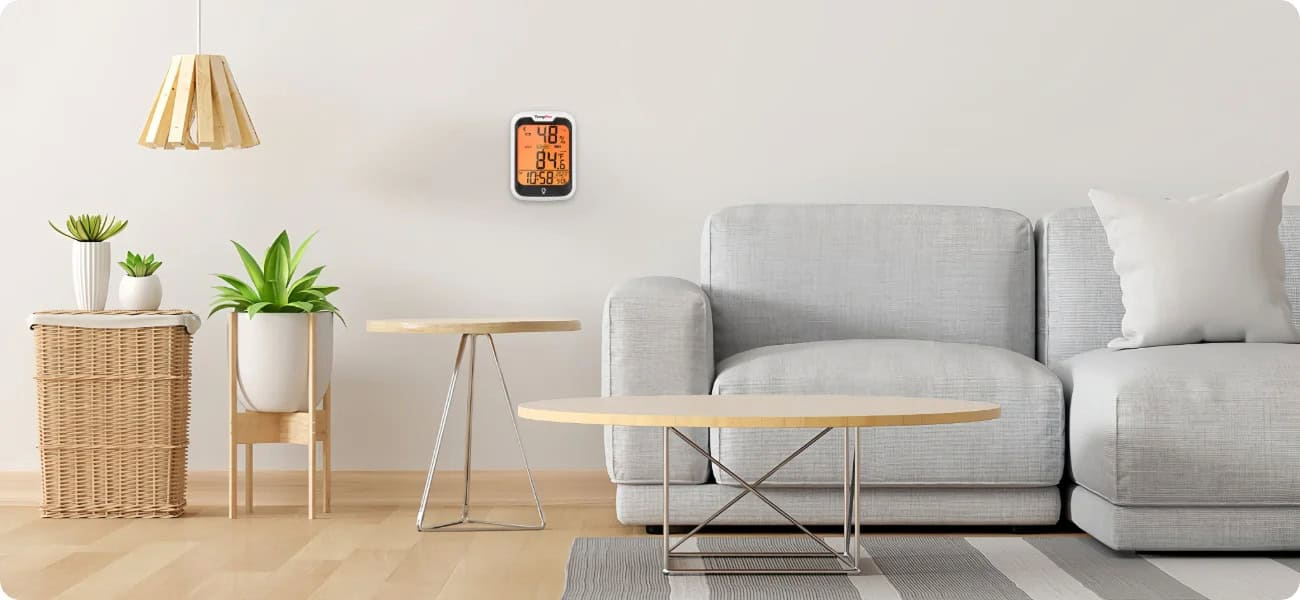
Outdoor relative humidity in fall can be misleading. While outdoor air might feel chilly or damp, bringing cold air indoors and warming it up dramatically decreases its Relative Humidity (RH), the percentage of water vapor air can hold at a given temperature. Warm air holds significantly more moisture than cold air; heating outdoor fall air to a cozy 70°F (21°C) without adding moisture can cause indoor relative humidity to plummet to 20%-30%. For context, that is drier than many desert regions!
What Humidity Level Do Houseplants Need in Autumn?
Most popular indoor plants originate from tropical understories or rainforest environments, where ambient air stays consistently humid year-round. While individual species have varied tolerances, the ideal general indoor plant humidity range is 40% – 60% RH.
Here is how common houseplant categories handle moisture levels during autumn:
High Moisture Seekers (Ideal RH: 60% – 80%): Examples include Calatheas, Fittonias, Ferns, Orchids, and Caladiums. These species have high sensitivity to fall air drops and are very prone to rapid leaf crisping and drop.
Moderate Moisture Tropicals (Ideal RH: 50% – 60%): Examples include Monsteras, Philodendrons, Pothos, Ficus, and Peace Lilies. These plants have medium sensitivity and will curl leaves, brown at the tips, or slow down growth when air dries out.
Hardy Foliage Plants (Ideal RH: 35% – 50%): Examples include Snake Plants, ZZ Plants, and Cast Iron Plants. They have low sensitivity and can tolerate drier household air, though they still thrive better around 45%+ RH.
Succulents & Cacti (Ideal RH: 30% – 40%): Examples include Echeverias, Jade, Haworthia, and Aloe Vera. They have very low sensitivity and require minimal air moisture; in fact, high humidity combined with low light can cause rot.
How Autumn Humidity Impacts Plant Growth and Health
Humidity acts as the unseen fuel for plant respiration and photosynthesis. When indoor air dries out during the heating season, plants suffer in several distinct ways:
Excessive Transpiration (Dehydration): Plants breathe through pores called stomata. Dry air acts like a sponge, rapidly pulling water out of the leaves faster than roots can absorb it, causing wilting even if the soil is damp.
Crispy Leaf Tips and Brown Edges: The most noticeable sign of low humidity is crisping along leaf margins and brown tips on tropical foliage like Calatheas and Monsteras.
Pest Outbreaks: Destructive houseplant pests, especially Spider Mites, thrive and reproduce exponentially in dry, warm indoor environments. Maintaining stable humidity keeps pest populations naturally suppressed.
Stunted Fall/Winter Transition: Dropping moisture levels signal to plants that extreme climate stress is occurring, causing leaf drop or premature dormancy.
How to Monitor Humidify for Indoor Plants
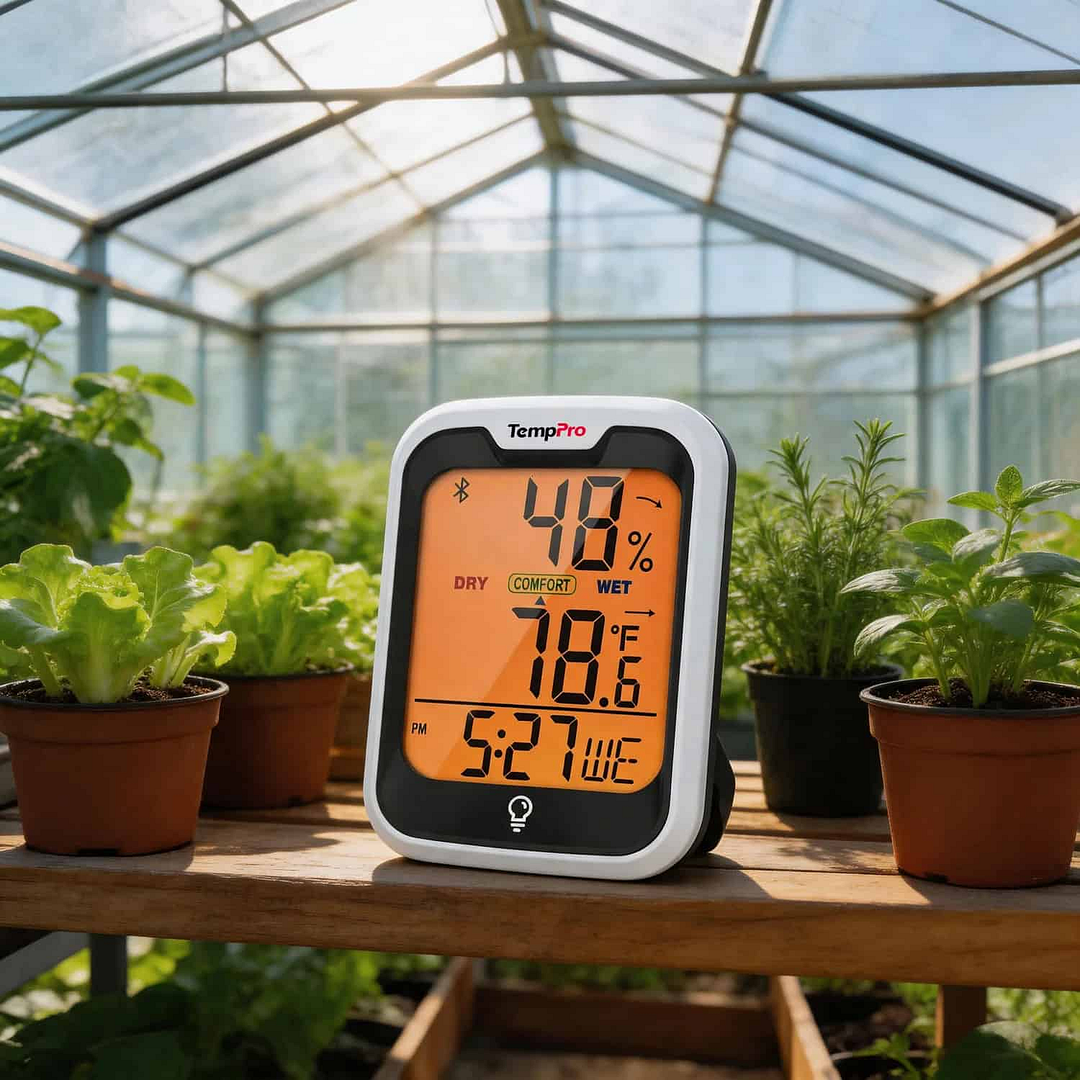
For dedicated plant enthusiasts seeking precise control over their growing environment, the TempPro TempAir ELITE TP358 Bluetooth Indoor Hygrometer Thermometer offers high-precision sensing paired with intuitive mobile tracking.
Key Advantages for Indoor Plant Monitoring
High-Precision Swiss Sensor: Equipped with high-accuracy sensors, the TempAir ELITE TP358 delivers reliable humidity and temperature readings updated every 10 seconds.
Extended Bluetooth Range (Up to 260 ft): Monitor microclimates inside grow cabinets, sunrooms, or basement plant setups from anywhere in your house via the companion mobile app.
App-Based Custom Target Alerts: Set custom high/low humidity or temperature thresholds in the app. Receive immediate push notifications on your phone if room humidity drops below your target range.
Historical Trend Charts & Unlimited Storage: Visualize humidity curves over 24 hours, 1 week, or 1 year. Analyzing historical data helps pinpoint heating cycles that dry out room air overnight.
Clear High-Contrast Display with Air Comfort Level Indicator: Featuring a crisp LCD screen with built-in air comfort indicators (DRY/COMFORT/WET), checking plant health at a glance is effortless.
Actionable Tips to Elevate Indoor Plant Humidity This Fall
Once your hygrometer for indoor plants reveals low indoor moisture levels, apply these simple methods to restore balance:
Group Plants Together: Plants release moisture during transpiration. Grouping tropical plants creates a collective humid microclimate.
Deploy a Cool-Mist Humidifier: Position a humidifier near your plant cluster and set it to turn on automatically when your TP358 signals humidity falling below 50% RH.
Utilize Pebble Trays: Place plant pots on trays filled with pebbles and water. As the water evaporates around the base, it naturally elevates ambient moisture around the leaves without oversaturating soil.
Relocate Sensitive Species: Move high-moisture seekers away from heating vents, radiators, and drafty exterior doors to avoid direct warm air currents.
Final Thoughts
Monitoring indoor climate metrics transforms plant care from guesswork into a simple, predictable routine. Keeping tabs on temperature and humidity ensures your indoor jungle remains lush, vibrant, and healthy all season long!



