The internet was once imagined as a place where geography would matter less. In many ways, that prediction came true. People can now discover music from another continent, follow creators in different languages, join international fan communities, work with colleagues across time zones, and maintain friendships that would have been difficult to sustain in an earlier era.
Yet global connectivity has not made local culture disappear.
Instead, people continually reshape digital platforms through their own languages, habits, visual references, slang, and regional expectations. A service may have the same basic features around the world, but the way users describe it, search for it, and incorporate it into everyday life can vary dramatically.
For multilingual users, digital identity is especially fluid. Someone may use an English operating system at work, Traditional Chinese on a smartphone, English-language social media, and Chinese-language search terms when looking for technical help.
Language is therefore becoming more than a setting hidden inside an app. It is part of how people experience digital culture.

Language Is Becoming Part of Digital Identity
People rarely use language in exactly the same way across every part of their lives.
A bilingual professional might communicate with international colleagues in English but use Traditional Chinese with family and friends. A student may consume entertainment in English while participating in Chinese-language fan communities. A creator might publish content for a global audience but answer local followers in a different language.
Digital platforms make these shifts almost effortless.
The same person can move between languages several times within a single hour without changing devices.
This creates a form of digital identity that is not fixed to one language or region.
Interface preferences are part of that identity as well. Some people prefer English software menus because technical terminology feels more familiar in English. Others choose Chinese interfaces because settings, privacy controls, and notifications are easier to understand in their first language.
There is no contradiction in either choice.
Online identity is increasingly defined by flexibility rather than by a single linguistic category.
Global Platforms Develop Local Vocabulary
When a digital product reaches a new community, users rarely adopt every term exactly as it appears in official documentation.
Local vocabulary begins to emerge.
Sometimes a translated term becomes popular. In other cases, users create abbreviations, visual nicknames, or informal names based on how a platform looks or behaves.
This happens throughout digital culture.
The English word “desktop,” for example, may appear as 「電腦版」 in Traditional Chinese contexts or “电脑版” in Simplified Chinese discussions. A “settings” menu can be described as 「設定」, “设置,” or simply “settings,” depending on the community.
All of these expressions can refer to the same basic function.
Search behavior reflects these differences. People frequently combine international brand names with local-language descriptions because that is the fastest way to communicate what they are trying to find.
The result is a hybrid vocabulary that belongs neither entirely to the platform nor entirely to formal translation. It belongs to the community using it.
Localization Is About More Than Translation
Good localization is sometimes treated as a simple matter of replacing one set of words with another.
In reality, language is only one layer.
- Where settings are located
- Which terminology is commonly used in their region
- Whether mobile and desktop interfaces differ
- How notifications and privacy controls are described
- Which instructions apply to their operating system
- How regional search habits affect the information they find
This is why localized search phrases can reveal more than a straightforward translation would.
Expressions such as Telegram 中文版 combine an internationally recognized product name with a direct Chinese-language description of what the user is seeking.
The phrase reflects a broader pattern across the internet: people often want global digital products to fit naturally into their existing language environment.
That may mean localized menus, clearer instructions, familiar terminology, or simply search results written in the language they find easiest to understand.
Localization succeeds when users no longer feel that they are adapting themselves to the software. The software begins to feel adapted to them.

Mobile and Desktop Create Different Digital Personas
Language is not the only thing that changes across digital environments. Device choice can influence behavior too.
Smartphones encourage immediate interaction.
- Short messages
- Quick reactions
- Photos
- Voice notes
- Social feeds
- Notifications
- Casual browsing
Desktop computers and laptops often support a different rhythm.
- Longer conversations
- Research
- File management
- Creative work
- Professional communication
- Multiple windows
- Focused reading
A person may therefore appear more spontaneous on mobile and more deliberate on desktop, even when using the same account.
This difference matters for multilingual users.
A smartphone may be configured entirely in Traditional Chinese, while a work computer remains in English. One device may use voice input frequently, while another relies on a physical keyboard.
Digital identity is shaped not just by which platforms people use, but by the context in which they access them.
Cross-Device Culture Changes How We Communicate
The ability to move between devices has made online communication more continuous.
A conversation can begin on a phone during a commute, continue from a laptop at work, and return to mobile later in the evening.
Files, links, images, and conversations increasingly follow the user rather than remaining tied to one device.
This has changed expectations.
People no longer think of mobile and desktop communication as completely separate experiences. They expect the transition to feel natural.
At the same time, each device still has its own cultural role.
Phones are highly personal. They travel everywhere, contain private photos, and deliver constant notifications.
Computers are often associated with work, study, creativity, and longer periods of concentration.
The same messaging platform can therefore occupy very different emotional and practical spaces depending on the screen through which it is accessed.
Online Communities Create Their Own Names
Digital communities have always been good at inventing vocabulary.
Fan communities shorten titles. Gamers create slang. Social media users turn visual symbols into nicknames. Technology communities develop shorthand for tools they use every day.
These names can become surprisingly durable.
A nickname may begin as an informal reference inside one community and later become common enough to appear in searches, tutorials, forum discussions, and conversations between users.
Visual identity plays a major role in this process.
Icons are especially powerful because they travel across languages without needing translation. A recognizable symbol can become shorthand for an entire service.
When users begin describing the service through that symbol, branding becomes part of everyday language.
The Paper Plane Became Part of Chinese Internet Vocabulary
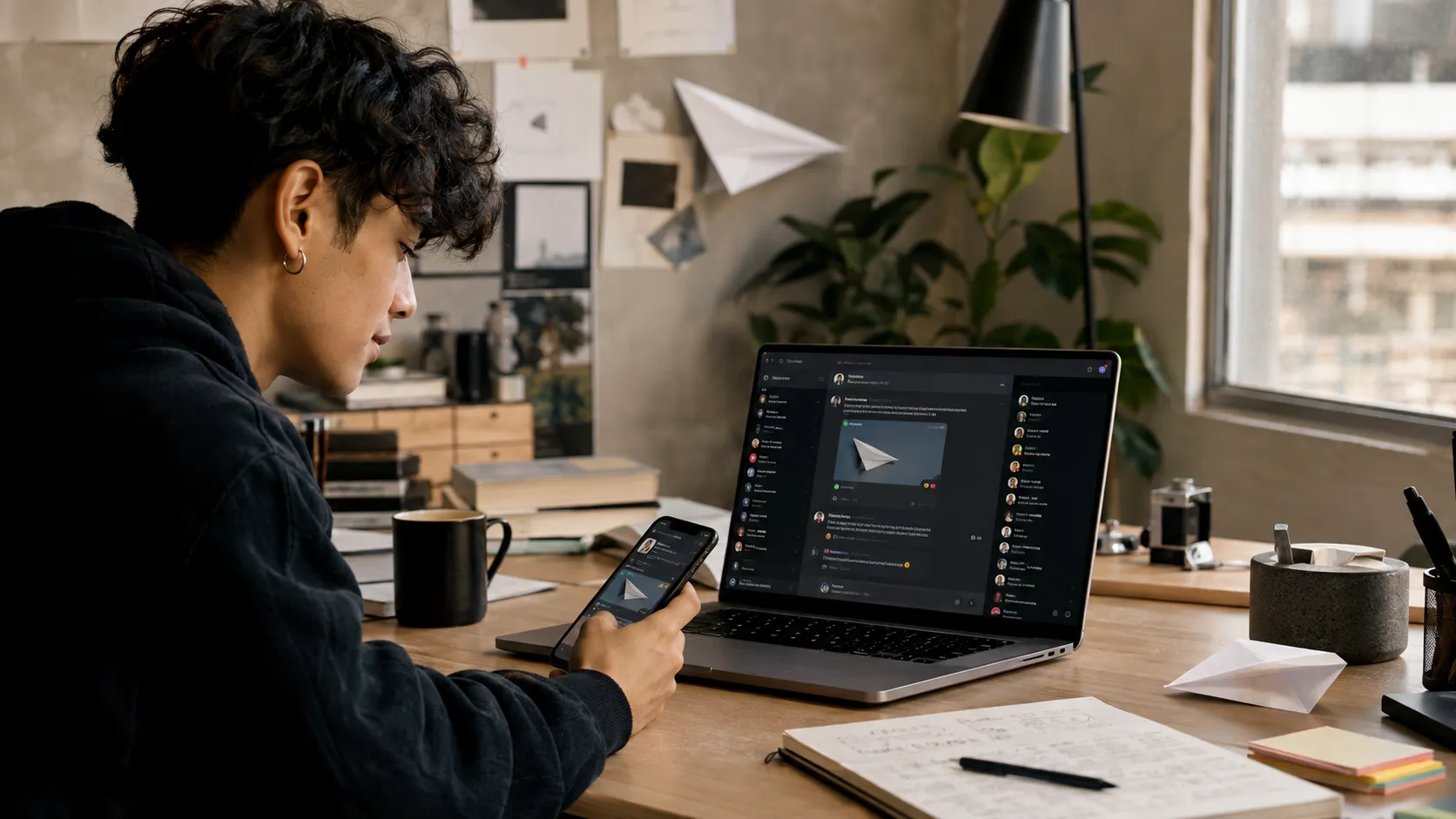
Telegram’s paper-plane imagery provides a useful example of how visual identity can influence local digital language.
Within parts of the Chinese-language internet, “纸飞机” or the Traditional Chinese form 「紙飛機」 has become an informal way of referring to Telegram.
The expression is memorable because it connects a visual symbol with an everyday object.
Over time, this association has also influenced search vocabulary. Phrases such as 纸飞机中文版 show how an informal nickname can be combined with a localization term and become a recognizable way for some users to describe what they are looking for.
This is not unique to messaging apps.
Digital culture constantly turns logos, features, memes, and interface elements into language.
What begins as visual recognition can become community shorthand, and community shorthand can eventually become part of search behavior.
That transition shows how users participate in shaping the cultural meaning of technology rather than simply accepting the terminology given to them.
Creators and Fandoms Make Language More Fluid
Music, film, fashion, gaming, and creator communities are among the clearest examples of multilingual digital culture.
A single artist may have audiences in London, Seoul, Taipei, São Paulo, and Los Angeles.
Fans frequently communicate across linguistic boundaries.
They translate interviews, explain cultural references, subtitle clips, share screenshots, and create their own terminology around artists and platforms.
These communities often move faster than formal localization.
A phrase may become popular among fans before any official translation exists. Abbreviations and nicknames can spread internationally within hours.
Creators experience the same phenomenon from the other side.
An independent musician or digital creator may publish primarily in English but discover that significant parts of the audience communicate in Chinese, Spanish, Korean, or Japanese.
The creator’s digital presence then becomes multilingual even if that was never part of the original strategy.
Global culture online is therefore not simply exported from one place to another. It is continually translated, adapted, and reinterpreted by the people participating in it.

Multilingual Interfaces Affect Accessibility
Language also affects whether users feel confident controlling their digital environment.
Consider common interface options such as:
- Privacy
- Devices
- Notifications
- Security
- Language
- Account
- Downloads
These settings can influence personal information, account access, and everyday usability.
A user who does not fully understand the interface may avoid changing settings altogether or may select an option without being certain what it does.
Localization therefore has an accessibility dimension.
Clear terminology allows users to make informed choices.
Traditional Chinese users might see:
- 隱私
- 裝置
- 通知
- 安全性
- 語言
Simplified Chinese users may see equivalent terms written differently.
English-speaking users encounter another vocabulary again.
The functionality may be identical, but the experience of understanding and controlling it is shaped by language.
Digital Culture Is Increasingly Hybrid
It is becoming harder to describe online culture as purely local or purely global.
People consume international entertainment while using regional slang.
They follow global creators while participating in local-language communities.
They use English brand names inside Chinese sentences and Chinese terminology inside conversations about international software.
The result is hybrid culture.
This hybridity can be seen in everything from fashion and music to apps and online fandoms.
Language does not simply translate global culture after it arrives. It changes how that culture is interpreted.
A digital platform can therefore mean slightly different things to different communities even when the underlying technology remains the same.
Digital Identity Now Moves Across Devices
The modern digital self is distributed across screens.
A person might:
- Watch videos on a phone
- Work on a laptop
- Message friends from a desktop computer
- Read long-form content on a tablet
- Participate in fan communities across several platforms
Each environment can have its own language preferences and communication habits.
The continuity comes from the person, not the device.
This is one reason cross-device design has become so important.
Users expect conversations, settings, files, and identity to remain understandable when moving from one screen to another.
For multilingual users, consistency is not always about making every interface identical. It is about ensuring that the relationship between languages, features, and devices remains clear.
What Better Localization Looks Like
1. Clear Language
Users should understand important features without needing specialist knowledge.
2. Region-Aware Terminology
Translations should reflect the vocabulary people actually use rather than relying entirely on literal word-for-word conversion.
3. Consistent Device Instructions
Guides should make it clear whether steps apply to mobile, desktop, web, Windows, macOS, Android, or iOS.
4. Accessible Settings
Language, privacy, security, and notification controls should be easy to find and understand.
5. Respect for Community Vocabulary
Informal names and regional expressions can be culturally meaningful even when they are not official terminology.
6. Clear Information Sources
Users should be able to distinguish between official product information, community discussion, and third-party explanations.
Localization works best when it recognizes that users are not passive recipients of technology. They actively reinterpret it.
Local Language Still Matters in a Global Internet
The internet has created a culture that crosses borders more easily than ever before.
But global connection has not produced one universal digital language.
Instead, people continue to bring local vocabulary, cultural references, habits, and identities into every platform they use.
That process is visible in interface preferences, search behavior, online nicknames, fandoms, and the way people move between languages throughout the day.
Technology may be global, but the experience of using it remains personal.
The most successful digital platforms and communities understand this distinction. They provide enough consistency to connect people across borders while leaving room for language and culture to evolve locally.
Global digital culture does not erase local language.
It gives people new spaces in which to reshape it.