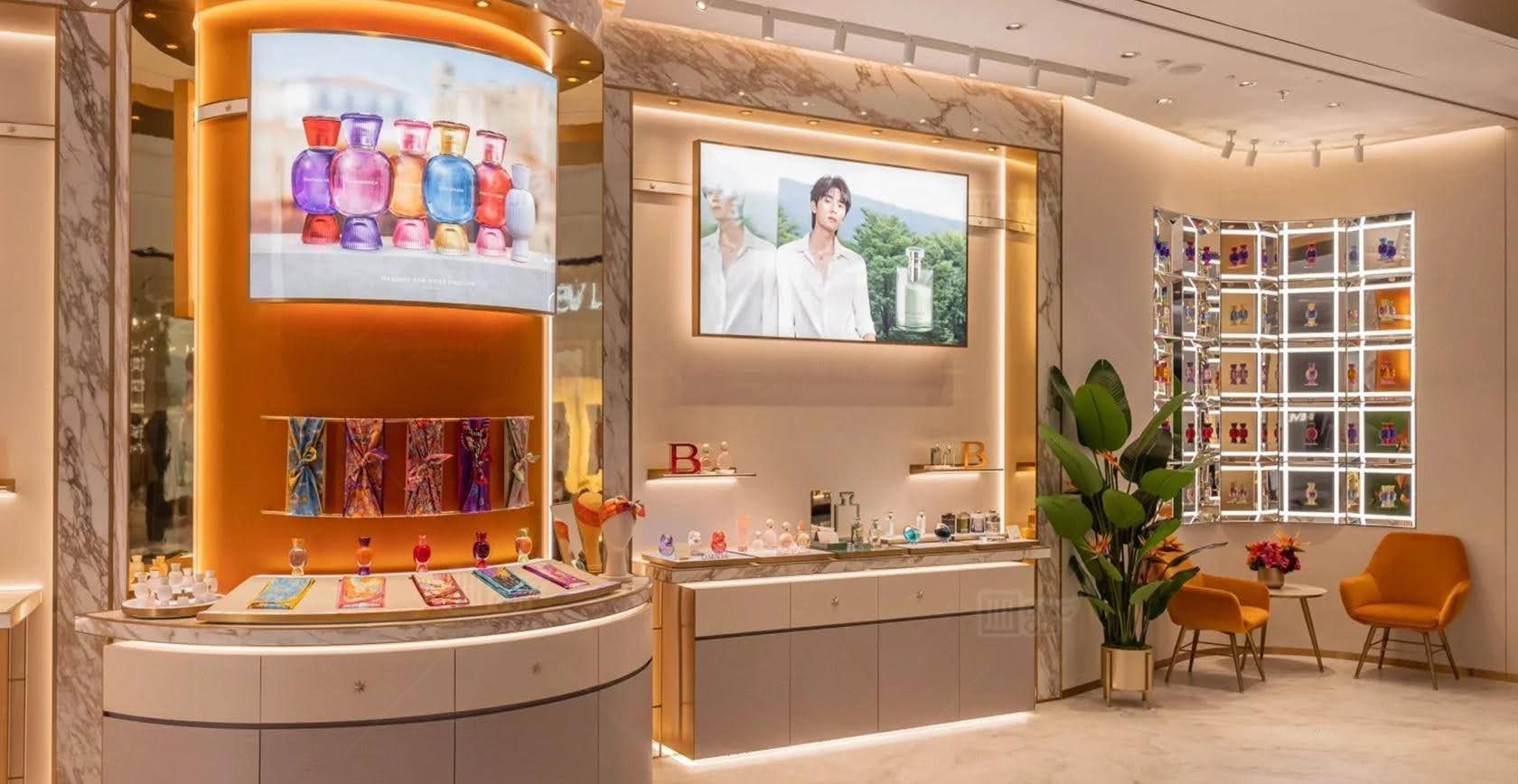
A perfume store has a unique challenge: fragrance cannot be seen, yet the brand must make its character immediately visible. Before customers smell a perfume, they experience the store itself through its architecture, displays, lighting, materials, and atmosphere.
That is why perfume store interior design plays such an important role in luxury retail. A well-planned environment can translate an invisible fragrance into something customers can visually and emotionally understand, creating a stronger connection between the product and the brand behind it.
Turning Fragrance Into a Physical Experience
Perfume is closely associated with mood, memory, personality, and lifestyle. The interior should support those associations instead of competing with them.
A brand known for understated elegance may choose a restrained palette, refined surfaces, and carefully positioned displays. Another brand built around creativity or boldness may use stronger architectural forms, distinctive textures, or dramatic lighting.
The objective is not simply to make the shop attractive. Every design decision should help express the qualities customers are expected to associate with the fragrance.
The Store as a Brand Story
Luxury perfume retailers often have stories rooted in heritage, craftsmanship, ingredients, fashion, or artistic expression. Store design provides a physical way to communicate those ideas.
Instead of treating every wall and display as an isolated feature, designers can create a visual sequence throughout the space. The entrance establishes the first impression, product zones introduce collections, and consultation areas provide a more personal setting for discovery.
This approach allows perfume store design to become part of the brand narrative rather than simply a backdrop for products.
Choosing Materials With Purpose
Materials can communicate luxury without relying on excessive decoration. Glass, metal, stone, wood, fabric, and specialty finishes can each contribute a different visual or tactile quality.
The important factor is how these materials interact. A combination of polished and textured surfaces, for example, can add depth while maintaining a sophisticated appearance.
Material choices should also consider durability and maintenance. High-traffic retail environments require finishes that continue to look refined after repeated customer use.
Display Design and Product Hierarchy
Perfume bottles are often designed as objects in their own right. Their shapes, caps, labels, and colors can become important elements of the visual composition.
Displays should therefore provide enough space for individual products to stand out. Overcrowding can weaken the sense of exclusivity that luxury brands want to create.
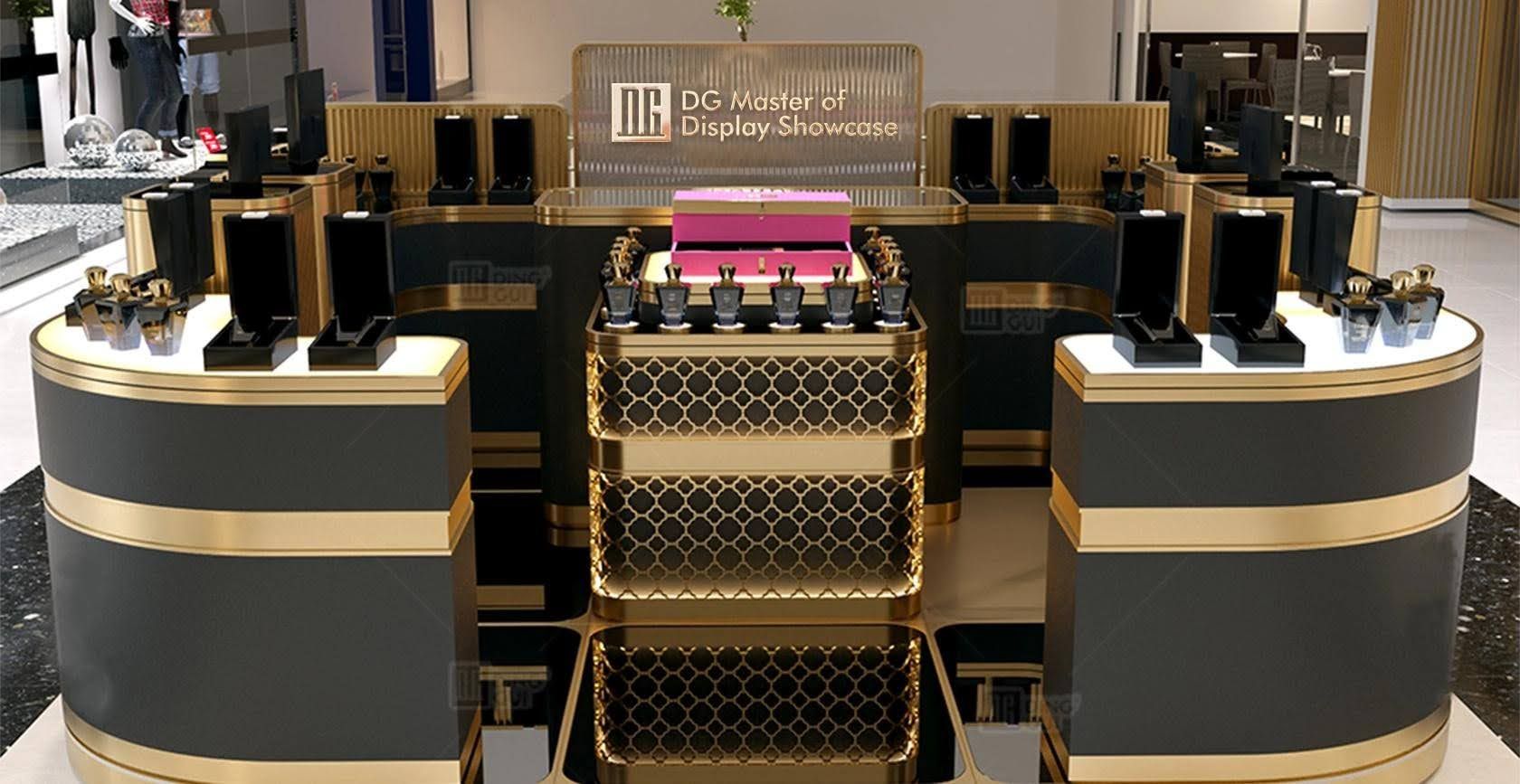
A thoughtful display strategy may distinguish between:
- Hero products that deserve immediate attention
- Core collections arranged for easy comparison
- Limited editions requiring a more exclusive presentation
- New launches positioned in high-visibility areas
This hierarchy makes the store easier to navigate while giving important products the visual prominence they deserve.
Lighting Sets the Mood
Lighting is particularly influential in perfume retail because it affects both the products and the surrounding atmosphere.
Soft ambient illumination can create an intimate setting, while focused accent lighting can emphasize a bottle, collection, or architectural feature. Carefully controlled color temperature can also influence how materials and packaging appear.
Good lighting should remain comfortable for customers. Excessive brightness, harsh shadows, or reflections on glass can make even an expensive interior feel less sophisticated.
Creating a Comfortable Discovery Journey
Buying perfume is often a process of exploration rather than a quick transaction. Customers may want to compare fragrances, test different scents, ask questions, and take time before making a decision.
The layout should support this behavior. Open circulation areas can encourage browsing, while dedicated consultation points give customers a place to receive personalized guidance.
A successful interior balances openness with intimacy. Customers should feel free to explore while still having access to knowledgeable assistance when they need it.
Why Customization Matters in Luxury Retail
A distinctive brand may have requirements that standard retail furniture cannot fully accommodate. Custom display solutions can address specific bottle dimensions, collection layouts, lighting integration, storage needs, and architectural conditions.
DG Display Showcase develops customized retail environments for perfume, jewelry, watch, and other high-end brands. Its work can cover different stages of a project, from initial spatial concepts and interior planning to custom showcases and implementation.
This integrated approach is useful when a perfume brand wants its displays and interior architecture to feel like parts of one carefully developed concept.
Adapting Design Across Different Store Formats
Luxury perfume brands may operate flagship locations, compact boutiques, department-store spaces, or multiple stores across different markets. Each setting presents different spatial limitations.
A strong design system allows the brand to maintain recognizable elements while adapting to the available floor area and local requirements.
For example, signature materials, display proportions, lighting principles, and branded details can remain consistent even when the overall layout changes. This creates familiarity without making every location feel identical.
Designing for Long-Term Brand Recognition
A successful perfume store should remain relevant beyond a single product launch or seasonal campaign. Overly trend-driven interiors can quickly lose their connection with the brand.
Timeless architectural elements combined with adaptable displays can provide greater longevity. Product zones, graphics, lighting, and selected decorative features can then be updated as collections evolve.
This approach allows the physical store to change with the business while preserving a recognizable identity.
The Relationship Between Product and Environment
The most effective perfume retail environments create a clear relationship between what customers smell and what they see.
A floral fragrance might be supported by lightness and softness in the environment, while a fragrance positioned around sophistication or intensity may call for richer materials and stronger architectural definition. These relationships do not need to be literal; subtle visual cues can be enough.
When the product and its surroundings communicate the same message, the customer experience becomes more coherent and memorable.
Conclusion
Perfume store design is ultimately an exercise in translating an intangible product into a physical experience. Architecture, displays, lighting, materials, circulation, and customization all influence how customers interpret a fragrance and the brand that created it.
For luxury retailers, the goal is not simply to build an impressive shop. It is to create an environment that remains consistent with the brand’s personality while giving customers a comfortable and engaging way to discover its products.
DG Display Showcase combines spatial design with customized display capabilities to help high-end perfume and other luxury brands develop retail environments suited to their identity, product positioning, and customer experience goals.