
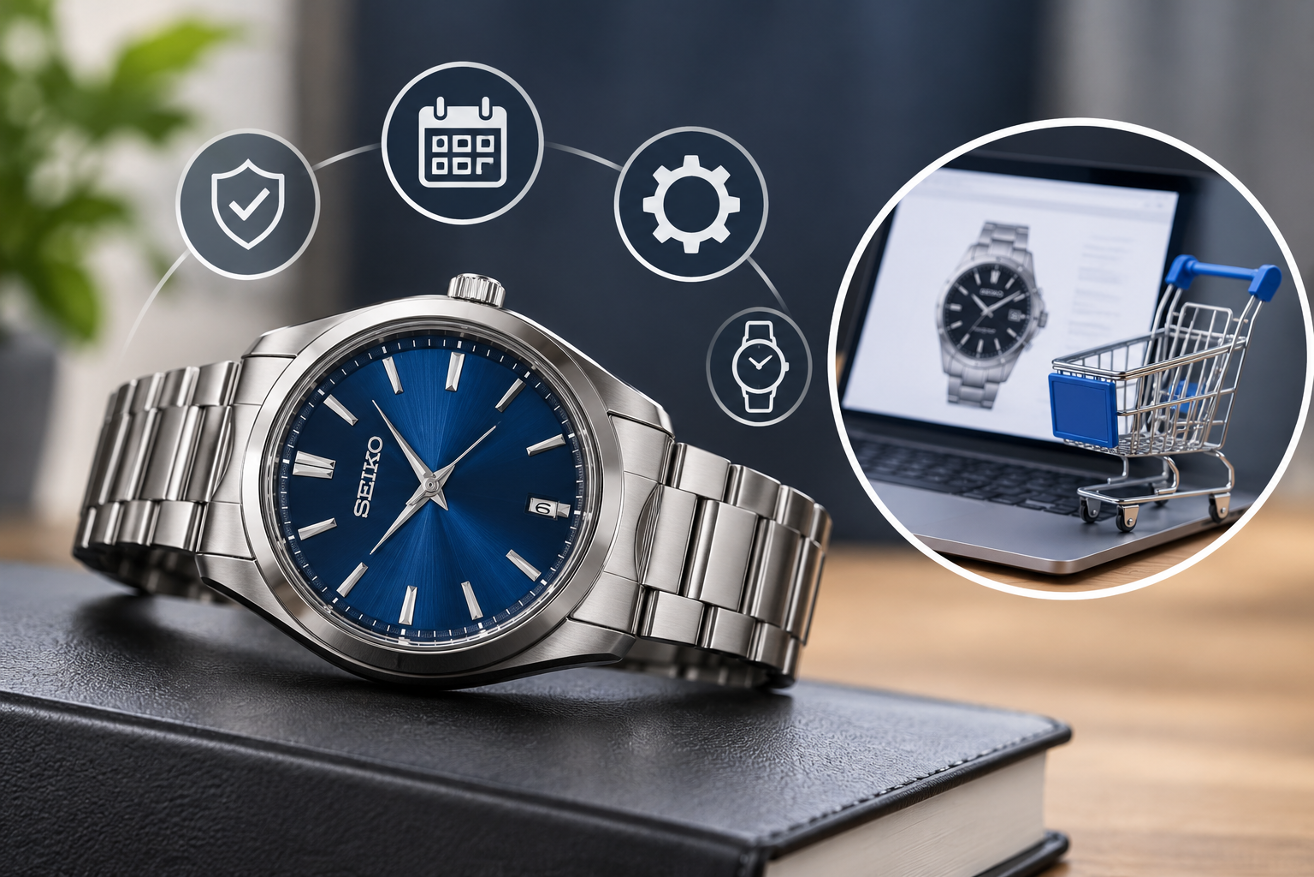
What Makes a Watch Suitable for Everyday Use?
Choosing a watch for daily wear isn’t about chasing the most popular model or the flashiest design—it comes down to matching practical features to your actual routine. A good everyday watch balances comfort, legibility, durability, manageable upkeep, and a style that genuinely fits your lifestyle. As you dig into specifications and weigh practical trade-offs, you might shop seiko watches or similar established collections just to get a feel for how movement types, case dimensions, and materials shift across price points and categories. Think of this as research, not a purchase decision in itself. This article walks through the key factors—movement type, case size, materials, water resistance, comfort, maintenance, and total cost of ownership—so you can judge any watch on its own merits before buying.
Start With Your Daily Routine
Before you even glance at specific models, think about where and how the watch will actually spend its time on your wrist. Someone working in an office has very different needs than someone who hikes on weekends or travels constantly for work. Ask yourself: will this watch see formal settings, physical activity, water exposure, or some mix of all three?
Consider two scenarios. Someone after a low-maintenance office watch might prioritize a quartz movement, a slim profile, and enough water resistance to handle handwashing and the occasional rain shower. Someone who’s regularly outdoors, on the other hand, might lean toward a sturdier case, higher water resistance, and a strap built to handle moisture and temperature swings without complaint. Take a moment to think honestly about the environments, clothing, and activities your current watch already experiences, and how much upkeep you’re actually willing to put in.
Choose the Movement That Fits Your Priorities
Quartz Movements
Quartz watches rely on a battery-powered electronic oscillator to keep time. They tend to demand little routine maintenance, deliver consistent accuracy, and run slimmer and lighter than most mechanical alternatives. The main recurring task is a battery swap every so often, though accuracy can still vary slightly depending on the specific movement inside.
Mechanical and Automatic Movements
Mechanical watches come in two flavors: hand-wound or automatic. Automatic models harness wrist motion to wind an internal mainspring, while hand-wound versions need you to wind them manually. These movements generally require more frequent adjustment and periodic servicing than their quartz counterparts. Plenty of owners are drawn to mechanical watches precisely for the craftsmanship on display and the hands-on relationship they build with the piece over time. Rather than leaning on broad claims about accuracy or durability, it’s worth checking the exact movement specifications and manufacturer instructions for your particular model.
How to Decide
Go quartz if low maintenance and consistent daily accuracy matter most to you, and you don’t mind the occasional battery change. Go mechanical if you’re drawn to traditional watchmaking, enjoy the ritual of winding or wearing a watch often enough to keep it powered, and you’re prepared for occasional servicing down the line.
Find the Right Case Size and Proportions
Case diameter gets cited most often, but it’s really only part of the picture. Thickness, lug-to-lug length, and strap width all shape how a watch actually sits on your wrist. In fact, a wider case with short lugs can wear more comfortably than a smaller case whose lugs overhang the edges of your wrist.
To get a realistic sense of fit, wrap a flexible tape measure or a strip of paper around your wrist, then compare that number against the watch’s lug-to-lug length—the lugs shouldn’t extend past the natural curve of your wrist. Smaller cases often improve both comfort and readability for narrower wrists, while larger cases give a bolder visual presence for anyone who prefers that look.
Sizing checklist:
– Does the lug-to-lug length stay within your wrist’s natural curve?
– Is the thickness comfortable under a shirt cuff or jacket sleeve?
– Does the strap or bracelet width feel proportionate to the case?
Evaluate Legibility, Materials, and Comfort
Strong contrast between the dial, markers, and hands makes a watch easier to read at a glance, even in low light. Luminous materials help with visibility after dark, though performance varies from model to model and shouldn’t be assumed identical across the board.
Crystal materials vary just as much. Mineral crystal offers decent scratch resistance at a lower price; sapphire crystal resists scratches far better but can cost more to replace if it’s ever damaged; acrylic resists shattering well but picks up scratches more easily. Case materials like stainless steel and titanium differ in weight, corrosion resistance, and finish—all of which affect comfort and how the watch ages over the years.
Straps and bracelets—leather, fabric, rubber, or metal—each suit different climates and activity levels. Being able to swap straps can extend a watch’s usefulness considerably, letting it adapt to different settings over time.
Understand Water Resistance Correctly
Water-resistance markings describe specific testing conditions, not a blanket guarantee for any water-related activity you might dream up. A rating suited to splashes is a very different thing from one suited to swimming or diving. Always check the case-back marking and the model’s official instructions rather than leaning on general assumptions.
Practical care habits include avoiding crown operation while the watch is wet, remembering that water resistance isn’t a permanent feature, having seals checked periodically, and rinsing the watch in fresh water after any seawater exposure before drying it with a soft cloth. Seiko’s own care guidance notes that water resistance can be compromised by aging gaskets and accidental shocks, and it specifically warns against holding a water-resistant watch directly under running water.[1][3] Manufacturer instructions should always take priority over generic water-resistance charts or retailer descriptions.
Check Ownership and Maintenance Requirements
Recurring maintenance includes battery replacement for quartz models, servicing for mechanical movements, strap or bracelet replacement, periodic water-resistance testing, and routine cleaning. Steer clear of strong impacts, extreme temperatures, moisture beyond the watch’s rating, or unnecessary exposure to magnetic fields.
Keep a record of your watch’s model and caliber information so future servicing goes smoothly. Seiko, for instance, directs owners to match the caliber code on the case back with the corresponding instruction manual for movement-specific guidance.[6] When in doubt, consult an authorized service provider instead of relying on generalized service intervals you happen to find online.
Compare the Full Cost of Ownership
The purchase price is only one piece of the puzzle. Factor in servicing costs, batteries, replacement straps, potential repairs, insurance, and periodic water-resistance checks when weighing total cost of ownership. Compare watches using consistent criteria—daily comfort, required accuracy, durability, maintenance burden, and suitability for your intended use—rather than fixating on specifications or looks alone.
Use Reliable Information Before Buying
Lean on official product specifications, manufacturer instruction manuals, and authorized service guidance over secondhand summaries you find scattered online. Always double-check the exact reference or model number, since watches that look nearly identical can still differ in movement, crystal, dimensions, or water-resistance rating. Make sure any listing clearly states the movement or caliber, case measurements, crystal material, water-resistance rating, included components, and warranty terms. Stock photos and vague descriptions aren’t proof of anything when it comes to a watch’s actual specifications.
Practical Decision Checklist
Before You Choose:
– What activities will the watch encounter regularly?
– Which movement type matches your maintenance preferences?
– Does the case fit securely and comfortably on your wrist?
– Is the water-resistance rating appropriate for your actual use?
– Are the dial and hands easy to read quickly?
– What ongoing costs should you expect?
– Can you verify the exact specifications from official sources?
– Are warranty, return, and service details clearly stated?
Final Perspective: Match the Watch to the Way It Will Be Used
A reliable everyday watch ultimately comes down to dependable fit, readable design, appropriate specifications, and manageable upkeep. Weighing movement, dimensions, materials, water resistance, and total ownership costs together—rather than in isolation—gives a far clearer picture of long-term suitability. Before settling on a final choice, verify the technical details through official documentation. Use the checklist above to compare a few watches side by side, and pick the one that genuinely fits your everyday needs rather than one chosen for looks or brand name alone.