Key Takeaways
- The best jeans fit your waist, hips, thighs, and rise without pinching, gapping, or constant adjustment.
- Comfortable stretch is useful, but shape recovery keeps denim from loosening too much during the day.
- Rise, leg shape, inseam, and details such as pocket placement can make a major difference in fit.
- A fitting-room movement test is more revealing than checking the mirror while standing still.
- Gentle washing and low heat help jeans keep their color, stretch, and structure.
Table Of Contents
- Why Fit Matters More Than the Size Label
- Take a Few Simple Measurements
- Check the Waist and Hip Balance
- Choose Stretch With Shape Recovery
- Pick the Right Rise
- Compare Common Leg Shapes
- Match the Inseam to Shoes and Height
- Use a Real-Life Try-On Test
- Care for Denim, So It Keeps Its Shape
- Common Questions About Curved-Fit Jeans
- Conclusion
Finding jeans that work for curves is less about chasing a number on a tag and more about choosing a cut that supports the way you actually move. The right pair should feel secure at the waist, smooth through the hips, and comfortable enough for sitting, walking, commuting, and relaxing.
For shoppers who prefer a more supported feel through the midsection, tummy control jeans can be one option to consider alongside fit features such as a contoured waistband, a higher rise, and structured stretch denim. The goal is not to squeeze into a particular style, but to find a pair that feels good from morning through evening.
Why Fit Matters More Than the Size Label
Jean sizing can vary widely by brand, wash, fabric blend, and silhouette. One size may fit perfectly in a rigid straight leg but feel restrictive in a high-rise skinny style. Start with your usual size, but judge the jeans by how they fit your body instead of treating the label as a verdict.
Jeans are likely too small if the zipper pulls open, the waistband digs in, the front pockets flare, or horizontal lines pull across the hips and thighs. They may be too large if the seat sags, the waistband slips down, or you need to tug them into place throughout the day. As stylist fit tips often emphasize, comfort and movement are just as important as how a pair looks in the mirror.
Take a Few Simple Measurements
Measurements give you a useful starting point, especially when shopping online. Use a soft tape measure and write down these numbers without pulling the tape tight:
- Measure your natural waist, usually the narrowest point between your ribs and hips.
- Measure around the fullest part of your hips and seat.
- Measure your inseam from the upper inner thigh to the ankle.
- Note your proportions, such as a longer torso, shorter legs, fuller thighs, or a waist that is noticeably smaller than your hips.
These numbers are guides, not guarantees. The rise, fabric, and shape of each pair can still change the final fit considerably.
Check the Waist and Hip Balance
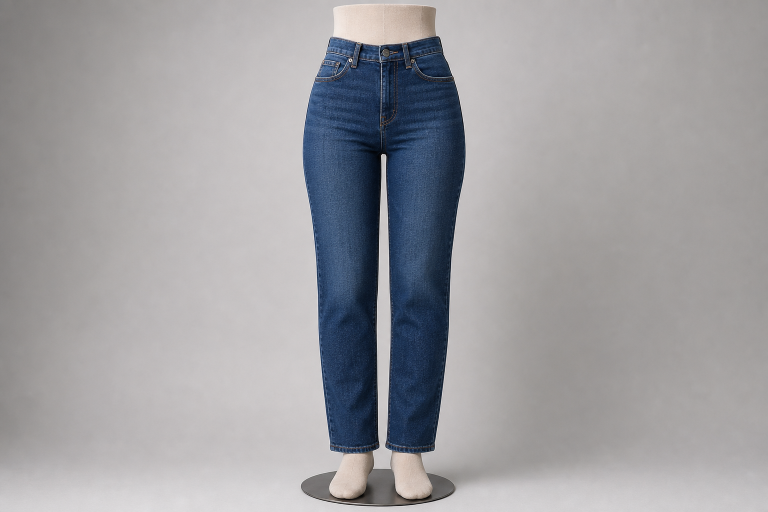
One of the most common denim frustrations is a pair that fits the hips but leaves a gap at the back waist. This usually means the cut does not match your waist-to-hip proportion. Look for terms such as “curvy fit,” “contoured waistband,” or “hourglass fit,” which may offer more room through the hips while keeping the waist closer to the body.
- The waistband should lie flat without rolling, digging in, or leaving a large gap.
- The seat should feel secure without pulling across the pockets.
- Wrinkles that run horizontally across the hips or upper thighs can indicate tightness.
- A higher back rise can provide better coverage when sitting or bending.
Choose Stretch With Shape Recovery
Stretch denim can make jeans easier to wear for long days, but more stretch is not always better. Fabric that feels very soft and elastic in the fitting room may loosen at the knees, waistband, and seat after several hours. A little structure helps denim return closer to its original shape after movement.
Check the fiber content and feel the fabric with your hands. Jeans with some stretch should bend comfortably, but they should still feel substantial enough to hold their line. If you are between sizes, test both rather than assuming the tighter pair will stretch exactly where you need it to.
Pick the Right Rise
Rise describes where the waistband sits on your body. The same listed rise can feel different depending on torso length, hip shape, and the cut of the jeans.
- Low rise: Sits lower on the hips and can suit relaxed, casual outfits, though it may provide less coverage when seated.
- Mid rise: Offers a versatile middle ground with moderate coverage and everyday comfort.
- High rise: Sits closer to the natural waist and may feel more secure through the midsection and back.
Always sit down before deciding. A rise that feels comfortable while standing can feel very different during a drive, a meal, or a full workday.
Compare Common Leg Shapes
There is no single “best” leg shape for a curved body. Choose based on comfort, shoes, and the outfits you want to wear, not on a rule about what you should or should not try. Current denim silhouettes are changing, but a practical fit will outlast any short-term trend.
- Straight leg: Creates a clean line from the thigh toward the ankle.
- Bootcut: Opens slightly below the knee and works well with boots or heeled shoes.
- Flare: Adds more width below the knee for a more dramatic shape.
- Wide leg: Gives extra room through the thigh and calf for an easy, relaxed feel.
- Skinny: Follows the leg closely and pairs easily with tall boots or longer tops.
- Barrel: Curves outward through the leg before narrowing at the ankle.
Match the Inseam to Shoes and Height
Length affects both comfort and proportion. A hem that bunches heavily around the ankle can look messy and wear out faster, while a pair that is too short may not work with your preferred shoes. Try jeans on with the shoes you expect to wear most often. Cropped and ankle lengths work well with flats, sneakers, and ankle boots, while bootcut and flared jeans often need extra length for heels or platforms.
Use a Real-Life Try-On Test
A good fitting-room test takes only a few minutes:
- Stand naturally and check that the waistband stays flat.
- Sit down to test the waist, thighs, and back coverage.
- Walk several steps to see whether the jeans twist, slide, or pinch.
- Bend or squat gently to assess flexibility.
- Check the front, side, and back before removing them.
Jeans can look excellent while standing still and become uncomfortable halfway through a commute or long lunch. Give the fabric time to settle before making your choice.
Care for Denim, So It Keeps Its Shape
- Wash jeans only when they need cleaning.
- Turn them inside out to help reduce fading.
- Use cool water and a gentle cycle when possible.
- Avoid high dryer heat, which can weaken stretch fibers.
- Air-dry jeans or use low heat briefly if needed.
- Follow the garment label for special washes and fabric blends.
Common Questions About Curved-Fit Jeans
Should jeans feel tight when they are new?
They may feel firm at first, especially when the denim has more structure, but they should not hurt, restrict breathing, or create deep pressure points.
Why do jeans fit my hips but gap at my waist?
The cut may not account for your waist-to-hip difference. Try a curvy cut, contoured waistband, different rise, or minor tailoring.
When should jeans be tailored?
Tailoring makes sense when the waist, hips, and seat fit well, but the inseam or leg opening needs a small adjustment.
Conclusion
The right jeans should feel supportive without feeling restrictive. Focus on the waist and hip balance, choose a stretch that recovers well, test the rise while seated, and select a length that works with your everyday shoes. When fit and movement come first, denim becomes one of the easiest pieces in your wardrobe to wear again and again.