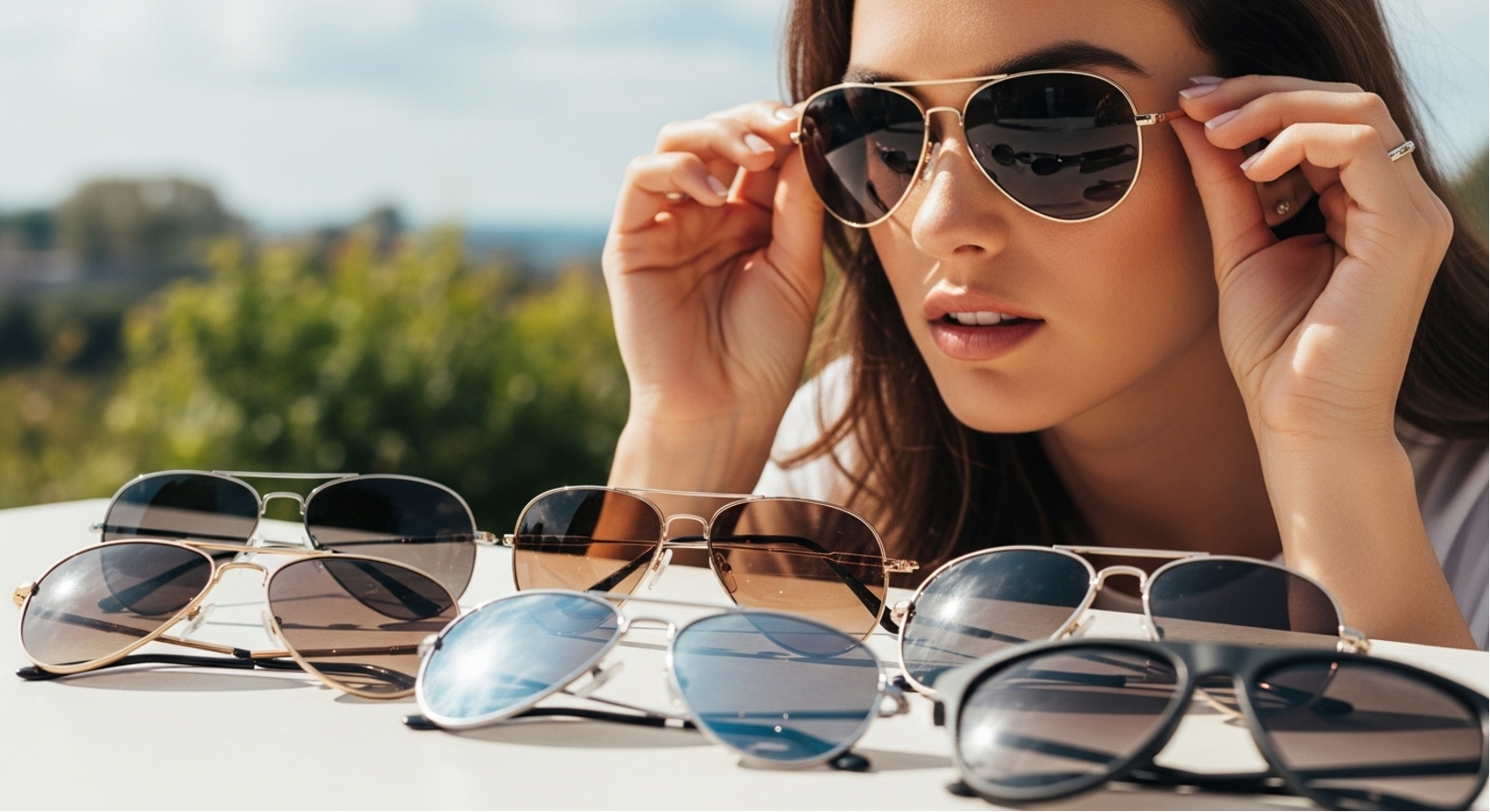
Aviator sunglasses have been around for decades, but the search for the “perfect” pair is still a wild ride. Some say it’s all about face shape. Others swear by lens tech or frame material. And then there’s the question of what you’ll actually do while wearing them, drive, hike, or just look cool at brunch? This guide tries to make sense of it all, but let’s be honest: even the experts can’t agree on every detail.
In This Guide
- Matching aviator styles to your face shape (with a few caveats)
- The real differences in lens types, coatings, and UV protection
- Sizing, fit, and measurement tips that sometimes get ignored
- Common mistakes and a handful of tips that might actually help
Understanding Aviator Sunglasses Styles
Aviators aren’t just for pilots or movie stars anymore. The market is flooded with options, some classic, some wild, and a few that probably shouldn’t exist. So, what’s the difference, and does it matter?
Classic, Navigator, Sport, and Fashion Aviators
Classic aviators stick to the teardrop lens and thin metal frame, timeless, sure, but not always the best for every face. Navigators swap the teardrop for a rectangular lens, which can look sharp on longer faces but might feel too formal for some.
Sport aviators? They’re all about function: wraparound frames, anti-slip temples, and a look that says, “I might actually go outside.”Fashion aviators, on the other hand, are for those who want to stand out, with bold colors, thick frames, and patterns that sometimes cross the line from stylish to strange.
Pros and Cons of Each Style
Classic aviators are the safe bet, versatile, but sometimes a little too predictable. Navigators offer more coverage and a bolder vibe, but not everyone can pull them off. Sport aviators are practical, but style options are limited. Fashion aviators? Great for making a statement, less great for blending in or blocking the sun.
Matching Aviators to Your Face Shape
The “face shape” rulebook gets thrown around a lot, but does it really work? Sometimes. Sometimes not. Still, it’s a starting point.
Identifying Your Face Shape
Grab a mirror and trace your face outline, if you can do it without laughing. Oval, round, square, heart, oblong, diamond… supposedly, everyone fits one. But real faces are rarely textbook examples.
Best Aviator Styles for Each Face Shape
- Oval Faces: Lucky break, almost any aviator works, especially those as wide as your cheekbones. Oversized pairs? They add drama, but don’t go overboard.
- Round Faces: Angular frames (think navigators) add structure. Wider frames can help elongate, but too much width and you’re in bug territory.
- Square Faces: Rounded aviators soften strong lines. Avoid sharp corners unless you want to look extra chiseled.
- Heart-Shaped Faces: Go for frames wider at the top, tapering down. It’s all about balancing that broad forehead and narrow chin.
- Oblong Faces: Larger lenses and frames add width. But too big, and it’s cartoonish.
- Diamond Faces: Brow bar details or slightly wider frames can balance out those cheekbones.
Lens Types, Colors, and Coatings
Lenses aren’t just about color; they’re about comfort, clarity, and sometimes, avoiding a headache.
Polarized, Mirrored, Gradient, and Photochromic Lenses
Polarized aviator sunglasses are the go-to for glare, especially if you’re near water or behind the wheel. Mirrored lenses block sunlight and look bold, but can feel a bit much for everyday wear. Gradient lenses? Dark up top, light at the bottom, good for mixed light, but not the best for full sun. Photochromic lenses change tint with UV exposure, but the transition isn’t always instant.
Choosing Lens Color for Style and Function
Brown lenses boost contrast and detail, great for driving. Gray keeps colors true but can feel flat. Green is the middle ground. Mirrored and gradient lenses add flair, but sometimes at the expense of practicality.
UV Protection and Eye Health
This one’s non-negotiable: 100% UV protection or UV400 rating. Anything less, and you’re risking your eyes for style. High-quality aviators usually get this right, but always double-check. As the American Academy of Ophthalmology advises, “Choosing sunglasses that block 99-100% of both UVA and UVB light is essential for protecting your eyes from the sun’s harmful rays and reducing the risk of cataracts and other eye conditions.”
Frame Materials and Build Quality
Frames can make or break the experience, literally and figuratively.
Metal, Plastic, and Mixed Material Frames
Metal frames (stainless steel, titanium) are classic and tough, but can feel heavy. Plastic frames are lighter, comfier, and come in wild colors, but sometimes look less “aviator.” Mixed materials? They’re the wild card, sometimes genius, sometimes a mess.
Durability, Comfort, and Style Considerations
Metal lasts, but can pinch. Plastic is comfy, but not always durable. Mixed materials can solve both problems or create new ones. Sensitive skin? Watch for nickel allergies.
Sizing and Fit: Getting It Right
Aviators should feel like they belong, not like they’re about to fall off or leave dents.
How to Measure for Aviator Sunglasses
Measure your face at the temples and compare it to the frame width. Lens width should line up with your eyes, the bridge should sit comfortably, and the temples should hug (not squeeze) behind your ears.
Adjustable Features: Nose Pads and Temples
Most aviators have adjustable nose pads; use them. Flexible temples help, too. Don’t settle for a bad fit; tweak until it feels right.
Common Fit Mistakes and How to Avoid Them
Too wide? They’ll slide. Too narrow? Instant headache. Don’t ignore adjustable features, and don’t assume “one size fits all.” If you want extra coverage or a bold look, oversized sunglasses for men styles are worth exploring for inspiration on frame scale and proportion.
Care, Maintenance, and Longevity
Even the best aviators need TLC. Neglect them, and you’ll be shopping for a new pair sooner than you think.
Cleaning and Storage Tips
Rinse with warm water, use mild soap, and dry with a soft cloth. Skip the shirt sleeve; scratches are forever. Always store them in a case, and never leave them on a hot dashboard unless you like warped frames.
Checking Screws, Hinges, and Frame Integrity
Loose screws? Tighten them before they fall out. Hinges should move smoothly. Check for cracks or bends; catching problems early saves money.
Comparison Table: Aviator Types, Features, and Best Uses
Tables make it look easy, but real-world choices are rarely this clear-cut. Still, here’s how the main types stack up:
| Aviator Type | Best For | Key Features | Drawbacks |
| Classic Aviators | Most face shapes | Teardrop lens, metal frame | May elongate long faces |
| Navigator Aviators | Longer faces, formal | Rectangular lens, bold | Not for all face shapes |
| Sport Aviators | Active lifestyles | Wraparound, anti-slip | Fewer style options |
| Fashion Aviators | Statement looks | Bold colors, patterns | Less functional |
| Polarized Aviators | Driving, outdoors | Glare reduction | Higher price |
| Mirrored Aviators | Sun, glare protection | Reflective, UV block | Less versatile |
| Gradient Aviators | Mixed light | Dark-to-light lens | Less sun coverage |
| Alloy Aviators | Lightweight, durable | Titanium/stainless steel | Expensive |
| Plastic Aviators | Comfort, affordability | Impact-resistant | Less classic look |
But does anyone stick to just one type? Not likely.
Avoiding Common Mistakes When Choosing Aviators
Even the best-looking aviators can flop if they don’t fit or protect your eyes. Here’s where most people go wrong.
1. Overlooking Face Shape and Sizing
Ignoring your face shape is a fast track to awkward selfies. Try on different styles, and don’t trust the mirror alone; ask for a second opinion.
2. Ignoring Lens Quality and UV Protection
Looks fade, but eye damage lasts. Don’t skimp on lens quality or UV protection. Quality aviators are worth the extra cash if you’re outside a lot.
3. Sacrificing Comfort for Style
If they pinch, slide, or feel heavy, you’ll leave them in the glove box. Comfort matters, adjustable features, and the right size make all the difference.
People Also Ask
What face shape looks best with aviator sunglasses?
Oval faces can pull off almost any style. Round faces do better with angular frames. Square faces? Rounded aviators soften the look. Heart-shaped faces need wider tops and tapered bottoms. But rules are made to be broken.
What color lenses are best for aviator sunglasses?
Gray, brown, and green are the classics. Gray keeps colors true, brown boosts contrast, and green balances both. Mirrored and gradient lenses add flair, but aren’t for everyone.
How do I know if aviators fit me properly?
They should sit comfortably, no pinching, no sliding. Lens width should match your eyes, and frames shouldn’t stick out past your temples. If they do, try a different size.
Are polarized lenses worth it for aviators?
For driving, water, or snow? Absolutely. Polarized aviators cut glare and boost clarity. For indoor use, maybe not so much.