Previously, I had only seen War Horse through the National Theatre Live recording that was shared during the pandemic. I loved it then, but of course watching something on a screen, however beautifully filmed, is never quite the same as sitting in ‘the room where it happens’. Seeing War Horse live in the Olivier Theatre, back home at the National Theatre where it first began almost twenty years ago, is a completely different experience. Bigger, richer, emotional, and at times actually overwhelming.
The Olivier is the National’s largest theatre, and War Horse fits the space perfectly. It needs scale. This is a story that spans countries, battlefields, and years of human suffering. Yet at its heart it remains an intensely personal story about a boy and his horse, and this production treads that line beautifully.
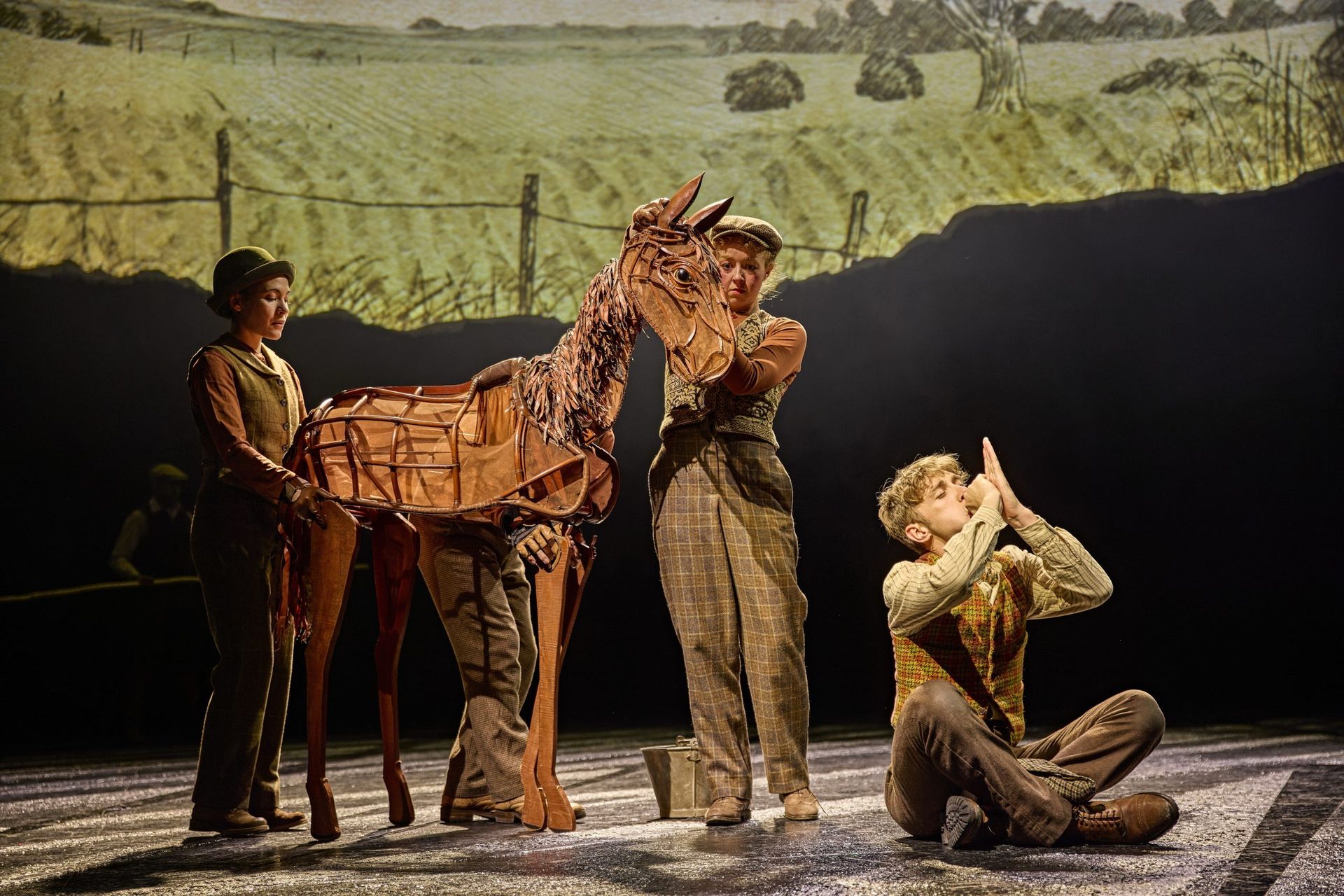
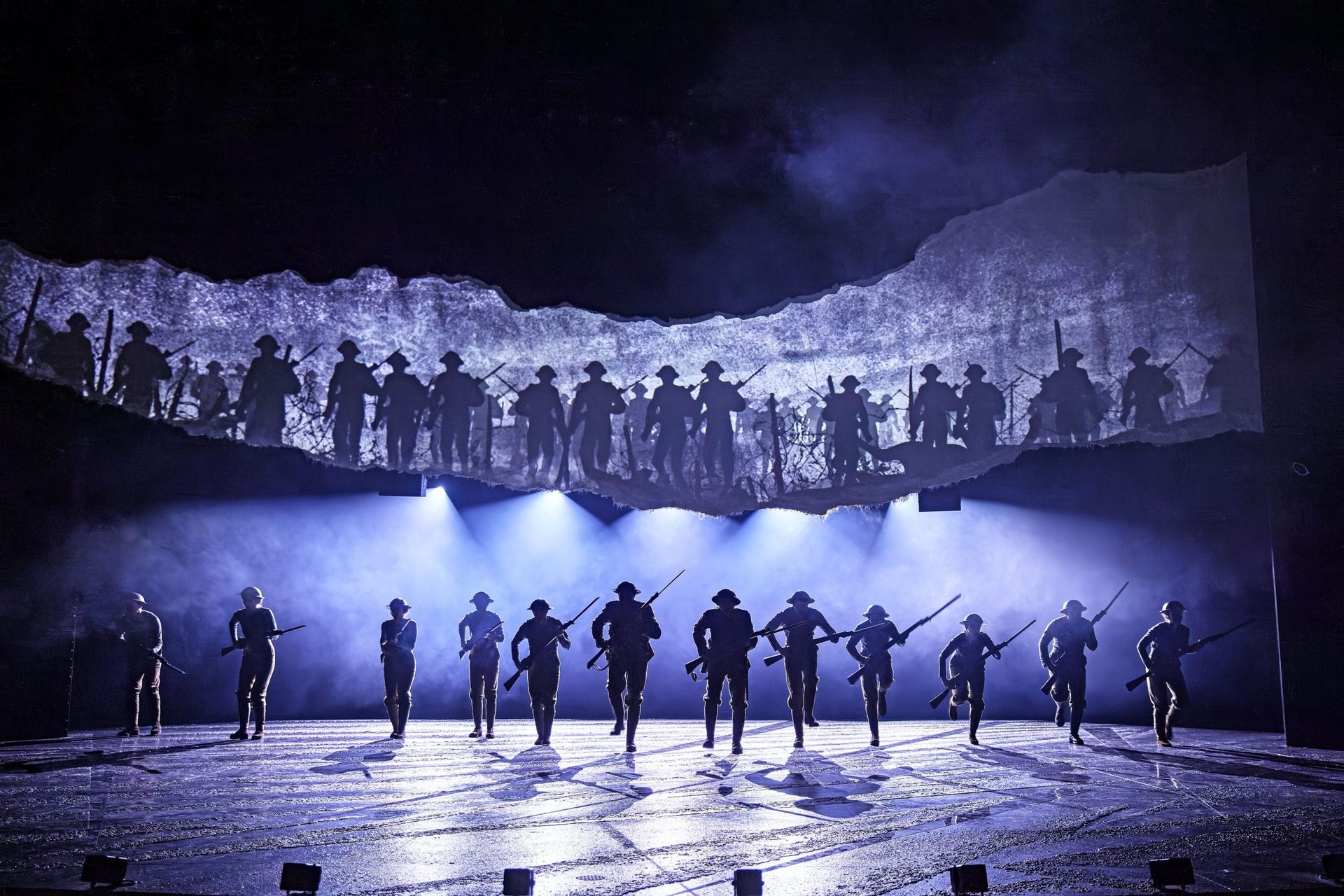
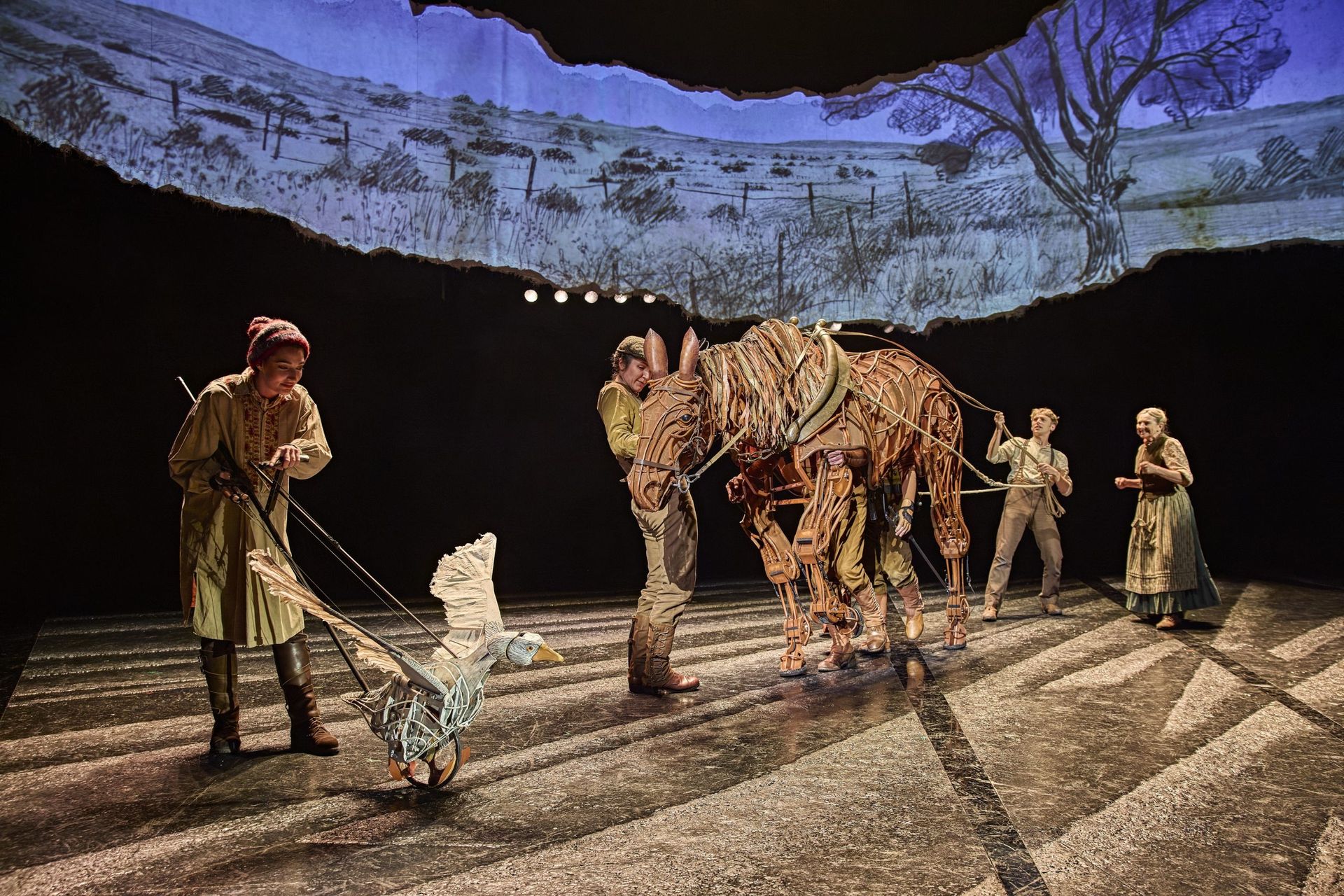
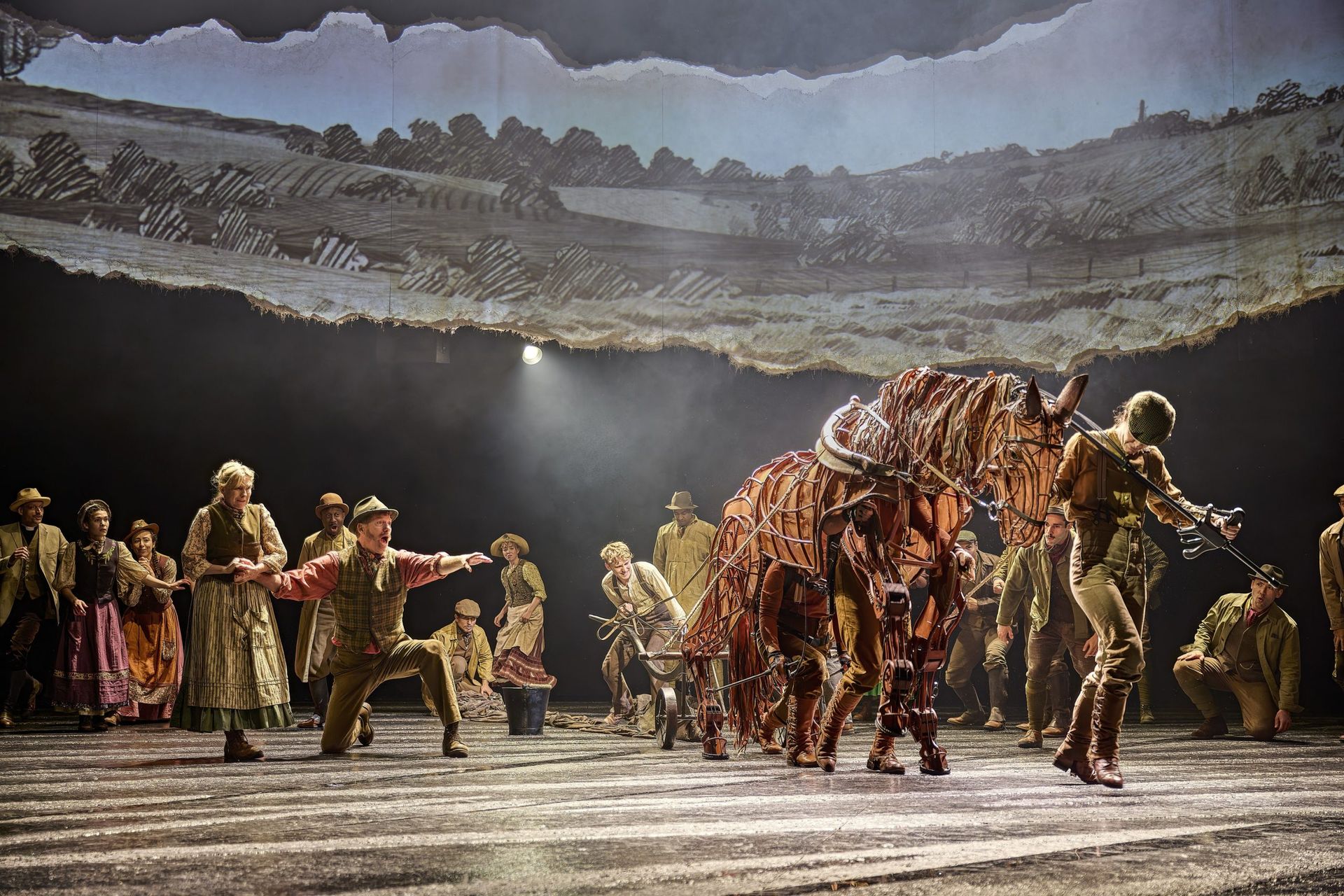
Designed by Rae Smith, the set is surprisingly sparse. The stage is mostly an open black space with rough, hand-hewn edges, while stable equipment and other props line the sides. Stretching high over the stage is a long strip that resembles a giant piece of torn paper, immediately evoking Michael Morpurgo’s novel and serving as a canvas for drawings, projections, and memories throughout the evening. One thing I noticed was how little the design has changed over the years. Aside from the removal of the revolving stage, it remains largely as it was when the production first opened nearly twenty years ago.
The literary connection is established from the outset. The Singer, portrayed by Sally Swanson, hands a book to an officer, who begins to sketch. Those drawings gradually appear across the backdrop, bringing the story to life before our eyes. The projections feel like memories, pages from a book being illustrated in real time. As the story unfolds, the scenery evolves alongside it. Hand-drawn landscapes roll past across the backdrop, and splashes of colour gradually emerge as spring arrives. It is simple, beautiful storytelling.
Swanson is wonderful throughout. Her rich, haunting voice threads through the entire production, often accompanied by accordion and ensemble vocals that help create an atmosphere unlike anything else in the theatre. The opening night performance was dedicated to the late Adrian Sutton, whose score has been part of War Horse since its first production in 2007, and it felt a fitting tribute. Alongside Sutton’s music and John Tams’ folk songs, the score remains one of the show’s most potent weapons.
Now to the real stars of the show… The ‘horses’. We first meet Joey as a foal, and even then the magic is immediate.
People often describe the puppetry as mind-blowing, but that barely covers it. What makes the work of Handspring Puppet Company so extraordinary is not simply that the horses move realistically. It is that they live.
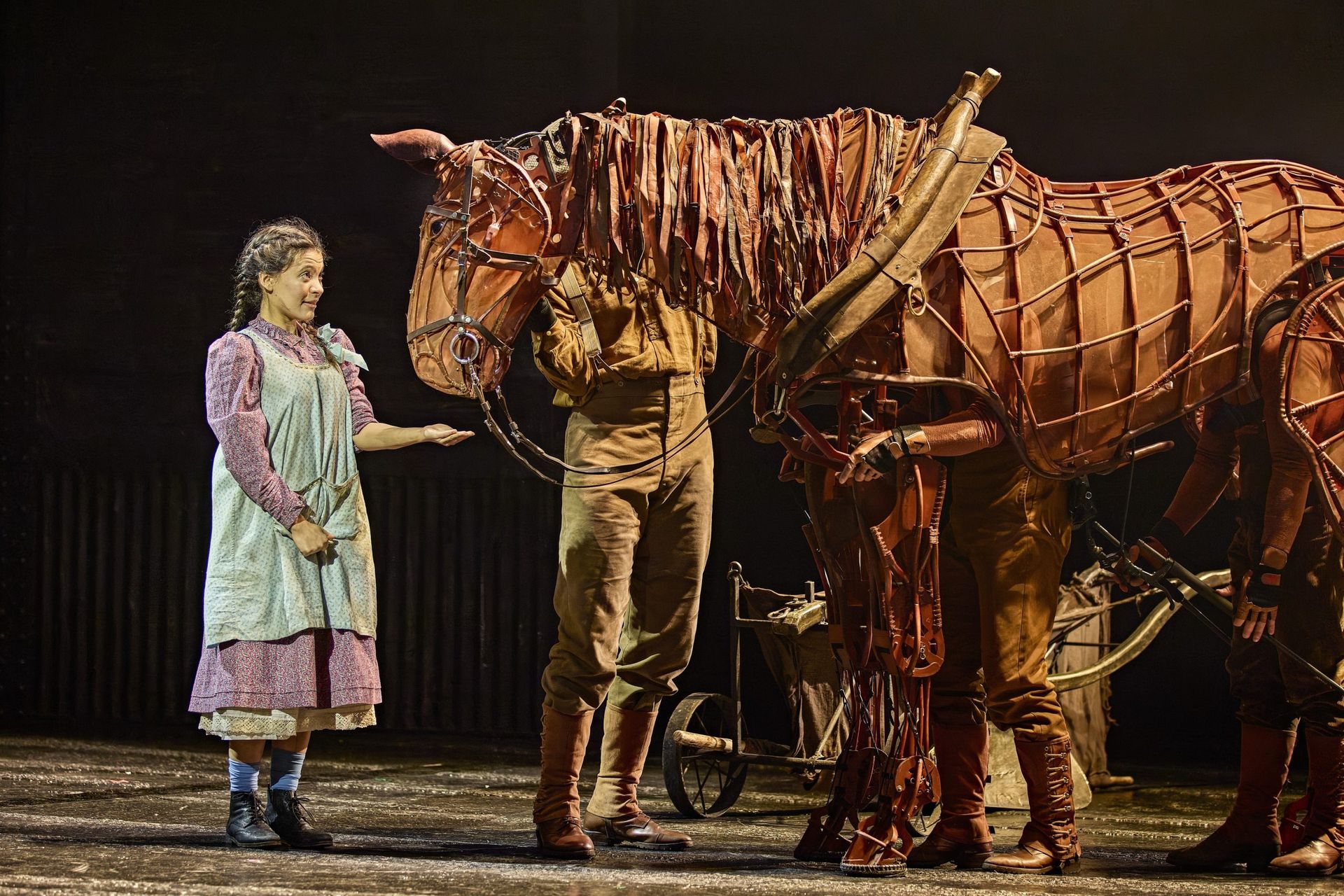
You know there are puppeteers there. You can see them. Yet within minutes your brain stops processing Joey as a puppet. He breathes, he startles, he gets stubborn, he plays, he becomes frightened, he is alive.
One detail I found myself constantly noticing was that the horses are never truly still. Even when standing quietly in the background, there is always a shift of weight, the flick of an ear, the rise and fall of breath. Those tiny details create an illusion so convincing that you stop admiring the technique and start caring deeply about the animal.
Which, of course, makes everything that follows so much more emotional.
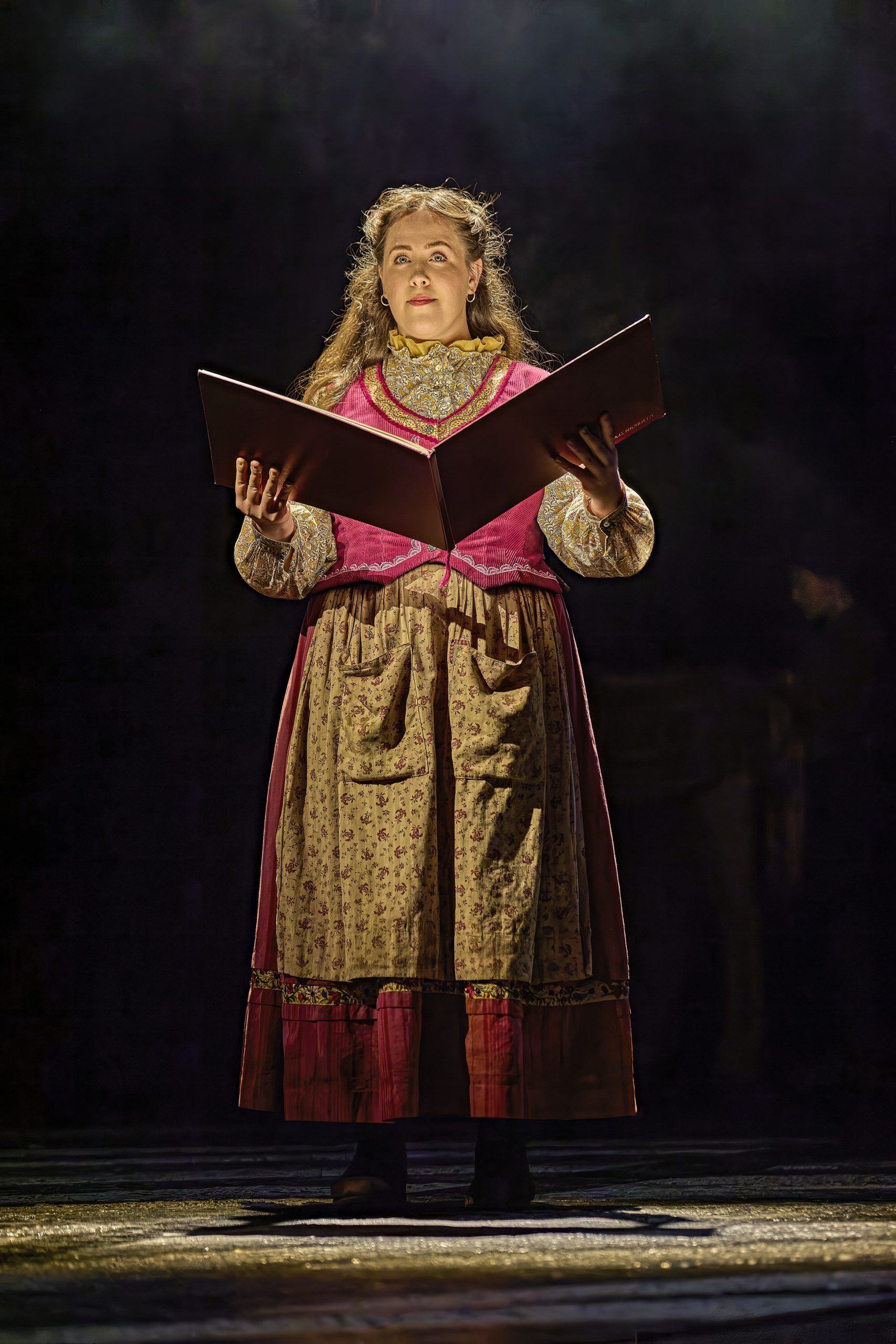
The story begins when Ted Narracott, played brilliantly by Stephen Beckett, makes what may be a very costly mistake. Determined to beat his brother Arthur (Nicholas Khan) at auction, Ted spends 39 guineas (about £6k today) on a horse his struggling family simply cannot afford. You want to grab him and tell him to sit down. Yet Beckett gives Ted enough vulnerability that you understand why he does it. Pride, insecurity, stubbornness, and a desperate need to prove himself all collide in a single disastrous decision.
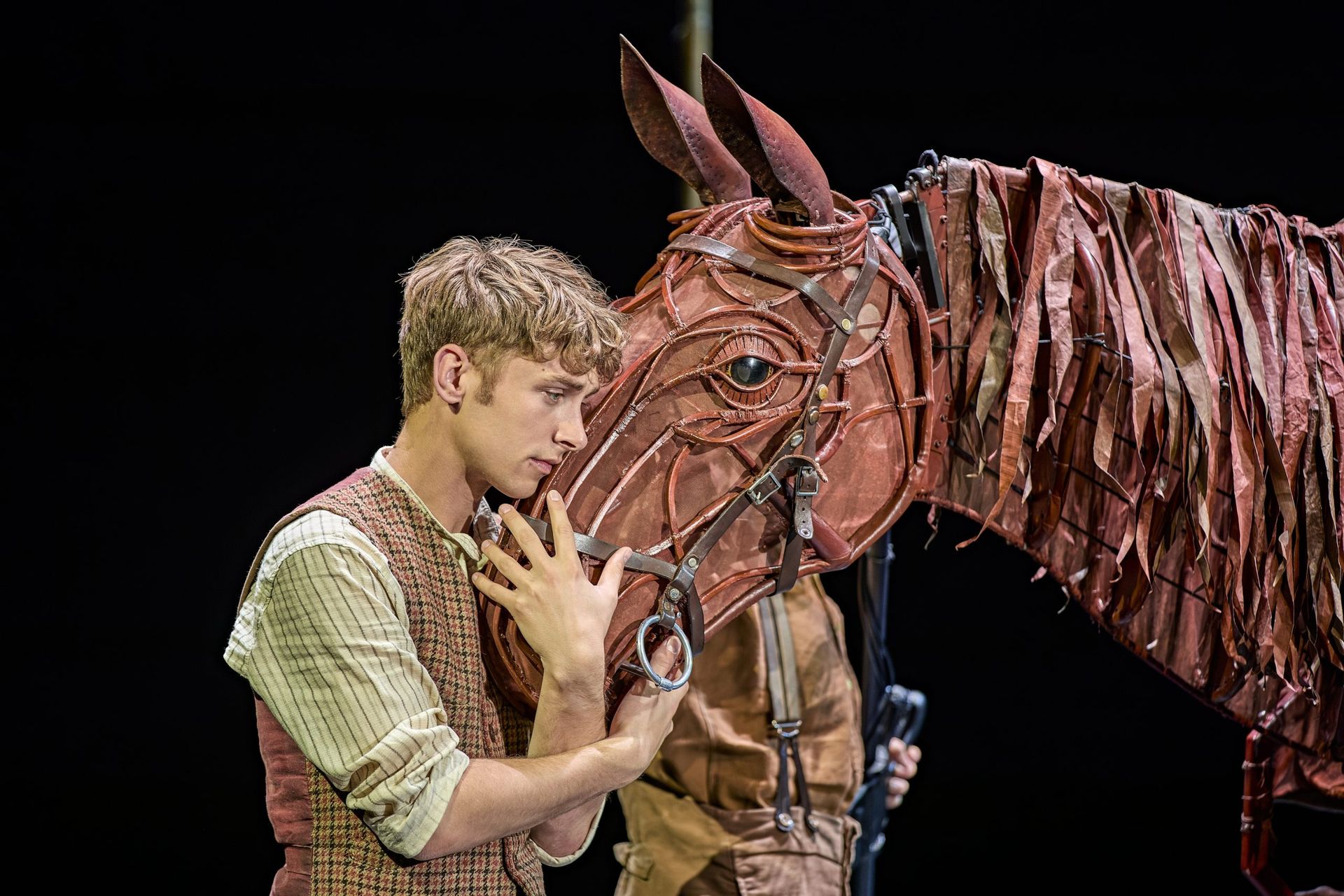
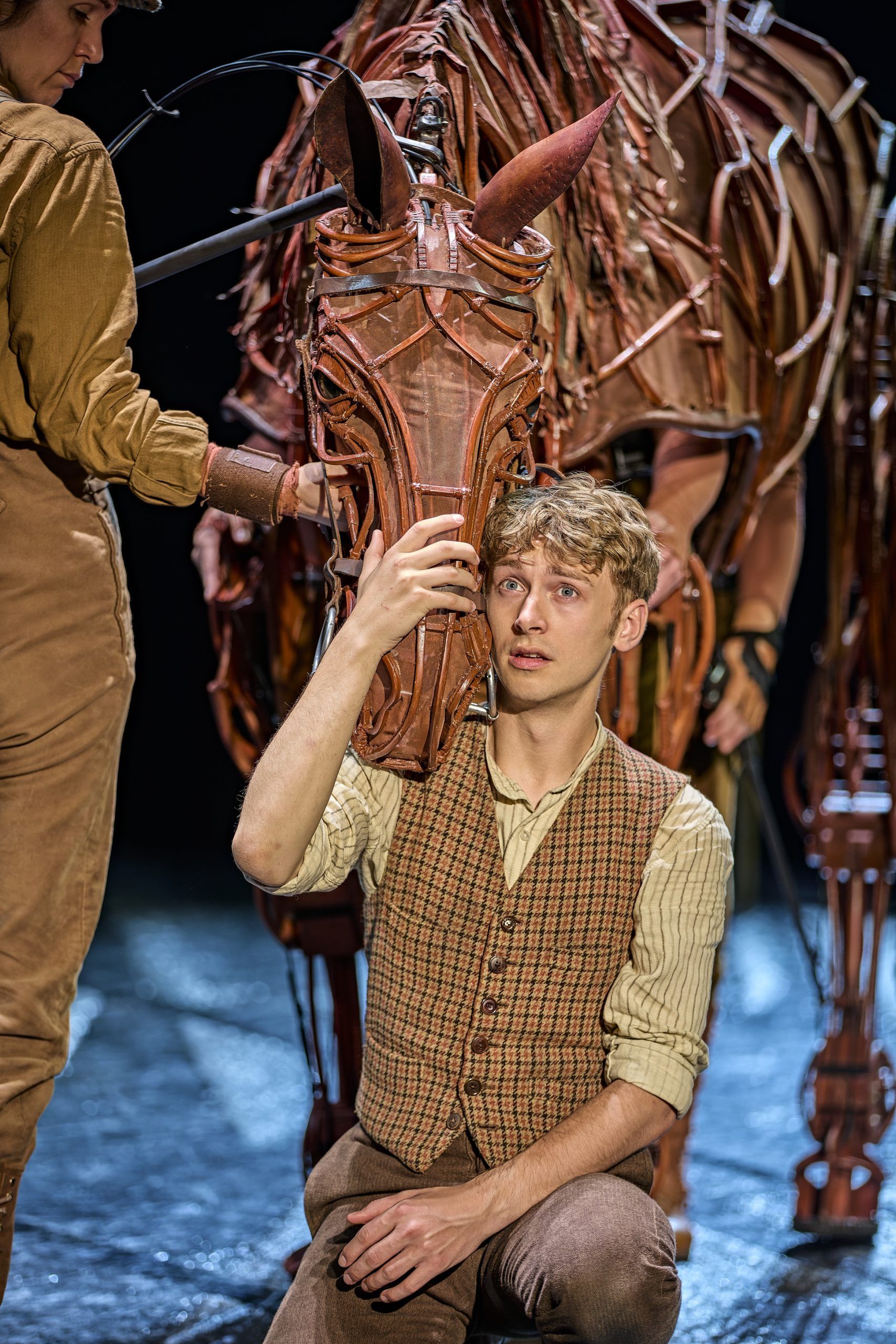
His wife Rose, played by Jo Castleton, is understandably horrified. But their son Albert, portrayed with tremendous warmth and emotional depth by Tom Sturgess, sees something completely different. Albert sees an animal in need, a new friend.
Sturgess is captivating throughout. His relationship with Joey feels utterly genuine, and nowhere is that more apparent than in the ploughing sequence. After Ted foolishly bets that Joey can plough a field, Albert sets about teaching him. Watching Joey struggle against the weight of the plough is extraordinary. The puppeteers slip and strain as the horse slips and strains. Every movement feels authentic. It is a key moment where you stop thinking about how the puppet works and simply become invested in whether Joey will succeed.
The farewell when Joey leaves for war is genuinely heartbreaking. By this point the bond between boy and horse has been established so effectively that their separation lands with enormous force.
Once war arrives, War Horse expands beyond rural Devon and into the nightmare of First World War France. Joey’s journey takes him through the lives of people on both sides of the conflict, and one of this story’s greatest strengths is its refusal to divide the world into heroes and villains.
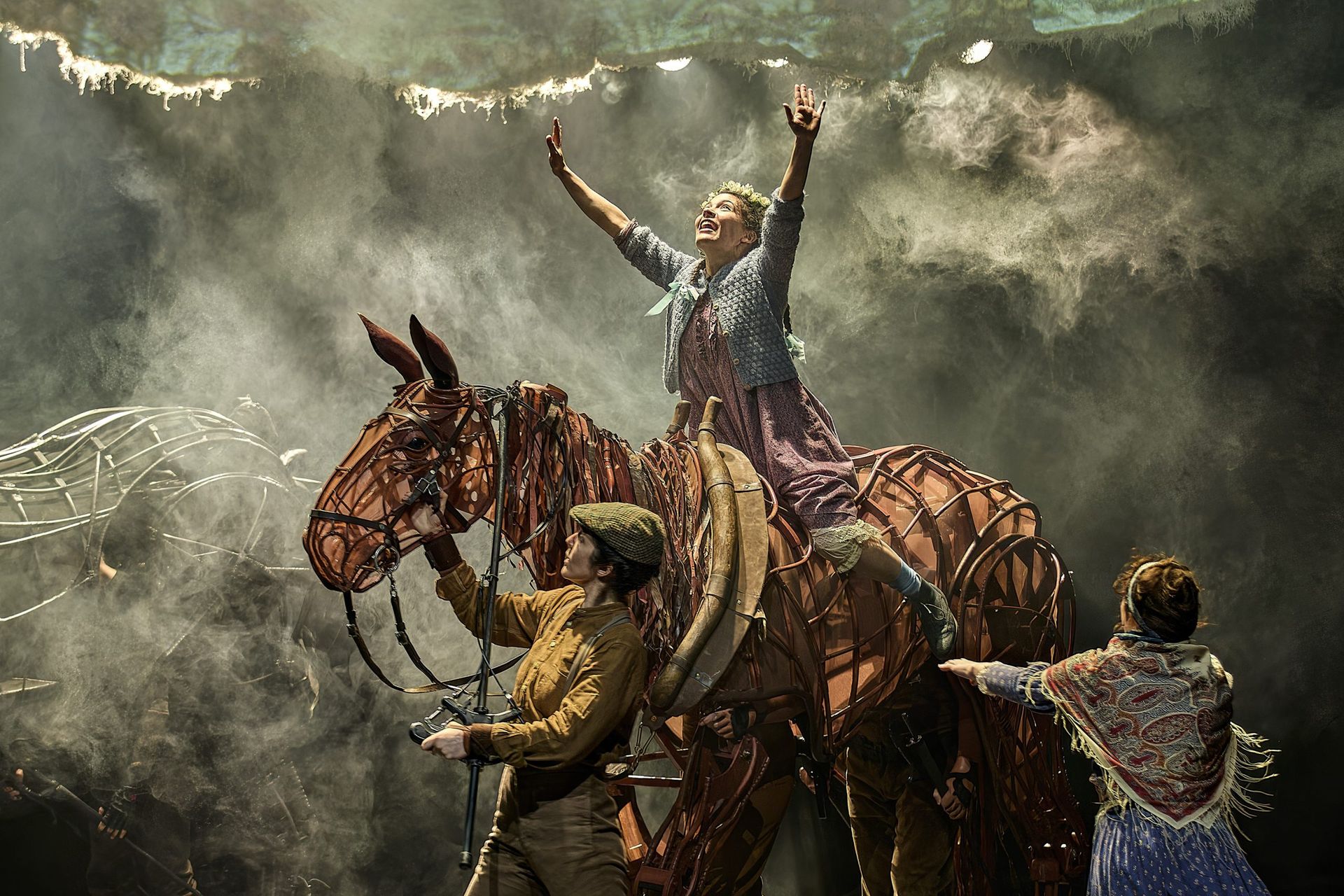
Manuel Klein’s performance is deeply moving as Friedrich, a German soldier whose kindness and compassion make him one of the most memorable characters in the entire story. Friedrich’s relationship with Emilie, a French farm girl, played by Anita Adam Gabay, provides some of the show’s sweetest moments. Emilie adores horses and immediately forms a connection with Joey and Topthorn (a black stallion). Together, Friedrich and Emilie bring warmth and humanity into a world increasingly consumed by violence. Their scenes remind us that ordinary people on every side of the conflict are caught up in forces beyond their control.
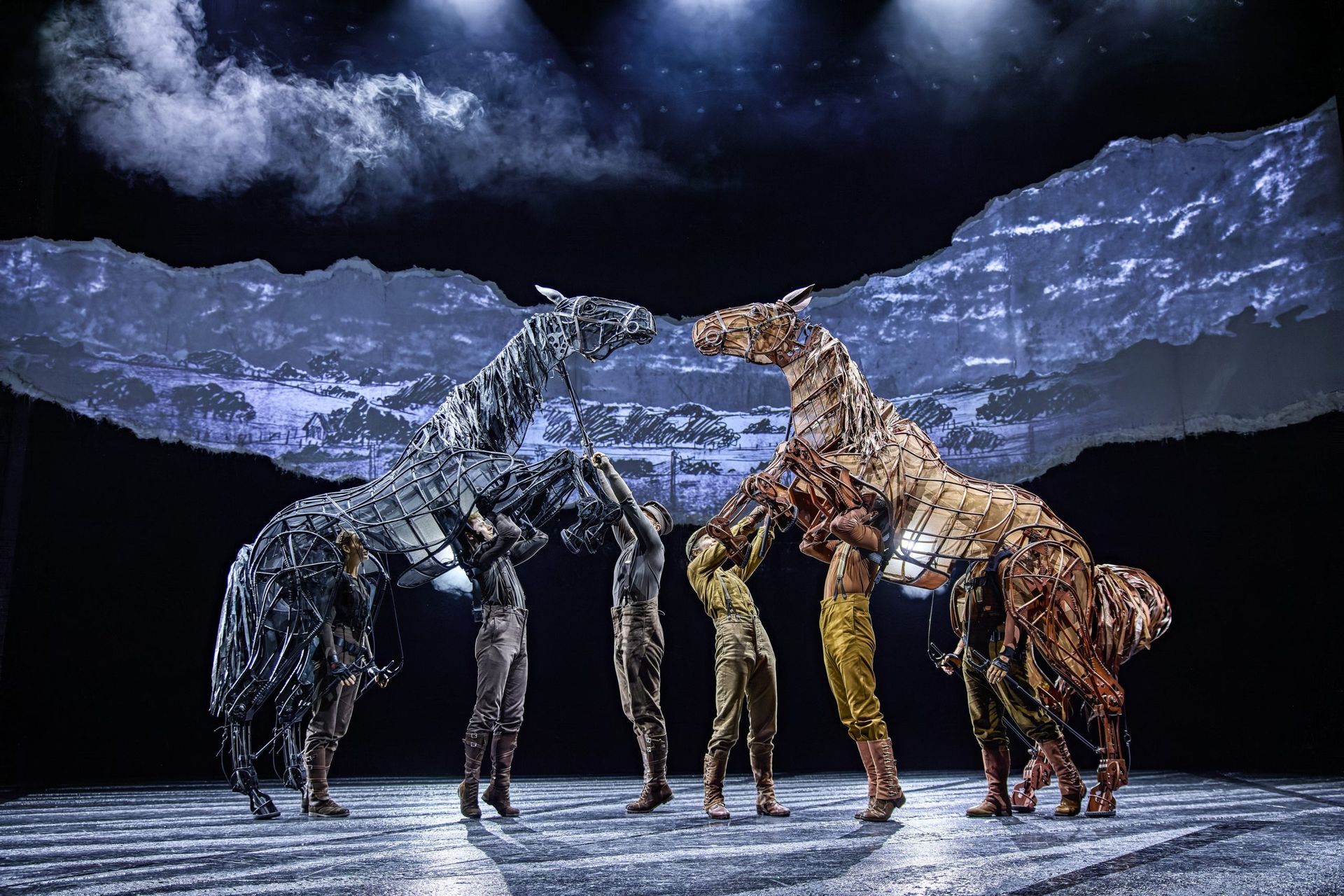
I also found myself unexpectedly attached to Topthorn. Like Joey, he is little more than cane, mesh, wire, and extraordinary puppetry. Yet somehow he becomes a magnificent, statuesque horse on that stage. One particularly powerful scene sees Joey and Topthorn left together to establish dominance. The tension, movement, and physical storytelling are astonishing. As the horses rear and circle one another, it feels entirely real. Sutton’s music really comes into its own in this scene as these two giant beasts battle it out, before settling and accepting each other.
There are many powerful images throughout the second half. The sight of wounded soldiers arriving while others head towards the front. The local women receiving news of their loved ones. Billy’s terror as he heads into battle. Corey Montague-Sholay brings real vulnerability to Albert’s cousin, and his fear feels painfully authentic.
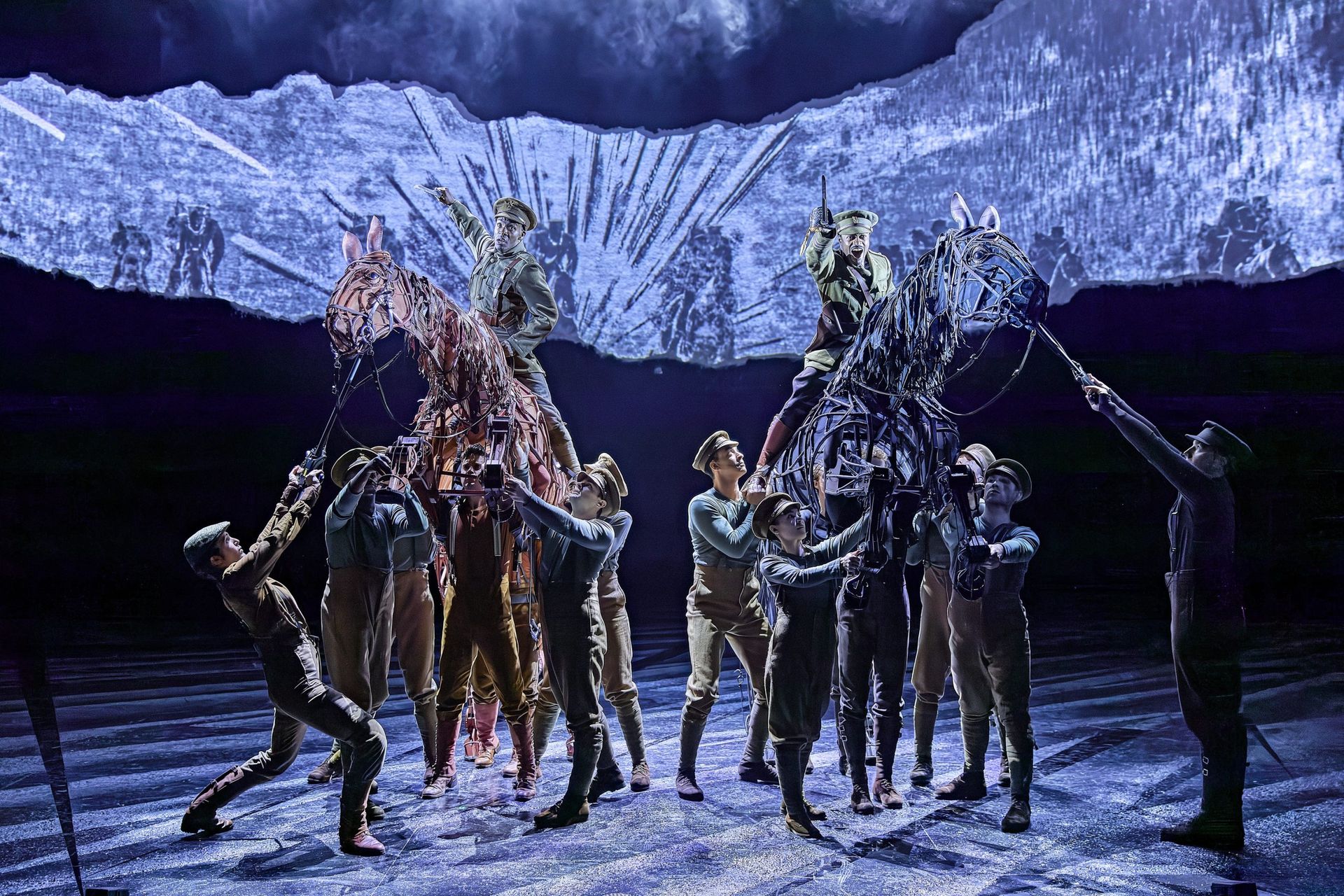
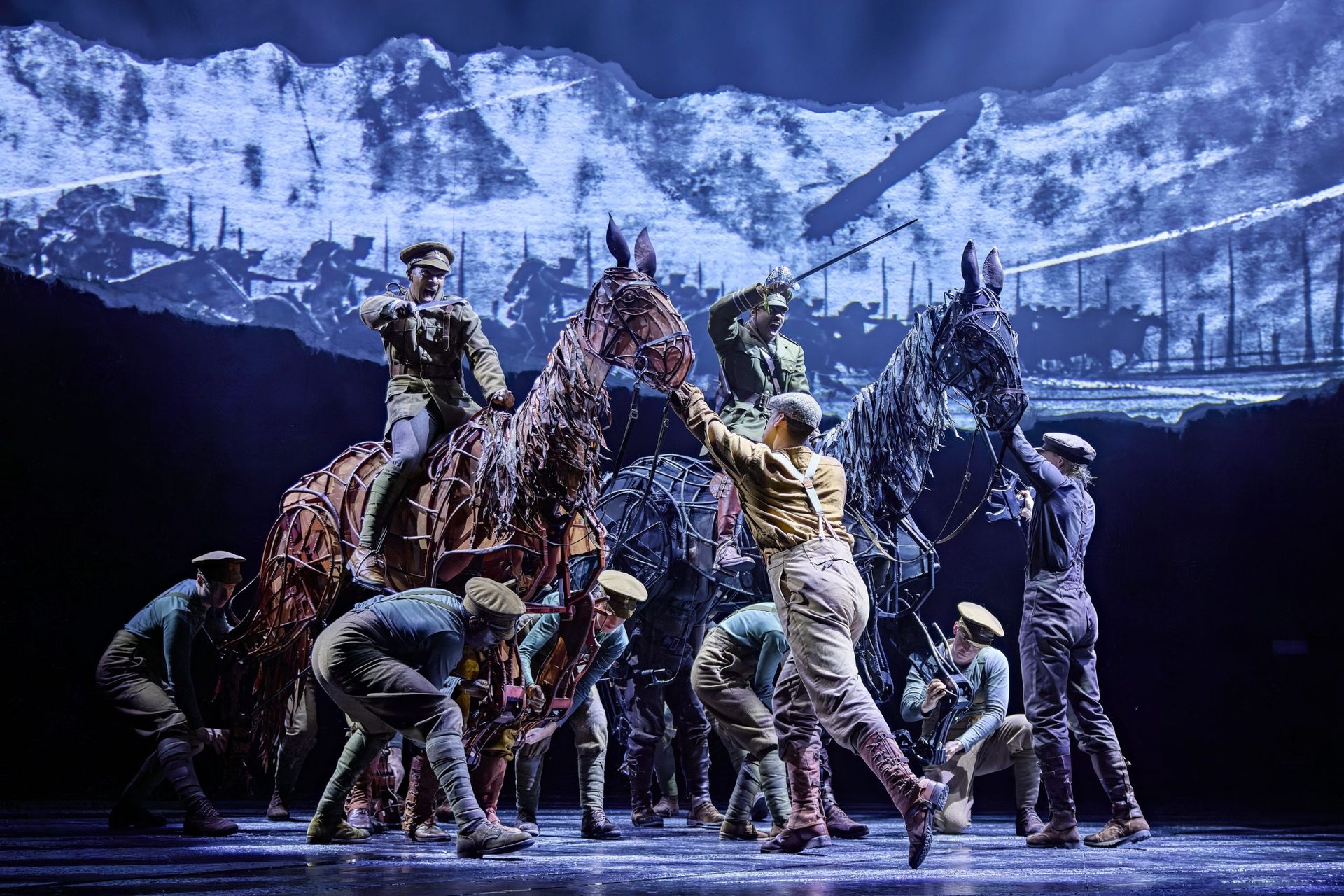
The battlefield scenes themselves are astonishing. Rob Casey’s lighting, Christopher Shutt’s sound design, and Rae Smith’s projection design combine to create moments of genuine horror. One massacre sequence is particularly devastating as horses and men are mown down around us. The production uses colour projection sparingly throughout, making the sudden appearance of vivid red all the more shocking. Blood and then poppies emerge above the fallen dead, reminding us that the poppy symbolises all the spilled blood.
After that scene, dead horses remain where they fell. Bodies still litter the landscape. Life continues, but the cost remains visible. It is a simple directorial choice, yet an incredibly moving one. The war does not politely tidy itself away when the next scene begins.
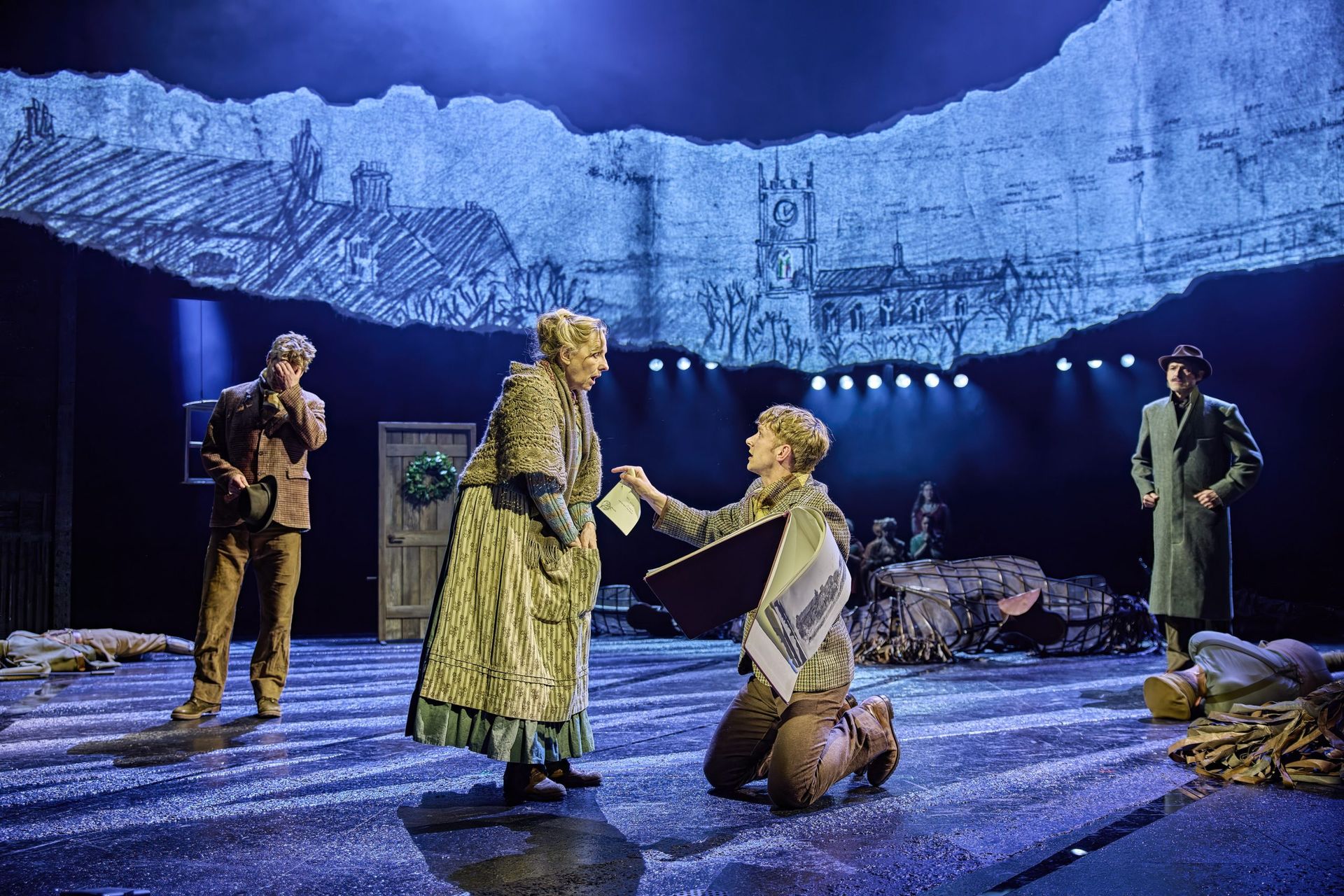
Throughout all of this, Sutton’s score continues to do much of the emotional heavy lifting. Alongside Tams’ songs and the beautiful ensemble singing, it creates a world that feels both epic and deeply personal.
My 11-year-old daughter came with me, and she absolutely loved it. She was transfixed throughout. The horses completely captivated her, and she was utterly absorbed in Joey’s story. She has never read Morpurgo’s novel, but by the time we left the theatre she wanted to.
One small critical note: the production handles different languages by having the British characters speak English with British accents, the Germans speak English with German accents, and the French speak English with French accents – yes, just like the 80s series Allo, Allo. It works well theatrically, but it did leave my daughter slightly confused. After the play she asked why everybody was speaking English but sometimes couldn’t understand each other. It’s a minor point, but perhaps a reminder that children process theatrical conventions differently from adults.
As I left the theatre, I found myself thinking about a statistic that featured in earlier productions of War Horse. At the end of the show, audiences were reminded that around eight million horses and donkeys died during the First World War.
Eight million.
That figure no longer appears on screen during the show, but I found myself thinking about it anyway. Because after spending nearly three hours with Joey, watching him breathe, struggle, trust, fear, and survive, those animals stop being statistics. They become living creatures.
There are shows that impress you with their technical brilliance, and there are shows that move you emotionally. War Horse does both. Nearly twenty years after it first galloped onto the Olivier stage, it remains one of the most impressive productions in modern theatre.
I went in knowing that I would enjoy War Horse. I came out understanding why so many people love it. Joey and Albert’s story is one of love and connection, something the world is in desperate need of at the current time.
War Horse is playing at the National Theatre’s Olivier Theatre until 30 July 2026.
Book tickets now at nationaltheatre.org.uk
Words by Nick Barr
Photography by Brinkhoff-Moegenburg