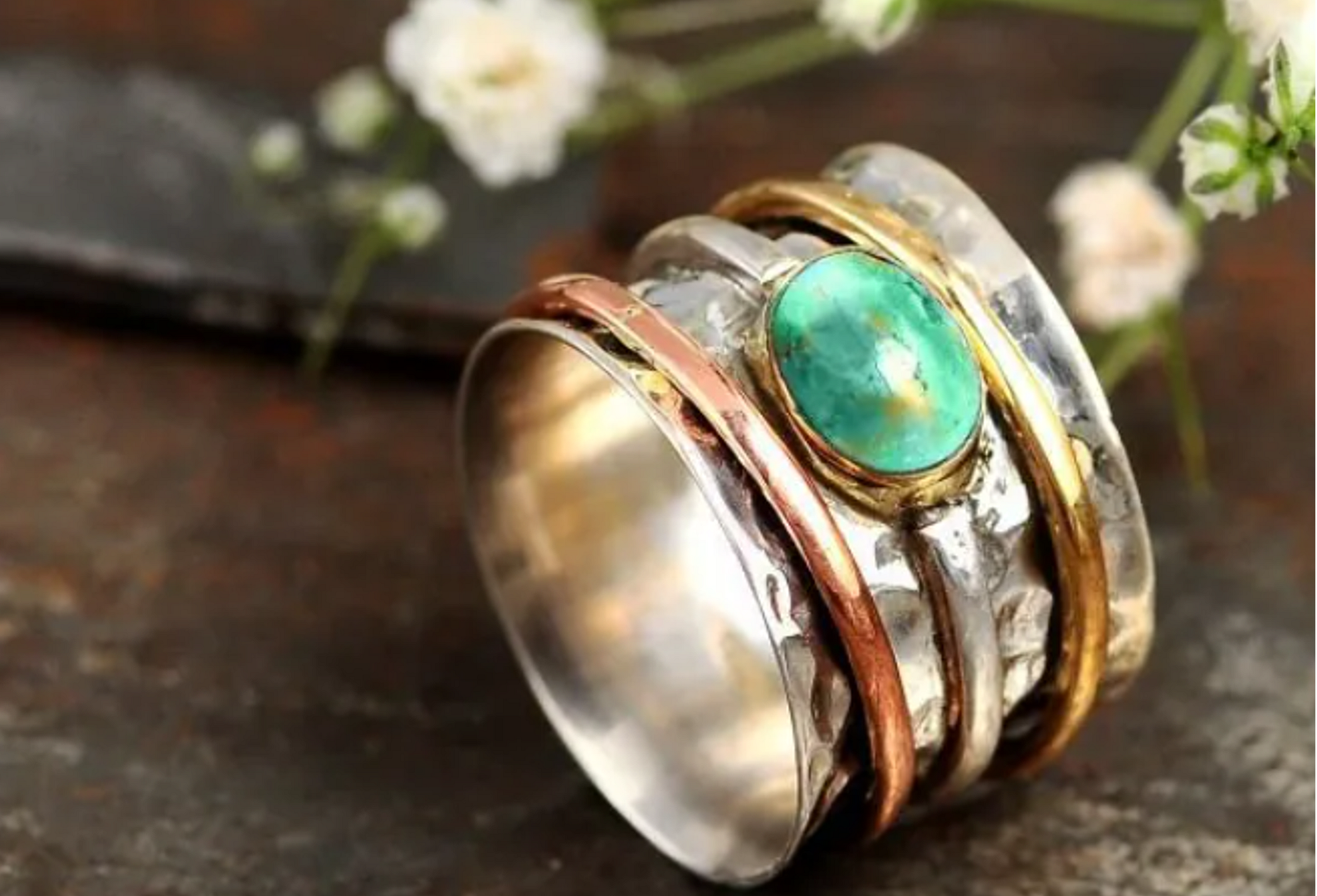
The global bridal jewellery landscape is undergoing a significant shift, driven largely by visual platforms like Instagram. Modern couples in the UK and beyond are increasingly moving away from the uniform perfection of traditional diamonds, seeking instead pieces that tell a personal story. This has catalysed a surge in demand for turquoise jewelry rings, where the stone’s vibrant hues and intricate matrix patterns offer a distinct, bohemian aesthetic.
For established jewellery brands and growing e-commerce retailers, this trend presents a complex manufacturing paradox. Turquoise is defined by its irregularity—its “natural fingerprint.” However, mass production relies on consistency. The challenge for large-scale brands is simple yet daunting: How do you scale SKU volume for a stone that naturally resists standardisation?
Defining “Natural Stone Uniqueness” for the Modern Consumer
To manufacture successfully, brands must first understand what the end consumer actually values. In the context of the current “alternative bridal” market, perfection is not the goal; character is.
1. The Aesthetic Traits of Authenticity
Consumers expect specific traits that signal a stone is genuine.
Primarily, this includes the matrix texture—the spiderweb-like veining or “iron wire” patterns that meander across the surface. These patterns act as nature’s art, ensuring no two rings are identical.
Secondly, the hue range is critical. Authentic turquoise spans a spectrum from sky blue to deep blue-green.
Finally, surface micro-variations and a waxy, porcelain-like lustre are indicators of quality that distinguish natural stone from plastic imitations.
2. The Risk of Homogenisation
There is a fine line between high-volume consistency and stone homogenisation. If a brand over-processes its inventory to achieve a uniform “robotic” blue, the product loses its soul. In the luxury and bridal sectors, homogenisation reduces brand value because it mimics the look of mass-produced costume jewellery.
3. Controlled Variability
The solution for mass manufacturing is “controlled variability.” This production philosophy accepts a defined range of differences within a single SKU. It involves setting tolerance parameters for colour and matrix density rather than demanding identical matches. By marketing this variability as a feature rather than a flaw, brands can maintain high output while satisfying the consumer’s desire for a unique piece.
Manufacturing Techniques for Scalable Turquoise Jewelry Wedding Rings
Producing durable, beautiful turquoise jewelry wedding rings at scale requires a fusion of traditional lapidary arts and modern engineering. Turquoise is a secondary mineral that can be porous and brittle (low hardness), making it challenging to set in daily-wear items like wedding bands without advanced preparation.
1. Smart Stone Cutting and Matching
Preserving the “fingerprint” starts at the cutting stage. Rather than aggressive colour-correction cuts, which waste material and sanitise the look, manufacturers should employ slab cutting. This method slices the raw material to reveal the most interesting cross-sections of the matrix.
For wedding ring sets, “pattern matching” is essential. By cutting adjacent stones from the same rough slab, manufacturers can create “left-right” pairs that share a genetic visual link without being clones. Furthermore, introducing controlled randomness per production batch allows for a diverse inventory that looks curated rather than stamped out.
2. Science Meets Art: Optimisation and Stabilisation
Because turquoise can be porous, it requires stabilisation to survive the daily wear of a wedding ring. Leading manufacturers utilise “Inorganic Filling Modification.” This involves treating the stone with a phosphate solution under controlled heat and pressure.
Unlike cheap plastic injection (which creates a fake feel), this method crystallises within the stone’s pores. It significantly increases the Mohs hardness (up to 4.5) and density, enhancing the stone’s lustre and resistance to oils and chemicals. Crucially, this process retains the natural chemical markers (Cu and Fe) and the original gemological characteristics. The result is a stone that looks untouched but possesses the durability required for a lifetime commitment.
3. Setting Techniques for High Output
The setting style is pivotal for protecting the stone and accommodating slight size variances.
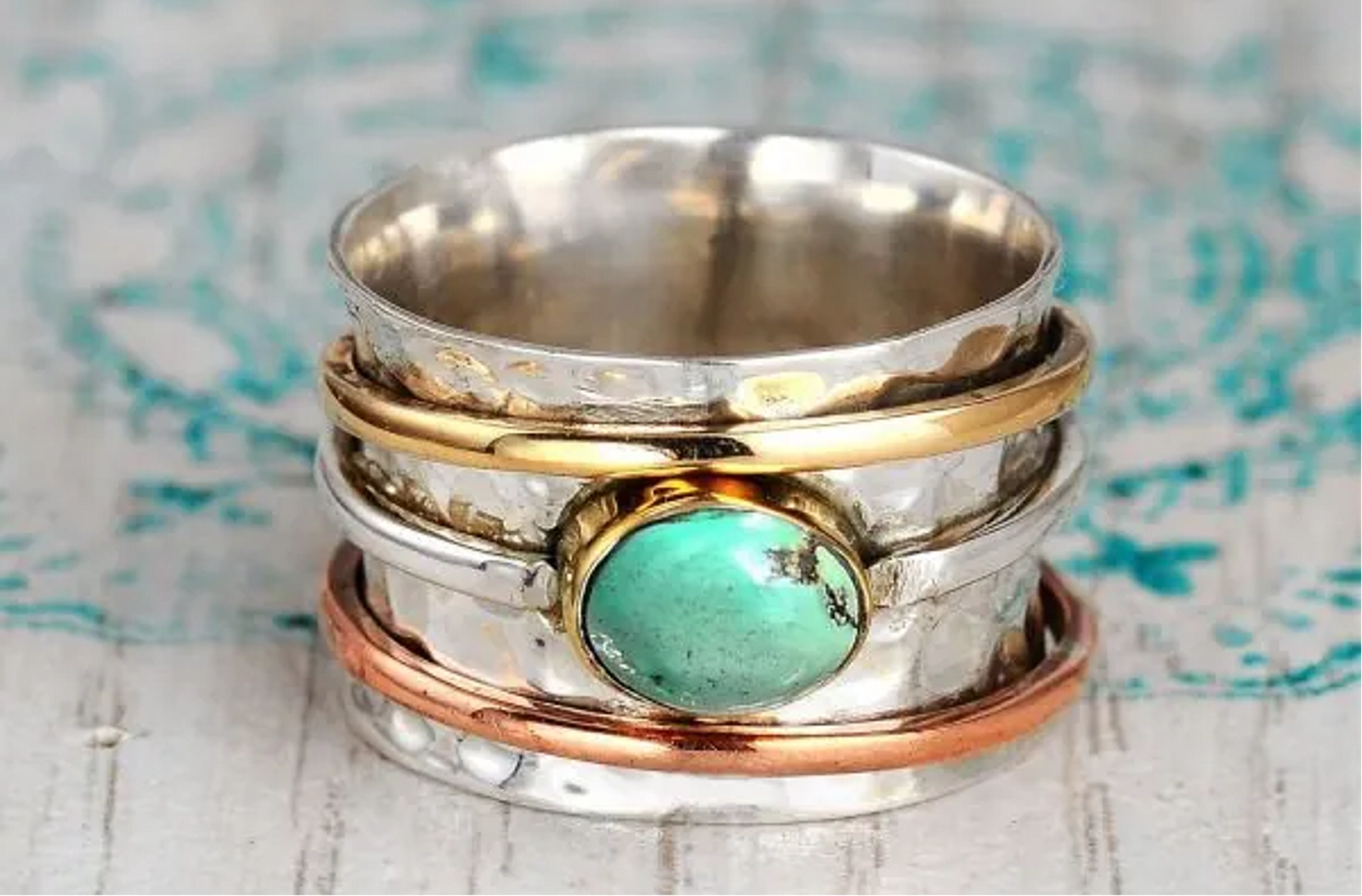
- Bezel Settings: Using fine silver bezel strips (often 26 gauge) is the gold standard for turquoise. The metal is wrapped tightly around the stone, offering superior protection for the edges. This is far safer than prong settings, which can exert pressure points that crack the stone.
- Channel and Tension Settings: These allow for sleek, modern designs but require precise calibration to ensure the stone is not crushed.
- Standardised Metal Frames: To stabilise production, brands can use standardised cast metal frames that allow for minor stone adjustments. This ensures the ring sizing remains accurate to UK standards, even if the stone’s dome height varies slightly.
4. Digital Drafting for Variation Control
Modern CAD (Computer-Aided Design) is indispensable. By scanning a sample range of stones, engineers can determine the average tolerance required for metal moulds. Instead of creating overly tight mould tolerances that force lapidaries to grind stones down to a dull uniformity, smart moulds are designed with slight “give” or under-bevels to accept natural size deviations. This dramatically lowers breakage rates during setting.
Why Star Harvest is Your Strategic Partner for Turquoise Jewelry
Navigating the complexities of turquoise jewelry turquoise rings production requires a manufacturing partner who understands both the geology of the stone and the demands of the Western market.
Star Harvest (starharvestcn.com) distinguishes itself as a premier jewelry manufacturer with over 20 years of OEM experience. Unlike generic factories that treat every stone like glass, Star Harvest specialises in handling organic gems.
We understand the specific requirements for the UK market—from strict assay standards to the aesthetic preference for natural matrix patterns. Our production lines are equipped to handle “controlled variability,” ensuring that your high-volume orders maintain the boutique feel your customers expect. Whether it is sourcing dense, authentic rough material, executing precise inorganic stabilisation for durability, or utilising advanced CAD for perfect bezel fits, Star Harvest supports your brand in delivering distinct value.
Our expertise allows us to scale production without sacrificing the intricate details, such as the use of 14K gold wire wrapping or oxidised patina finishes that highlight the stone’s depth.
Conclusion
The market for alternative bridal jewellery is not a passing fad; it is a permanent expansion of consumer taste. For medium to large-scale jewellery brands, the opportunity lies in mastering the production of turquoise jewelry rings that feel personal yet are produced efficiently.
Success in this niche does not come from erasing nature’s imperfections, but from engineering processes that accommodate them. By leveraging smart cutting techniques, scientific stabilisation methods, and flexible setting designs, brands can offer the durability of a wedding ring with the wild beauty of natural turquoise. Partnering with an experienced manufacturer like Star Harvest ensures that you can scale this vision confidently, delivering a product where quality and uniqueness coexist seamlessly.