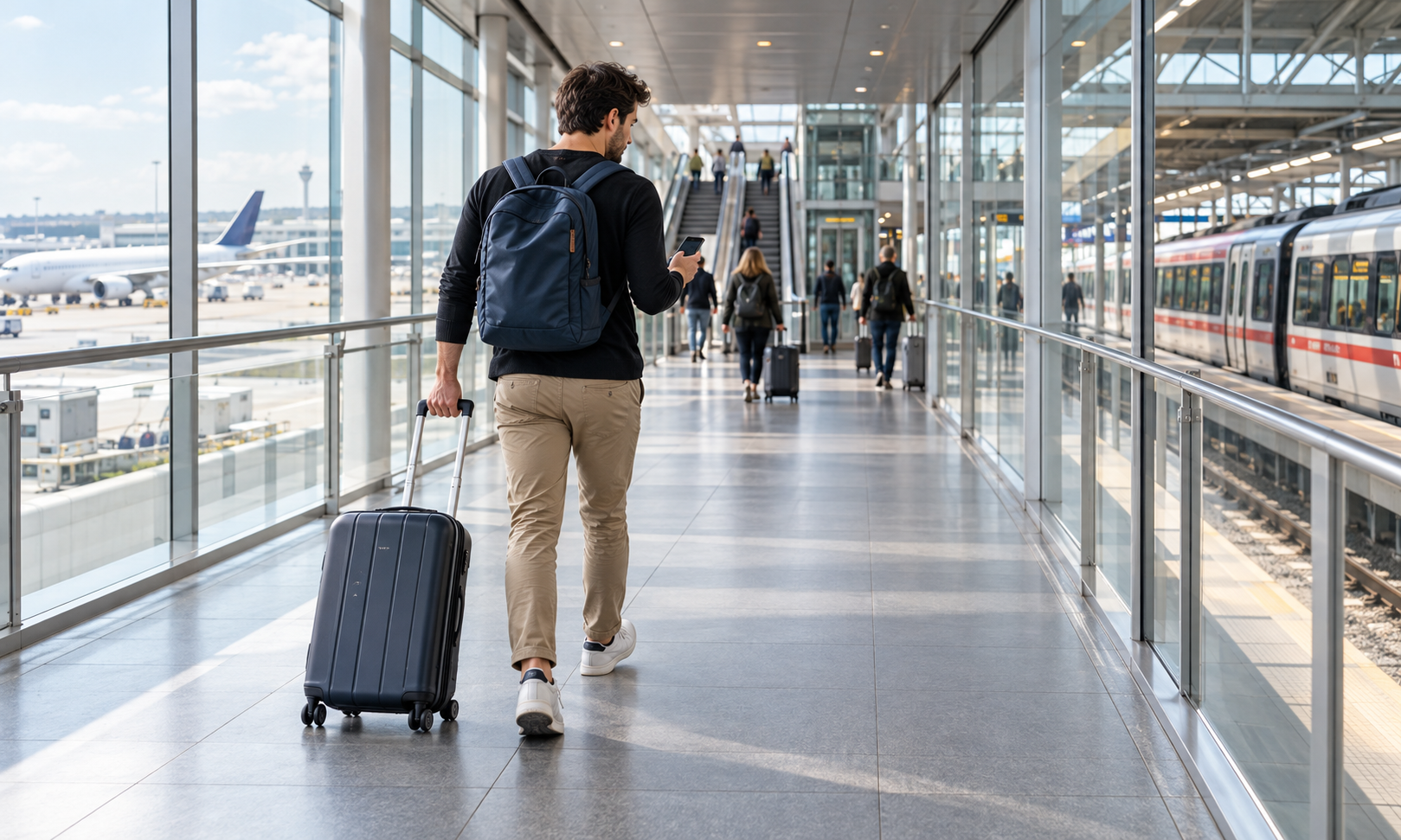
Landing at an airport is only part of the journey when your destination is another train ride away. You may need to find an unfamiliar station, buy a ticket, change platforms, and reach your accommodation after a long flight. A manageable connection depends on knowing the route, allowing enough time, and keeping essential items accessible. These preparations can reduce the decisions you have to make while moving through busy terminals and stations.
Prepare Your Bags for Several Stages of Travel
An airport-to-train journey involves repeated stops: arrival procedures, ticket machines, platform entrances, and boarding. Packing around those moments helps you avoid opening your main compartment whenever you need something.
A travel backpack can keep your documents, charging cable, and an extra layer organized for the journey. Give frequently used items a consistent place, with valuables in a secure compartment. Before leaving home, check that you can retrieve your ticket or phone without setting the bag down and unpacking clothes.
For routes with long terminal corridors and paved station approaches, a rolling backpack offers another way to move your belongings. You can roll it along suitable surfaces, then lift it or use the straps briefly where stairs interrupt the route. Keep straps secured while rolling so they do not trail near the wheels, and avoid packing more than you can comfortably lift onto a train.
Keep the number of separate items manageable. A loose jacket, shopping bag, and drink can make a simple platform change more awkward than expected.
Check Where the Train Actually Departs
An airport rail connection may leave from inside the terminal, a separate airport station, or a city-center station reached by another service. Establish which arrangement applies before choosing your onward train.
Follow the route from your arrival terminal to the correct station. Look for any shuttle, walkway, or terminal change along the way. Save the station’s full name, since similarly named stops can appear in booking results.
If you must travel into the city first, check where that service arrives and whether your next train leaves from the same station. A connection between two city stations needs its own travel allowance.
Save the route and booking details for offline access. Screenshots of directions can help, but also check whether your ticket requires an app or another method of presentation.
Build the Connection Around Arrival Procedures
Your plane’s scheduled landing time is not the time you will reach the railway platform. Leaving the aircraft, completing arrival procedures, collecting checked bags, and walking to the station all take additional time.
Consider those stages before booking a fixed departure. A connection that works with cabin bags and a nearby station may be less practical when you need baggage collection and a shuttle ride.
Read the ticket conditions before buying. Check whether the booking is tied to one departure and what options exist if your flight is delayed. A cheaper ticket may offer less flexibility, so weigh the saving against the consequences of missing that train.
For an important onward journey, identify a later service in advance. You do not need to book every alternative, but knowing your next option can make a delay easier to handle.
Find the Platform Before Taking a Break
Once you reach the station, confirm the departure time, destination, and platform using the current information displayed there. Booking details provide a starting point, but the station information should guide your next move.
Find the route to the platform before buying food or browsing shops. If you need an elevator, locate it early rather than assuming it is beside the nearest stairs.
Then decide whether you have time for a break. Stay where you can monitor departure information, and keep your belongings together. Shopping bags and loose purchases add to what you must manage when boarding starts.
If the platform has not been announced, wait near an information display instead of choosing a platform based on a previous journey or an assumption.
Board with a Storage Plan
Boarding is easier when you know your carriage and have fewer items to rearrange at the door. Check any carriage or seat information on your booking while you are still on the platform.
Keep the aisle clear while placing your bag in an appropriate storage area. Avoid leaving it in doorways, accessible spaces, or seats needed by other passengers. If you cannot safely lift it into an overhead rack, look for another permitted location or ask staff for guidance.
Before storing the bag, take out what you will need during the ride. Keep your ticket accessible for inspection and note where your belongings are placed. Set a reminder before your stop so you have time to gather everything.
Plan the Journey Beyond the Station
Check the final route to your accommodation, including reception hours if you expect to arrive late. A short-looking walk may be less appealing with bags, stairs, or bad weather. Having the address and one practical transport option ready lets you finish the journey with fewer last-minute decisions.