
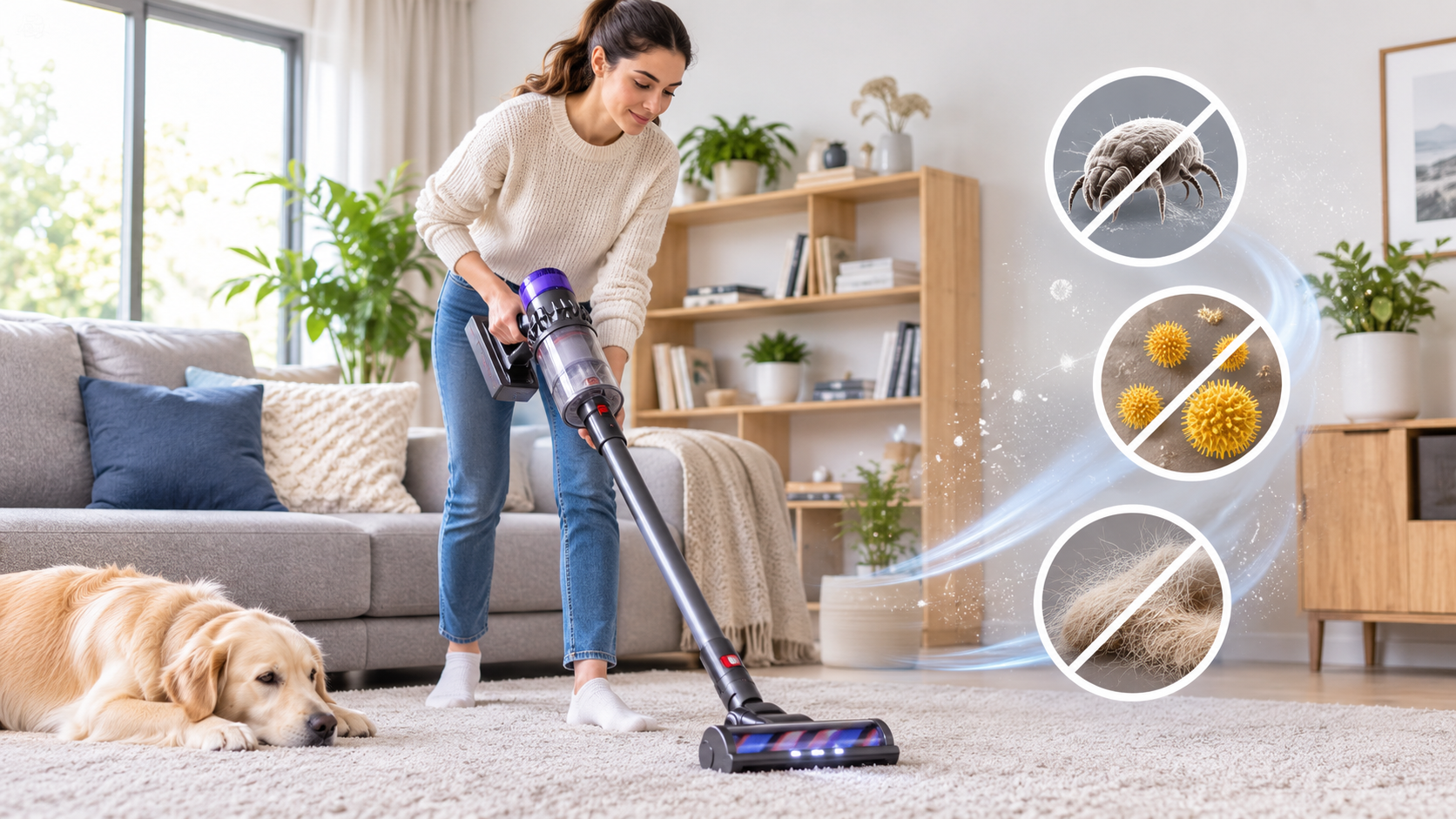
Household dust is more than a cosmetic nuisance. It’s typically a mix of pollen, pet dander, dust-mite matter, mold particles, and other fine debris that settles on just about every surface in a home. Cutting down on this buildup isn’t something you accomplish in a single cleaning session—it takes a consistent routine that blends source control, smart cleaning techniques, ventilation, and humidity management. The right equipment matters too; a vacuum with efficient filtration, for example, can capture fine particles from carpets and upholstery instead of just scattering them back into the air. That said, it’s worth setting realistic expectations from the start: cleaning can meaningfully reduce exposure to dust and allergens, but it won’t eliminate every airborne particle or guarantee relief from allergy symptoms.
Understanding Where Household Dust Comes From
Household dust is a composite of many things: shed skin cells, textile fibers, outdoor soil tracked in on shoes, pollen, pet dander, dust-mite matter, and mold spores, to name a few. It piles up on carpets, rugs, upholstery, bedding, curtains, shelves, baseboards, and other spots that are easy to miss during routine cleaning.
Settled dust doesn’t necessarily stay settled. Walking across a carpet, shaking out a blanket, or wiping a surface with a dry cloth can send particles right back into the air, where they linger for a while before resettling elsewhere. This matters because visible dust is only part of the story—many allergens are microscopic and won’t show up in a casual glance around the room. People with allergies or asthma may be especially sensitive to these fluctuations, though how much varies from person to person.
Create a Source-Controlled Cleaning Routine
Prioritize High-Accumulation Areas
Rather than giving every surface equal attention, it helps to figure out where dust builds up fastest. These spots usually include floors and rugs, upholstered furniture, bedding and mattresses, curtains and blinds, baseboards and shelving, and anywhere pets like to rest. Focusing your efforts here—what’s often called source control—tends to pay off more in the long run than relying solely on devices that filter air after dust has already spread throughout a room.
Use Methods That Capture Rather Than Redistribute Dust
Damp microfiber cloths or damp mops generally beat dry dusting tools, which tend to stir particles into the air rather than actually remove them. A practical routine looks something like this: declutter surfaces first, dust from higher areas down to lower ones, clean floors last, and wash or swap out reusable cleaning materials regularly so they keep capturing dust instead of just moving it around.
Key takeaway: Effective cleaning should capture dust, not simply shift it to another surface or send it back into the air.
Use Floor-Care Methods Appropriate to Each Surface
Cleaning methods should fit both the flooring material and the manufacturer’s care instructions. Hard floors generally do well with damp mopping, while carpets and area rugs often need more frequent attention since they trap dust deep within their fibers. Upholstered furniture and delicate textiles may call for gentler, more specialized approaches.
A home with mostly hard flooring might only need light daily upkeep and one thorough clean per week, while a home with several rugs—especially one with pets or kids running around—may need more frequent passes to keep dust from piling up. A HEPA-equipped cleaner can help cut down on the fine dust that escapes back into the room during this process, though it won’t catch every airborne contaminant. Whatever equipment you use, keeping it maintained according to the manufacturer’s instructions—emptying containers, swapping filters—matters, since neglected equipment can lose suction or end up releasing trapped dust back into the home.
Manage Bedding, Upholstery, and Pet-Related Dust
Bedrooms deserve extra attention, since mattresses, pillows, blankets, and other fabric surfaces tend to collect a lot of dust-mite matter. Washing bedding regularly in hot water and drying it fully helps keep this buildup in check. Allergen-resistant mattress and pillow encasements are an optional step some people with dust-mite sensitivity find useful, though results vary from person to person.
Pet-related particles add another layer to think about: washing pet bedding on a regular basis, brushing pets outdoors when you can, and keeping pets off beds or upholstered furniture when needed all help. It’s also worth paying extra attention to the spots where pets spend most of their time. No single step works for everyone, and anyone dealing with persistent symptoms should talk to a qualified healthcare professional rather than relying on cleaning adjustments alone.
Control Humidity and Improve Ventilation
Humidity levels affect both dust mites and mold growth. Many health organizations recommend keeping indoor relative humidity in a moderate range—often cited as roughly 30–50%—particularly for households managing asthma or dust-mite concerns. Practical ventilation steps include running kitchen and bathroom exhaust fans, letting in outdoor air when the weather cooperates, and addressing leaks or lingering dampness as soon as they crop up.
It helps to understand the difference between reducing pollutant sources and filtering particles already floating in the air: humidity management and ventilation tackle the former, while air cleaners and filtration handle the latter. Both play a role, but neither one can substitute for the other.
Avoid Common Cleaning Mistakes
A few habits can quietly undo an otherwise solid routine:
- Using a dry cloth on heavily dusty surfaces
- Ignoring upholstery, curtains, or baseboards
- Cleaning only the areas you can see while skipping hidden spots
- Overlooking dampness or leaks that encourage mold
- Failing to maintain filters and collection systems
- Cleaning aggressively while a sensitive person is still in the room
When it’s practical, try to clean while vulnerable household members are elsewhere, especially during tasks that stir up settled dust. Following product labels and equipment instructions matters, and it’s generally best to steer clear of harsh chemicals or heavily fragranced products as a default choice, since some people react to fumes or volatile compounds.
Build a Sustainable Weekly and Monthly Plan
Weekly: clean carpets, rugs, and high-use floors; dust frequently touched surfaces with a damp cloth; wash bedding and pet fabrics; clean upholstery that sees regular use; check for dampness or mold.
Monthly or occasional: clean vents, blinds, baseboards, and hard-to-reach corners; maintain filters according to manufacturer guidance; reassess clutter; adjust the routine after seasonal changes, renovations, or a new pet joining the household.
A small apartment might fold several of these tasks into a single weekend session, while a larger family home may need to spread them across multiple days. Consistency matters more than perfection.
A Practical Path to Cleaner Indoor Air
Reducing household dust works best as a combination of source control, targeted cleaning, bedding care, ventilation, and humidity management—tailored to your flooring, pets, household size, and local conditions. Start with three changes: dust with a damp cloth, clean high-use textile surfaces regularly, and address any ventilation or moisture problems.
Pick one high-dust area in your home, apply these methods, and build a repeatable routine from there. Cleaning can meaningfully reduce exposure to dust and allergens, but persistent respiratory symptoms warrant guidance from a qualified healthcare professional.