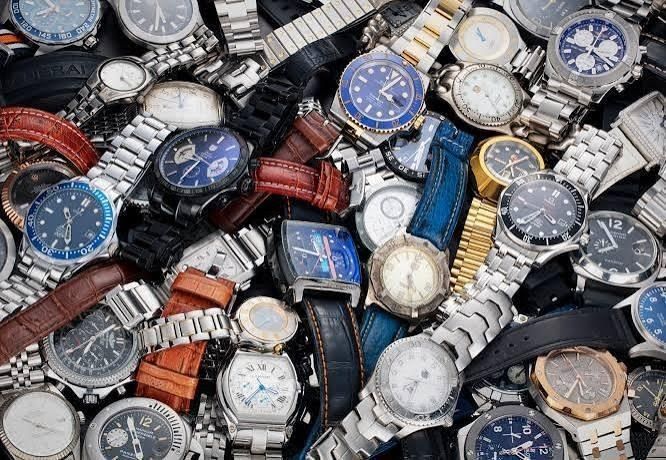
Luxury watches have long represented precision engineering, exceptional craftsmanship, and timeless design. Brands such as Rolex, Patek Philippe, Audemars Piguet, Omega, and Cartier are recognized worldwide for their distinctive designs and mechanical expertise.
However, the popularity of luxury watches has also created a substantial market for counterfeit timepieces.
Today, identifying a fake watch can be considerably more challenging than it was in the past. While inexpensive replicas often contain obvious manufacturing flaws, higher-grade reproductions, commonly called super clone watches, may imitate many visual and mechanical characteristics of genuine luxury watches.
Some reproductions are designed to resemble authentic models closely enough that identifying differences requires specialized knowledge and equipment.
So, how can you tell whether a luxury watch is genuine or fake?
In this complete beginner’s guide, we explain how to spot a fake watch by examining its dial, movement, case materials, serial numbers, weight, bracelet, finishing, and documentation.
Whether you are purchasing your first pre-owned luxury watch or simply want to understand the differences between authentic watches and replicas, these practical authentication techniques will help you recognize potential warning signs.
What Is a Fake Watch?
A fake watch is a timepiece designed to imitate another manufacturer’s product, typically using its trademarks, branding, or distinctive design without authorization.
Fake watches are commonly referred to as counterfeit watches or replicas.
However, not all counterfeit watches are manufactured to the same standard.
The market contains everything from inexpensive quartz-powered reproductions to sophisticated mechanical replicas.
Understanding Different Types of Fake Watches
Counterfeit watches are often discussed in three broad categories.
1. Budget Replica Watches
These are inexpensive reproductions that prioritize visual resemblance over accurate construction.
Common characteristics include:
- Low-cost quartz or automatic movements.
- Basic stainless steel or plated metal cases.
- Incorrect dial fonts and markers.
- Poor bracelet finishing.
- Inaccurate dimensions.
- Simplified complications.
2. High-Grade Replica Watches
These watches generally feature improved construction and more convincing external details.
They may incorporate sapphire crystals, automatic movements, and more carefully manufactured cases.
Nevertheless, differences in finishing, movement architecture, and component quality may remain.
3. Superclone Watches
Superclone is a marketing term used for higher-grade reproductions designed to imitate luxury watches more closely.
Depending on the model, these watches may attempt to reproduce:
- Original case dimensions.
- Movement layout.
- Dial textures.
- Bracelet construction.
- Bezel operation.
- Mechanical complications.
- Caseback appearance.
However, the term superclone is not an independent manufacturing certification.
Even a visually convincing superclone remains a replica rather than an authentic luxury timepiece.
1. Examine the Watch Dial Carefully
One of the first steps in identifying a fake watch is examining its dial.
The dial contains several small details that can reveal inconsistencies in manufacturing.
Luxury watch manufacturers generally apply strict quality-control standards to dial production.
Check the Brand Logo
Start by examining the logo under good lighting.
Look for:
- Incorrect proportions.
- Uneven printing.
- Poor alignment.
- Irregular spacing.
- Distorted lettering.
- Inconsistent finishing.
For example, an authentic Rolex dial should feature branding appropriate to its specific model and production period.
A counterfeit watch may use a slightly different font or incorrectly position its printed text.
However, many higher-grade replicas reproduce dial printing convincingly, so logo appearance alone cannot confirm authenticity.
Inspect the Hour Markers
Look closely at the applied hour markers.
Check whether they are:
- Correctly aligned.
- Consistently spaced.
- Securely mounted.
- Properly finished.
- Consistent with the reference model.
Crooked markers or visible adhesive can indicate poor manufacturing quality.
Nevertheless, authentic vintage watches may display age-related changes, and some genuine models have distinctive marker designs.
Always compare the watch against the correct reference and production period.
Examine the Date Window
The date display is another useful inspection point.
Potential warning signs include:
- Incorrect numeral fonts.
- Poor date alignment.
- Unusual magnification.
- Uneven printing.
- Incorrect date-window positioning.
Some Rolex models feature a Cyclops magnification lens over the date.
Its optical characteristics can help during inspection, but magnification alone is not a reliable authentication test.
2. Check the Movement: The Heart of the Watch
The movement is one of the most important components in luxury-watch authentication.
A watch movement consists of the mechanical or electronic system responsible for measuring and displaying time.
Automatic vs Quartz Movements
Many traditional luxury sports watches use mechanical automatic movements.
Other authentic luxury models legitimately use quartz movements.
Therefore, discovering a quartz movement does not automatically mean a watch is fake.
The movement must match the specifications of the particular reference.
For example, a mechanical Rolex Submariner should not contain an inexpensive quartz movement.
The Sweeping Seconds Hand Test
A common misconception is that genuine luxury watches always have a perfectly smooth seconds hand.
In reality, mechanical movements operate at different frequencies.
A movement operating at 28,800 vibrations per hour typically produces eight beats per second.
This gives the seconds hand a relatively smooth appearance, although small individual steps remain visible.
Some genuine mechanical watches operate at different frequencies.
Similarly, certain quartz watches feature multiple seconds-hand steps per second.
A smooth seconds hand is not proof of authenticity.
Higher-grade replica movements can produce a similar sweeping motion.
Inspecting the Movement Architecture
Professional watchmakers may identify counterfeit movements by examining:
- Bridge shapes.
- Gear placement.
- Rotor design.
- Escapement construction.
- Finishing techniques.
- Engraving.
- Component layout.
Some superclone movements reproduce the visual architecture of genuine calibres.
Therefore, identifying a sophisticated counterfeit may require detailed mechanical comparison rather than a quick inspection.
Can a Fake Watch Have an Accurate Movement?
Yes.
Timekeeping accuracy alone does not establish authenticity.
A well-regulated replica movement may maintain reasonably accurate time, while a genuine mechanical movement requiring service may run poorly.
Accuracy testing is useful for evaluating performance, but it is not a definitive authentication method.
Final Thoughts: How to Spot a Fake Watch in 2026
Learning how to spot a fake watch requires understanding the details that distinguish genuine luxury watch manufacturing from imitation products.
While inexpensive counterfeit watches may have obvious flaws, modern high-grade replicas can reproduce many visual features with considerable accuracy.
The most important areas to examine include:
- Dial printing and marker alignment.
- Movement architecture.
- Case dimensions and materials.
- Crystal construction.
- Bracelet and clasp finishing.
- Serial and reference numbers.
- Mechanical complications.
- Documentation and ownership history.
Nevertheless, no single visual test can guarantee authenticity.
A watch’s weight, smooth seconds hand, sapphire crystal, or engraved serial number should never be treated as definitive proof.
For readers researching the broader differences between replica quality tiers, resources such as ReplicaWrist.is provide examples of the materials, movement types, and specifications advertised within the superclone market.
However, genuine luxury-watch authentication requires independent verification, particularly when purchasing valuable pre-owned watches.
The most reliable way to avoid purchasing a counterfeit watch is to combine careful research, documented provenance, and professional authentication before completing the transaction.