
A statement piece works best when the rest of the room gives it enough space to stand out. In interior design, that often means resisting the urge to make every corner equally interesting. A patterned rug, an unusually shaped coffee table, or a brightly colored sofa can give a room plenty of personality on its own. The challenge is choosing what belongs around it.
Rugs are particularly interesting because they occupy such a large area of the room. They influence how furniture sits together, how colors relate, and where the eye naturally settles. A strong design can make an ordinary living room feel considered and personal, but too many competing elements can leave the space feeling unsettled. A few thoughtful decisions about pattern, color, shape, and proportion help keep everything in balance.
Let One Pattern Take the Lead
A patterned rug can become the focal point of a room without requiring much else in the way of decoration. The trick is to let its design do most of the talking. If the rug features a busy motif, surrounding it with several other intricate patterns can make the floor feel crowded, especially in a smaller living room.
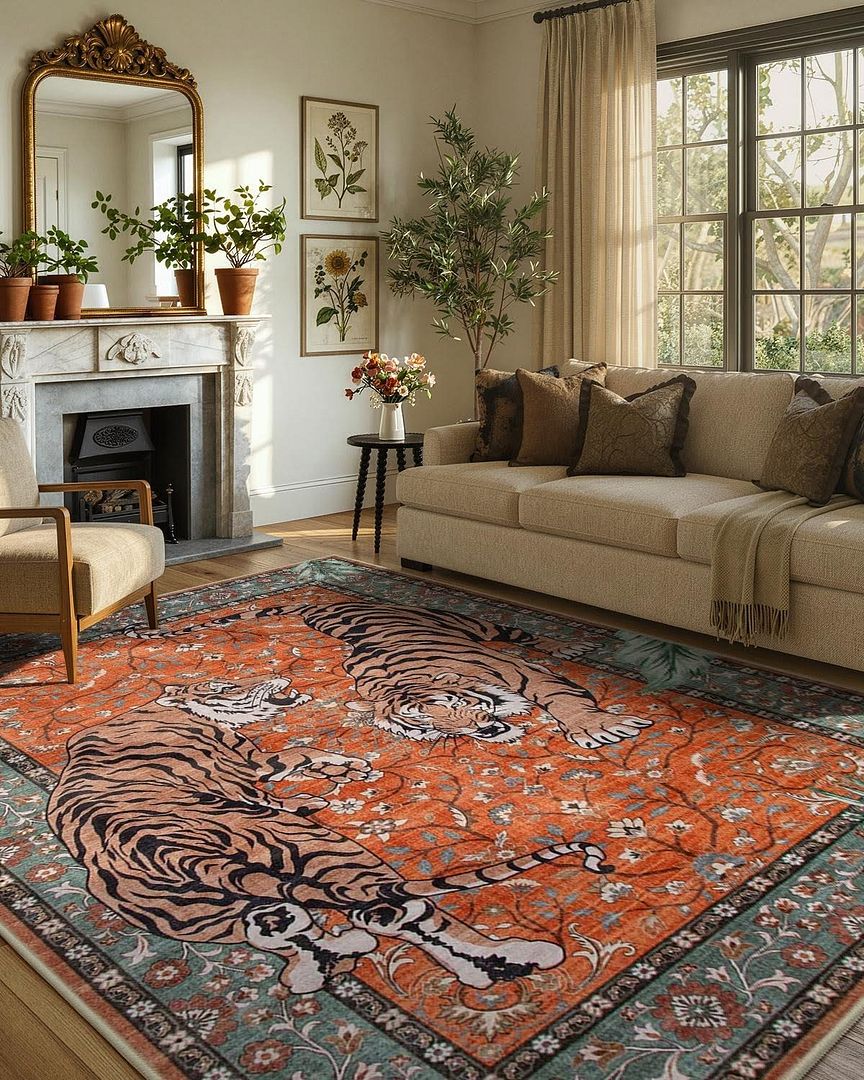
Consider animal print rugs, for example. Their spots, stripes, and contrasting markings naturally draw attention, even when the colors are relatively restrained. A rug with a leopard-inspired pattern might look at home beneath a simple coffee table, paired with a plain sofa and a couple of textured cushions. The room still has character, but the eye has somewhere to rest.
Scale matters, too. A large animal print can feel more pronounced across an open floor than it does in a small sample. Before settling on the surrounding decor, look at how much of the pattern will remain visible once the furniture is in place. If the rug already has a strong presence, smaller decorative details can be simpler.
Pattern mixing is not off limits. Stripes, checks, and florals can sit comfortably alongside a more graphic design, provided they differ in scale or visual intensity. A large, loosely drawn pattern may work better with a small, understated print than with another design of similar size and contrast.
Use Color With a Little Restraint
Color can make a statement rug feel either well integrated or disconnected from the rest of the room. A bright red rug, for instance, may look out of place if nothing else in the space relates to it. That does not mean every cushion and accessory needs to match. Even a small detail in a similar shade can help the color feel intentional.
A useful approach is to choose one dominant color from the rug and repeat it elsewhere in a quieter way. If the rug has deep green and cream tones, a green cushion or a piece of artwork with a similar shade can create a visual connection. The remaining furniture can stay neutral, allowing those details to tie the room together without turning the entire space into a color scheme.
Neutral surroundings are especially effective when a rug contains several strong colors. Beige upholstery, warm white walls, and natural wood finishes give the pattern room to breathe. On the other hand, a colorful room can still accommodate a statement rug if its existing palette feels cohesive.
Pay attention to undertones as well. A rug with warm rust and brown shades may feel more at home beside warm wood and creamy fabrics than against cool gray finishes. Small differences like these can affect how comfortably the room comes together.
Give Unusual Shapes Room to Breathe
Not every statement rug relies on color or pattern. Shape alone can make a design noticeable, particularly when it breaks away from the straight edges found in most furniture arrangements.
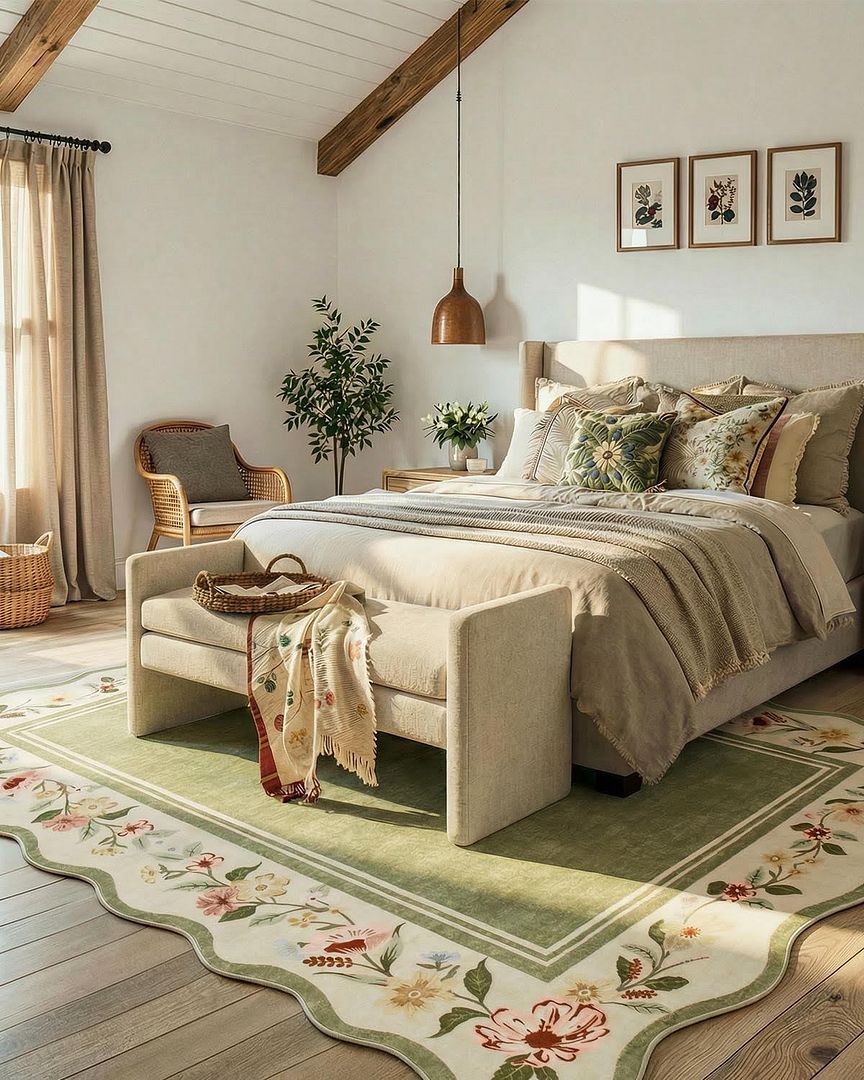
Scalloped rugs provide a good example. Their curved, decorative edges introduce a softer outline than a conventional rectangular rug. That shape can work nicely beneath a rounded accent chair, beside a bed, or in a compact seating area where the rug itself adds a little visual interest.
The surrounding furniture should complement the shape rather than compete with it. If a rug has a scalloped border, placing it beneath a collection of heavily carved furniture, ornate tables, and decorative accessories may create too much visual activity at floor level. A straightforward sofa or a simple side table allows the rug’s outline to remain noticeable.
Placement also makes a difference. Try to leave enough of the rug’s perimeter visible to appreciate its shape. Pushing most of it beneath a large sofa can hide the very feature that makes it interesting. In a smaller room, a well-positioned rug with a distinctive silhouette may have more impact than several decorative objects scattered around the space.
Check the Scale Against Your Furniture
Even a beautifully chosen rug can look out of place if its proportions do not suit the furniture. A small rug surrounded by oversized seating may appear disconnected, while a large, visually complex design can dominate a room filled with delicate furniture.
In a living room, consider how the rug relates to the sofa and chairs as a group. Ideally, it should help define the seating area rather than look like an isolated patch of decoration. Depending on the layout, the front legs of the main seating pieces can sit on the rug, creating a more connected arrangement.
The size of the pattern matters alongside the physical dimensions. Large motifs often feel more dramatic across an expansive floor, while smaller, closely repeated designs can create a denser appearance. Neither is inherently better. The right choice depends on the room’s proportions, the furniture, and how much visual activity the space can comfortably accommodate.
Before moving furniture into place, mark out the proposed rug dimensions with painter’s tape. This simple step helps you judge the available floor space, the distance between furniture pieces, and whether the design will feel cramped once everything is arranged.
Decide How Much Pattern the Room Can Handle
A neutral room provides a straightforward backdrop for a statement rug, but a patterned room can work just as well with the right balance. The important question is not whether the surroundings are plain or decorative. It is whether the different elements compete for attention.
In a room with patterned curtains, floral cushions, and artwork featuring several colors, a rug with a subtle design may help settle the overall look. Alternatively, if the wallpaper and upholstery are relatively quiet, a more expressive rug can introduce the interest the room needs.
Texture can also provide variety without adding another competing pattern. Linen upholstery, a wool throw, a wooden coffee table, or a ceramic lamp can make a neutral room feel layered while keeping its visual structure calm. These materials bring differences in surface and finish rather than introducing more shapes and colors.
For homeowners who enjoy mixing prints, repetition can create a sense of order. Similar colors appearing across different patterns help connect the pieces, while variations in scale prevent them from looking too alike. The goal is a room in which each element contributes something without demanding equal attention.
Balance the Statement With Quieter Pieces
A room rarely needs several focal points fighting for attention. If the rug is the main feature, allow another element, such as an artwork or a sculptural lamp, to play a supporting role. This does not mean the rest of the decor should be plain or forgettable. It simply needs a different level of visual intensity.
Think about where your eye lands when you enter the room. If you notice the rug first and then naturally take in the sofa, lighting, and artwork, the arrangement probably has a comfortable rhythm. If your attention jumps between a patterned rug, brightly colored furniture, elaborate curtains, and several decorative objects, the room may benefit from a little editing.
You do not necessarily need to remove furniture or start over. Try clearing a few accessories from the coffee table, replacing patterned cushions with solid-colored ones, or moving a decorative object to another room. Small adjustments can change how the main design reads.
Lighting deserves consideration, too. Strong natural light can make contrasting colors and patterns appear more pronounced, while evening lighting may soften them. Look at the room at different times of day before deciding whether the overall arrangement feels balanced.
Let the Room Feel Like It Belongs Together
A statement rug should contribute to the character of a room, not dictate every decision that follows. Sometimes that means keeping the walls and furniture understated. In another space, it may mean combining several patterns that share a color or placing a distinctive rug alongside furniture with simple silhouettes.
The best arrangements leave enough visual breathing room for each important piece to be appreciated. Pay attention to proportion, repeat colors where they make sense, and edit anything that competes unnecessarily with the main feature. With those choices in place, even an expressive rug can feel like a natural part of the room rather than an interruption.



