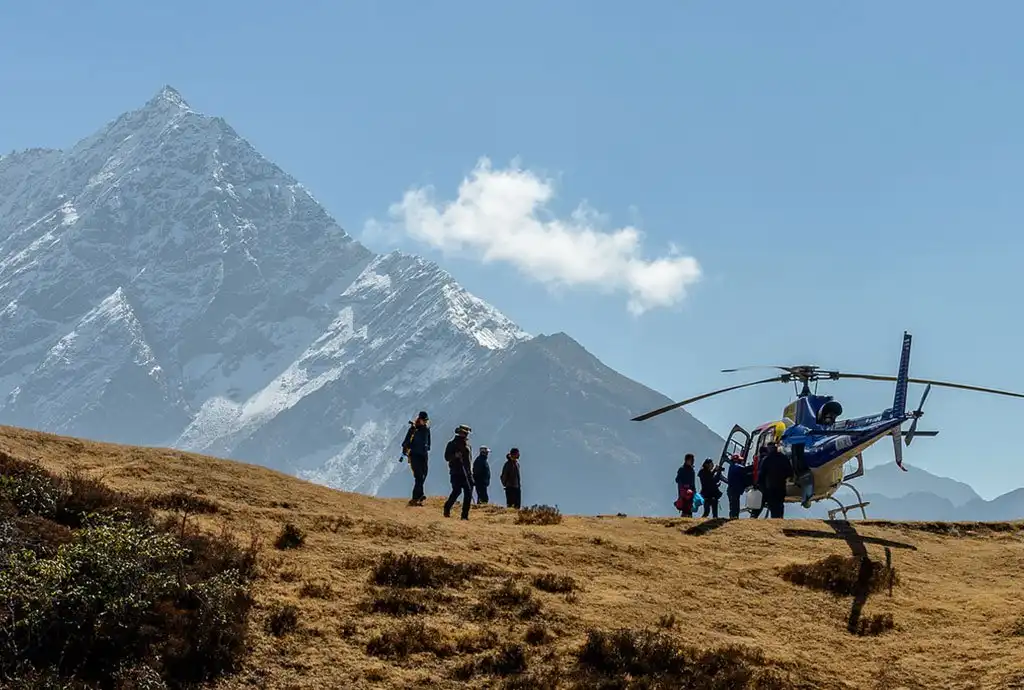
There’s a moment almost every traveler hits when they start researching a Himalayan trip — the point where “trekking to Everest Base Camp” splits into three completely different plans. Some people have ten days and a decent camera. Others have three weeks, sturdy boots, and a genuine wish to walk into the mountains rather than just look at them. And a smaller group wants something beyond trekking altogether — a real climb, with crampons and a rope and a summit at the end of it.
Nepal happens to offer all three. An Everest base camp helicopter tour gets you into the thin air and the big views without the weeks of walking. An Everest base camp trek with helicopter return lets you earn the trail on foot and skip the long walk back out. And Mera Peak climbing pushes past trekking entirely, into actual mountaineering territory. None of these is a “lesser” version of the others — they’re just different relationships with the same landscape, built around how much time, effort, and altitude tolerance you’re bringing with you.
Three Ways Into the Himalayas: Choosing the Experience That Fits You
If you’re short on time or unsure how your body handles altitude, the helicopter tour is the low-commitment option — a few hours in the air instead of nearly two weeks on foot. If you want the trail itself, the villages, the tea houses, the slow climb in elevation, but you’d rather not retrace every step back to Lukla, the trek-with-helicopter-return model solves that. And if you’re the kind of traveler who finishes a trek thinking “what’s next,” Mera Peak is usually where that question leads.
From the Air: Everest Base Camp Helicopter Tour
This is Everest on a tight schedule. You leave Kathmandu, fly over the Khumbu, and take in views of Lukla, Namche, and Tengboche from an angle almost no trekker ever sees — assuming the weather cooperates, since flight paths and landing spots shift depending on conditions that day.
On Foot, Then by Air
Here you walk in — through the villages, the altitude gain, the daily rhythm of trekking — and then fly out once you’ve reached Base Camp. It’s a hybrid: full trail experience going in, none of the repetition coming back.
Higher Commitment: Mera Peak Climbing
This one isn’t really a trek anymore. Mera Peak asks for actual climbing skills, proper gear, and a level of preparation that goes beyond walking uphill for several hours a day.
Everest Base Camp Helicopter Tour: Seeing the Khumbu From Above
There’s something genuinely different about seeing the Everest region from a helicopter window instead of from a trail. You get perspectives that are nearly impossible on foot — ridgelines falling away beneath you, the scale of the valley suddenly obvious in a way it isn’t when you’re inside it. Most flights track a route connecting Lukla, Namche Bazaar, Tengboche, and Pheriche, though the exact stops depend heavily on the operator, the weather, and sometimes the season.
Mornings tend to matter more than people expect. Himalayan weather has a habit of turning by mid-morning, which is exactly why most operators schedule these flights early — clearer skies, calmer air, better odds of actually seeing what you came for. It’s worth understanding, too, that “seeing Everest Base Camp from the air” and physically landing there aren’t always the same thing; landing depends on permits, weight limits, and conditions that can change flight to flight.
Speaking of weight — helicopters at altitude aren’t like commercial jets. Passenger numbers, luggage, even where people sit can be adjusted by the pilot based on air density and route requirements that day. It’s not bureaucracy for its own sake; it’s how these aircraft stay safe at altitude.
A few practical notes for anyone booking one of these flights: keep spare camera batteries somewhere warm, since cold drains them fast at altitude. Use a strap — cabins vibrate more than people expect. And resist the urge to watch the whole flight through a phone screen. You can review the footage later; you can’t relive the moment.
What the Helicopter View Cannot Replace: Culture and the Khumbu Trail
For all its advantages, a helicopter tour skips over something that trekkers get for free: proximity. Walking through the Khumbu means passing mani walls stacked by hand over generations, chortens marking mountain passes, and prayer flags strung between trees that have probably seen more storms than anyone currently walking past them.
Namche Bazaar isn’t just a scenic stop — it’s historically been a trading hub and remains the region’s practical center for acclimatization, supplies, and information. Tengboche, further along, holds real cultural weight as a monastic center, and travelers who stop there tend to describe it as one of the more memorable parts of the whole trek, aerial views notwithstanding.
None of this shows up from a few thousand feet up. Walking slowly enough to notice how the architecture shifts from village to village, how farming terraces give way to forest and then to bare rock — that’s a different kind of experience entirely. And it comes with responsibility too: monasteries and religious objects deserve quiet, respectful behavior, and that’s true whether or not anyone’s watching.
A helicopter compresses distance. Walking reveals how people actually live at altitude — which is arguably the more interesting story.
Everest Base Camp Trek Return by Helicopter: The Hybrid Himalayan Journey
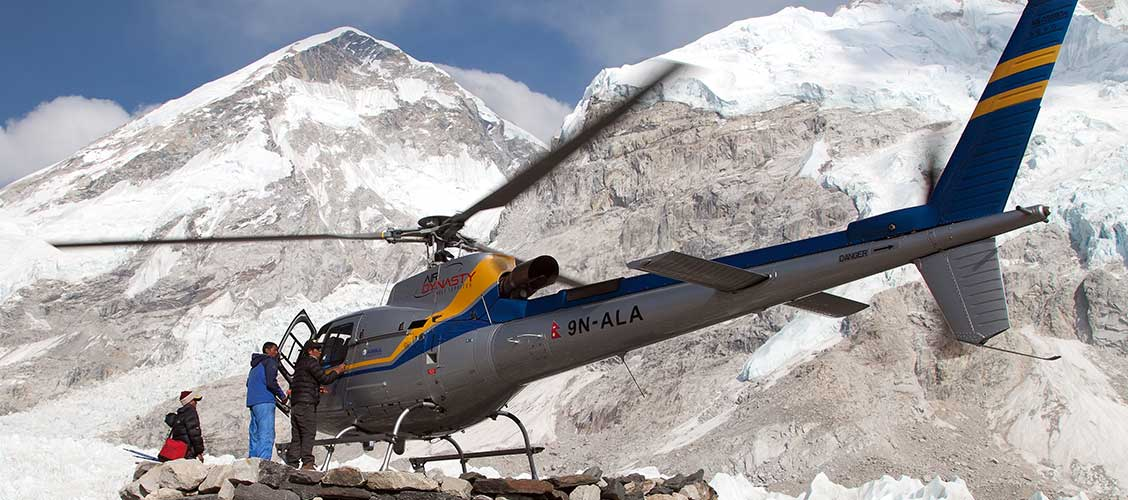
The basic shape of this trip is straightforward: fly into Kathmandu, take the short flight to Lukla, then trek through the Khumbu toward Everest Base Camp — and once you’ve made it, fly back instead of retracing the route on foot.
For a lot of trekkers, this solves a real problem. The walk in is arguably the better half of the experience anyway — the acclimatization days, the villages, the slow adjustment to thinner air, the conversations with porters and guides and fellow trekkers along the trail. The walk out, by contrast, is often described as the less exciting part, mostly because you’ve already seen it. Cutting that out with a helicopter return can save several days without sacrificing much of what made the trip worthwhile.
That said, acclimatization still matters just as much on this version of the trip. You’re still gaining altitude gradually over multiple days before reaching the Everest region, and that process doesn’t get shortcut just because the return flight does. It’s also worth building some slack into your schedule — helicopter operations depend on weather, airport conditions, and regulatory factors that can shift with little warning, so booking an international flight for the same afternoon as your helicopter return isn’t a great idea.
What Makes This Different From a Helicopter Tour?
A helicopter tour is built around aerial access and sightseeing from the start. An Everest Base Camp trek with a helicopter return still puts you on the trail — walking into the Khumbu, adjusting to altitude over days rather than hours, sleeping in mountain lodges, and reaching Base Camp on foot — before the helicopter takes over for the way back.
Mera Peak Climbing: When Trekking Becomes Mountaineering
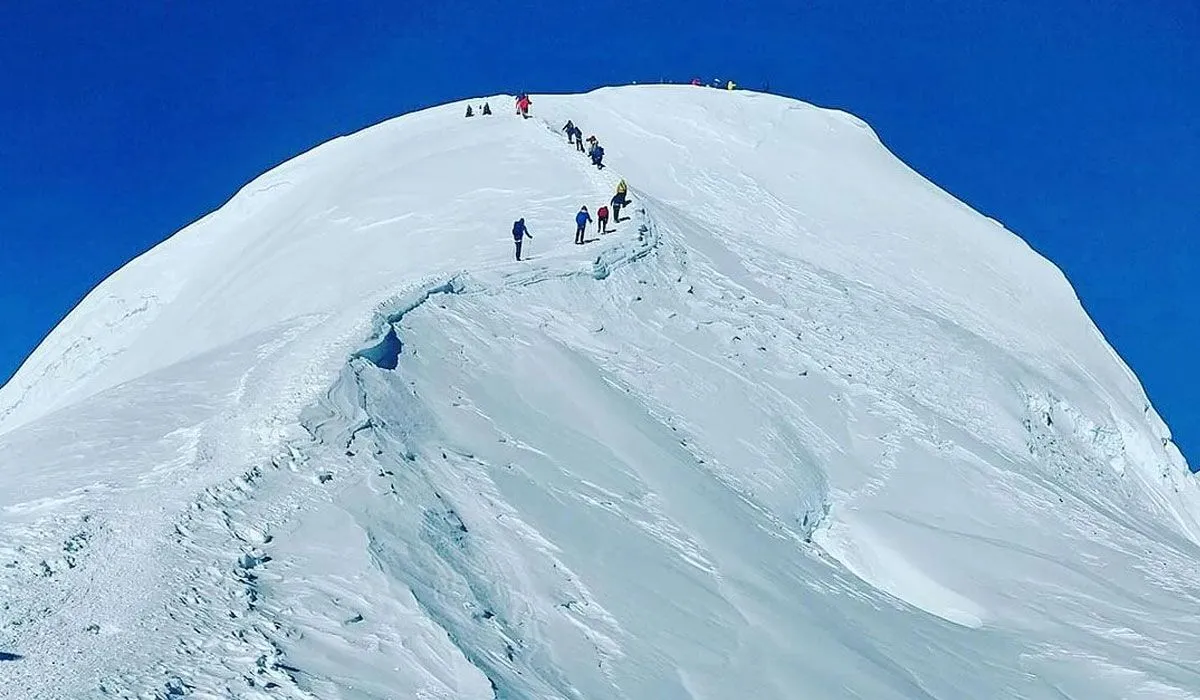
Mera peak climbing sits within the wider Everest region, but it belongs to a different category of trip entirely. For trekkers who’ve done a few high-altitude walks and want to know what actual mountaineering feels like, it’s often the first real step.
The difference from standard trekking shows up early — this isn’t just walking uphill for longer. It calls for proper acclimatization scheduling, physical conditioning beyond what a trek demands, and gear that trekking simply doesn’t require: crampons, a climbing harness, a helmet, ropes, and sometimes an ice axe depending on the specific route and conditions encountered. An experienced climbing guide isn’t optional here — route-finding, weather judgment, and safety decisions on summit day depend on real expertise, not just enthusiasm.
Previous high-altitude experience helps, though it’s hard to say definitively who is or isn’t suited to a climb like this — conditions, preparation, and individual fitness all play a role. What is fairly consistent, though, is that summit day itself feels nothing like an ordinary trekking day. It starts earlier, demands more from the body, and asks for a different kind of mental focus than simply putting one foot in front of the other on a trail.
The Practical Difference: Time, Effort, Altitude and Experience
| Experience | Main focus | Physical commitment | Ground experience | Best suited to |
| Everest Base Camp Helicopter Tour | Mountain sightseeing | Lower than trekking | Limited | Travelers with limited time |
| Everest Base Camp Trek + Helicopter Return | Trekking + aerial return | High | Strong | Travelers wanting the trail experience with a shorter return |
| Mera Peak Climbing | Trekking + climbing | Very high | Strong | Travelers seeking a mountaineering challenge |
These aren’t three versions of the same trip dressed up differently — they’re genuinely different experiences, built around different goals, and worth choosing based on what you actually want from the mountains rather than which one sounds more impressive.
Small Details That Make a Big Difference in the Himalayas
A little flexibility in your itinerary goes further than people expect, especially where weather-dependent flights are involved. Don’t judge conditions by temperature alone, either — wind and elevation can turn a mild-looking day uncomfortable fast. Keep water within reach rather than buried in your pack, and break in trekking boots well before you land in Nepal, not during the first day on the trail.
Charging is inconsistent in mountain lodges, so a backup battery or two is worth the extra weight. Keep documents and electronics away from moisture — it’s an easy thing to overlook until it isn’t. And when a guide suggests changing plans because of altitude or weather, that advice is worth following without much debate; they’ve usually seen what happens when it isn’t. Around monasteries and prayer wheels, a bit of caution with cameras and behavior goes a long way too. None of this is about ticking boxes — it’s mostly about not treating the mountains like something to be rushed through.
Which Himalayan Experience Will You Remember Differently?
There isn’t really a “best” choice among these three — just different reasons people pick each one. The helicopter tour is about compressing an extraordinary landscape into a short window of time. The trek with a helicopter return blends the physical experience of walking into the Khumbu with a faster way back out. Mera Peak adds the weight — literally and otherwise — of preparing for an actual summit.
What tends to stick with people afterward isn’t just how high they went. It’s the villages they passed through, the conversations on the trail, the specific quality of light at 5,000 meters — the parts of the trip that had nothing to do with altitude at all.
Frequently Asked Questions About Experiencing Nepal’s Himalayas
Can I see Everest Base Camp by helicopter without trekking?
Yes — helicopter sightseeing can bring you into the Everest region without a full trek, though exact landing spots and viewing points shift depending on weather and operational conditions that day.
How does an Everest Base Camp trek return by helicopter work?
Travelers trek into the Everest region on foot as usual, then arrange a helicopter for the return flight instead of walking the same route back out.
Is Mera Peak climbing harder than Everest Base Camp trekking?
Generally, yes — Mera Peak involves actual climbing alongside trekking, which means more preparation, specialized equipment, and mountain skills beyond standard trekking.
Do I still need acclimatization for a helicopter trip to Everest?
Rapid altitude exposure can still pose risks even with reduced walking time, so how your itinerary handles altitude gain still matters.
What should I consider before booking a Himalayan helicopter or climbing trip?
Weather flexibility, the operator’s safety practices, how the itinerary handles altitude, travel insurance, cancellation policies, and your own physical readiness are all worth weighing before booking.