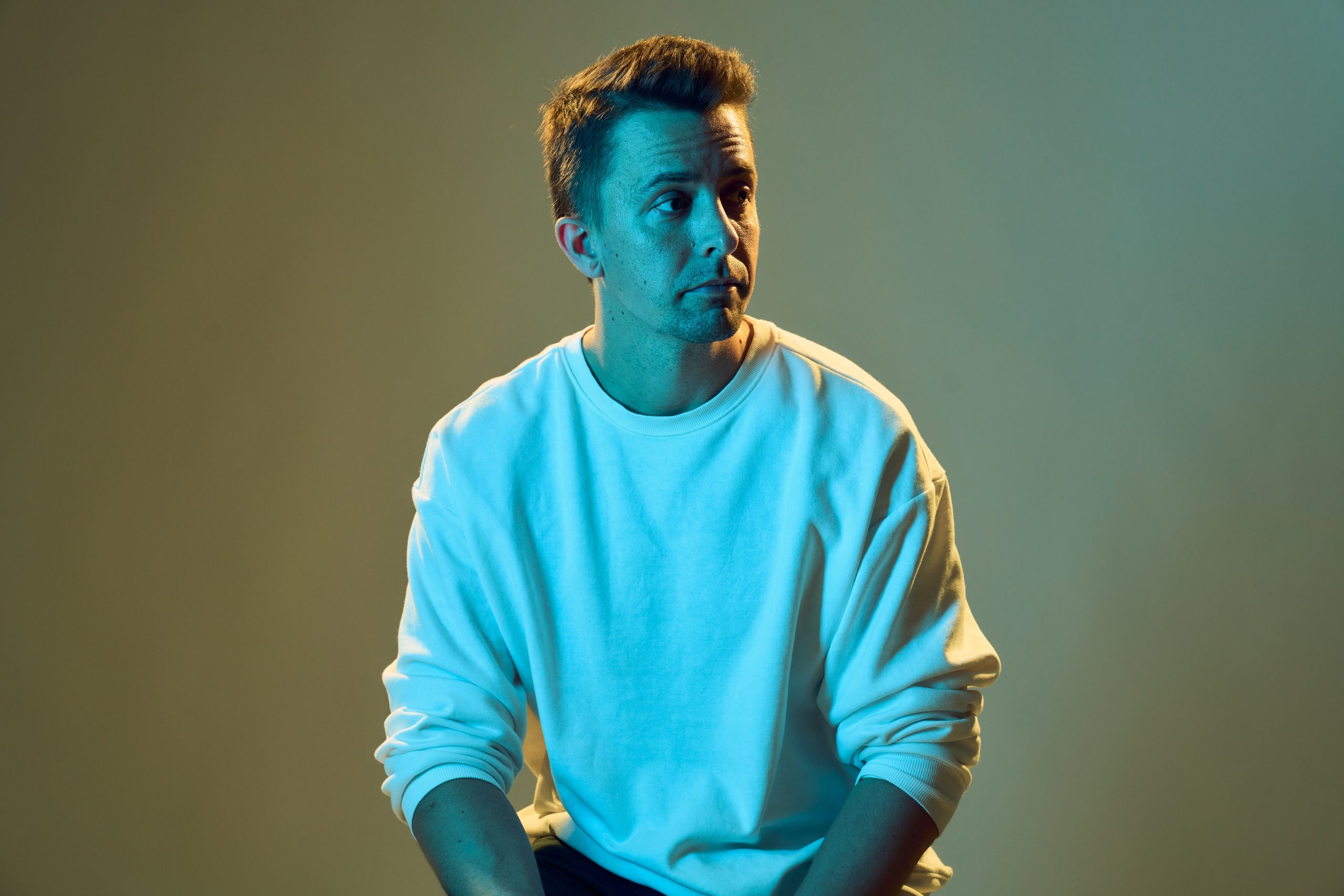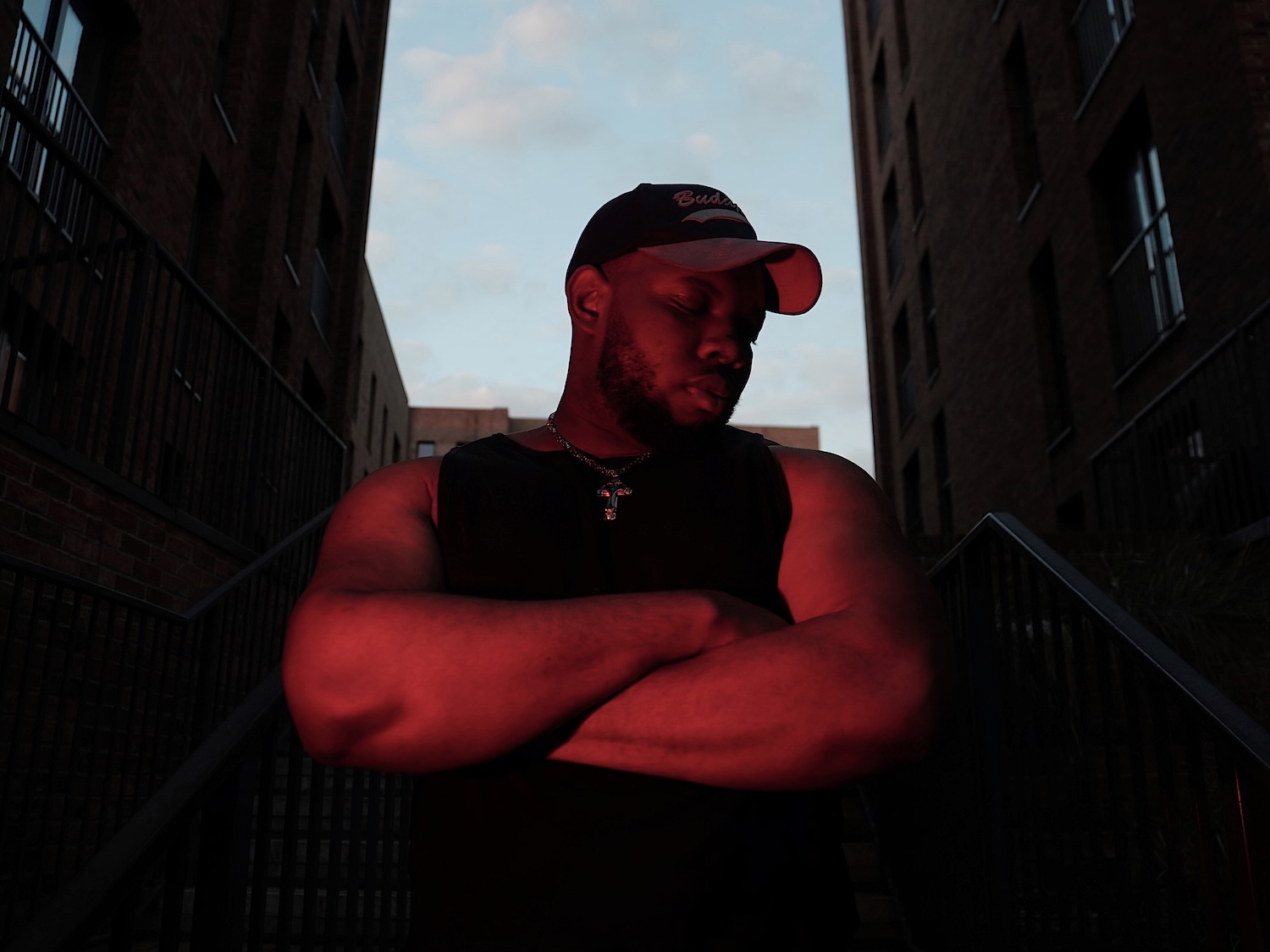
British-Nigerian artist Jayshow delivers a precisely-timed meditation on emotional release and why he’s done pretending men don’t feel.
At exactly three minutes, the new track from British singer Jayshow, “The Inside,” does not waste a second, landing with an intentional restraint that feels defiant in an era when streaming algorithms reward ever longer runtimes, its mellow melody built for stillness and the unguarded honesty that only arrives when the world finally falls quiet.
Speaking to 1883 Magazine, Jayshow traced the song’s origins through his Nigerian heritage and the cultural silence around male vulnerability, having been raised on the commandment that men should never cry. “The Inside” stands as his direct rebuttal, a song about reaching for something already gone and confronting what has been carried too long, and while exhaustion runs through every layer of the record, so does the rarer thing he finally found, release from the weight of pretending.
Though Lana Del Rey shapes Jayshow’s sound unmistakably, a presence felt in the cinematic stillness of “The Inside,” the song still carves its own space while joining the conversation around overthinking and creative pressure, a topic that sparks Quora discussions on anxiety and art. In the face of that pressure, Jayshow’s response is to write through the anxiety, turning his overthinking into a reckoning he invites the listener to share.
Though Jayshow is still early in a journey, a newcomer with room to grow, his three minutes and the nerve to go there have already said something worth hearing in “The Inside,” a reminder that in a digital landscape where streaming royalties barely pay independent artists even as social platforms boost visibility, the most honest thing an emerging artist can do is simply tell the truth about what men feel.
Given that the music industry loves to file artists like you into tidy boxes labelled Nigerian roots, British soil and alternative soul, when did you stop auditioning for a category and simply start making the thing that frightened you most?
That shift happened when I realised that every time I tried to fit neatly into a category the music got smaller, sounding correct but not like me, because the things that genuinely move me were never from one world, whether an Afrobeat record in the morning, orchestral music in the afternoon or Lana Del Rey at night, so at some point I stopped asking whether a song fit a genre and started asking whether it told the truth, and “The Inside” didn’t really scare me because it wasn’t trying to belong anywhere; it was simply trying to be honest.
Given that you grew up between cultures and between worlds, at what point did music stop being a mere activity and start becoming the only space where you truly understood yourself?
Probably before I had the words for it, because over time there were always parts of me that belonged to different places, and music became the one space where those contradictions didn’t need resolving, allowing me to bring all of it into a song, the Nigerian kid, the immigrant, the musician, the producer obsessed with cinematic composition, not as an escape from myself but as the place where every version of me finally sat in the same world.
“The Inside” sounds like a 3am waking-up confession you cannot take back by morning, so what emotional cost did finishing this song carry?
Distance, I suppose. Once a song like that exists, pretending certain things never happened or never touched you becomes impossible. Finishing it meant admitting truths I had spent a long time turning over in my head instead of actually feeling. The cost was not dramatic, quieter than that really. It was simply giving up the comfort of not knowing for sure.

A lot of artists talk about vulnerability as if it were a strategy, yet this record sounds like it has nothing to do with one, so at what point did the song stop feeling like yours to control?
The moment I stopped trying to sound impressive. As a producer, you are trained to solve problems, fix things, polish them. But there came a point where every so-called improvement was actually making the song less honest. That is when I knew I was no longer in charge. The song was telling me what it needed instead.
You absorbed emotional cues from Catholic Mass and Lana Del Rey to shape this song, two influences you carry for a lifetime rather than treating as mere references, so what personal hurt lies underneath each of them for you?
This was mostly Uzo, to be honest. What fascinated him, my collaborator, about both sources was simply longing. Catholic liturgy grasps ritual, mystery and absence, while Lana’s work finds beauty in broken things and deep desire. The common link is the search for something you cannot quite hold, and perhaps that is the real wound underneath both, the feeling that the things we love most always remain just out of reach.
What is the most unexpected guilty pleasure you have in music, if you are being honest about it?
Though I honestly do not believe in guilty pleasures, people are usually surprised how much I love soundtracks like The Prince of Egypt or The Greatest Showman, which I have absorbed through repeated listening because they taught me emotion, tension and storytelling.
What were you doing outside of music when this song started taking shape, and where did “The Inside” actually begin?
The song began when Uzo asked for a ballad instrumental I struggled to organise, though the inspiration arrived as no sudden burst of clarity, instead building through small observations, memories and conversations that lingered too long, so that by the time I sat down to write it, the emotional work had already been happening for months.
Is there a version of you that never left Nigeria, and do you ever write from ‘his’ perspective?
Absolutely. I think ‘he’ is still with me, probably more fearless in some ways and more innocent in others. Whenever I write about home, belonging or identity, he is usually somewhere (dwelling) in the room. The UK changed me, but it never erased ‘him’.
Weird Uzoma brings something from elsewhere into a UK made track, not just a feature but a conversation between two versions of a diaspora, so what were you really asking him when you invited him onto the song?
My (prior) intention was for Uzo’s perspective on the emotions he felt while listening to the piece I sent him, rather than a feature, because he carries deep introspective feelings and questions with him wherever he goes, and I wanted that energy on the record, and his contribution becoming a reminder that distance never means disconnection.
Every great ballad has its breaking point, the moment when the artist stops performing and starts drowning. Where is that ‘moment’ in “The Inside”?
That moment comes when the questions stop looking for answers, a section where the song accepts uncertainty instead of trying to solve it, and that is where the performance ends for me.
The emotional restraint on “The Inside,” the reluctance to give everything away, is a deliberate choice, so what truth did you decide to keep from the listener, and why?
Names, details, the evidence. I left them out more for the song’s sake than for mystery, because the song is really about what happened inside me rather than another person. Some things belong to real life and stay there, no need to turn them into content.
How does your faith now compare to when you first felt how a choir can move a congregation?
It feels more complicated now, and more personal. As a younger man, the power of collective belief amazed me. These days, doubt, questions and silence interest me just as much. But music remains one of the few places where faith still feels real.
The industry rewarded you before this, with awards, recognition and validation. Did any of that prepare you for making something as emotionally exposed as “The Inside”?
Not really. Awards are fine. They tell you that some industry people appreciate what you do, but they never teach you how to tell the truth or how your music actually reaches your fans, and I have learned to respect those as different skills entirely.
What did making this song teach you about yourself that you wish had stayed hidden?
Loving someone deeply can still leave a relationship unsustainable. Most people learn that lesson eventually. I just wish the learning had hurt less.
You work across composition, performance and production, so which one do you turn to when the other two have let you down?
Composition. Always back to composition. Production can turn technical, performance can turn external, but composition is where I always go, when I need to remember why I started making music in the first place.
Has success ever pushed you further from the music rather than bringing you closer?
Yes, it definitely has. Success brings a lot of distractions, expectations and outside opinions. Sometimes you have to find your own way back to simple curiosity.
Is there a sound, a chord or a texture in “The Inside” that means something only you will ever fully understand?
Yes. There is a texture in the song that holds a memory for me. No one else will hear it that way, and that is all right. Some things are just ‘meant’ for me.
Which of your songs would you say is the most dishonest, and what were you hiding from when you made it?
For me, dishonest songs usually come from trying to impress people, chasing trends or chasing approval. It is not what they say, just why they exist. If I had to pick one, it would be “JO.” Give it a listen. It sounds like a catchy, happy record, and that cheerfulness is precisely the point of the dishonesty.
Who in your life has never truly understood what you do, and does that absence of understanding still carry a sting?
I think every creative person has people they love who fall short of fully understanding what they do, most of my friends actually. It used to bother me. Now I see understanding and support as two different things.
If this song never finds a big audience, will it still have been worth making?
Absolutely. Some songs build a career. Others (song) just bring you back to yourself. This one did the latter.
You carry interests beyond music, so are there any obsessions outside of it that found their way into the emotional world of “The Inside”?
Love, film, literature and architecture. I have always been interested in spaces and atmosphere. Listen to my songs and you will hear it, the way a room feels before anyone says a word. A lot of that found its way into the record.
When did you last find yourself crying while making music, and was it for this record?
I’ve never cried for a record; they say men don’t cry hahahaha.
What would the 15-yo version of ‘you’ think of this song, and would you care what he thought?
I think he would be surprised (that) I had the nerve to release it. And yes, I would want his approval more than most.
What is the one thing about “The Inside” you hope no interviewer ever asks you, and why have we nearly touched on it?
Who the song is about. I will keep that name to myself. Not because it is a secret, but because the song is no longer really about that person. The real story is what made it show me about myself. And you have already come close enough (to the truth).
“The Inside” is out now. Follow via @jayshow_1
Interview Belinda Yohana