
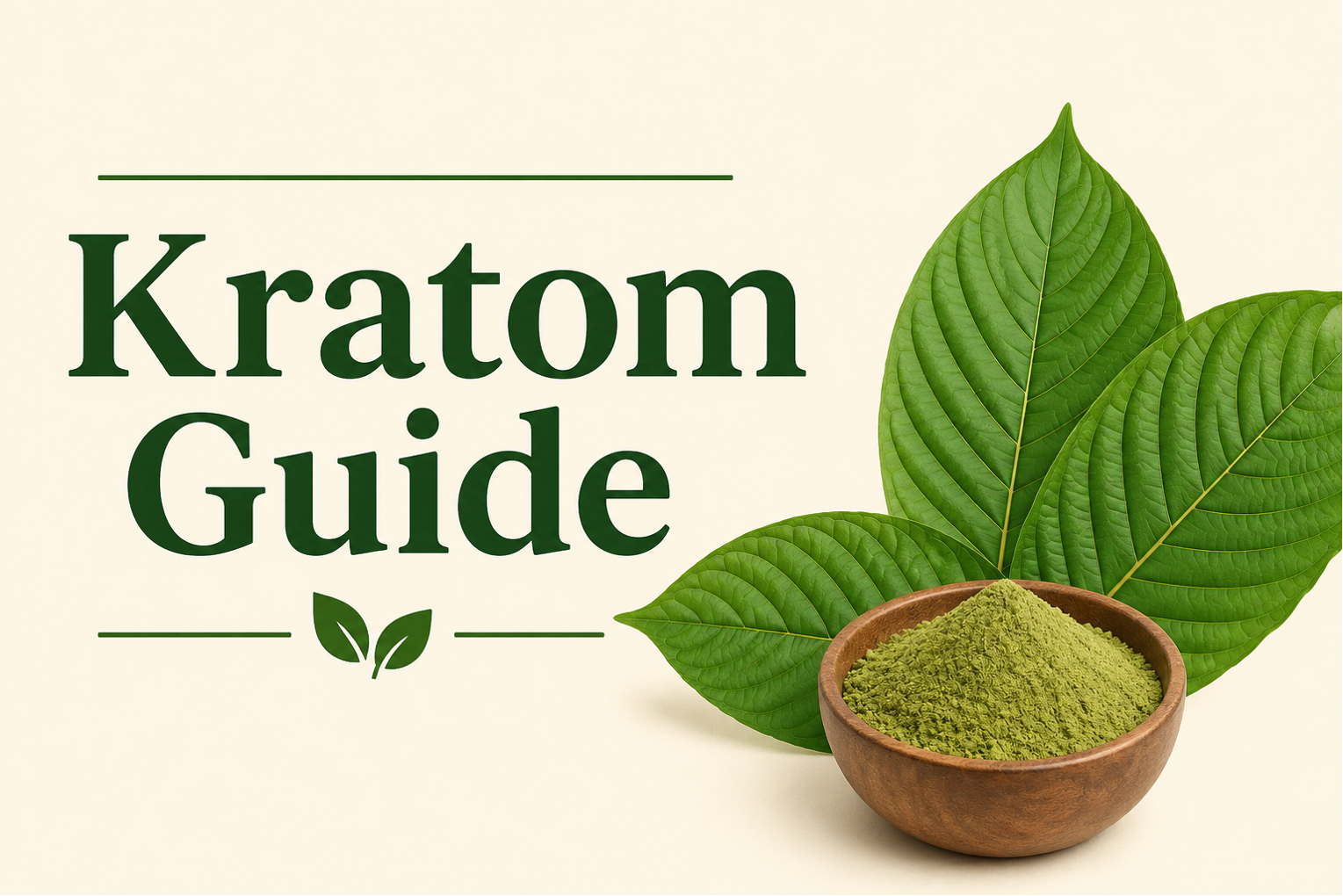
Here’s something that surprises most first-time researchers: Kratom isn’t one single thing. It is a plant with dozens of variants and each one acts differently. People tend to think of “kratom” as one product with one effect. This assumption leads to confusion, misaligned expectations and frustration.
This is important since kratom is a topic of strong online interest and misinformation travels quickly. It’s impossible to get a straight answer with conflicting forum discussions and vague blog entries. A good, clean, organized kratom guide can cut through the noise.
This guide covers what kratom is, where it originates from, and how it’s used. We’ll discuss alkaloids, common strain kinds, dose limits and safety factors. No hype. No medical claims. Just a down to Earth look at the plant itself.
This tutorial provides you with the core facts, whether you’re completely new to the field or just looking for a refresher. Let us return to the fundamentals.
What Kratom Is
Kratom is derived from the leaves of the tropical tree Mitragyna speciosa, a relative of the coffee tree. It’s native to Southeast Asia and has been traditionally used for centuries. The leaves are usually dried, powdered and marketed in various forms.
Kratom products come in a variety of forms including: loose powder, capsules, tinctures and extract shots. Each format affects the speed of the product, and how it is monitored. But powder remains the most popular and versatile.
Origins and Background
Kratom trees are native to Indonesia, Thailand, Malaysia and Papua New Guinea. Most of the world’s kratom comes from Indonesia, particularly the islands of Borneo and Sumatra. Climate, soil type and altitude influence leaf quality.
Local farmers have been processing kratom leaves for generations with fermentation and sun-drying procedures. These approaches impact the alkaloid content and the classification of leaf color directly. These old gathering methods remain the basis of modern kratom manufacturing.
Characteristics of Kratom Strains
Kratom strains are mainly divided by vein color, red, green and white. Vein color represents the color of the leaf stem before drying and processing.
Red vein kratom is produced from ripe leaves and has a more earthy fragrance. Green vein kratom is harvested at a mid-stage of maturity. White vein kratom is usually produced from younger leaves or some drying procedures.
Other than color, regional designations such as Maeng Da, Bali or Borneo identify origin or cultivation method, not a different plant species.
Alkaloid Profile
Kratom leaves have naturally occurring chemicals called alkaloids. Mitragynine and 7-hydroxymitragynine are the two alkaloids primarily investigated in kratom research.
Alkaloid content depends on the strain, harvest time, and growth circumstances. Lab testing analyzes total alkaloid content and percentage of mitragynine. This number can vary widely even for the same strain label, depending on the batch.
Where to buy best kratom? Buyers who research this usually focus on kratom with confirmed test results. Clear alkaloid testing is part of the process to differentiate validated products from unvalidated bulk powder marketed with no quality information.
Effects Commonly Associated With Kratom
While users note that different strains of kratom seem to be associated with varied subjective experiences , people can respond differently . These connections are based on community feedback and not controlled clinical research.
When red strains are mentioned in internet chats, they are often associated with calm. When it comes to daytime use, green strains are typically mentioned. White strains are frequently linked to alertness experiences in users.
Remember these are self-reported tendencies, not a guarantee for everyone.
Potential Benefits Reported by Users
People describe a broad spectrum of individual experiences with kratom use on forums and review sites. Kratom has not been authorized by the FDA for the treatment of any medical condition and no statements within are intended to imply otherwise.
Variations in reported experience frequently come down to dosage size, individual tolerance, and the precise ratio of alkaloids in that batch.
User Experiences
Personal testimonials of strain preferences and dosing practices are abundant on internet kratom forums. These stories are all over the map, even among those utilizing the same strain type.
Some users keep logs or spreadsheets to monitor their experience over time. Others experiment with trial and error to find out what works for their own bodies.
Dosage Guide
There’s no universal dosage standard for kratom, and individual response varies significantly. The ranges below reflect commonly cited figures from community resources, not medical recommendations.
- Beginner range: Approximately 1 to 2 grams
- Moderate range: Approximately 2 to 4 grams
- Higher range: Approximately 4 to 6 grams
How these doses feel depends on body weight, metabolism, tolerance, and the alkaloid concentration of a certain batch. A popular technique in kratom groups is to start at the low end, and titrate up gently. This is not medical advice. Consult a healthcare provider before consuming kratom.
How Kratom Compares Across Formats
Powder is the most conventional form of kratom. It provides for accurate and personalized dosing. Capsules are convenient because they provide you a constant dose in each one but they take longer to work.
Extract shots are more concentrated which means lesser quantities have a higher alkaloid content. Tinctures are a happy medium . Liquid dosing without all the heft of raw powder .
Each format has its advantages for individual preferences based on ease, accuracy of measurement, and personal routine.
Popular Uses
People usually use kratom by adding the powder to drinks, eating capsules, or taking calculated amounts of extracts. Some people use it in a regular habit, some use it from time to time.
Format choice tends to be a function of convenience and how much control over dose one wants.
Risks and Safety Considerations
The FDA does not regulate Kratom as a food, medicine or supplement. The quality and alkaloid concentration varies greatly amongst different unverified suppliers and batches.
Risks: Dependency with regular usage, withdrawal effects, and probable interaction with drugs. The FDA has issued public safety concerns about kratom, including instances of contamination in some products. Anyone looking to try kratom should study their sources and talk to a health care expert first.
5 Frequently Asked Questions
Is kratom legal everywhere?
No. It depends on the country and even on the state of the US. Be sure to verify local laws beforehand.
Are all kratom strains the same potency?
Nope. It depends on the alkaloids included in the strain . The name of the strain will not tell you the potency , as it changes from batch to batch .
How is kratom typically measured?
Most people measure kratom powder in grams using a digital scale for accuracy.
Can kratom interact with medications?
Interactions might occur. If you are on medication, check with a doctor for use.
Is lab testing important when choosing kratom?
Yes. Lab testing confirms alkaloid content and tests for pollutants such as heavy metals.
Conclusion
This kratom tutorial will walk you through the basics: its origins, the science of its alkaloids, dosage levels, and safe practices. Kratom is not a single uniform product, but a plant with significant variety across strains and styles. Good research, good source, and good medical advice are more important than the assertion of any one blog post.



