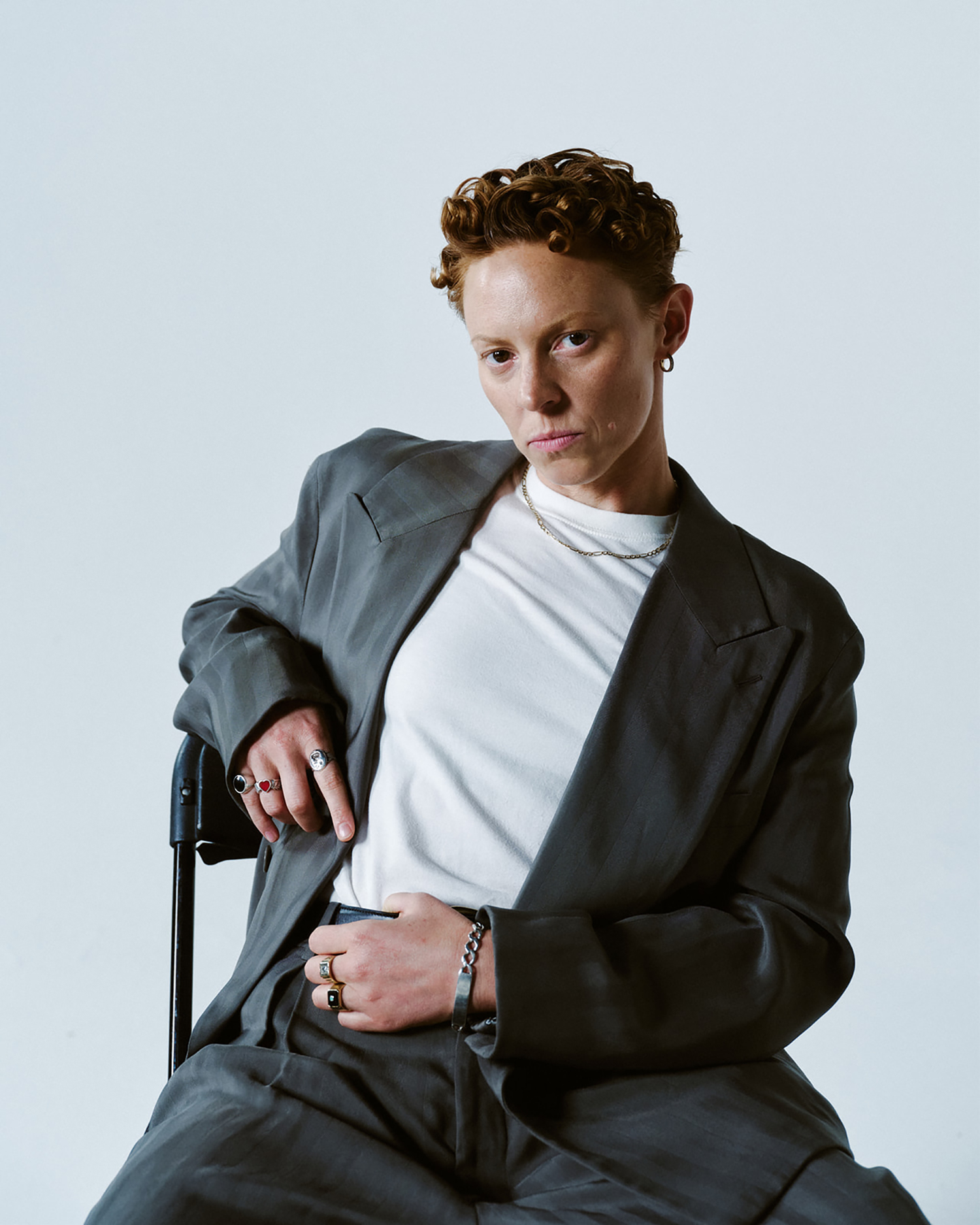
It’s been six years since Elly Jackson, aka La Roux, released her last album, Supervision, which she never got to tour because of COVID, and seventeen years since her debut single, Bulletproof, hit number one on the UK charts. There are plenty of reasons for the gaps between her albums, most of which come down to process and artistry, but it’s also been a bumpy ride for Jackson. After hiding herself away for a while, she’s back this year with her fourth album, Old Flames. Set for release on November 6, it’s her most honest yet, full of reflections on what it’s been like to be cooped up, and the wisdom that comes from years of living behind success.
She picks up my call sitting under the shade of a tree in Portland. Her honesty, whether newfound or inherent, is palpable as we talk. She’s currently out supporting Hilary Duff on the lucky me tour, playing across the US this summer, which feels fitting for a couple of reasons: the aesthetic of Portland and the Pacific Northwest is a big part of the inspiration behind Old Flames, and Duff’s tour is banking on the same kind of nostalgia that runs through both the album’s sound and La Roux’s return to the stage.
In this conversation with 1883, we talked about the importance of taking time between projects, the intersection between La Roux and herself, researching the world of an album, the trauma of early success, and much more.
This is your first project in six years, the same gap as between Trouble in Paradise and Supervision. What’s your take on the need for more time to make art, especially in a time when yearly albums seem almost expected?
I just don’t think I could do it in a year. It’s not like I sat, didn’t do anything, and then thought, “oh, I’ll make an album.” It just takes time. After I finished Supervision, we couldn’t tour it, and I find it really hard to be in one visual and musical world, and build another one straight away. I could have made another Supervision-y, disco-y type album really easily because I was already in the flow of making that type of thing. But what’s the point of doing the same thing again? I already felt like Supervision and Trouble in Paradise were a little too close to each other stylistically. If I was going to do this again, it needed to feel like I was saying something with what I’m doing, and that just takes time.
I also don’t go into the studio and have a load of people try stuff and then work on my behalf, I think that genuinely does make things take a lot longer. I don’t write with anyone, so in order for all of my ideas to come out, I have to figure out what genres I’m pulling from, where I’m getting my new inspiration from – that takes a minute. And then you’ve got to figure out how to do it, because each style of music usually has a slightly different methodology. The way I approached this record was quite different to the previous ones, because I wanted to approach it the way people would have made the music I was referencing, and that involved me buying different equipment, trying different things, different synthesizers, and finding the sound palette I wanted to use.
I don’t rush. I don’t have eight million songs and then go, “oh, these are the ten best ones.” I just tend to write what you hear, that’s it. So I’m self-editing all the time. It just takes time.
You did put out some singles in between. How do you know those are singles and not part of the new world of your music?
With Feedback, I didn’t have any other songs that I felt could go around it. I was thinking about doing an EP with Malibu Barbie, Feedback, and maybe a couple of other things. That was the plan, but I realised I didn’t like releasing music during the pandemic. I didn’t like that I had to post it on Instagram, and if it didn’t work, there was nowhere else to promote it. It felt like a bit of a dead end, and knowing you couldn’t tour made it worse. Also, I felt like they were exploratory tracks, I was exploring the genre that eventually got me to where I ended up with Old Flames. Once I’d put out those two tracks, I felt like, “okay, now I kind of know where I’m going with this.”
They were fun tests for me. Malibu Barbie was me trying to make something with a modern hip-hop and pop influence. And once I found that, I thought, “okay, now hone in and step back.”
I think it goes back to what you said before: you need to find what you’re going to say, and sometimes that maybe requires releasing some songs first.
Songs can be great, you know? Songs are songs, they should be great on their own, but we don’t really live in that world anymore. Music not being enough is something I find really difficult about the world we live in now. You have to do all these other things, and that doesn’t make any sense to me. Personally, as a fan, I don’t care what’s going on around a song – what promos are happening, what marketing’s happening. If I don’t like the music, I don’t like the music, that’s it, you know what I mean?
I can’t be reeled in by personality or any other stuff, I just take it at face value: is the music something I love without anything else? And if it’s not, it doesn’t make any difference to me. There’s all this focus on narrative and TikTok and virality and stories. I think a lot of artists are finding that really hard at the moment, and some people are way better at it than others.
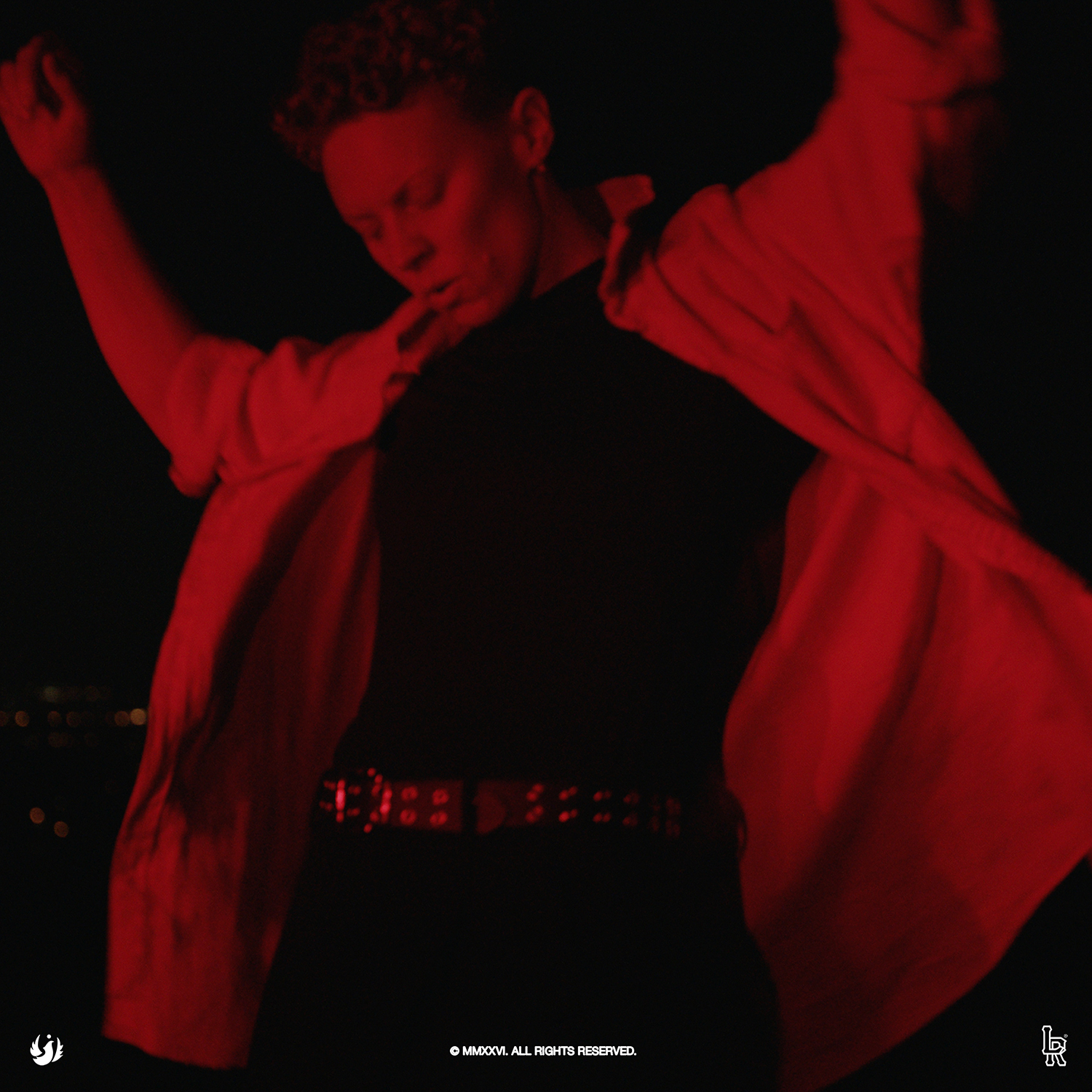
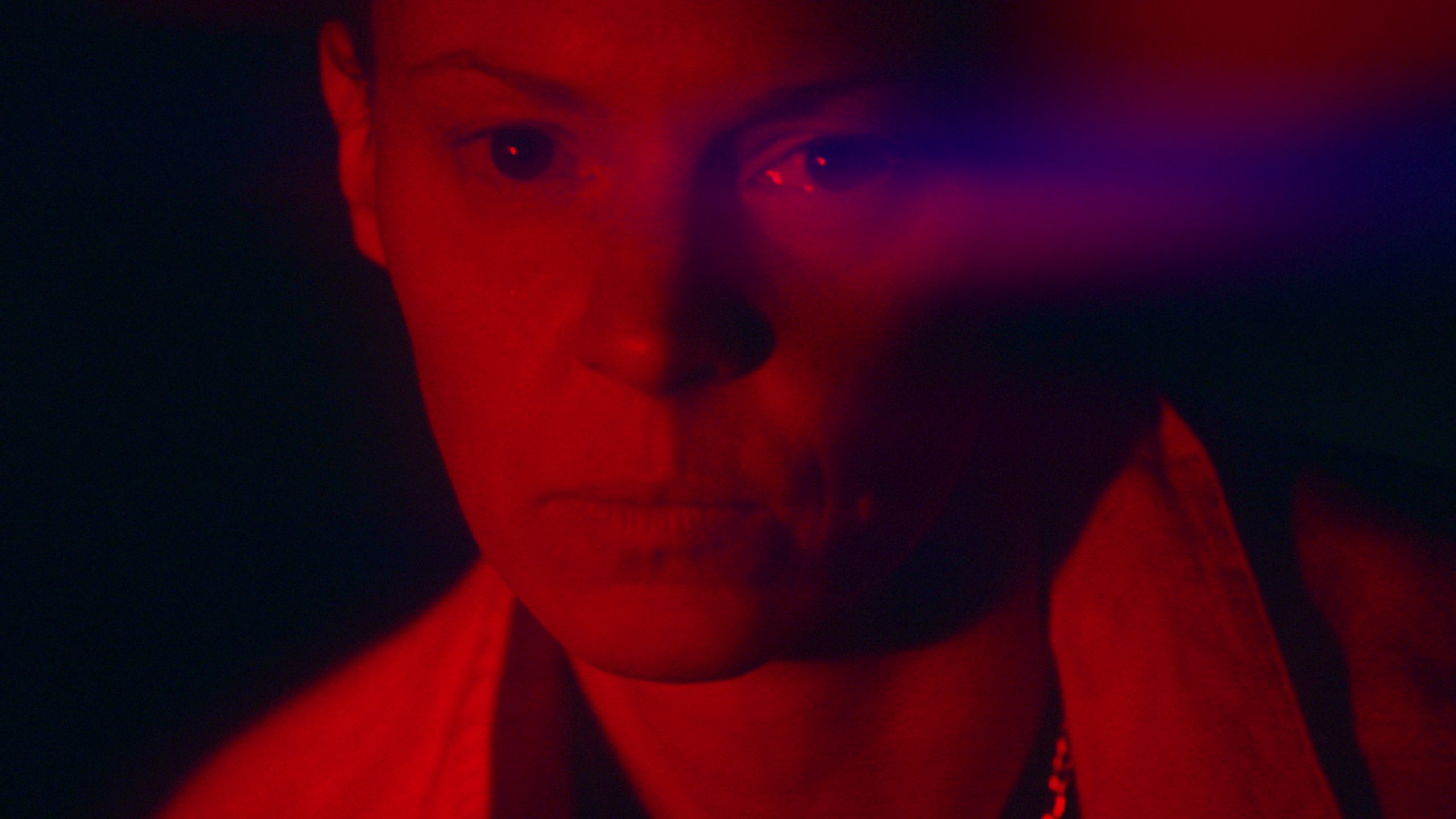
When you talk about what goes around a song, though, the visual identity of Old Flames is quite interesting. You’ve put out two very different visuals within the same world. The song is the main thing in both, but what’s your process for finding the visuals for a project?
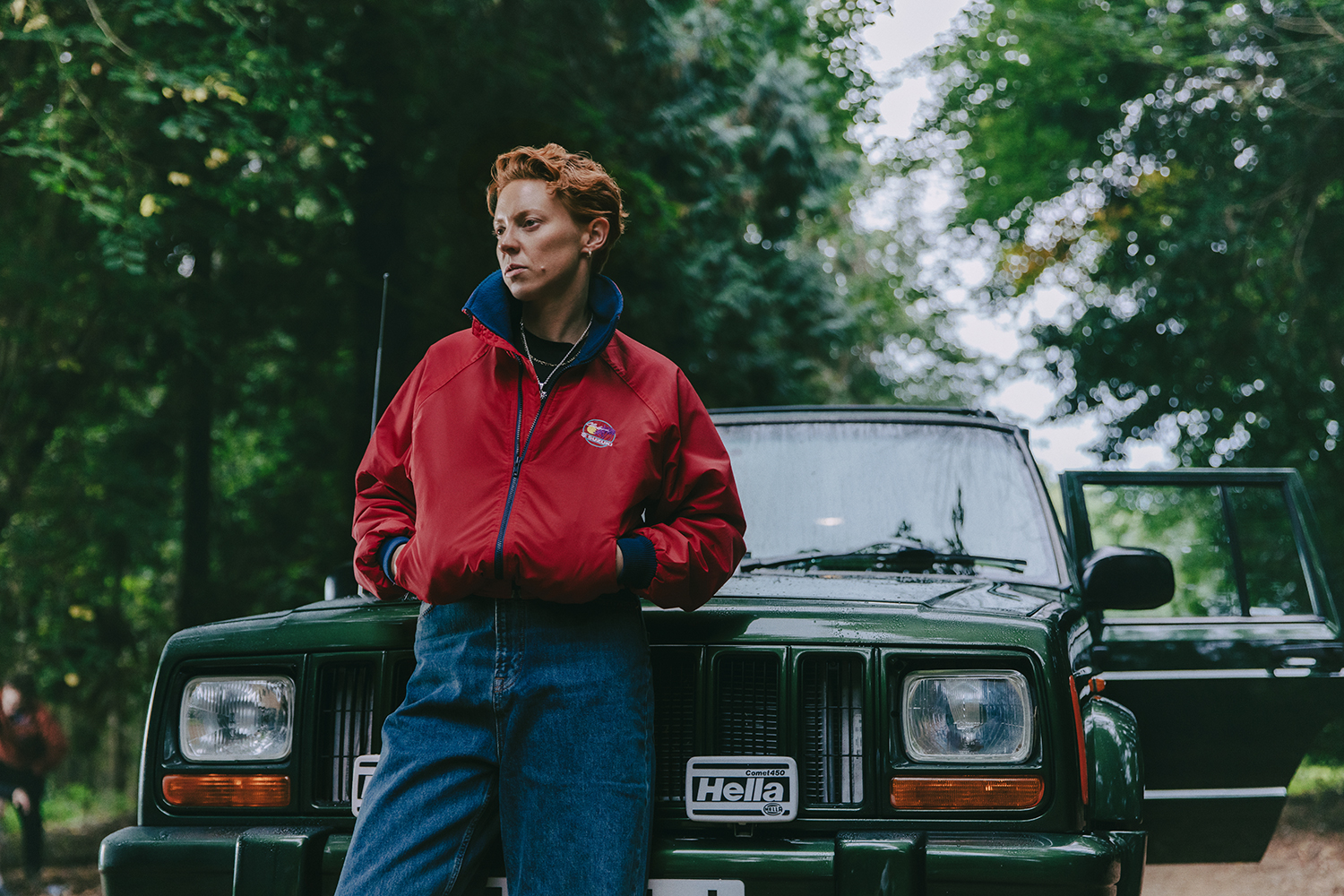
I always find the world first. If I don’t know what the visual world is, I find it hard to even make the album, they go hand in hand. For this one… cars have always been a thing for me in my life, they’ve always signified important moments. I love cars, I love vintage cars. I bought a 2001 Jeep Wrangler (TJ) in dark green with a tan roof, it’s shown up on my Instagram a couple of times. I bought it on a whim. I just looked up Jeeps online, went to buy it the next day, and paid for the insurance on the way home.
And then I parked outside my house, and I was looking at it through my window, and the title Old Flames came to me. It instantly brought up all of this imagery of Portland, where I am right now. It’s a very particular thing, it’s very American, it’s not a landscape we have in the UK, that whole Jeep, outdoor-living, pine trees sort of thing just flooded my brain.
I had been looking for a softer world because of the R&B influence on the record, something that wasn’t so neon. I was looking for a bit of a development in where La Roux could go, because we live in a new era now, a new time, and that neon stuff just feels old, kind of indie sleaze. It just doesn’t feel like where La Roux is now, you know? Even though that’s me, I hate to refer to myself in the third person, but you know what I mean.
When I wrote the song Old Flames as the title track of the record, everything started to feel like a project, and the visual world built with the album, they just fed each other, which was great. Without the album title and the visual world, it’s just a bunch of songs on my computer.
Because the album opens and closes with Old Flames, you did build a world that’s quite circular, even in its story.
So it starts with the end. It starts with what you know about where you eventually end up, kind of leaving everything behind. And then Cabin Fever takes you back to the start, to why you had to go through this journey, how you got stuck inside. I’ve had people telling me there has to be a story, and I was like, “the fuck is my story?” I think it’s easy to shy away and think you don’t have a story to tell, and I’ve never been as honest as I’m being now. Now you have to show a bit more, you have to let people in. You didn’t have to do that as much before, you could live in this mysterious world, no one knew what your songs were about or what was going on in your private life. It was a selling point. It’s just not a selling point anymore. And I think I was like, “okay, yeah, there is a story, it’s just about whether I’m brave enough to tell it or not.”
When you first started, some of your references were more folk-inspired, which tends to be much more lyrically heavy than dance music. This album is quite lyrically heavy too, were you using the lyrics as a way of processing what was happening, or did you think of the story first?
I think, actually, what happens to a lot of people, I think I saw Florence write about it once, is that you write something and don’t quite understand the significance of it until like a year later, and you’re like, “oh, I didn’t actually consciously understand what that was about until now.” In hindsight, sometimes I feel like I just wrote something because it sounds good, you weirdly dupe yourself into thinking it’s not that accurate, or about your life, and then six months or a year later you’re like, “whoa, fuck, okay, yes it is.” And other times, as you’re writing, you’re bowled over by what’s really going on inside your head that you hadn’t clocked.
This is what took time on this album. I was very aware that it’s quite easy to hide in ambiguity. I grew up on folk music, poetry, stuff like that, and it’s very easy to write metaphors and hide behind things. So for me, it was about finding the balance between the songs being metaphorical, visual, and playful, but also still being as honest as I possibly could be.
The chorus and hooks come out fast, that’s never a problem, that’s what starts the tunes, I’m always like, got it, chorus done, intro done. And then I’m like, “what the fuck am I saying?” That’s the part of writing that takes time for me. The bass lines don’t take time, it’s the storytelling that takes the time.
What comes first, the backing track and production, or the verses?
The production, that’s pretty much all there already. I’m actually going to post a voice note of my demo of Babyline – it’s from 2020 or 2021, and you can hear the whole track was already there. The whole thing sounds the same. It took me until 2025 to finish that song, by the way. But I leave it. I won’t listen to it for six months, either because I’m working on other things, or because I don’t think it’s as good as I thought it was. But the music’s always there, it’s about what makes it important enough for you to release it.
I listen to backing tracks, and I don’t listen to lyrics a lot of the time. If the backing track isn’t getting me, forget what you’re saying over it. I don’t really care how well someone sings either, if I don’t like the music in the background, whatever’s going on in the foreground is completely irrelevant to me. But that’s not how other people listen to music, so I have to find a way of not thinking that my backing track is going to sell my record, even though it would for me, I know it doesn’t for others.
That’s funny, because you do write good lyrics, and you have a great voice.
Don’t get me wrong, there are some singers I really appreciate and respect and think, “God, I can’t do that with my voice.” I saw Lola Young in concert recently, and I was like, “Jesus Christ, that woman can sing in a way I’ll never be able to sing,” and I loved watching that, I love watching a great vocalist, especially live.
But when it comes to having a headphone moment, the music in the background is what my brain is tracking. Which is why I love the music I referenced on this record, because actually the lyrics and vocals are all really good too, like in those Justin Timberlake records, or a Toni Braxton record. But then the music in the background is fucking sick, as well.
You mentioned some music references there, and I want to get into that, because you say it’s a visually very American record, do you research musical references based on where you imagine the record, world-wise?
The musical references started in 2020, when I kind of woke up from a slumber I’d been in for a long time. I hadn’t paid attention to what was coming out, what was popular, nothing. I’d completely hidden myself away, and I started to realise how bad that was going to be for my career. I remember asking my girlfriend at the time who someone was online, and she was like, “How the fuck do you not know who that is?” And I was like, “I’ve just never seen them, my algorithm’s not serving me that.” She said, “You need to wake the fuck up.” And I was like, “yeah, I actually do.”
Around then I got into the poppier side of the hip hop that was coming out, Drake had some ones that year, I think? Toosie Slide, Laugh Now Cry Later, Popstar, stuff like that. I’ve never been a Drake fan, but there was something about that hookiness with the modern hip-hop production that felt more pop than anything else to me. And because a lot of those records are sampling the R&B stuff I’m referencing now, Brandy, Lauryn Hill, I got reminded of all of that. I missed it. Not sampled, just more of that again, those vibes without someone having to sample them.
I’d loved all of that music when it first came out, when I was about twelve, thirteen, fourteen, that G-Unit tune Wanna Get to Know You, a lot of that smooth R&B-influenced hip hop from that era. Growing up with SWV, Ace of Base. I wanted to reel some of that into what I do, but it was new territory for me. My music’s always been electro or disco inspired. So I did a lot of listening to what I used to listen to as a teenager, Timbaland productions, Rodney Jerkins productions, watching them talk about how they made music, what inspired them, how they started tracks, trying things their way until I found my own way of doing it.
You never actually end up doing it someone else’s way, but learning how they do it helps you go, “okay, I don’t want to do it like that, but I learned this, and then I learned that.” I had to learn a lot more about mixing too. The pandemic was an amazing time to do all of that.
And what was the visual research like?
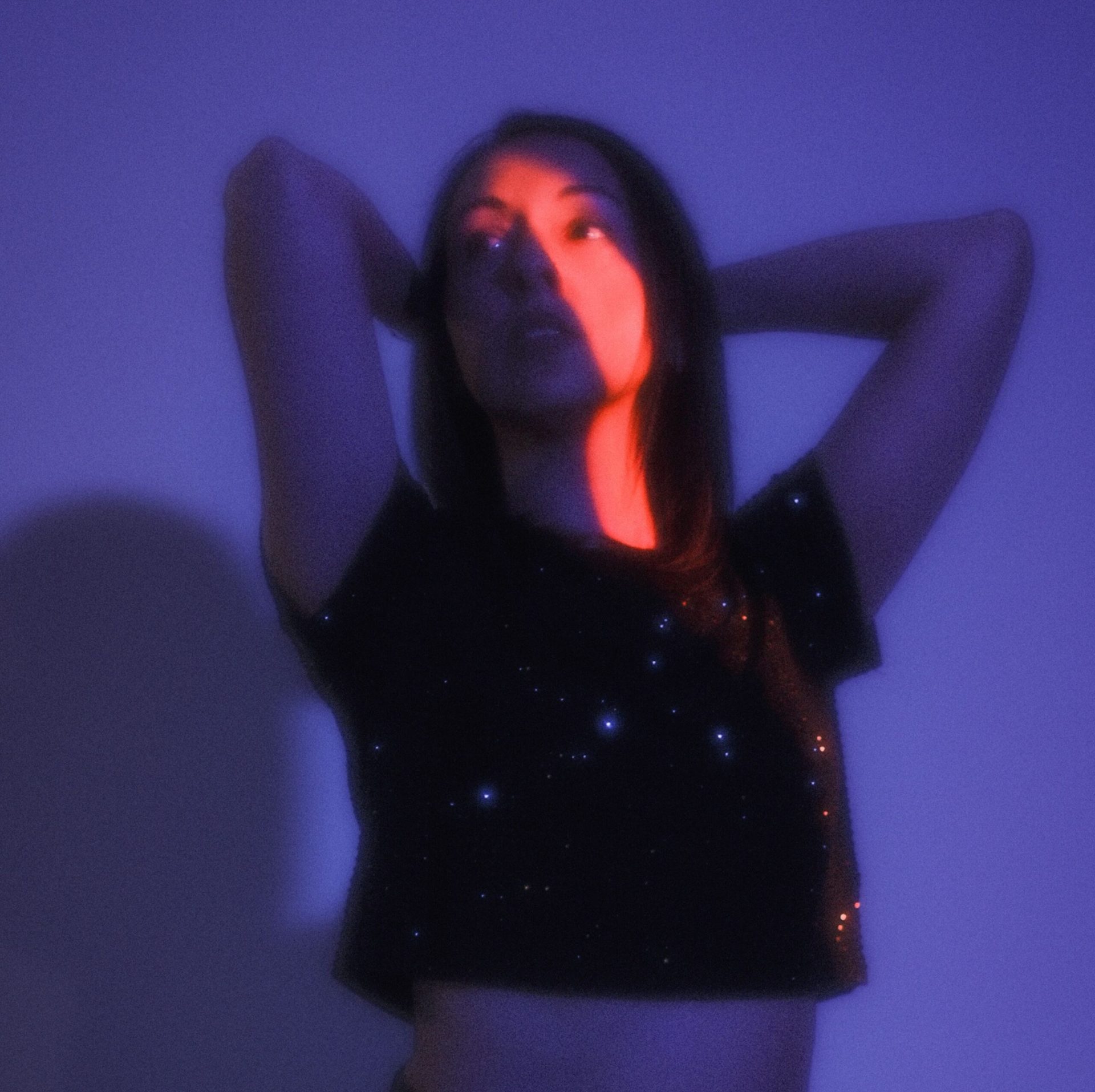
I was obsessed with Twin Peaks when I was younger, and Donnie Darko, and I started thinking about where I sat within it as a character, but still being myself, I didn’t want it to be a character that isn’t me. I was like, well, I already dress like a boy in a late-’90s movie, I’ve been dressing like that for years. So those character studies, people like Donnie Darko, some of those ’90s cinema moments and references, really helped me get in there. It was a fun process, watching ’90s films, even things like Clueless, just living in that world again a little. Even the Babyline cover, for some reason, reminds me of Home Alone, I don’t know why, but there’s something about the lighting on the side of my face, a particular cinematic reference that feels very stuck in the late ’90s.
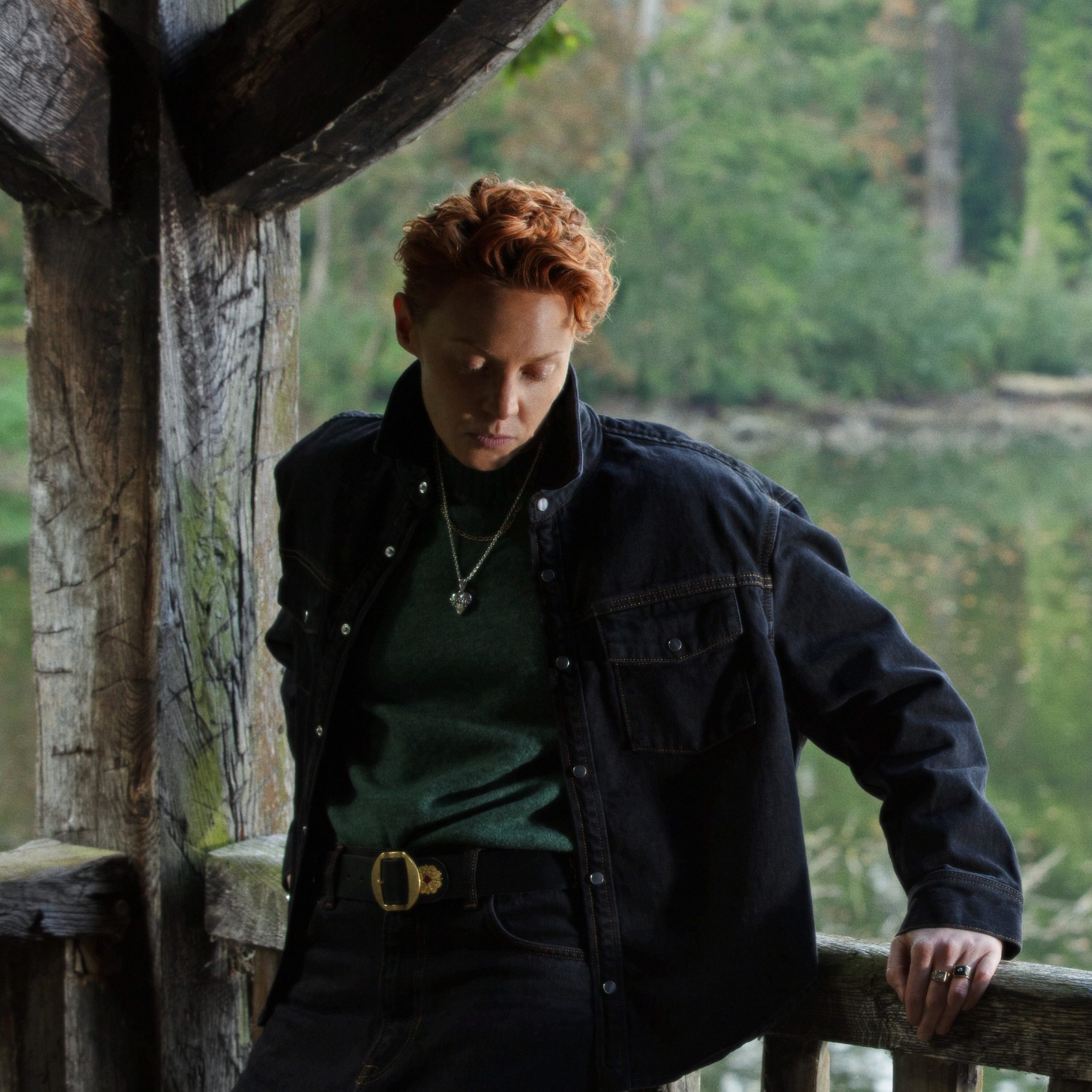
I think both music videos [Babyline and Cabin Fever] feel like they’re referencing the ’80s and ’90s in very different ways.
100%. There’s a slight folk thing in Cabin Fever that I didn’t mean to happen, it just did. And there was a Ralph Lauren reference as well.
Well on that, I did want to ask you about fashion, because you’ve made your own clothes as well.
Well, I buy vintage clothes and then I adjust them or embroider them, but I pretty much always buy vintage. I made all the clothes for Supervision. I designed them, went and got the fabric, the zips, the ribbing, absolutely everything, then took them to a tailor, took the shapes, had the calicoes made. I designed and made it all. I didn’t sew it myself, obviously,I’m not insane.
That is all kind of insane.
Look, it was a process, and it took a lot of time, and I loved it. I’m a huge control freak, I don’t work that well with a team around me. Stylists are always great people, great at what they do, but I always feel like nobody knows you better than you know yourself. I know what I like, I know what I want, and I’m pretty creative, so I’d rather just do it myself, but it does mean it’s nonstop.
Is there something about wanting to do everything yourself that isn’t just about control? You sound like someone who just loves learning how to do things, like that’s part of your creative process.
I think setting yourself new challenges keeps you alive. But there’s plenty I don’t know, I don’t know about lighting, for example. So when it comes to a music video, there are certain areas I’m really involved in, like the creative direction, and then there’s stuff where I’m like, I haven’t got a clue, that’s all you. So I think you have to pick your battles.
If you designed your own look as an artist in the first place, usually handing that over doesn’t work. You think people get what you mean, and then they come to you with a bunch of stuff and you’re like, “no, that’s not it at all.” You realise having someone else in the middle of that process just makes it clunkier and longer, especially when you could just walk into a shop, or draw something, and go, “this is what I mean.” So when I can do it myself, it usually makes things easier, less clunky, less frustrating, things happen quicker.
And I do love learning, but there are certain things where I try, and I’m crap at it, and I’ll never be any better, that’s when I completely hand it over. So there’s a level of perfectionism, but also I know myself. I built this visual world from the age of nineteen, by myself, and I think it’s just that I often know best what’s right for me.
This is something you mentioned earlier, referring to yourself in the third person. You’ve built La Roux as a project, but it’s also you, a way to show your artistry not always as Elly. What does it mean to you to have these two personas? Do they feel like two personas?
Kind of. I’ve tried to merge them more on this record, I think I’ve got as close to merging them as I can imagine doing for now. Before, there was too much distance between me and the character, and I got a bit lost. I couldn’t work out if I should introduce more of the character into my personal life, or more of my personal life into the character. It got a bit Ziggy Stardust, where you’re like, “I actually don’t know who I am anymore”, should I be La Roux all the time, live like that, like Prince or whatever? It became too much. I needed it to be more relaxed, more me.
But I think it’s nice to have the project. I always wanted it to be a project name, not my own name, mainly because I knew from nineteen that I was never going to make the same album twice, the problem is no one else knew that. I felt like a lot of other artists had their own name as their moniker, and it was harder for them to move away from their first album’s identity. Gorillaz don’t really have that problem, Damon Albarn bridged a really good gap between different projects, and people don’t necessarily expect him to do the same thing again and again. I wanted my name to give me the ability to move around more. I knew I was never going to make Synth Pop Vol. 2 from the time I was tiny, but nobody else knew that. I think people are starting to understand what La Roux is now, but it’s genuinely taken about a decade for people to go, “oh, it’s a project, she just does whatever the fuck she wants.”
You’ve spoken about this before with Supervision, but I wanted to ask about when you lost your voice, it feels like it ties into Cabin Fever too, as a kind of metaphor for feeling trapped by the weight of success. With even more hindsight now, how do you feel about that time, when your body literally stopped you from doing what you do?
That was a very, very hard time in my life, and it’s been difficult to forgive myself, even though it wasn’t my fault, that I had to run away so hard. I wasn’t well. It’s frustrating because you look back and think, “damn, if that hadn’t happened, things would have been so different.” I’m having to return to things now, and it’s not from scratch, but it’s not from where I was either, and that’s hard. I don’t get to return to the success I previously had, there’s no two ways about it. The time out has been palpable, it hasn’t gone unnoticed. But I don’t think there was anything I could have done about it.
I was probably touring too much for the age and type of person I was. I’m fairly sensitive and pretty neurodivergent, and I was too young and too sensitive to be dealing with what I was dealing with then. I also had all the wrong people around me, which took me too long to work out, until it was too late. I tried to protect myself, my parents tried to protect me, I said I needed more time out, I was not well, I was not okay. And no one gave a fuck. It was, “well, you should be grateful and shut up. I don’t care if you’ve got laryngitis, I don’t care if you can’t sing today, you’re getting on that stage.” It was rank. It happens a lot less now, but it took a long time to recover, and it did make me run away hard and not trust anyone, my trust issues were through the roof.
When I got a new manager in 2017, he could see the damage that had been done. He said, “It’s going to take longer than you want it to take to get you back to a place where you’re ready to do this again.” I was like, “don’t fucking say that, it’s already been years.” He said, “I’ve seen this before. I’m going to look after you, but it’s going to take time”, which isn’t what you want to hear when all you want is to come back and do it again, and you think you’re ready way before you are. But it was a difficult time. You can’t regret it, things happen for a reason. I needed to do the healing, I needed to take that time. So be it. I’m thirty-eight. It is what it is.
Well, beyond it happening for a reason, the music you’d be making wouldn’t be the music you’re making now. And you’re proud of the music you’re making now.
Yeah, exactly. I wouldn’t have the same shit to write about, and I have to be honest with myself about that. Unfortunately, there’s something notoriously boring about being in the music industry and then writing about it. I think, in a way, I got to move out of the music industry for a decade, live my life, and now I have things to say about life again. There’s nothing worse than someone just writing about being on tour all the fucking time, it’s not relatable, unless you’re obsessed with that person and their life, which obviously a lot of fans are.
It can be quite interesting, especially at first, and then you’re like, “actually, I can’t relate to that because my life isn’t like that.” I think being an artist, and being successful in any way, and still finding things that are real and relatable to say, can be tough for everyone. So in a way, I’m grateful I just got to live a normal, messy, emotional life for another ten years.
How are you feeling about your day-to-day life now? Are you at peace after all that? Are you happy with the life you’ve built?
Yeah, I am. Life is messy, man, and I think people forget it’s meant to be messy. I enjoy the mess more now, it’s not a mess to me anymore. We’re all looking for that clear run, right, when’s the clear run coming? It’s not going to happen, there is no clear run. I think it’s about enjoying the surprises, the ups and downs, the hard work. It’s still one of the best jobs ever, I get to make music and create visual worlds for a job. I couldn’t see that when I was younger, it’s so much harder to see when you’re younger, it’s just scary. But as you get older you get more and more grateful, like, shit, I was lucky, I get to do this.
My day-to-day life is so much more relaxed than it used to be, in every part of it, and I remind myself to be optimistic and enjoy life. None of it’s guaranteed, and I just try not to look at things as negatively, with as much fear, as I used to. The more you do that, the more things tend to go right, and be exciting and surprising in the way you want, rather than terrifying. It feeds into itself, the more you wake up with that attitude, the more you get it back, and I’m definitely experiencing a lot of that right now. It’s a really nice place to be, but it took time to learn how to get there.
You’ve been back to doing concerts for about a year now, and you’re currently on tour with Hilary Duff, what does it feel like to be fully back?
It’s really nice, it’s a great tour to be coming back on. The album’s not out yet, so it’s been an amazing opportunity to try out new songs and get back on stage without the pressure of it being my own tour. That’s actually been a real saving grace. Everyone is insanely nice, it’s very chilled, we’re doing shed tours, amphitheaters, everywhere outdoors, it’s summer. It’s probably about as delightful as touring gets.
Touring can be hard, windowless rooms, buses, back streets a lot, and this isn’t like that at all. I’m just so grateful this is my introduction coming back, and everyone’s so nice. It’s a small enough team that you feel like you know everyone, big enough that it feels like some weird huge summer camp the whole time. So far it’s been a joy. To the point now, I’m really excited about doing my own headline shows. I feel like I’ve got back into the swing of touring, and I’m not remotely apprehensive about any of it. I’m looking forward to everything that’s coming. It’s been amazing.
What’s the best new song to play live so far?
You know what? The next single, Lose Myself, is really, really, really good to play live. I can’t wait for that to come out, because then people will know it, but even though nobody knows it, it’s getting energy back. I think that’s probably the song of the record. But I also love performing Babyline, it makes me happy. I wouldn’t care if no one else is enjoying it, I’ve just got to that point where I’m like, “I enjoy it, and that’s enough.” Do you know what I mean?
I’m happy to hear that’s the next single. It’s a great song. And also a great tour to come back with, because there’s a nostalgia to the Hilary Duff tour that this album also has.
Yeah, yeah! And there’s a lot of people on this tour who don’t know anything about La Roux, they just know Bulletproof. It’s really nice seeing that audience who all bought Bulletproof and went to college and listened to it when they were nineteen or eighteen, and you can see them connecting the dots of the nostalgia.
Lose Yourself is out now and the new album “Old Flames” is out November 06.
La Roux is currently on tour supporting Hilary Duff across the US, UK, and Australia.
Fo latest info go to www.laroux.lnk.to
Interview Natalia Albin
Top photo Shan Steward