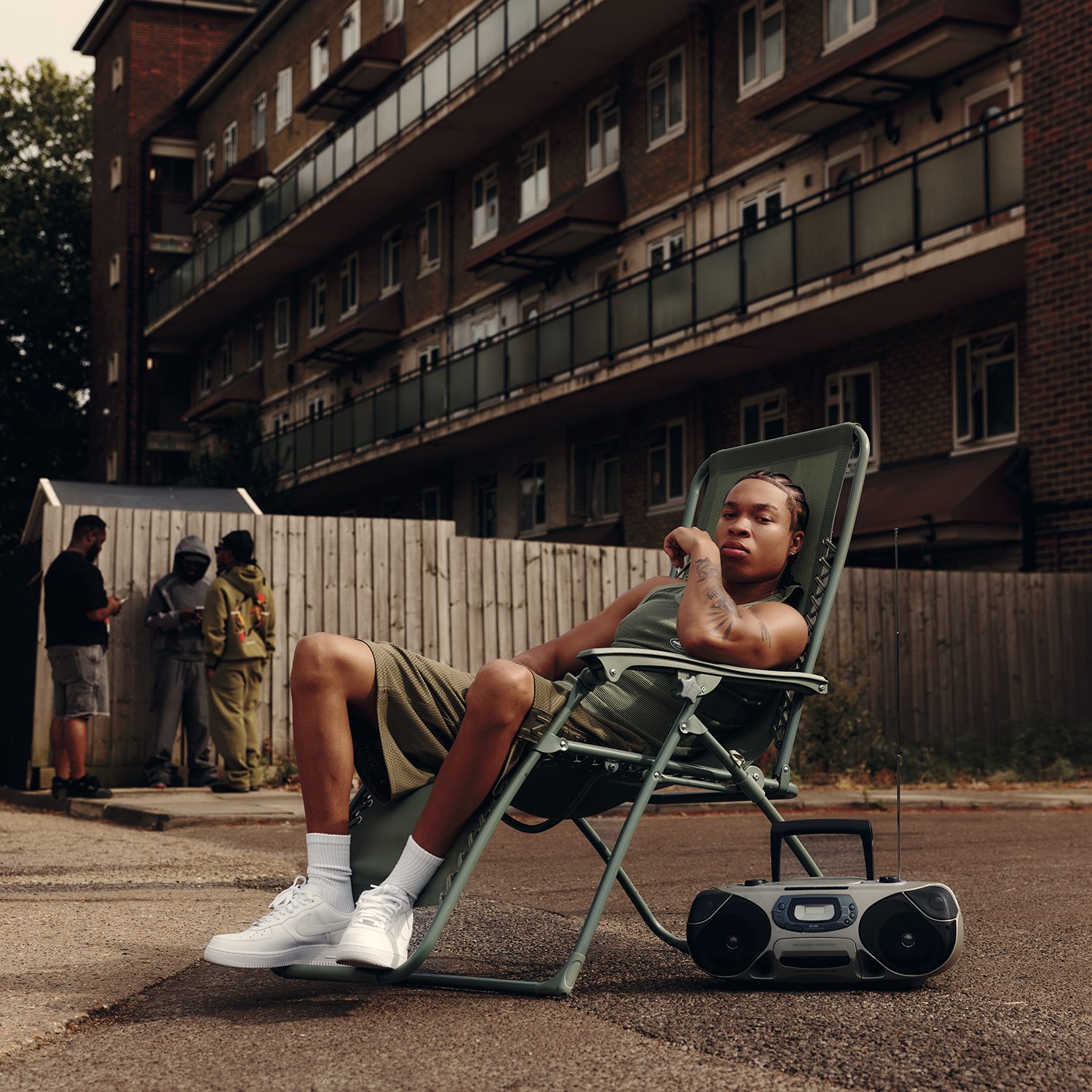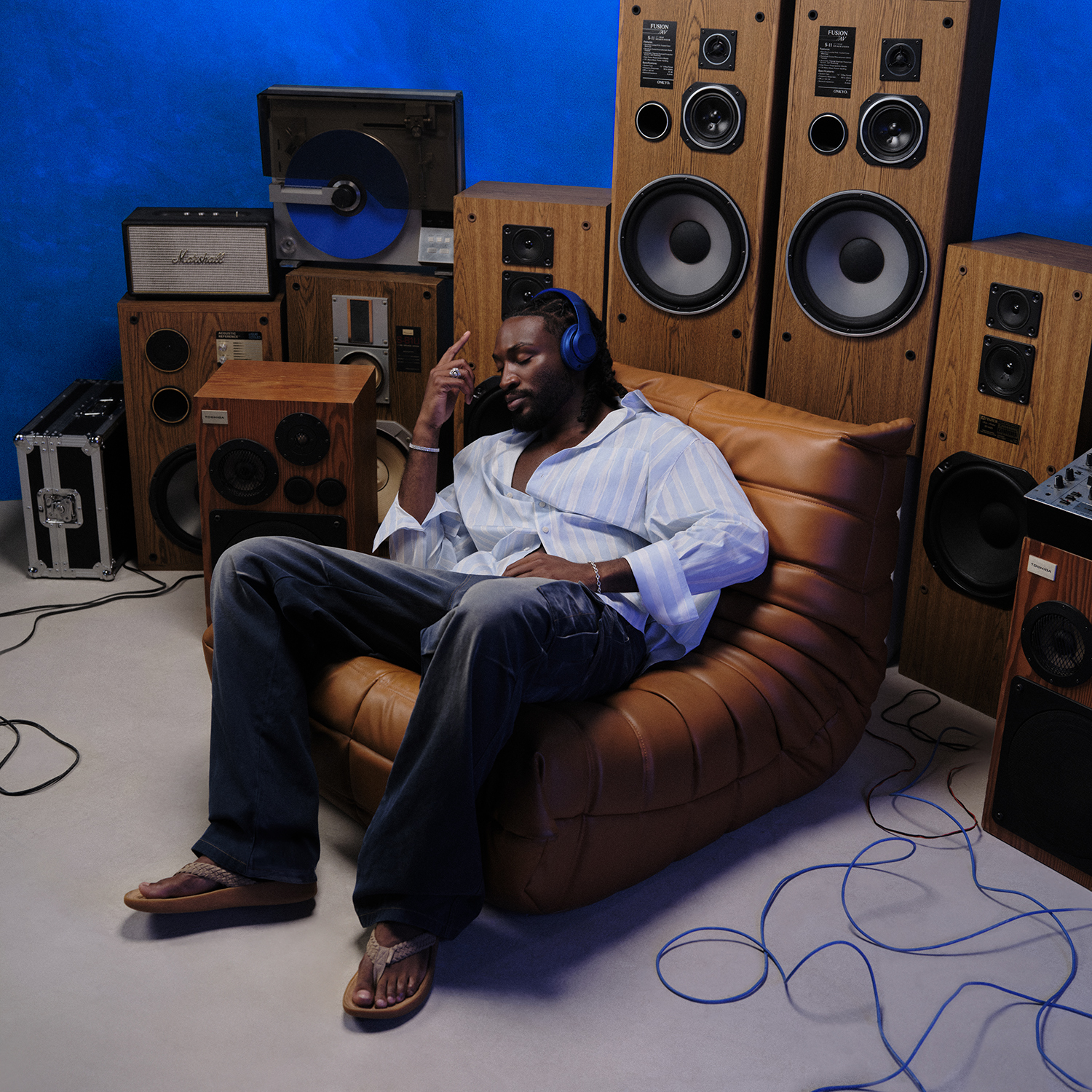
I remember first coming across Odeal through my sister a few years ago, listening to his 2022 track “Coffee.” I was immediately struck by the warmth of his vocals and the tranquility of its summer-like production. Since then, Odeal’s success has grown, with achievements including a MOBO Award for Best R&B/Soul Act and Best Newcomer, a feature in Forbes 30 Under 30, being named Billboard’s African Rookie of the Year, and selling out London’s O2 Academy Brixton earlier this year. This Friday, he arrives at All Points East on a lineup that includes Jorja Smith, Tems, Nia Archives, KWN and Ayra Starr, to name a few — artists each carving their own distinct space within contemporary music. For Odeal, the festival comes at the beginning of a new chapter. His latest project, For A Good Time…, trades some of the introspection of The Fall That Saved Us for something lighter, freer and more spontaneous. Yet beneath its carefree nature is an artist who is remarkably deliberate about what he wants his music to make people feel.
Recorded across Medellín, LA and London, the seven-track project was shaped by writing camps and a changing cast of producers and musicians. Speaking with Odeal, it became clear that his approach to music is as much about environment as it is sound. He describes testing songs in different countries, cities with different people, constantly asking whether they pass the “vibe check” — in other words, whether they can still create the same feeling of warmth and summer freedom outside the room in which they were made. For A Good Time… is an invitation to let go and embrace the present moment, but the world surrounding it has been carefully considered.
His attention to detail extends beyond his music; through OVMBR, Odeal created a space where music, fashion, individuality, community and shared experiences intersect. Tied to a difficult period in his life, it forced him to think differently about the impact he wanted to make. He recalls a saying that stayed with him: “there are three times that you die: the day you actually die, when you’re buried, and the last time anyone ever mentions your name on earth.” What began as something connected to his own artistry has since grown into a community built around freedom, self-expression, and the simple act of enjoying life with other people.
In conversation with 1883, Odeal is calm, thoughtful and quietly philosophical. He is increasingly interested in what an artist can create beyond the songs themselves — and what it means to give people a world they can step into, even when he isn’t in the room.
Hey Odeal. How are you?
Good, how are you?
I’m good. I’m actually very excited for this interview.
I do admire your work, so this is a bit of a pinch-me moment, won’t lie. But excited for All Points East. How do you feel about it?
Thank you so much. I feel good, you know. I feel the energy in London is just incredible at the moment and I can’t wait to finally do a summer show, good production.
We’re really putting our foot in this one, you know, so I can’t wait for it.
I look forward to it as well. In my opinion, I don’t know, I might be biased, but I think, and that’s one thing I do love about your music, there definitely is a feeling of summer, even when it’s sad. I don’t know how you do it. It should be good.
It’s going to be good, honestly. “London Summers” as well — in London during the summer, all of these songs, I can’t wait, it’s going to be fun.
And I think this year might be the best summer, in my opinion.
Low-key, I was thinking that today, I was literally — what was I doing? I was about to brush my teeth, and I was like, wait, I can’t even lie. This summer’s been really interesting for a lot of people — just feels like everyone’s just kind of back to normal, back to life after everything that’s happened over the past couple years. People are just living again, staying in the moment, enjoying themselves.
100%. But on the topic of music, For A Good Time… feels like a noticeable shift from the introspection of The Fall That Saved Us, and towards something freer and more spontaneous. What were you giving yourself permission to do differently when making this project?
For me, it’s about being more open. I approach every single project with a very free mind. Naturally, it’s not even like, this time I’m going to do this, and this time I’m going to do this. I think one of the things I had was a constraint when it came to making this project.
I was in the middle of two tours, and I had a short window of time where I travelled to different places. In those places, which were hot countries, I was trying to just capture the essence of summer and feel-good vibes, all of the great times that I had in those moments, and put that into the music in hopes that people will be able to receive it like that when the time comes — when summer comes around, wherever you are in the world, when the project’s out. But I feel I really go into every single project with an open mind and just allow inspiration from where I’ve gone to and how I feel to just influence the music.
I love that. You recorded the project across Medellín, LA and London, through writing camps that brought together different producers and musicians. How did moving between those places and working with different people shape the way you approach the music?
Pertaining to the people who worked on the project, there’s a very select few people that I trust in terms of their ears. And a lot of the time I work with these people in different places I go to.
So if I’m in LA, I’ll be working with Jonah and Nez and Los Hendricks, and if I’m in London, I’m working with Charlie Pitts or Miles James, and what Colombia allowed me to do was finally bring all those worlds together in one place. I’ve never had a bunch of people that I felt, I trust all of you guys, all you guys’ opinions, all in one place. So, for the first time, I allowed all the people whose input, opinions and musical ear I trust to be in one place.
We brought Charlie Pitts, Miles James, and Jonah Christian, all three great producers that I respect, together. The way they worked was just incredible; it was almost as if they’d known each other for ages. Yet, they all have separate lives, families; two of them have kids. But the way they all came together, it made so much sense, and we all love working with each other. At that moment, we were able to make different songs, working with each other, picking up the songs, dissecting things, making a track list and being like, no, this doesn’t suit it; this doesn’t work, this works — that’s what happened in Colombia.
After Colombia, we then moved on to LA, and Miles had left and gone back to London. Charlie Pitts came back from Colombia to LA — this was his first time in LA, so we’d been working there for a while. We were in this house together, and we were working alongside other collaborators like Ezra, who was from the last project, and Oz Beatz as well, who was also from the last project. Charlie ended up linking up with Jonah again in LA.
LA just has a different energy and is one of my favourite places to create. It was just good vibes and we had more collaborators who I trusted who were able to vet the music. It sounded great in Medellín, but when we brought it to LA, does it still feel the same? Does it still hold that weight? So, it’s that process of elimination. Does it still take me back to that place? Does it still give summer, you know? So that was really it. I’ve come off the plane now, and I’m listening back to this song. I don’t really know. Is it still giving me that vibe?
I sat with it. We’d had two days sitting with it, and the weather’s like this today, or today’s been this day, or I went on a walk today, and I was listening to it, or went on a drive, and I was listening to it. Should we change this? So, I think just the different locations we went to and being able to live with the songs together allowed us to make it what it was. I remember Miles James sending a video once we’d made “Bluey Vitton”; he made a video of him driving down west London, playing back one of the revisions of the song, and he was just like, no, no, it still feels good. It still feels good in London. So we were always checking, is it passing the vibe check?
You mentioned quite a lot about the feeling of summer — what does that feeling feel like for you? What memory is that feeling attached to?
Summer for me is more like, it’s freeing. It’s the opportunity for people to express themselves, be their true selves, and be happy. Happiness is key. Happiness, love, all those feelings are key. In “London Summers,” I’m talking about summer personified as a woman and all of those feelings that come with just being in the sun, that carefree element of just being — you know what, I got my shades on, I don’t care who’s looking at me, I’m just vibing.
Everyone knows what that feeling is like, and it’s like, what is the soundtrack to that? What is the vibe? What is the beat that evokes that emotion? What makes you move regardless of whether you know the song or not? What just gets you in that vibe to get moving and vibing — and the topics sometimes don’t need to be too heavy. I make R&B music, but I’m also conscious of the fact that I don’t want to hear that all the time. I don’t want to hear people crying about their past relationship or being in conflicts all the time. I’m very conscious of that. But also, I’m very true to how I feel in the moment.
How do I want to feel in the summer? How do I want to move? How do I picture people vibing to this? That’s really it. Summer to me is a time to just be free and express yourself. So in the music, I make sure that the selection of beats and the topics I speak about reflect that — or you can live vicariously through my lyrics, if anything.
I think living vicariously through your lyrics is definitely happening, if it hasn’t already happened, ha-ha. And if it hasn’t happened, it should be happening.
It should be happening.
Yeah, 100%, ha-ha.
Ha-ha, a lot of people haven’t been to Miami. A lot of people haven’t been to Argentina.
But we have been to Miami in our brains!
You feel me? But you’ve been there. Everyone’s been there. And it’s so crazy. It’s so crazy. When I went to Miami to shoot the music video, and I’m playing “Miami,” and I’m looking around, I’m like, oh my gosh, this is exactly what the song feels like. And I feel like anyone who does go and listens to these songs — that song in particular — is going to be like, this is exactly how this sounds. Then when you go to London, you’re listening to “London Summers,” you’re like, this is exactly what I need to be listening to.
It works. It works for people around the world.
But it’s so funny that you mentioned Miami, because I went to see Leon Thomas at his concert in April and you both performed “Miami” for the first time in London. What was that moment like for you?
It felt good. Leon’s the homie. He was in London, and I just felt it was only right for us to perform that one together. It also did feel good, performing it in London for the first time. Everyone going crazy, singing the lyrics back to me. It just felt good.
“Coming Home” features Jorja Smith and the song feels like the emotional centre of the project that’s otherwise built around movement and spontaneity. What did you hear in Jorja’s voice that made you feel she could bring something to the song that you couldn’t have achieved alone?
First off, it’s Jorja. Her vocals are incredible; that’s number one. To be fair, if you hear a Jorja record in the summer, you’re singing along — that’s just her voice. It’s London. Even though she’s not from London, her voice is so UK. It’s a staple. Those Jorja records, when they get mixed into joints, like out of our AirPods, or during the summer, it’s just exactly what you need to hear in that moment. I feel like “Coming Home” — we know that term, even when it comes to football and stuff, we’re like, “yo, it’s coming home” — it’s such a UK term. Just like “London Summers,” it felt like a part two to that. It’s like I’m still coming home, but like a double entendre. Her vocals are really important, because I don’t think I’ve had a summer record with a female vocalist, and she was just perfect for that. I felt like it was just perfect for her. I couldn’t have done that on my own. That’s like one of those records I wouldn’t have done on my own.
You’re also going to join her at All Points East on the lineup this summer. Does performing alongside someone you collaborated with change the experience for you at all?
100%. I feel like it just brings more life to the record and it gives the audience a chance to see how you connect together on the records and the synergy. I’m looking forward to it, it’s going to be a blast.
There’s a real sense of world-building around this project, particularly with Bluey becoming a character and symbol for its carefree spirit. Where did the idea for Bluey come from, and how do you see that character developing beyond this project?
Bluey’s character came from “Bluey Vitton,” which is a strain of mushrooms. But the Bluey was a representation of curiosity in terms of freedom, which is what the mushroom represents. I felt like this is what we should leave with — carefree spirit, carefree energy. That being the last song for this project, I want people to remember a specific time, or a specific moment.
You’re now creating space for other artists and creatives through OVMBR? How do you actually say it — is it OVMember?
Like November, but no N — it’s just OVMBR.
Before I continue my question, why no N? Is it because of Odeal? But then, if it’s because of Odeal, then what’s significant about November?
November was the month that OVMBR was created. It was a special month. Back in 2017, I became ill, was admitted to hospital for most of that month, but I made it out of the hospital that month. I made a promise to myself that I would memorialise that time period. It went from November to OVMBR; it was a month where I would release music multiple times. I made a promise to myself to increase my output to make sure I was giving back to my supporters. There’s a saying I heard which goes, “there are three times that you die — the three stages of death: the day you actually die, when you’re buried, and the last time anyone ever mentions your name on earth.”
And for a lot of people, that last stage happens very, very fast. It might take five years, ten years, but after a while, people forget about you and things that you’ve done. I wanted to make the month of November special and make sure that I was putting out as much music as I could. I went from releasing regularly to releasing four times in November. I released four singles, a track every week, then moved to releasing projects every month. I made sure that my fans knew what November was. If November was coming up, people knew that they were going to receive something. I wanted to make it a time where people could remember, this is the month where we get this — a checkpoint for fans to know it was this November that I locked in. If you start listening to me at any time of the year, we could basically start again from that specific November. So you can basically catch up — I listened to this November project, so now I’m up to speed with everyone.
It was really about making sure that I keep pushing, because I was in hospital thinking, if I was to die, nobody would know who I was — I hadn’t made enough impact for anyone to know about my music or anything I was doing. So I was like, I’m going to up the ante and make sure that this month everybody knows what’s going on, regardless of how many times I release in the year. November would become that. So, we started by taking off the N.
After that, I felt like this isn’t about me anymore — the fact that I was ill or my output — it’s now about a community of people who care about the music that I actually released that month. If you care about it, you’re a collaborator: you’re listening, you’re streaming, spreading the word or inspired by it — you’re part of the community. I made an acronym for November, which is OVMBR, which stood for Our Variances Make Us Bold and Relentless.
Everyone who’s interested in what’s going on and is on that frequency is special and has a special calling. So it went from me releasing a song a week, to projects, to then having parties. We throw events in November, and all of those people who I told you were at the checkpoint could finally be like, oh yeah, I started listening at this point — they could all actually come together and talk to each other, network, and understand that there are other people like themselves who listen to the same things or have similar or different interests.
It was just a hub for people to come together. Because one thing I realised in London, and in the world in general, is that if you listen to an artist that not everybody knows, you might be a bit shy to be like, I listen to this artist, I rock with this artist. You might not want to put your hand up because you don’t want people to judge you.
If you realise that other people are listening to you, you’re kind of like, oh, yeah, me too. So online, there wasn’t much of a conversation. People would randomly be like, yeah, I love his music, but other people would be like, who the hell is that? So when you now create a space for everyone to come to, and you’re looking at people and you’re like, oh my gosh, what! Do you listen to him too? It allows for there to be a free and open conversation for people to be like, yeah, I do. I know that there’s a community of people behind me that also listen to me too, and not only do we listen to my music, we know how to dress. We have similar or different tastes that we can all appreciate, and the centre of that whole thing was the music. As I said, I’m an R&B artist, but I have eclectic tastes, I would say, in terms of sounds. So the DJs for those events were very important. People should come there and not feel like I’m about to hear ballads for another six hours, or I’m about to see him perform and I’m drunk. That’s not what I wanted. I wanted it to be that I’m not performing.
We’re all going to come in and we’re all going to vibe, and there’s not going to be no tables, no sections, no nothing. The DJs are going to come with different flavours and sounds from different parts of the world. It became a whole community of people who got it and understood each other, friendly and inclusive of wherever you came from.
That’s honestly incredible. It sounds like it’s definitely gone through its journey into a bigger platform. I do admire that it’s all about creating space for individuality, which is very beautiful to hear. How has being on the other side of the room as the person creating the platform changed how you see your own place within music?
I think it’s an interesting question to answer. I feel like you go from making music thinking, yo, it’s me, me, me — to, no, it’s about the world. The more honest I can be with myself, the better. You have to be honest with yourself at every given stage. Am I being real with myself? Am I being real with the community? Is this what they want? You also have to listen to people, you have to understand how people operate in spaces outside of the house, outside of the DSPs, outside of all of that stuff, which opens up your mind to just the possibilities and what people are like. It’s less about what we are streaming and more about, outside of the home, how are we activating these people and how are we connecting with people outside of the house? I think that’s really what it’s been like for me. How are you curating vibes that people remember, past the music? How are you curating feelings that, even when you’re not in the room, even when I’m not there, how are you creating those spaces? It stems from the music and who’s able to DJ the music, who’s able to speak about the music and what they represent. It’s very important. I think there’s a lot of things to consider. You just have to consider way more than just when it’s about you.
You’re joining a lineup that brings together artists like Jorja Smith, Tems, Nia Archives, KWN and Ayra Starr, all with very distinct approaches to their sound. What excites you the most about being part of that particular mix of artists? How does it make you think about the space you’re carving out for yourself as an artist?
I’m just grateful to be on this lineup. I’m not going to lie to you. I feel being alongside my peers at this time — it just feels like there’s no better time than now. Especially with what I’m doing, it’s an interesting place where not a lot of people have actually been, I would say. So, to just be with those other artists and be able to represent in the way that I can and the way that I do, I’m grateful. I know it’s going to open up doors for other people to be like, yeah, I can do it too, you know? If you look at where I’ve come from and the musical journey as well, to be on that great lineup, it shows people that it’s possible and you can do this too.
Thank you.
I appreciate it, Nancy.
No, thank you so much for your time, Odeal. It’s been so lovely speaking to you and I look forward to All Points East.
For sure, it is going to be lit.
For A Good Time…is out now. Odeal will be playing at All Points East this Friday, August 21.
For more info go to www.allpointseastfestival.com
Follow Odeal via @iamodeal
Interview Nancy Anekwe