Priya makes jewelry. She trained as a traditional metalsmith and spent years working with hand tools — gravers, burnishers, hammers. When she added a fiber laser to her studio three years ago, she didn’t expect it to change how she thought about design. But it did. ‘The laser lets me put details into silver that my hand can’t make,’ she told me. ‘Not because my hands aren’t skilled — but because my hands have physical limits the laser doesn’t have. I draw the pattern, the machine cuts it, and what comes out is exactly what I imagined. Sometimes better.’
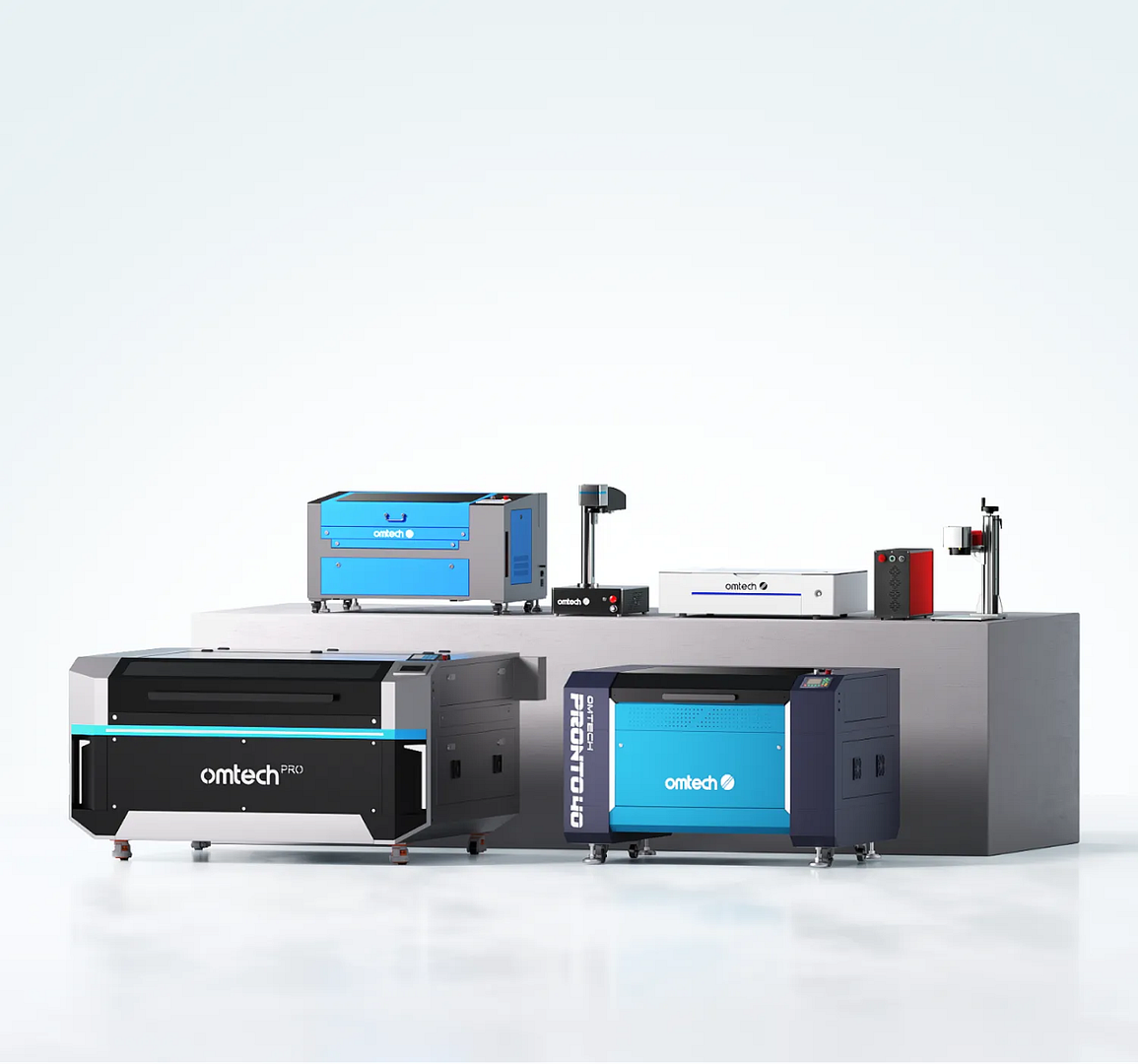
Laser engraving has moved well beyond its industrial origins. It now sits at the intersection of fine craft, product design, commercial production, and personal making — used by jewelry designers, furniture makers, sign shops, fine artists, and Etsy sellers alike. What makes it significant for contemporary design isn’t just the precision. It’s that laser precision is now accessible to individual makers, small studios, and independent designers who couldn’t reach it before. OMTech’s laser engraving machines cover the full range from desktop studio machines to professional production systems.
What Laser Engraving Actually Does to a Surface
According to Wikipedia’s laser engraving overview, the process uses a focused laser beam to vaporize or alter material at the point of contact — creating recessed marks, surface texture changes, or color modifications permanently integrated into the material. The depth, contrast, and character of the mark change entirely with material choice. The same machine parameter set produces a clean dark mark on walnut, a bright white mark on black anodized aluminum, and a subtle frosted texture on clear acrylic. Understanding these material relationships is the core creative skill in laser engraving design.
This material specificity is what makes laser engraving both creatively rich and technically demanding. A design that works beautifully on slate may need significant reworking to achieve the same visual weight on bamboo. A fine-line illustration that reads clearly on dark wood may need thicker lines on a lighter hardwood where the laser mark has less contrast. The best laser engraving designers understand their materials the way a printmaker understands paper.
| MATERIAL | LASER TYPE | VISUAL EFFECT | DESIGN CHARACTER |
| Walnut / cherry / maple | CO2 | Dark brown char mark | Warm, artisan, rustic — fine detail legible |
| Black anodized aluminum | Fiber | Bright silver-white mark | High contrast, modern, precise — logo and text |
| Clear / colored acrylic | CO2 | Frosted / matte texture | Soft, diffused — works for signage and decor |
| Slate / stone | CO2 | Light grey exposed surface | Natural, organic — strong contrast on dark ground |
| Leather | CO2 | Darkened debossed mark | Rich, tactile — fashion and accessory work |
| Stainless / titanium | Fiber / MOPA | Black anneal / color | Industrial-precise or color-rich — jewelry and products |
| Glass | CO2 | Frosted surface etch | Elegant, subtle — giftware and homeware |
Six Design Disciplines Where Laser Engraving Changed Everything
Fine Woodwork and Furniture Design
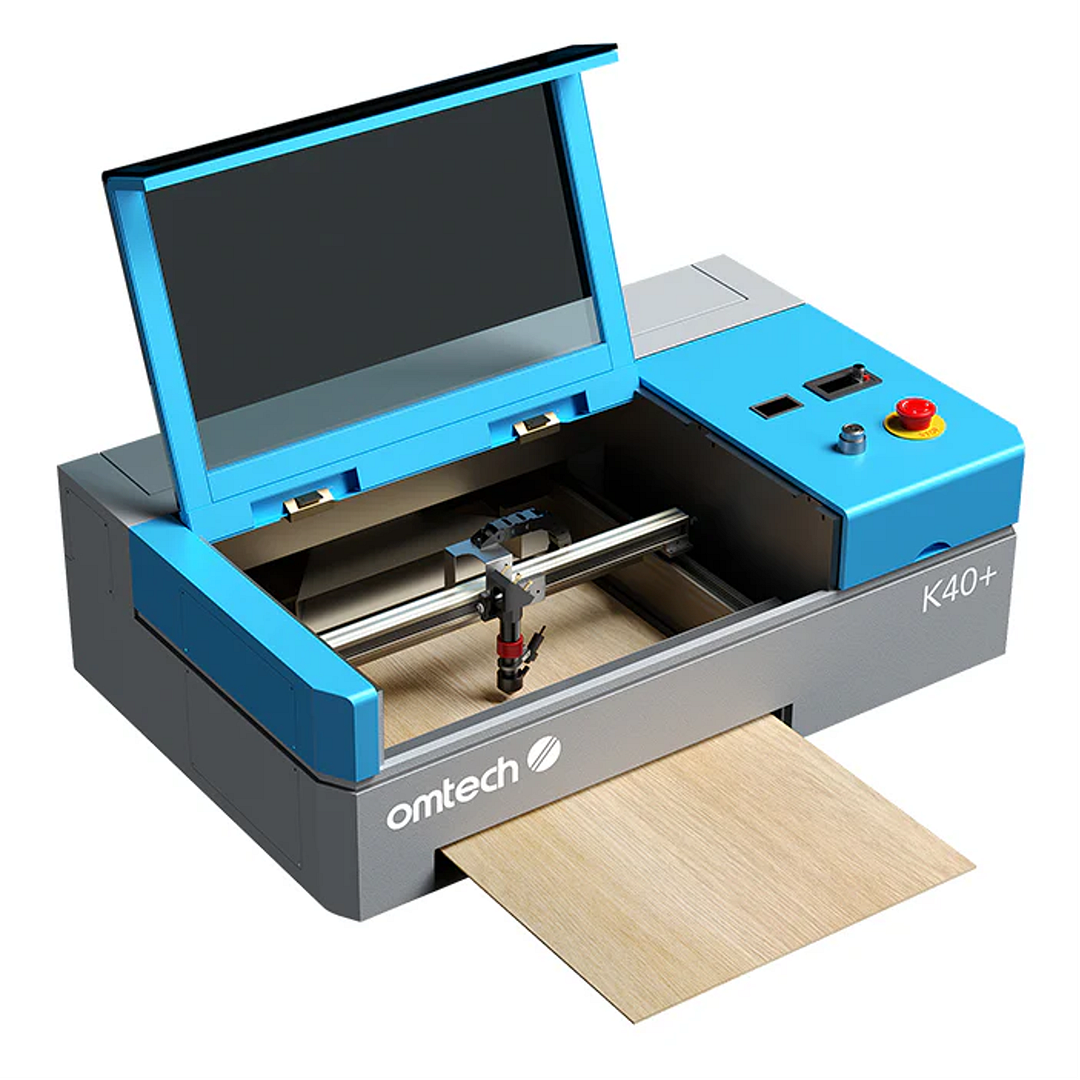
The furniture and woodwork design community was among the first outside industrial production to embrace laser engraving seriously. CO2 lasers engrave hardwoods — walnut, cherry, oak, maple — with a fineness that hand carving and routing cannot economically match. Furniture designers now incorporate engraved surface patterns, inlay guides, and joinery detail marks that would have been cost-prohibitive with hand tools. OMTech’s CO2 laser engraver machines handle hardwood, plywood, MDF, and bamboo — the core materials of contemporary furniture and object design.
Wood Panels and Decorative Surfaces
Material: Hardwood, plywood, bamboo Laser: CO2 laser Style: Raster engraving / vector
Detailed illustrative patterns, topographic maps, architectural renderings, botanical illustrations, and abstract geometric designs engraved into wood panels for wall art, furniture surfaces, and architectural elements. CO2 lasers can produce photographic-quality raster engravings in wood — translating grayscale images into variable depth marks that read as continuous tone. Large-format CO2 machines handle furniture-scale work; desktop systems handle art panels and smaller decorative objects.
Jewelry and Precious Metal Work
Priya’s experience is shared by hundreds of jewelry designers who have added fiber lasers to their studios. OMTech’s fiber laser engraving machines mark stainless steel, sterling silver, gold, titanium, brass, and copper with lines as fine as 0.1mm — enabling filigree-like detail in metal surfaces that would require expert hand engraving skills to reproduce manually. MOPA fiber lasers add color marking on titanium and anodized aluminum — producing vivid purples, blues, golds, and greens through controlled surface oxidation, which has opened entirely new aesthetic territory for contemporary jewelry design.
Jewelry Surface Engraving and Marking
Material: Sterling silver, gold, titanium, stainless Laser: Fiber / MOPA laser Style: Vector line work / annealing
Monograms, floral patterns, geometric line work, script lettering, family crests, and memorial inscriptions engraved into ring shanks, pendant backs, bracelet surfaces, and charm faces. MOPA color marking on titanium wedding bands has become a signature contemporary jewelry technique — producing color gradients and patterns that no other marking method can achieve. Rotary fixtures hold rings and cylindrical forms for wraparound engraving.
Product Design and Custom Manufacturing
Industrial product designers and small-batch manufacturers use laser engraving to add branding, serial numbers, assembly instructions, and decorative surface treatment to physical products. The intersection between design intent and manufacturing reality is where laser engraving has had the most transformative effect — a designer can now execute surface detail in production quantities that previously required expensive tooling or hand application. This has been particularly significant for direct-to-consumer brands producing small runs of premium products.
Custom Gifts and Personalized Products
Material: Wood, acrylic, metal, leather, glass Laser: CO2 / Fiber laser Style: Text + illustration
Personalized cutting boards, engraved wine glasses, leather-bound notebooks, custom jewelry, wooden maps, memorial plaques, and corporate gifts are among the highest-volume commercial laser engraving applications. The combination of digital design flexibility and laser precision means each piece in a batch can carry unique text — names, dates, coordinates, personal messages — at the same unit cost as a standard run. This is the economics that built the personalized gifting industry on Etsy and similar platforms.
Signage and Interior Design
Architectural signage, interior wayfinding, retail display elements, and decorative panels are a significant and growing commercial market for laser engraving. The precision and repeatability of laser work allows sign designers to work with tighter tolerances and finer detail than router-based production. Backlit acrylic panels with laser-engraved patterns create lighting effects that would be impossible with other production methods — the laser texture modifies how light passes through the material, creating depth and visual complexity from flat sheet stock.
Fine Art and Mixed Media
Fine artists working with laser engraving are using it not as a production tool but as a primary medium. Printmakers, illustrators, and sculptors use laser-engraved plates and surfaces as part of processes that combine digital and traditional techniques. The laser serves the same role a burin or acid bath served historically — as Wikipedia notes about engraving as an art form, engraving has been central to fine art reproduction and original printmaking for centuries. The laser simply removes the physical skill barrier to achieving fine marks, making the medium more accessible without reducing its expressive potential.
Fashion, Accessories, and Leather Goods
Leather laser engraving has transformed how designers and small brands produce handbags, belts, wallets, shoes, and accessories. CO2 lasers engrave and cut leather cleanly and quickly — a single hide can be engraved, cut into components, and ready for assembly in the time that hand tools would require for layout and cutting alone. The level of surface detail achievable on leather with a laser — fine texture patterns, photographic portraiture, intricate geometric work — has created entirely new visual vocabularies in leather goods design.
How to Choose the Right Laser for Design Work
The most important decision in setting up a laser engraving studio for design work is matching the laser type to your primary materials. OMTech’s laser engraving materials collection covers the blanks, sheets, and substrates that designers work with most often. Here’s how the two main laser types serve different design disciplines:
- CO2 lasers (10,600nm) handle wood, acrylic, leather, glass, slate, fabric, paper, and most organic and non-metal materials. They are the primary choice for designers working in mixed-media, gifts, home decor, signage, and furniture. Most studio CO2 machines work with LightBurn software, which handles both raster (photographic/tonal) and vector (line art/cut) work.
- Fiber lasers (1,064nm) mark metals — steel, aluminum, brass, copper, titanium, silver, and gold. Required for any work on bare metal surfaces. Galvo fiber systems are fast and well-suited to jewelry marking, metal product branding, and small-format metal art. MOPA fiber lasers add color marking capability on titanium and anodized aluminum.
CYLINDRICAL AND WRAPPED DESIGN WORK
Mugs, wine glasses, tumblers, bottles, pens, and jewelry bangles all require a rotary fixture to engrave the curved surface. OMTech’s rotary attachments for lasers maintain consistent focal distance as the object rotates — enabling 360-degree wraparound designs on cylindrical items. Rotary engraving is one of the highest-demand services in commercial laser studios, driven by the personalized drinkware market.
Two OMTech Machines for Design Studios
| Polar Lite 55W Desktop CO2 Laser — Wood • Acrylic • Leather • Glass • Design StudioDesktop CO2 machine designed for studio and small-shop design work. 55W power handles hardwood, acrylic, leather, glass, slate, bamboo, fabric, and most organic design materials. Compact footprint for shared creative studio space. LightBurn compatible — handles both detailed raster artwork and vector line/cut work from the same workflow. Camera module option for precise material positioning and design overlay. Used by Etsy sellers, graphic designers, and interior product makers. | |
| Galvo Fiber 20/30/50W Autofocus Laser — Metal • Jewelry • Anodized Aluminum • PrecisionGalvo fiber system for metal design work — jewelry engraving, product marking, anodized aluminum surface design, and mixed-metal art. Autofocus ensures consistent marking across irregular surfaces. Variable power settings from 20W to 50W cover light detail work on silver and gold up to heavy marking on stainless and titanium. MOPA-compatible workflow for color titanium work. Used by jewelry designers, product brands, and commercial metal engraving studios. |
FROM ETSY STUDIO TO FULL-TIME BUSINESS
Claire started laser engraving in her spare bedroom with an entry-level CO2 machine, selling engraved wooden maps of US national parks on Etsy. Within 18 months she had outgrown the machine, moved into a studio, and upgraded to a mid-range CO2 system with a larger bed. She now employs two people and ships to 12 countries. ‘The thing about laser engraving,’ she says, ‘is the design work is the hard part. Once you have designs that connect with people, the machine just executes them. It doesn’t get tired or make the same mistake twice.’ Her best-selling map designs have been purchased over 3,000 times.