It was the first day of June, and in the full shimmer of the Belle Époque, Paris rose to meet a day unlike any in her history. The largest crowd ever filled the streets, zigzagging from the Arc de Triomphe through Place de la Concorde to the Panthéon, as many as three million had gathered to bid adieu to the country’s most beloved citizen and artist. The multitudes of mourners not only exceeded the total number of people living in the city in 1885 but today remains the most attended funeral in the history of France, more than double that of Princess Diana’s London funeral over a century later.
The spectacle not only illustrates a profound love for the artist, who de Gaulle called, l’âme de la France éternelle, but moreover highlights a city who values art, artistry and artists perhaps above any other. In Paris, as history has made clear for centuries, artists from the world over have found both inspiration and refuge, from Picasso, Modigliani and Stein to Lenny Kravitz, Hemingway, Fitzgerald, Giacometti, Simone, Dali and countless others.
For Italian painter and sculptor Marco Lorenzetto, Paris has been a constant source of inspiration and support. Nearly two decades ago, one of his first major global exhibitions at Place des Vosges’ Galerie Nikki Diana Marquardt marked a defining moment in his young career and established a lasting bond with the city. This month, he returns to Paris with Encounter at the prestigious Galerie Alexandre Biaggi, an exhibition that brings his vibrant abstractions into dialogue with the sculptural work of Jean Grisoni and the spatial compositions of Ludovic Roth.
Encounter: Conversations in Material and Space
Biaggi, at his well established gallery in the heart of the 6th arrondissement, has cultivated a legacy for uniting twentieth century furniture and decorative arts with contemporary design. The trio Encounter exhibition he has curated organically extends this heritage, juxtaposing the tactile strength of sculpture, the precision of design, and the emotional resonance of painting to explore how different disciplines converge within a shared aesthetic language.
For Lorenzetto, Encounter naturally reflects a mélange of experiences and influences that have shaped his development as an artist. Since his first exhibition in Paris, Lorenzetto’s art has evolved across painting, sculpture, and ceramics and been shaped by years of work in Rome, New York, Berlin, Los Angeles, and Mexico City.
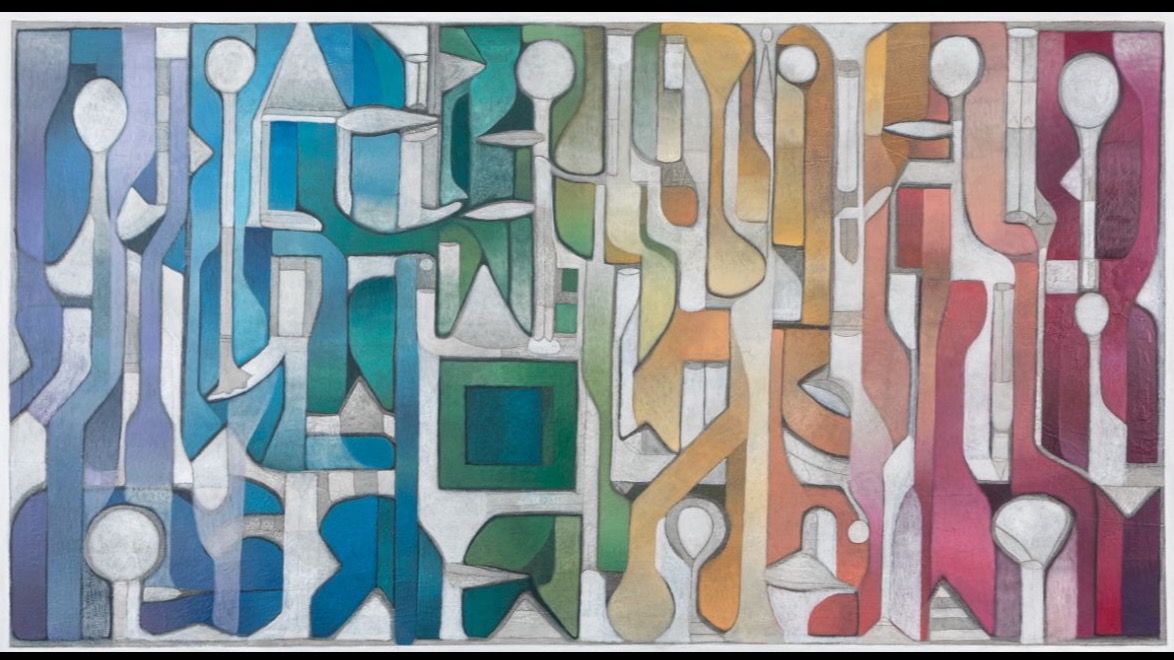
With the exhibition, which will run from November 21st through December’s end, he will debut four sizable pieces in acrylic and oil which were inspired and executed in Paris. True to his signature style, the paintings reveal a playful constellation of varied shapes, a shifting kaleidoscope of color and form that reflects his ongoing study of balance, movement, and perception. However, the new works within Encounter mark a notable progression stylistically. Distinctly more geometric with a rather architectural balance, they reflect an evolution of his earlier works into a sharper language.
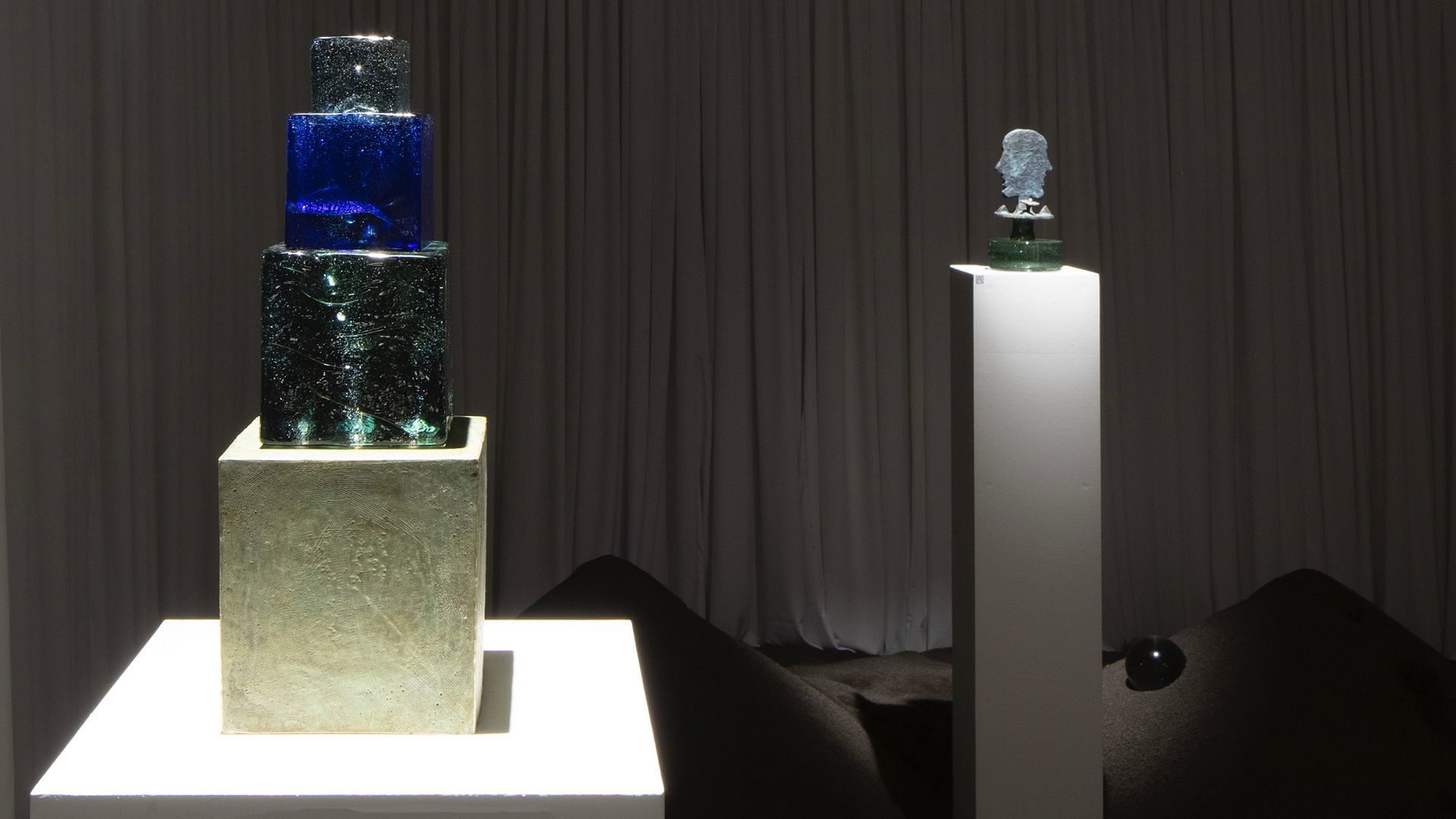
In fact, their composition and weight more closely echo the sculptural language of Lorenzetto’s recent Oraculumexhibition in Mexico City, which featured a series of bronze and glass works exploring light, elevation, and material tension. Presented at Maison Céleste in February 2025, the exhibition ran through the spring and marked a decisive expansion of his sculptural practice.
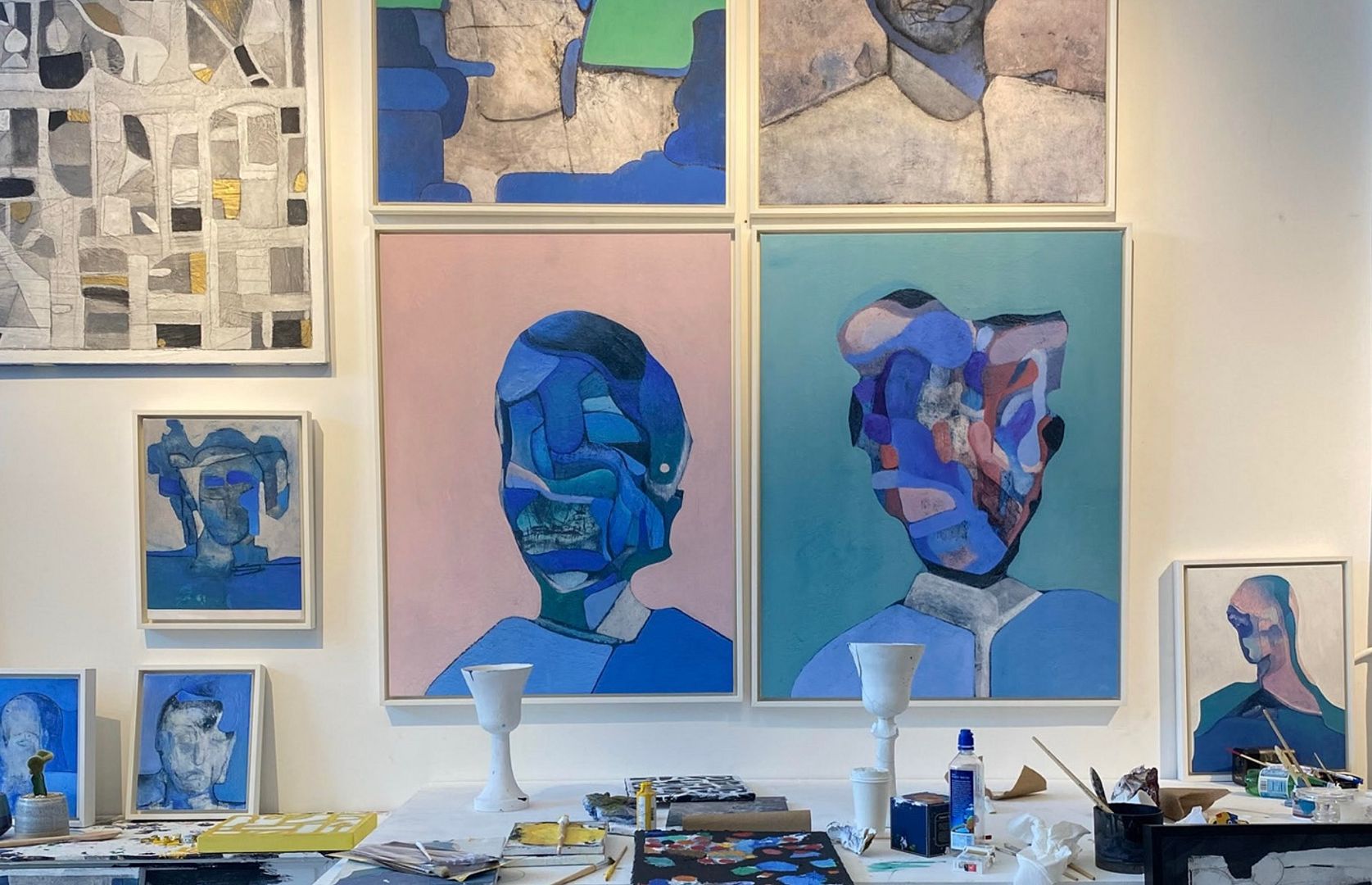
Alongside Lorenzetto, Encounter features Jean Grisoni and Ludovic Roth, two artists whose approaches anchor the exhibition’s dialogue between matter and form. Grisoni, a Corsican-born sculptor, masterfully shapes bronze, wood, and leather into forms that evoke ancient rituals reinterpreted through a contemporary, poetic lens. Roth, trained in both design and architecture, imaginatively works with glass, metal, and gold, constructing spaces and objects defined by equilibrium, tension, and transparency.
From Hugo to Heist: Paris is Still Possessed by Art
From Hugo’s monumental funeral nearly a century and a half ago to the extraordinary October theft of the Napoleonic jewels from the Louvre’s Galerie d’Apollon, Paris’s obsession with art endures, whether mourning it, creating it, celebrating it, or stealing it.
As Hugo wrote in his Tas de pierres, a disjointed collection of reflections and fragments compiled between 1858 and 1870 and published posthumously in 1901, the creation of art is nothing less than a second life—“Créer, c’est vivre deux fois.”
In Paris today, that remains more true than ever.
Words by Steven Barlow