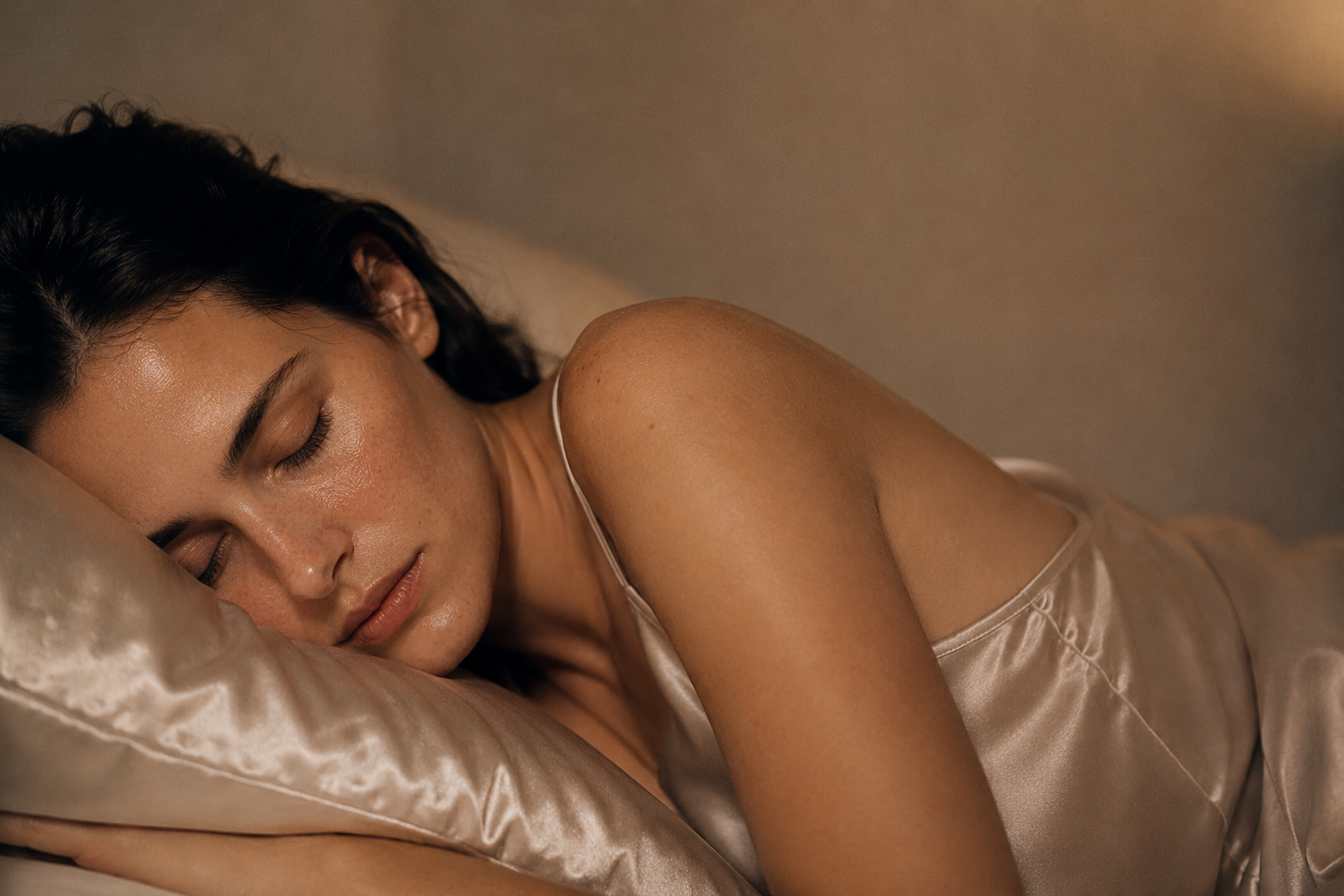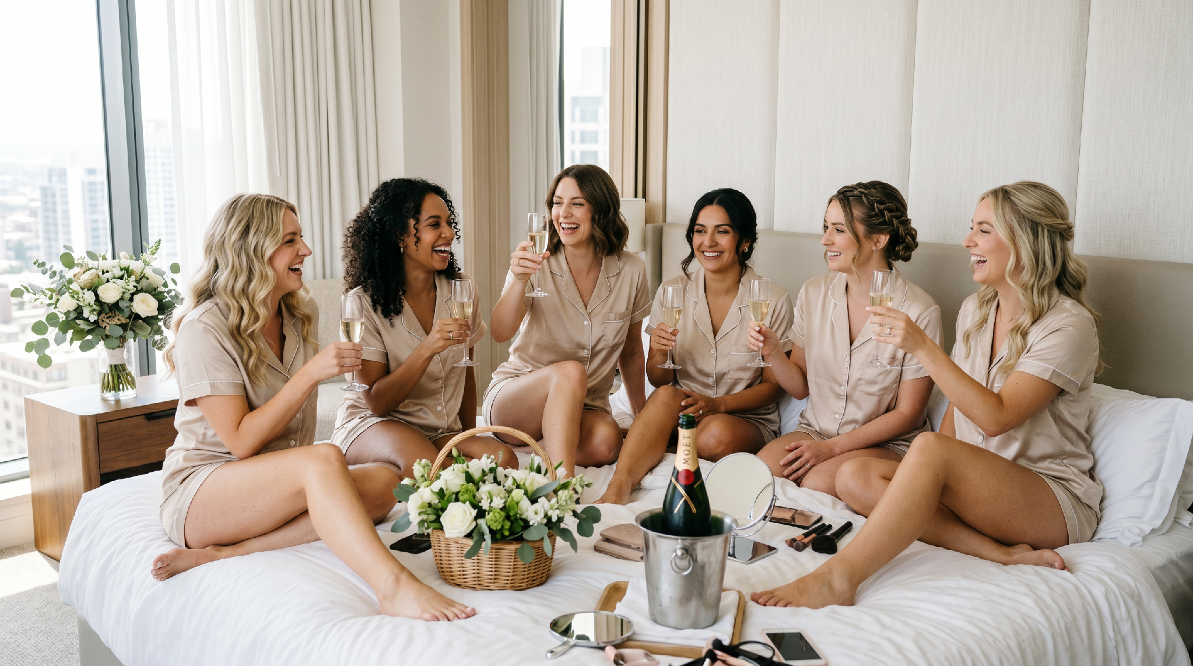
There was a point, not very long ago, when the getting-ready portion of a wedding morning was functionally invisible. The bride and her bridesmaids wore whatever was comfortable, the photographer arrived when the dress went on, and nobody thought to document the hours before that.
That is not how it works anymore.
Wedding photographers now routinely arrive two to three hours before the ceremony specifically to capture the getting-ready period — because that is where, as most of them will tell you, some of the most genuine and emotionally alive moments of the entire day happen. Someone’s sister is doing up a zipper. A bridesmaid catches herself in the mirror mid-laugh. The bride sees herself in the dress for the first time with everyone watching. These are not posed moments, which means they cannot be dressed retrospectively. What the bridal party is wearing when the photographer walks through the door is in the photographs, permanently.
The market responded accordingly. Coordinating bridesmaid pajamas have moved from a niche bridal trend to something closer to a standard expectation. Green Wedding Shoes, one of the most widely read wedding planning platforms in the U.S., noted in its 2026 roundup that the modern getting-ready aesthetic has shifted decisively toward “silky bridesmaid pajamas and coordinated PJ sets” — away from the monogrammed robes that dominated the previous decade, toward pieces that bridesmaids will actually wear again after the wedding is over.
Why the matching set specifically
The logic of coordinating bridesmaid sleepwear is partly aesthetic and partly practical, and the two reinforce each other in ways that make it more useful than it might initially appear.
On the aesthetic side: a group of bridesmaids in matching or coordinating satin sets creates a visual coherence in getting-ready photographs that individual choices do not. It does not need to be perfectly uniform — the trend in 2026 leans toward coordination over matching, with bridesmaids in the same color family or fabric but different silhouettes — but some degree of intentionality in what the group is wearing changes the register of those photographs meaningfully.
On the practical side: coordinating the getting-ready look early in the planning process is one fewer decision to make in the weeks before the wedding, when the list of decisions is already long. Ordering together as a group also tends to unlock better pricing. For bridal parties buying coordinating sets, bundle pricing makes the coordinated look more accessible than individual purchases would — which is why ordering together rather than separately is worth organizing even when it requires a little more logistical effort upfront.
The other practical consideration is reusability. Green Wedding Shoes flagged the sustainability shift specifically: eco-conscious brides are increasingly asking whether the getting-ready wardrobe is something bridesmaids will actually keep wearing. A well-made satin pajama set with enough everyday appeal to wear outside of a wedding context is a more defensible ask than a monogrammed robe that ends up in a drawer.
What to look for when choosing coordinating sets
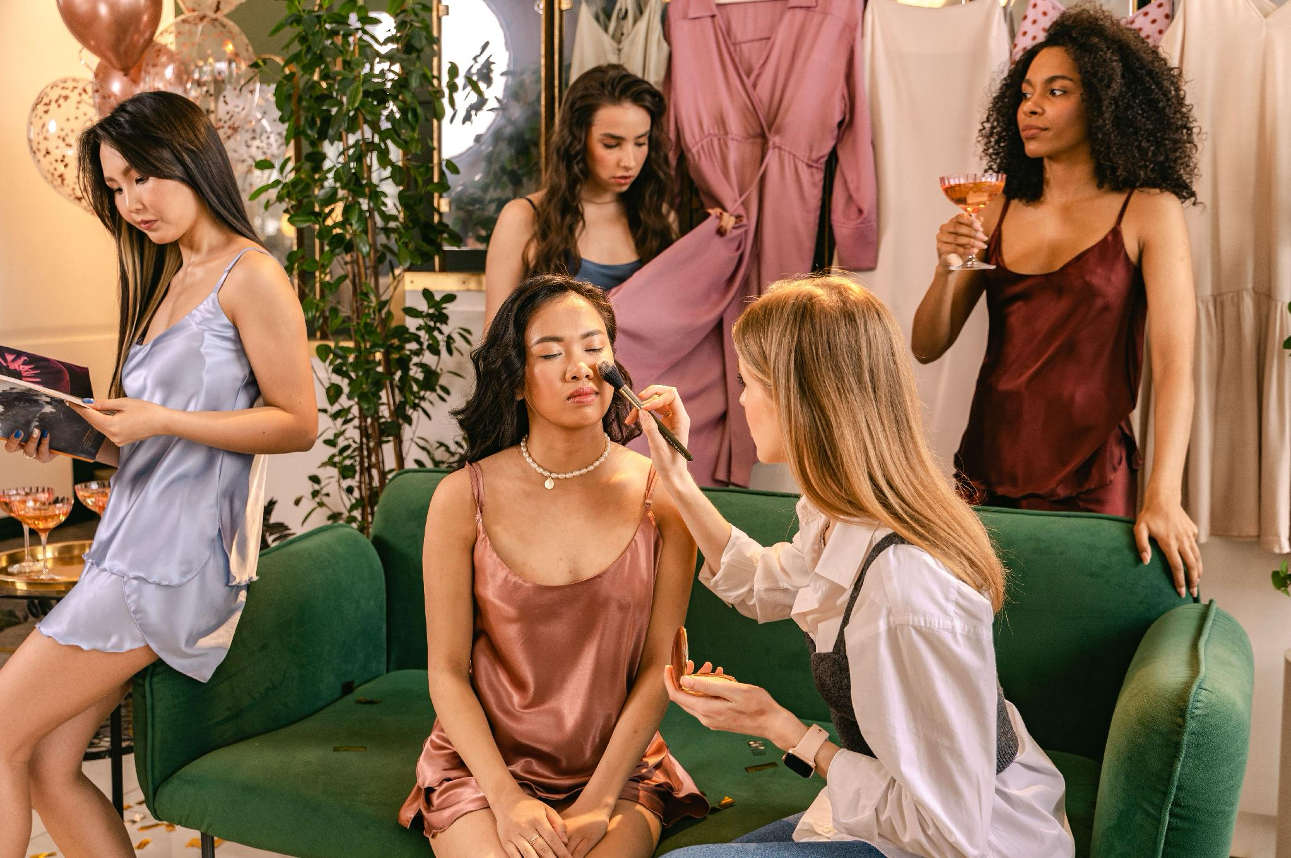
Color comes first, and the decision is usually one of two approaches: the bride wears white or ivory and bridesmaids coordinate in a complementary shade, or the entire party — bride included — wears the same color in a hue that works for the wedding palette. Dusty rose, champagne, sage, and soft blue have all been popular in recent seasons. Stark white, while visually clean, can overexpose in bright morning light.
Silhouette flexibility matters more for a group than it does for an individual. A set that comes in multiple styles — a cami top, a longer version, a shorts option — allows bridesmaids with different comfort levels and body preferences to coordinate without wearing the same thing. This is the direction most bridal stylists recommend, and it is why the tank-and-shorts format has become so prevalent in the category.
Ekouaer’s Silk Pajama Set with Bow Tie Knot Tank sits squarely in this space — a satin cami top with adjustable bow-tie detailing paired with matching shorts, available in colorways that read as bridal without being occasion-specific. The bow detail photographs particularly well at close range, which matters when the photographer is working in a hotel room or a bridal suite. The full range of coordinating options across the bridal party is at Ekouaer’s Wedding Seasoncollection, which covers everything from the bride’s set through to bridesmaids.
The timing question
Wedding planning experts are consistent on this: bridesmaid sleepwear should be ordered three to four months before the wedding. That sounds earlier than necessary until you factor in shipping, potential exchanges for sizing, and the coordination overhead of getting five or six people to confirm their sizes and color preferences within the same ordering window.
For June weddings, that window has technically already closed. But for late June and July brides, ordering in the next two to three weeks still leaves a reasonable buffer. The advice for anyone in that position: size up if uncertain, and order together rather than individually to ensure consistency across the group.
FAQ
Q: What are the best bridesmaid pajamas for getting-ready photos?
A: Satin sets in coordinating colorways consistently outperform other options in getting-ready photography because the fabric reflects light well and reads as intentional rather than casual. Cami-and-shorts formats are the most versatile across body types and comfort levels. The bride typically wears white or ivory while bridesmaids coordinate in a complementary shade, though full-group coordination in a single non-white color has become increasingly common.
Q: Should bridesmaids wear matching or coordinating pajamas?
A: Coordinating rather than perfectly matching is the current direction for most bridal stylists — same fabric family and color palette, with some flexibility in silhouette. This allows each bridesmaid to wear a version that suits her while maintaining visual coherence in photographs. The result is a more natural-looking group shot and a more wearable everyday garment afterward.
Q: How early should bridesmaid pajamas be ordered?
A: Three to four months before the wedding, to allow time for sizing exchanges and group coordination. Ordering together as a group rather than individually ensures color and fabric consistency and often unlocks better pricing through bundle options.