Meal Deal, the modest combination of a sandwich, drink, and snack in London supermarket—has long been more than just a a lunchtime convenience. For £4.25, you don’t just buy a sandwich, crisps, and a drink; you purchase the illusion of choice in a system that already decided what you could afford. “Meal Deal,” the group exhibition at Filet in October 2025, uses this humble supermarket offer as a lens to examine the economic, emotional, and existential cost of living under late capitalism.
Across works by over a dozen artists, the show captures the quiet absurdities of urban subsistence—how efficiency, affordability, and individuality become entangled in a feedback loop of consumption. The market’s promise of variety is only another form of fatigue dressed as freedom.
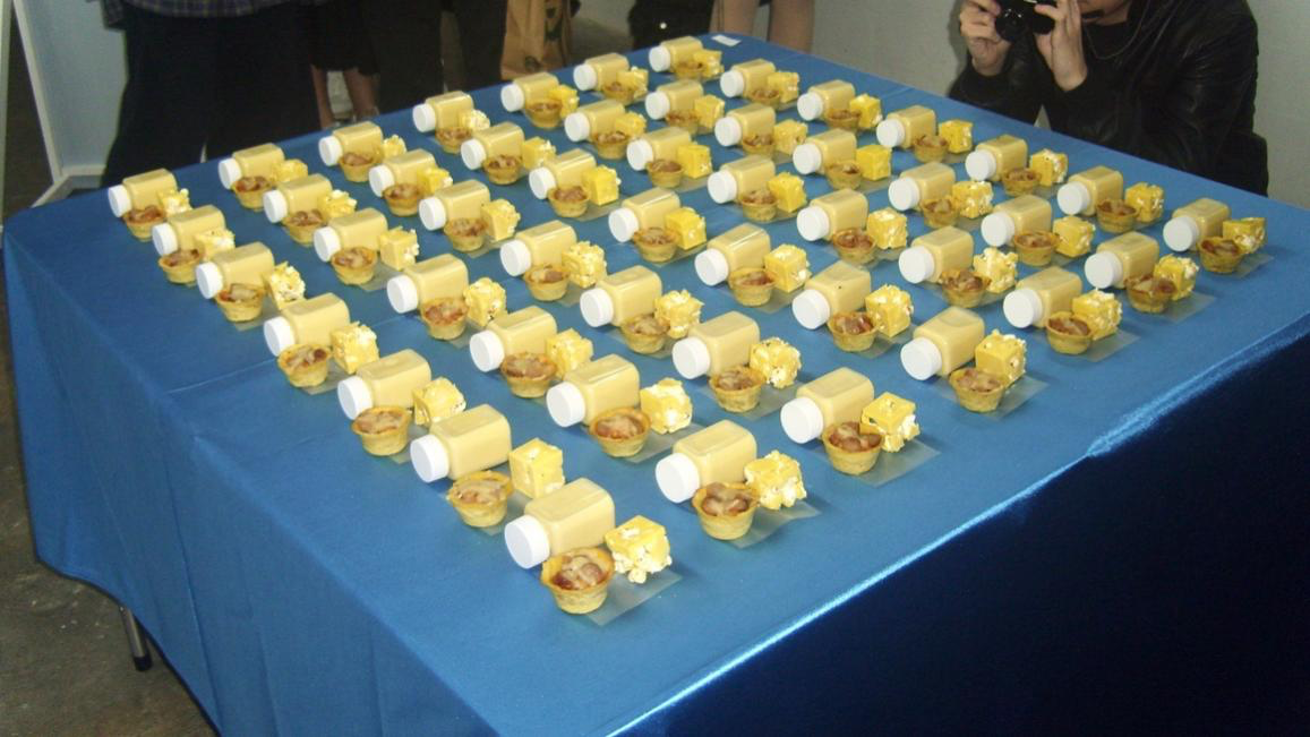
The exhibition starts with Lancy Liu’s food performance, a corn-based meal set to reveal the modular and homogenized structure of food culture under the guise of urban convenience. a work that turns the supermarket staple into a symbol of industrial sameness. Corn, endlessly adaptable and everywhere at once, becomes both material and metaphor: the bright yellow face of a system that disguises uniformity as choice. Following with, Yihao Zhang’s The Hungry Machine, a customized sandwich machine, which takes the fantasy of customization to absurd extremes. His automated dispenser, which scans bodies to create a “personalized” lunch, his interactive machine plays like a dark joke about a world that promises individuality but delivers algorithmic obedience.
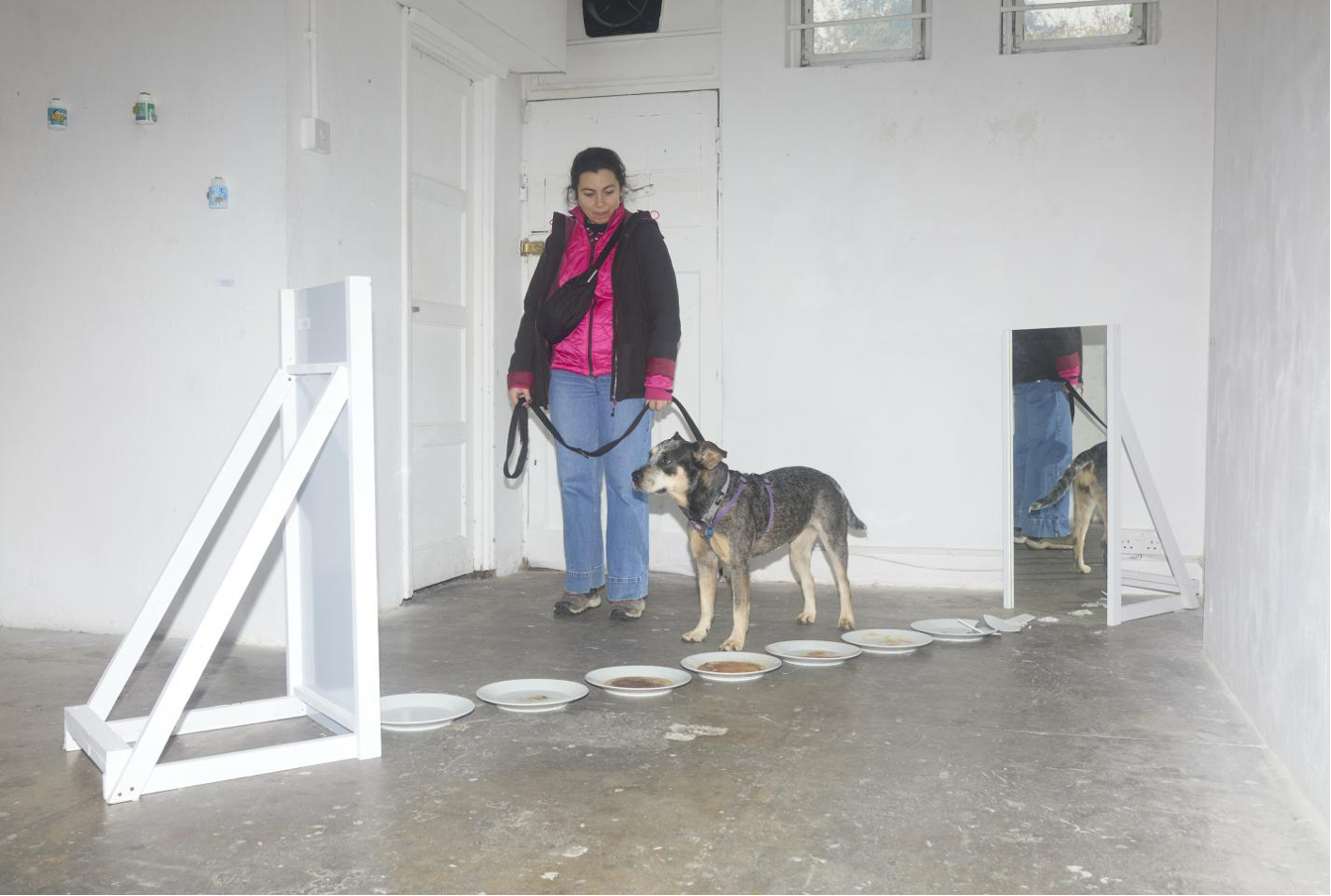
Ruilin Li’s Zeroing places at the centre of the exhibition space. Twelve white plates, arranged in a mirrored corridor, trace a slow narrative of contamination, each one carrying the remain of use, residue, and time. The work feels almost devotional, its repetition both meditative and unsettling, suggesting that the pursuit of purity inevitably folds back into decay.
Bread Letter (2025) by Hanzi He is installed at the entrance of the exhibition and takes the form of a food nutrition table spelled out entirely with bread. Her work transforms everyday material into a sculptural language, highlighting the physicality of consumption while inviting viewers to consider the relationship between nourishment and art.
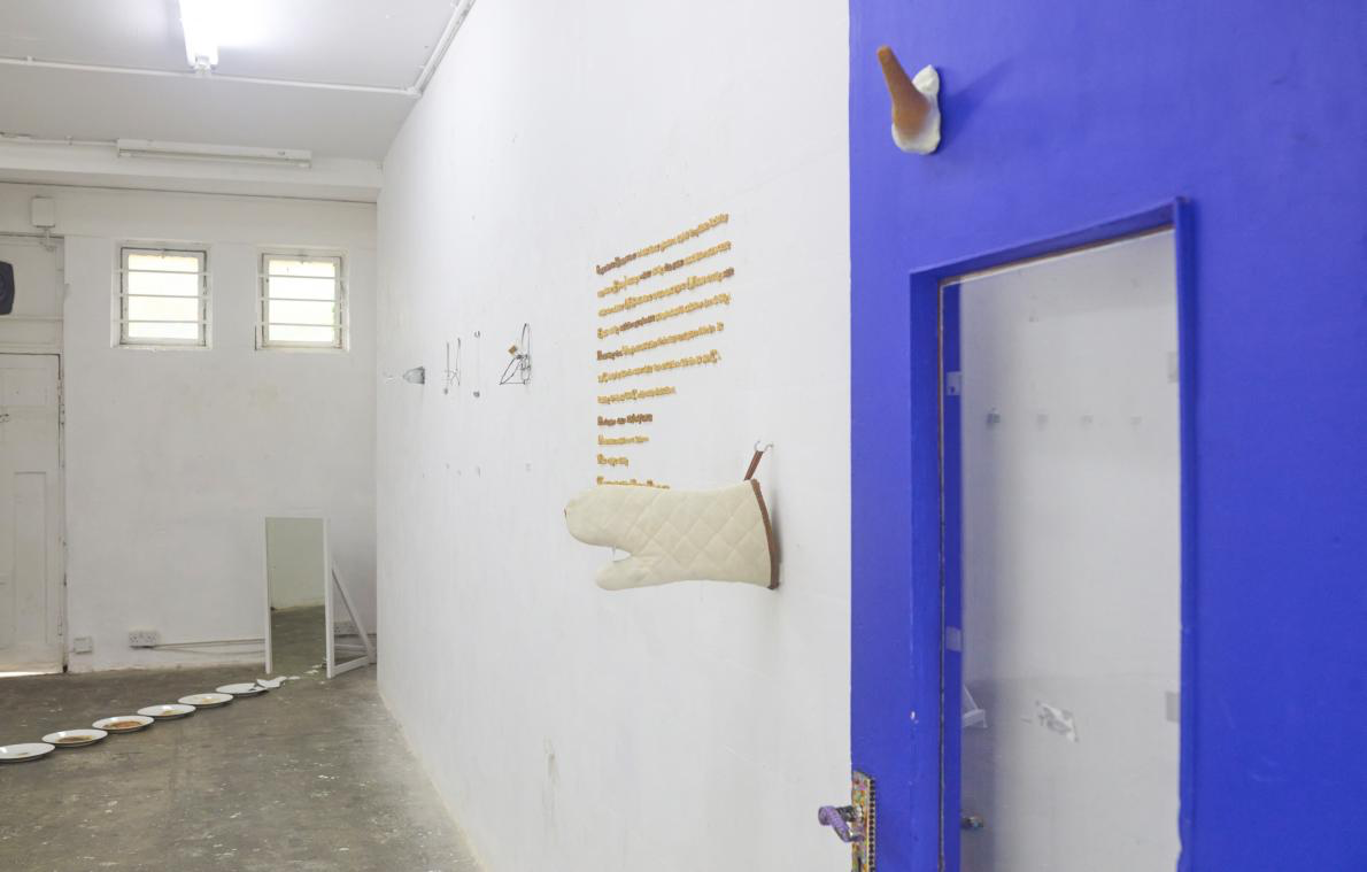
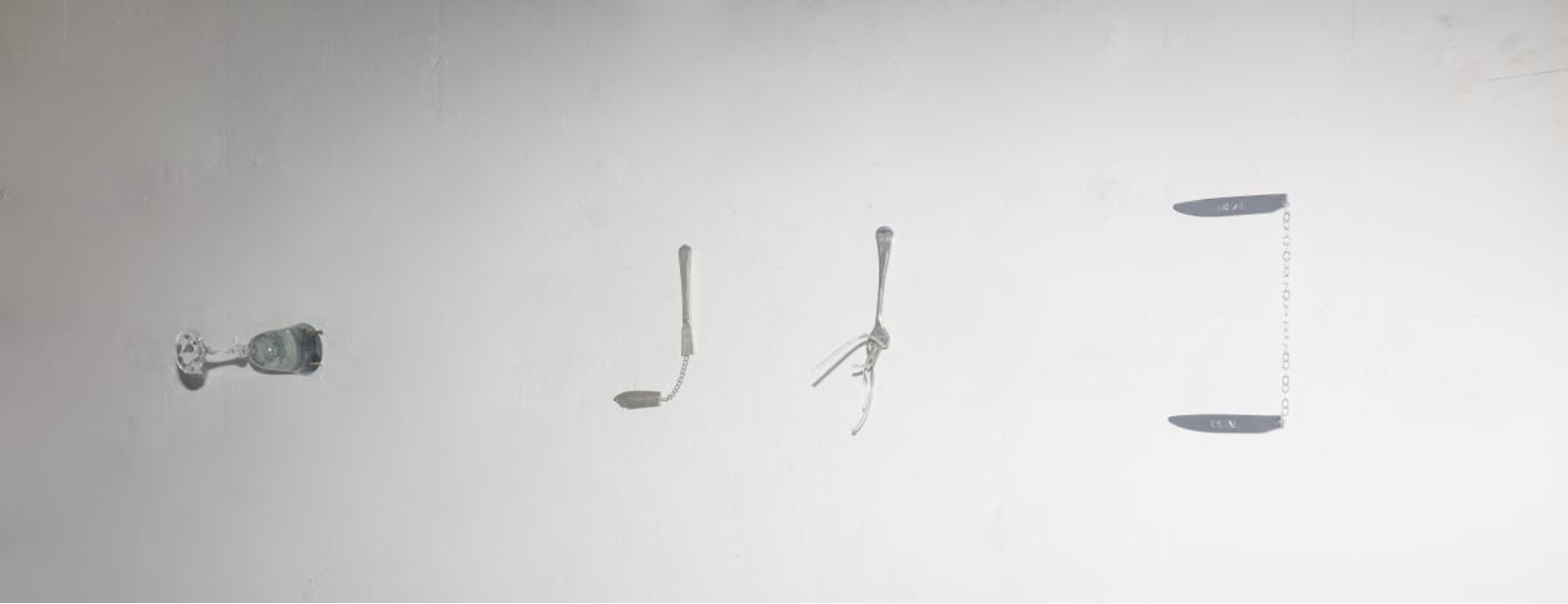
Elsewhere, Natalia Janula’s work often occupies the space between function and fiction. She uses familiar formats — domestic interiors, everyday objects, gestures of hospitality — and subtly distorts them to create speculative scenarios that feel both intimate and uncanny. By blending kinetic elements with crafted or altered objects (such as cutlery or furniture).
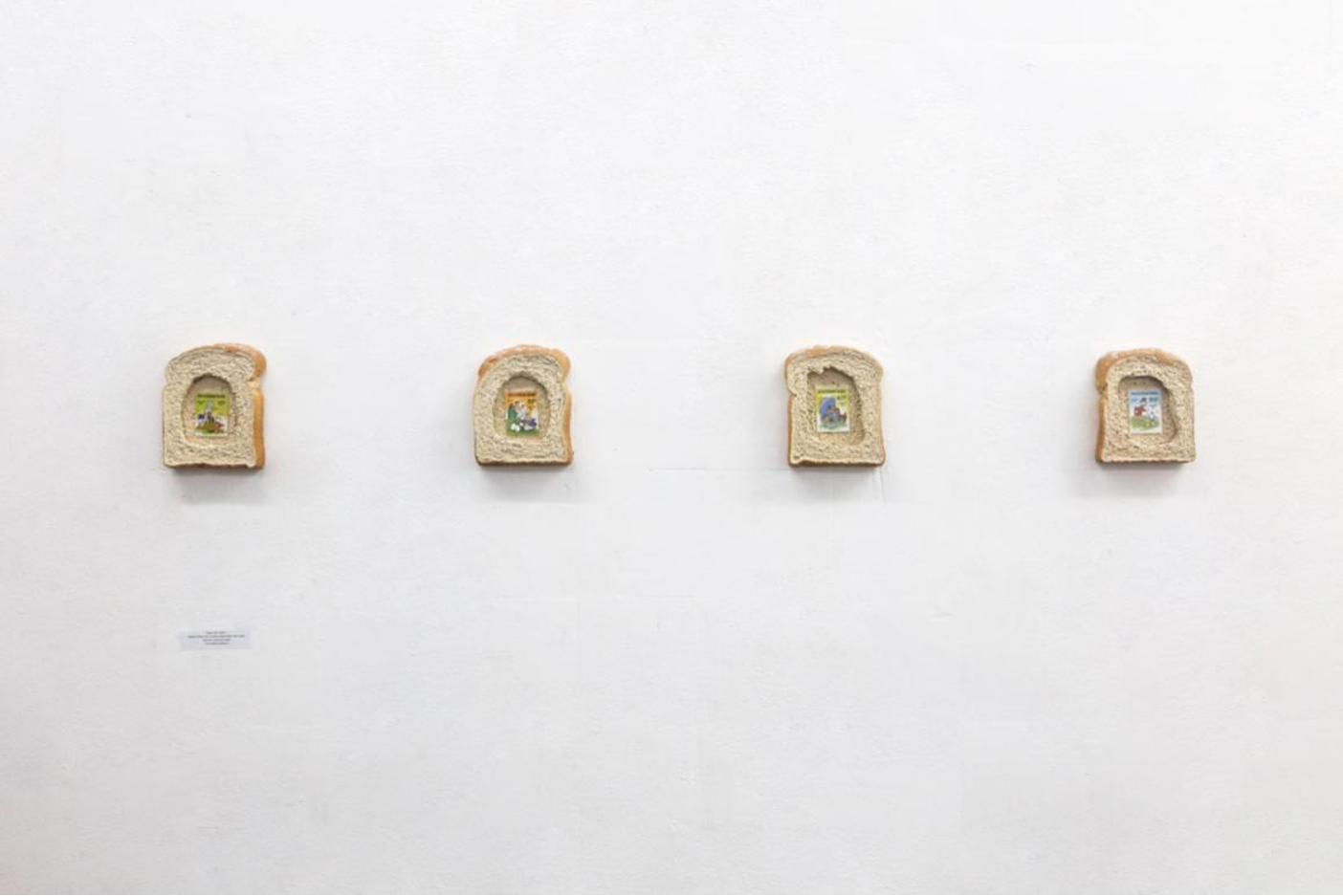
Corey Bartle-Sanderson’s Easter 1981 layers a Disney postage stamp in jesmonite and flour, conjuring the strange marriage of nostalgia and commodity, faith and branding. His work, like much of the show, asks how memory survives when everything—from food to feeling—is processed and packaged.
With Yucheng Kang’s The Embodiment of Being vulnerability becomes its own kind of mirror. The artist hides a blurred image—taken after a night out—at the bottom of a wine glass, forces viewers to peer downward, to confront the tension between exposure and misreading that defines our online selves.
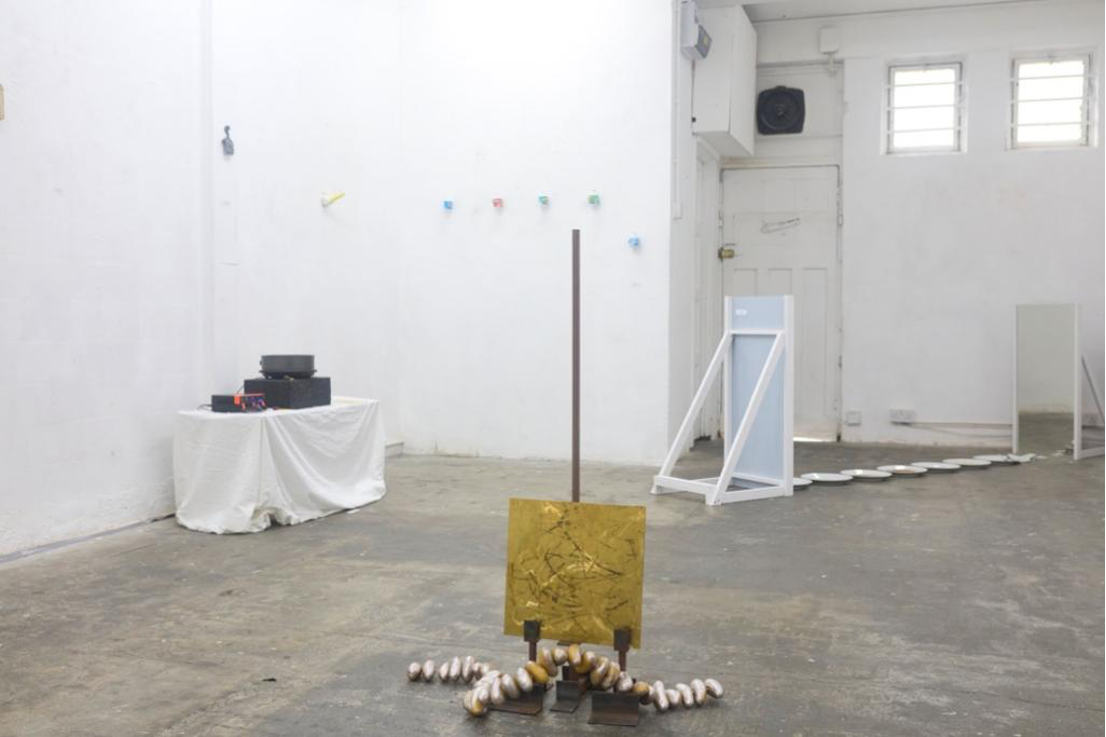
Nearby, Cheng Xie’s No one asked, I’m still Frying uses the motif of a fried egg—repeated to near absurdity—to question how cultural identity flattens into stereotype. The humor is delicate, but the frustration is palpable. Xinyi Xu’s Veins of Gold gilds ordinary potatoes, elevating symbols of survival into absurd luxury. By dressing poverty in the language of wealth, Xu exposes the arbitrary systems through which value is assigned and maintained.
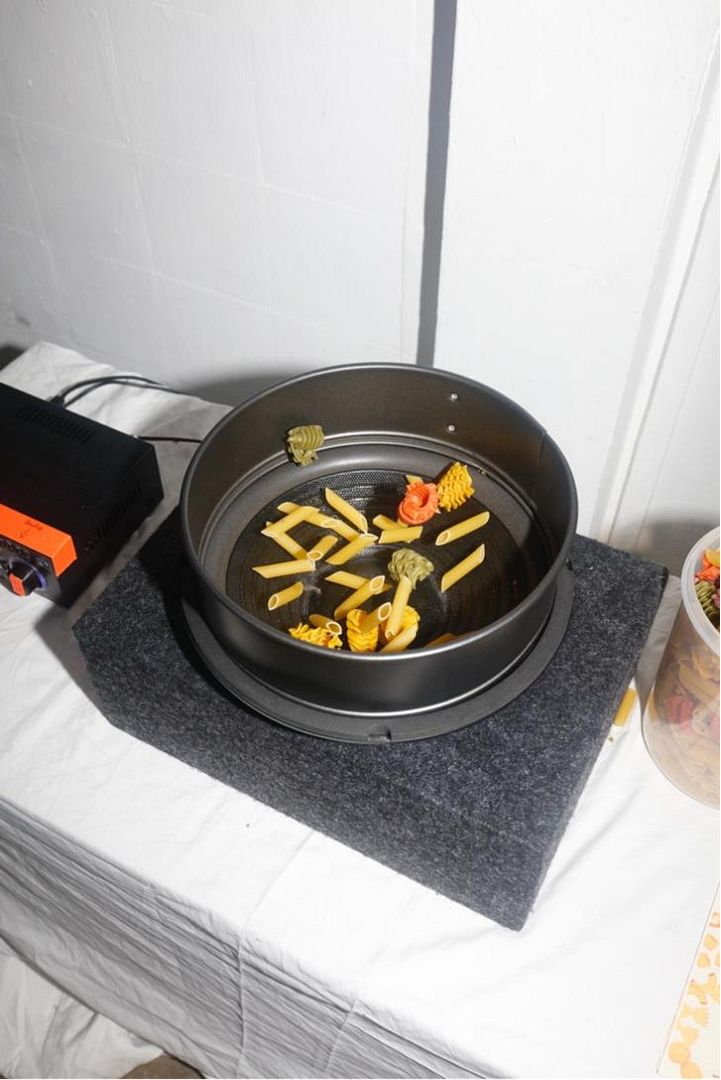
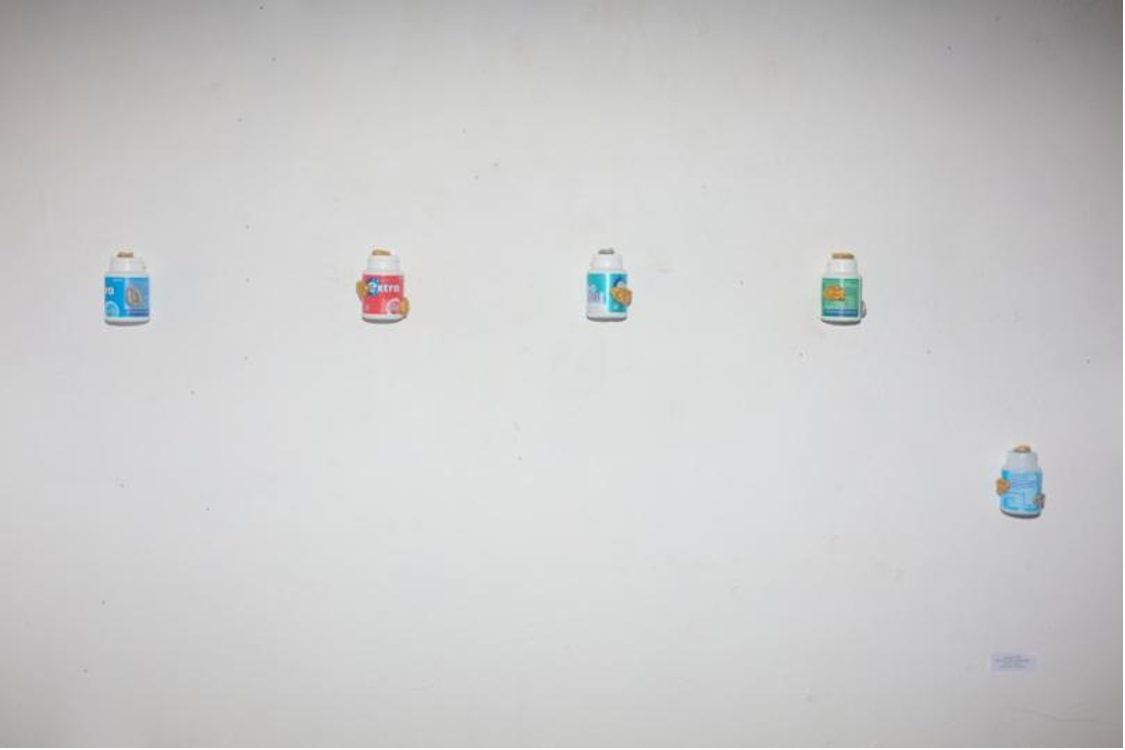
Other works tackle the aesthetics of convenience more literally. Keiying Yip’s Chewing Gem made by Tesco gum pot, reimagines discarded gum pots into glittering relics with the material use of clay, while Xinyue Ma’s LET ME COOK stages a chaotic sound performance in which uncooked pasta vibrates violently on a speaker—an ode to impatience in the age of instant meals. Both works flirt with comedy, yet they speak to the erosion of care, time, and intimacy in a world that demands constant productivity.
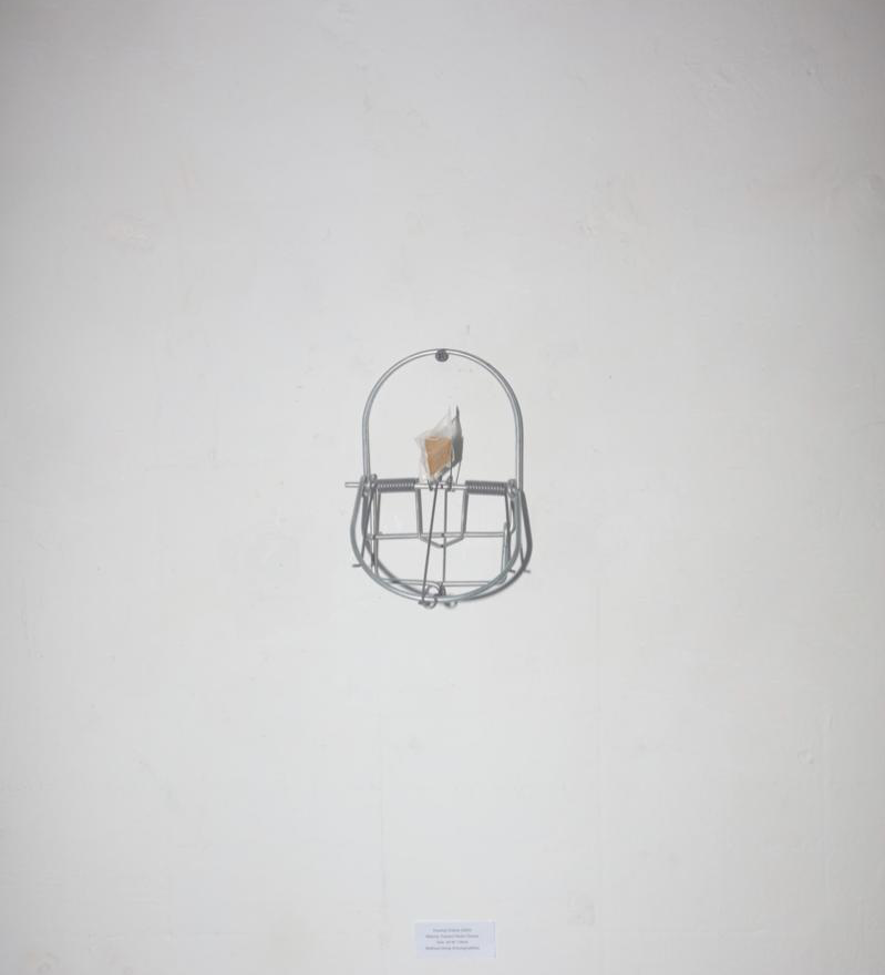
Matthew Chung’s Chasing Cheese lines up wedges of fake Swiss cheese on floor. It’s funny at first, the kind of work that makes you smirk. Then it settles in how easily the chase for success starts to look like an addiction, how we learn to crave the very systems that drain us. Nearby, his The Fleeting Nature of Childhood freezes a fallen ice cream mid-melt, holding that soft collapse between nostalgia and embarrassment. The gesture is small, almost tender, but it hits with quiet accuracy—like remembering a happiness that’s already gone sour.
The exhibition doesn’t end with a grand statement, nor does it try to solve anything. It simply sits with the exhaustion of being alive in a world that sells comfort as convenience. You leave Meal Deal thinking not about hunger, but about appetite, the kind that never really goes away.
Exhibition Artists:
Corey Bartle-Sanderson, Cheng Xie, Xinyue Ma, Alex Collinson, Yihao Zhang, Ruilin Li, Yucheng Kang , Keiying Yip, Hanzi He, Toni Zhao , Xinyi Xu, Lancy Liu
Natalia Janula, Matthew Chung
Words by James Mitchell