Men’s designer bracelets are defined by material quality, construction precision, and design that holds its relevance over time. For everyday wear, 925 sterling silver is the most versatile designer bracelet material available: durable, age-resistant, and adaptable across every style context from casual to smart. Start with one well-made piece, wear it consistently, and build from there.
Men’s designer bracelets have moved firmly into the mainstream of UK men’s style. What was once a subcultural or occasion-specific choice is now part of how a significant number of men dress every day. The bracelet market has expanded accordingly, which means the quality range is wide and the decision of what actually constitutes a designer piece worth buying is less obvious than it once was. This guide covers what to look for, which styles work, and how to wear them.
What Makes a Men’s Bracelet Designer Quality
The term designer gets applied loosely across the men’s bracelet market, but the markers of genuine quality are consistent regardless of the label. Material standard, construction precision, and design longevity are the three things that separate a men’s designer bracelet worth buying from one that simply carries a premium price tag.
Material Standard
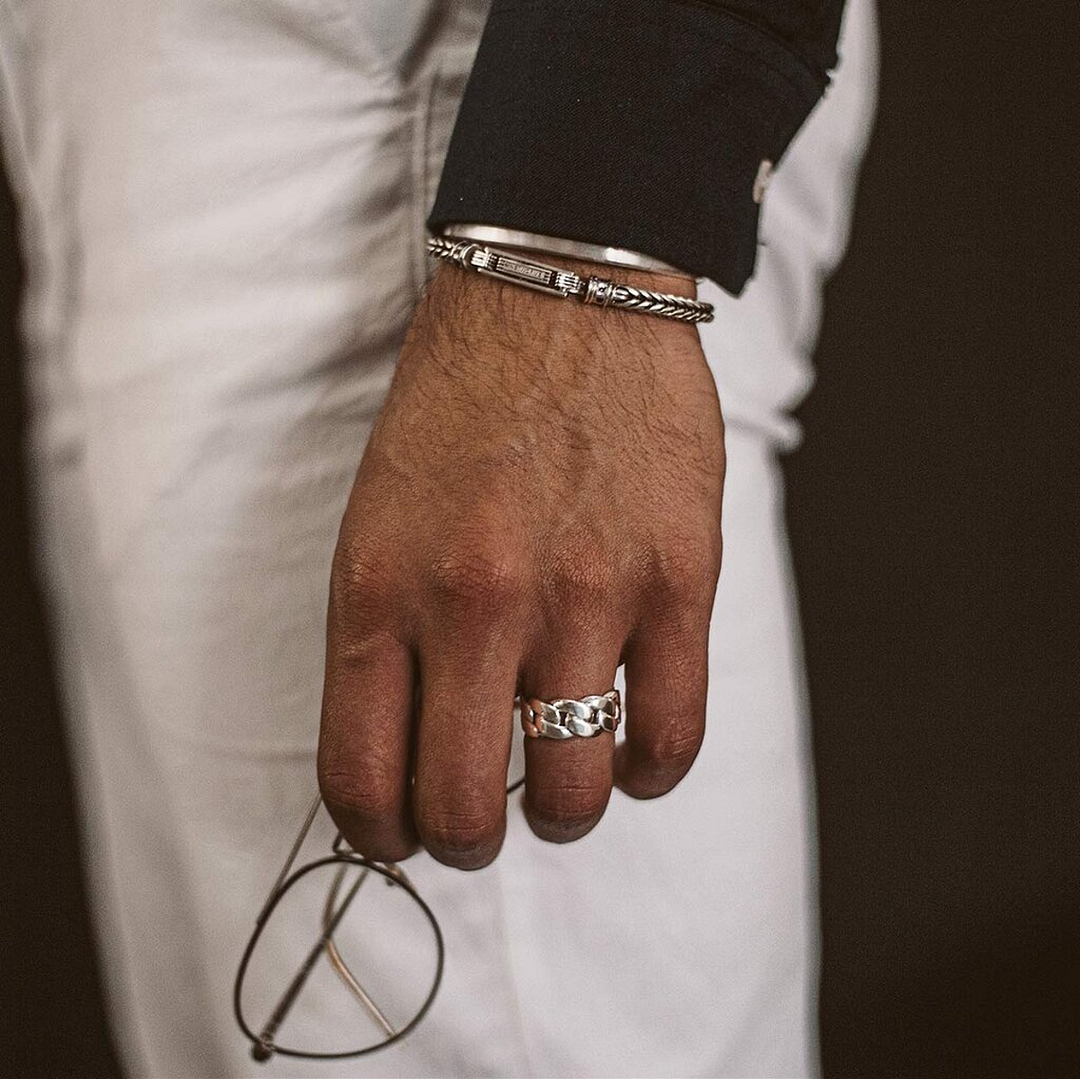
For sterling silver men’s designer bracelets, the material benchmark is 925 sterling silver: 92.5% pure silver, dense enough to hold detail and structure, and durable enough for daily contact with surfaces, clothing, and moisture. A hallmarked 925 bracelet gives you a verifiable material quality that plated or alloy alternatives cannot offer. Weight is a reliable indicator before you even check the hallmark: a genuine 925 sterling silver bracelet should feel substantial on the wrist, not hollow or lightweight.
Construction and Finish
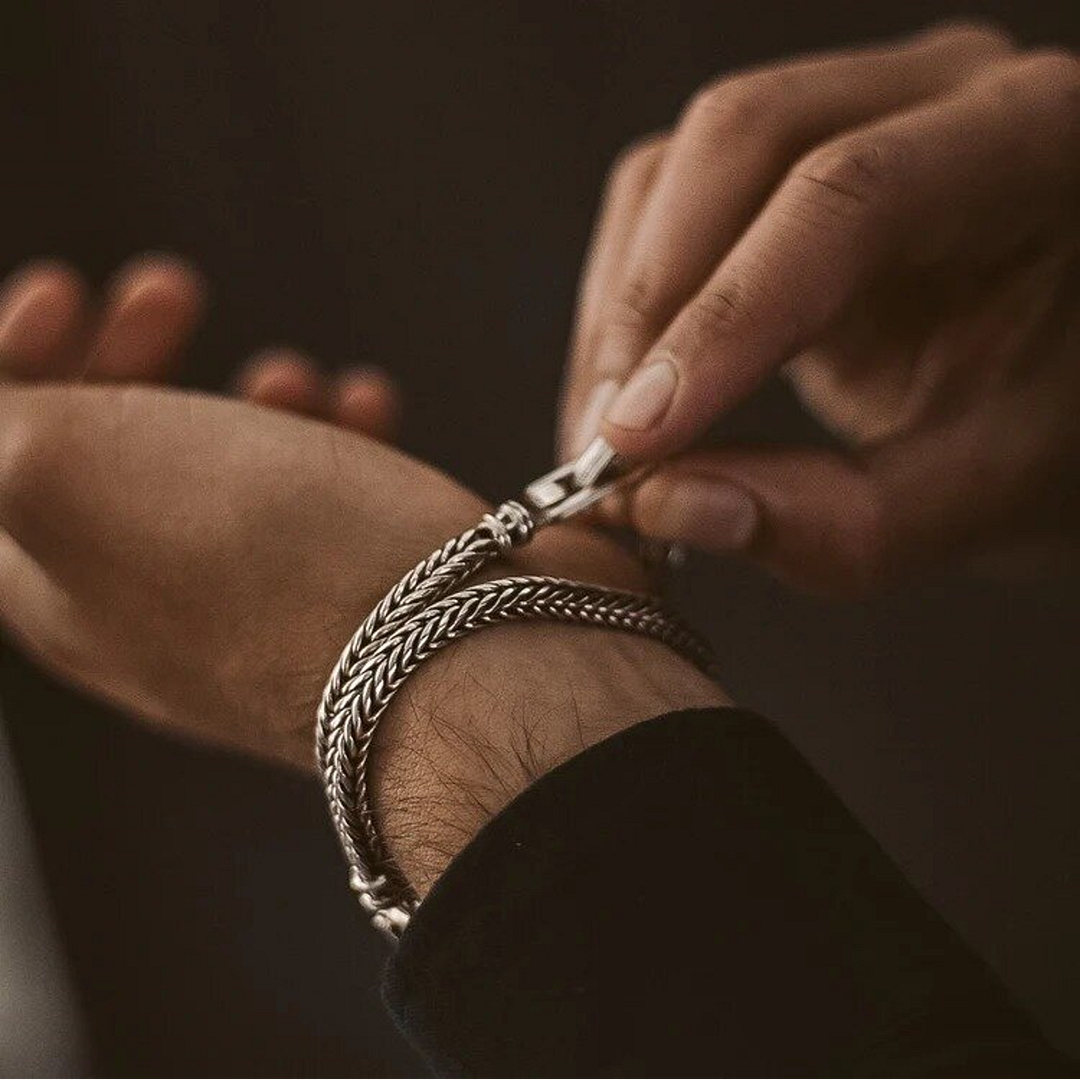
Construction quality in a men’s designer bracelet shows most clearly in the clasp and the finishing of edges and surfaces. A well-made clasp opens and closes cleanly, holds securely under normal movement, and does not show signs of surface wear within the first few months of use. Box clasps, lobster clasps, and toggle closures all appear in quality men’s silver bracelets: what matters is precision of fit rather than the type of mechanism.
Surface finishing on a designer bracelet should be even and consistent. A polished silver bracelet should reflect cleanly without uneven patches. A brushed or satin finish should have consistent grain direction across the full surface. Oxidised silver, where the metal is intentionally darkened to emphasise texture and detail, should be evenly distributed with the contrast between raised and recessed areas reading clearly. Any inconsistency in finish is a reliable indicator of compromised production quality.
Design Longevity
The third marker of a genuinely designer men’s bracelet is a design that does not depend on a particular moment in fashion to make sense. The best pieces in this category are those whose proportions, form, and detail work together in a way that looks considered five years from purchase as clearly as it does on the day you buy it. This is what justifies treating a bracelet as an investment in wardrobe rather than a seasonal purchase: a well-designed piece in quality silver will outlast most of the clothing it is worn alongside.
The Designer Bracelet Styles Worth Knowing
Men’s designer bracelets in 2026 span a broad range of styles, but the pieces with the most sustained relevance share a common quality: they are built around clear design ideas rather than trend-driven decoration. For silver specifically, the strongest designer bracelet styles tend to be architecturally clean, with detail that rewards closer inspection.
Sterling Silver Chain Bracelets
The sterling silver chain bracelet is the most versatile style in men’s designer jewellery. It works across every register of dressing, from a relaxed weekend outfit to a smart evening look, and it pairs naturally with a watch on either wrist without visual conflict. Designer chain bracelets in 925 silver are available in a range of link styles: curb chains with their flat, interlocking links sit close to the wrist and suit minimal wardrobes; figaro chains with their pattern of varied link sizes add more visual interest; rope chains with their twisted construction catch light differently from the others and suit men who want more texture from a slim profile piece.
The key consideration for a designer silver chain bracelet is weight. A piece that is too fine will look delicate rather than considered, particularly on larger wrists. A piece that is too heavy can look costume-like. For most men, a chain width of between three and six millimetres in 925 sterling silver hits the right balance between substance and restraint.
Cuff Bracelets
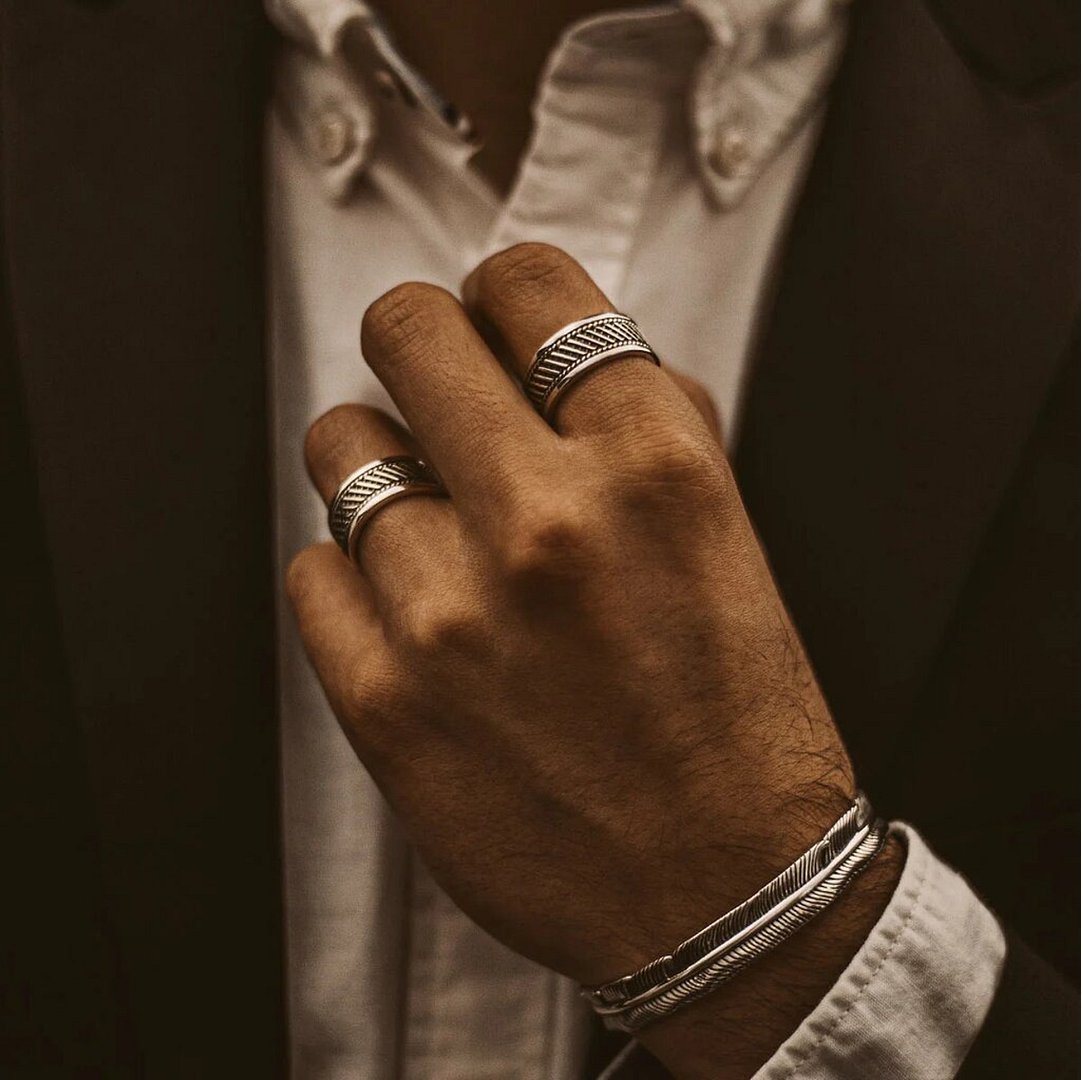
Designer cuff bracelets in sterling silver are the most architecturally assertive style in this category. A well-made silver cuff, whether a plain polished band, a hinged piece with structural detail, or a wider form with engraved or textured surfaces, commands the wrist in a way that chain bracelets do not. Cuffs are best worn as a solo piece rather than stacked: their visual weight is sufficient to carry the wrist on its own, and adding further pieces tends to compete rather than complement.
For men who dress with a preference for considered, architectural detail, a designer sterling silver cuff is one of the strongest bracelet choices available. It reads as a deliberate style statement without the overt signalling of heavily branded designer pieces, and a quality 925 silver cuff will develop a patina over time that adds to its character rather than diminishing it.
Beaded Bracelets
Designer beaded bracelets have established themselves as a significant category in men’s jewellery, moving well beyond their previous association with casual or spiritual aesthetics. Quality men’s designer beaded bracelets use natural stones, including onyx, lapis lazuli, tiger eye, and turquoise, strung on durable elastic or knotted cord with sterling silver or gold hardware details. The natural variation in stone colour and pattern means each piece has a distinctly individual character.
Beaded bracelets stack naturally with silver chain bracelets, which makes them a strong choice for men who want to build a layered wrist look. A single designer beaded bracelet paired with a slim silver chain creates a combination that works across casual and smart-casual contexts without looking over-assembled. The texture contrast between the organic quality of the stone and the precision of the silver is part of what makes this combination effective.
Leather Bracelets
Designer leather bracelets with sterling silver hardware occupy a distinct space in men’s bracelet styling. The combination of materials creates an inherent contrast between the warmth and texture of the leather and the cool precision of the silver, which gives the bracelet a character that pure metal pieces do not have. Quality designer leather bracelets use full-grain leather in dark, neutral tones with cleanly finished edges and solid silver clasps or hardware that holds its finish over extended use.
Leather bracelets suit a more casual or weekend-oriented wardrobe direction and work particularly well stacked with other pieces. A leather bracelet alongside a slim silver chain or a beaded piece creates a layered look that references heritage craft aesthetics without becoming costume-like. The key is keeping the leather piece in a dark, restrained tone: heavily decorated or brightly coloured leather bracelets tend to work against the understated quality that makes a designer piece worth wearing.
How to Wear a Men’s Designer Bracelet
Knowing how to wear a men’s designer bracelet well is as important as choosing the right piece. Placement, the decision to wear one or several, and how the bracelet relates to a watch all affect whether the piece reads as considered or casual.
Solo or Stacked?
A single designer bracelet worn well is the most confident approach and the right starting point for men new to wristwear. One well-chosen piece in quality sterling silver, worn consistently, builds the habit of wearing jewellery naturally and gives you the reference point to decide whether adding more pieces makes sense for your style. The solo approach also lets the design of the bracelet read clearly: stacking multiple pieces around a quality single piece often reduces rather than enhances the overall effect.
Stacking two or three bracelets works best when the pieces vary in texture and profile while staying consistent in metal. A slim silver chain alongside a beaded bracelet with silver hardware, for example, creates a layered look with visual interest but enough coherence to read as intentional. Avoid stacking more than three pieces: beyond that point, the individual quality of each designer piece gets lost and the overall combination starts to feel effortful.
Which Wrist?
There is no strict convention for which wrist men should wear a designer bracelet on in 2026, but the wrist opposite the watch is the most common choice. Wearing a bracelet on the same wrist as a watch tends to create visual clutter and can cause the two pieces to scratch against each other over time. The watch wrist is the dominant wristwear statement: a bracelet on the opposite wrist creates a balance across both arms that suits the layered approach to men’s jewellery.
If you do not wear a watch, either wrist works. Most men find their non-dominant wrist more comfortable for wearing bracelets, since the dominant hand is involved in more precise activities where a bracelet can become a distraction. That said, comfort and the look you want to achieve should take precedence over convention.
Wearing with a Watch
Pairing a men’s designer bracelet with a watch is one of the most effective ways to build a considered wristwear look. The most reliable approach is to match metals: a sterling silver bracelet alongside a watch with a silver or stainless steel case and bracelet creates a coherent combination. A silver bracelet worn with a gold watch can work but requires more confidence and a clear intention to avoid looking accidental.
Scale matters as much as metal matching. A slim chain bracelet alongside a large, heavy watch can look disproportionate. A wider cuff or a beaded bracelet with more visual weight creates a better balance with a statement watch. The bracelet and watch should complement rather than compete: if the watch is the dominant piece, the bracelet supports it; if you want the bracelet to lead, a plainer watch face and strap creates the right backdrop.
Matching Designer Bracelets to Your Style
Men’s designer bracelets only work as part of a wardrobe when the piece connects to how you actually dress. The table below maps the main style directions to the bracelet types and metals that suit each one.
| Style Direction | Best Bracelet Type | Metal | Occasion |
| Minimal & Clean | Slim silver chain or cuff | Polished sterling silver | Work, everyday |
| Streetwear & Casual | Beaded, chunky chain | Oxidised silver, mixed | Casual, social |
| Smart-Casual | Engraved cuff, slim chain | Brushed sterling silver | Evenings, events |
| Heritage & Character | Leather with silver hardware | Sterling silver details | All occasions |
These are starting points rather than prescriptions. Most men’s style sits across more than one of these directions, and the best bracelet choices tend to reflect that overlap naturally.
Minimal and Clean
A minimal wardrobe, built around clean lines, neutral tones, and quality over volume, calls for a designer bracelet that integrates without demanding attention. A slim sterling silver chain bracelet or a narrow cuff in polished 925 silver is the most reliable choice in this direction. The bracelet should look like it belongs rather than punctuating the outfit. One piece, worn consistently on the non-watch wrist, is the right approach here. Avoid beaded or leather styles in this context: their texture and warmth sit awkwardly against an otherwise clean aesthetic.
Streetwear and Casual
A more casual, streetwear-oriented wardrobe has more latitude for designer bracelet choices. Beaded bracelets with natural stone and silver hardware, chunky chain styles, and oxidised or darker-finish silver pieces all suit this direction. Multiple bracelets are more appropriate here than in the minimal direction, and mixing textures, stone alongside chain, leather alongside silver, creates the layered quality that suits a more relaxed dressing approach. Keep the overall number to three pieces maximum to avoid the combination looking assembled rather than chosen.
Smart-Casual and Formal
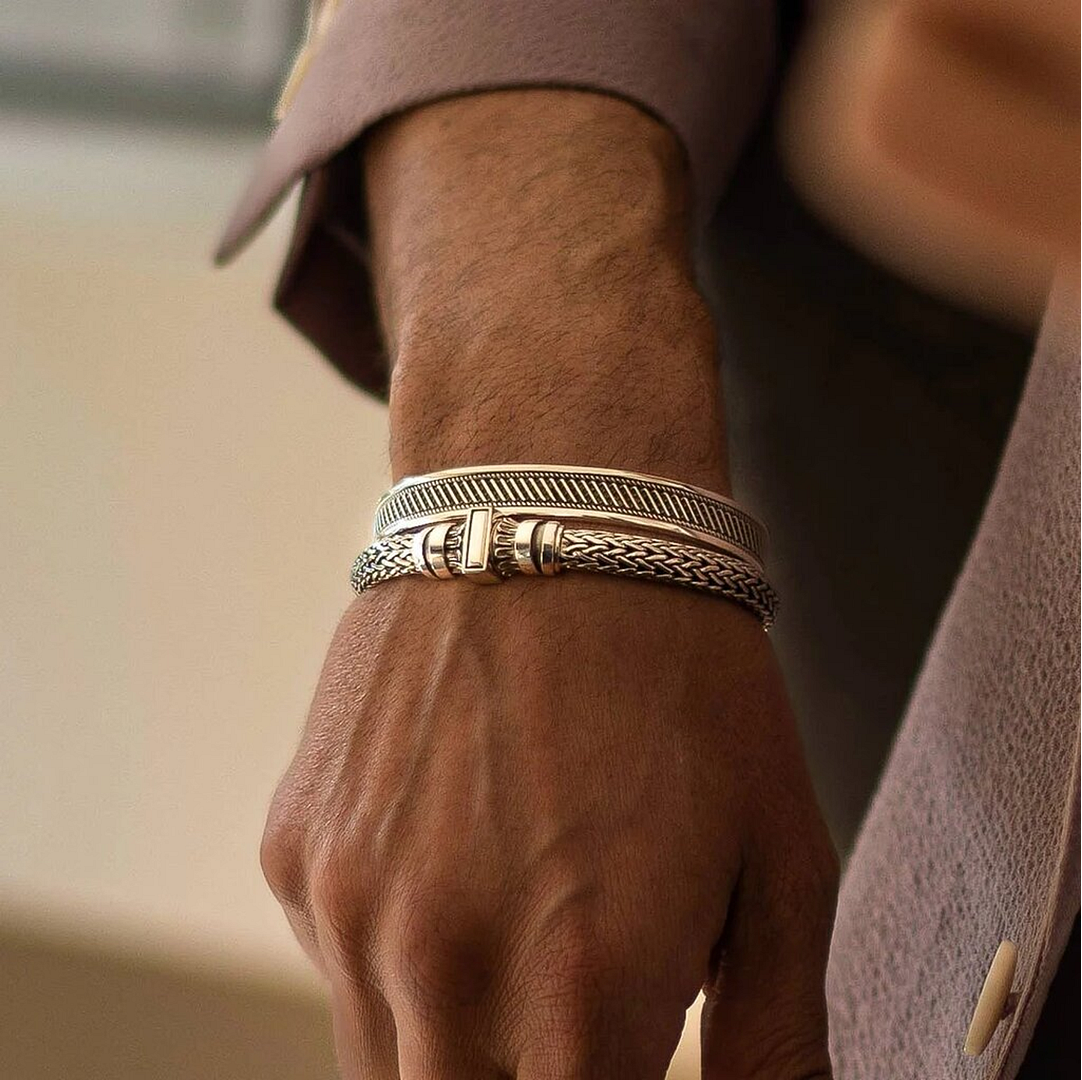
In smart-casual and formal contexts, restraint is the governing principle. One designer bracelet on the non-watch wrist is the right number. A slim engraved silver cuff, a minimal chain bracelet, or a clean beaded piece with silver hardware in a dark stone all work in these settings without feeling incongruous. Avoid heavily textured or decorative pieces in formal contexts: a clean, well-made sterling silver bracelet reads as confident personal style; an oversized or visually busy piece reads as incongruous with the register of the occasion.
Sterling Silver as the Designer Bracelet Material
Sterling silver is the dominant material in men’s designer bracelets across the UK market, and the reasons are practical as much as aesthetic. Its cool, neutral tone works across a broader range of skin tones and wardrobe palettes than yellow gold. Its price point allows for building a considered collection without the financial commitment that precious metal alternatives require. And its behaviour over time gives each piece an individual quality that mass-produced alternatives cannot replicate.
Why 925 Sterling Silver Works
925 sterling silver is the standard for quality men’s silver jewellery, and its properties make it particularly well suited to bracelet use. It is strong enough to hold its shape under daily contact with surfaces and clothing without requiring careful handling. It takes engraving, texture, and surface treatment cleanly, which gives designers significant range in how it can be worked. And it has a weight and density that communicates quality in a way that lighter metals and alloys do not.
For men building a designer bracelet collection for the first time, starting with 925 sterling silver and adding from there is the most reliable approach. A quality silver piece establishes the material and design standard for everything that follows, and sterling silver’s versatility means it integrates naturally with almost any other material or metal you add to the wrist over time.
How Silver Bracelets Age
One of the qualities that distinguishes a genuine 925 sterling silver bracelet from cheaper alternatives is how it ages. Quality silver develops a natural patina over time: a slight deepening of tone and the appearance of very fine surface marks from daily contact that collectively give the piece a lived-in quality. This patina is not damage. It is the natural accumulation of wear that makes a piece feel personal and considered rather than new and generic.
Men who prefer the original polished finish can maintain it easily with a soft silver polishing cloth, which removes the surface oxidisation and restores the bright silver tone. Men who prefer the aged look can simply let the bracelet develop naturally through regular wear. The ability to choose between these two appearances over the life of the piece is one of the practical advantages of 925 sterling silver over more stable or heavily plated alternatives.
Men’s Designer Bracelets as a Gift
A men’s designer bracelet in sterling silver is one of the most reliable gift choices in the jewellery category. It is personal without being presumptuous, versatile enough to suit most style directions, and durable enough to be worn every day for years. Getting it right requires knowing the recipient’s wrist size and style preference, but both of these are more accessible pieces of information than ring size or specific taste in necklaces.
Engraving and Personalisation
Engraving elevates a designer bracelet from a well-made object into a personal one. A date, initials, coordinates, or a short phrase engraved on the interior surface of a silver cuff or on a flat link in a chain bracelet adds a layer of meaning that the design alone cannot carry. For gift purchases, engraving is often the detail that transforms a piece from something the recipient might have bought themselves into something they would not have thought to. 925 sterling silver takes laser engraving cleanly, and the engraved detail remains crisp and legible over years of wear.
How to Choose for Someone Else
When choosing a men’s designer bracelet as a gift, start with the recipient’s existing jewellery and watch if they wear one. Match the metal to what they already have: a silver watch points toward a sterling silver bracelet. If they already wear a chain bracelet, consider a beaded piece or a cuff as a complementary addition rather than a duplicate. If they wear no jewellery at all, a slim sterling silver chain bracelet is the most approachable starting point: it integrates into any wardrobe without requiring a style adjustment and is comfortable enough for a first-time bracelet wearer to adapt to quickly.
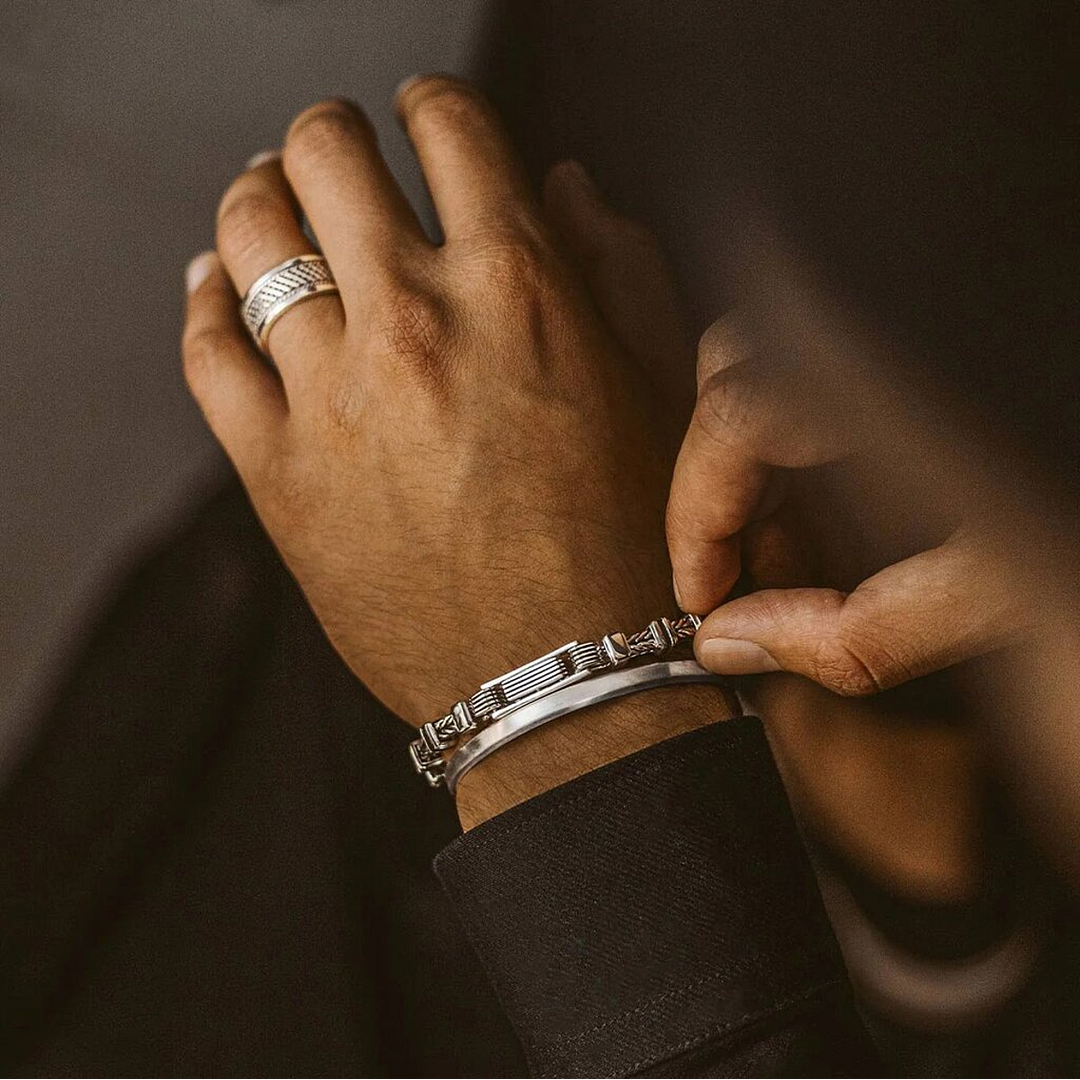
Shop Men’s Designer Bracelets
Finding a men’s designer bracelet worth buying comes down to the same principles as any quality jewellery purchase: material standard, construction precision, and a design that works for the way you actually dress. The range of options available in 2026 is broader than it has ever been, which makes those criteria more useful as filters than they have been in previous years.
For men looking for well-made sterling silver options across the full range of bracelet styles, the Men’s Braceletscollection at NineTwoFive covers chain bracelets, cuffs, beaded styles, and leather pieces, all built to a consistent 925 sterling silver standard. Free laser engraving is available on selected pieces, making the collection well suited to gift purchases as well as personal additions to a wristwear rotation.
For a broader look at the full range of men’s sterling silver jewellery available, including rings and chains alongside bracelets, NineTwoFive brings together pieces designed for everyday wear with a design direction that prioritises clean construction and considered form. It is a reliable starting point for any man building a designer jewellery collection around sterling silver.
Final Thoughts
Men’s designer bracelets reward the same approach as any quality jewellery purchase: start with one piece that meets a genuine material and design standard, wear it consistently, and build from there when the instinct arises. A well-made sterling silver bracelet worn every day for a year will develop a character that no number of cheaper pieces worn occasionally can match. That is what makes it worth investing in designer quality from the outset rather than working up to it gradually.