There can be few Shakespeare plays better suited to Regent’s Park Open Air Theatre than A Midsummer Night’s Dream. A forest, a summer evening, confused lovers, mischievous fairies, and the occasional rustle of actual trees behind you? It is almost too perfect. The danger, of course, is that the setting does half the work before the production has even begun.
Thankfully, Atri Banerjee’s new staging does not simply lean back and let the park do the heavy lifting. This is a playful, musical, and very funny Dream, one that does not always reach for the darker shadows of the play, but does find huge joy in its chaos.
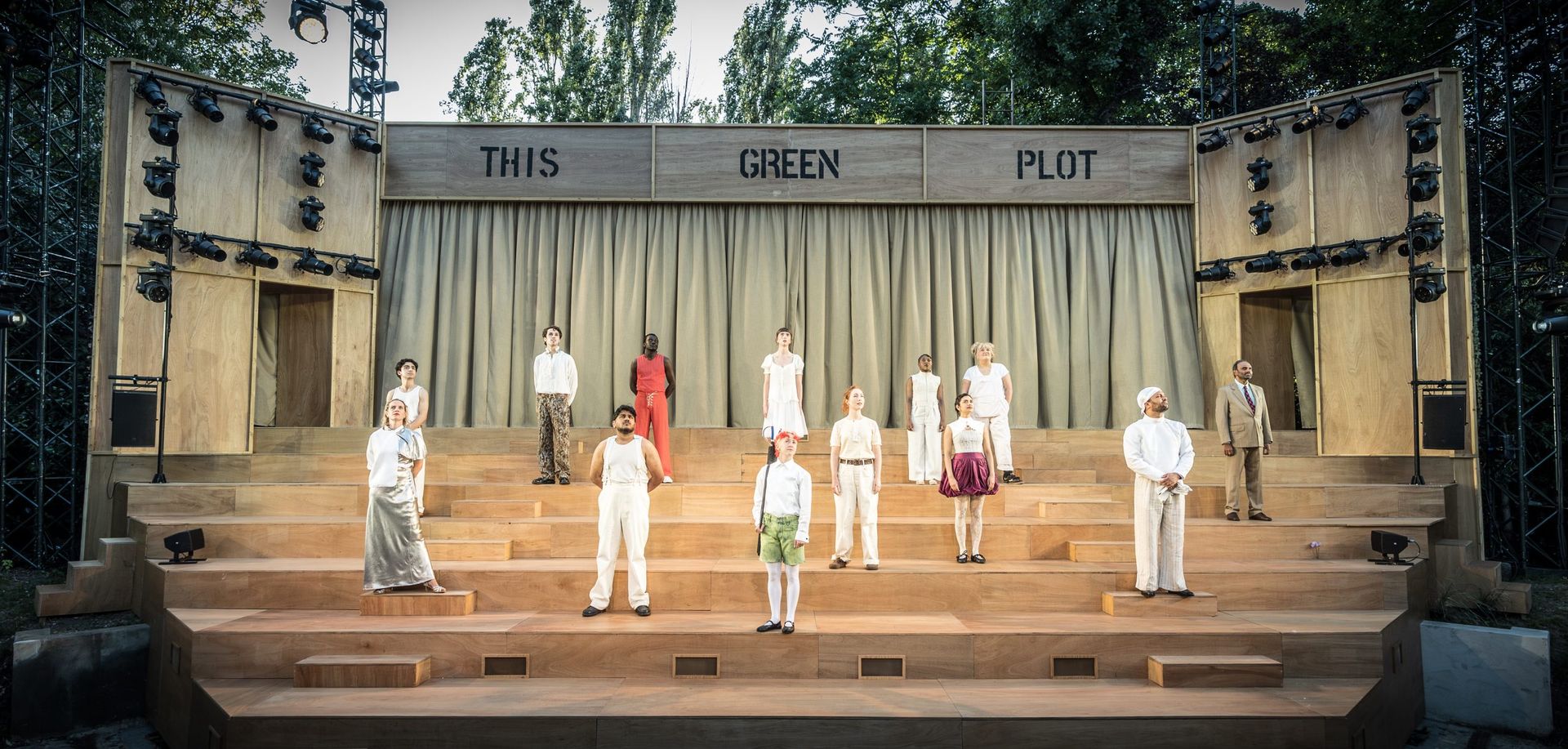
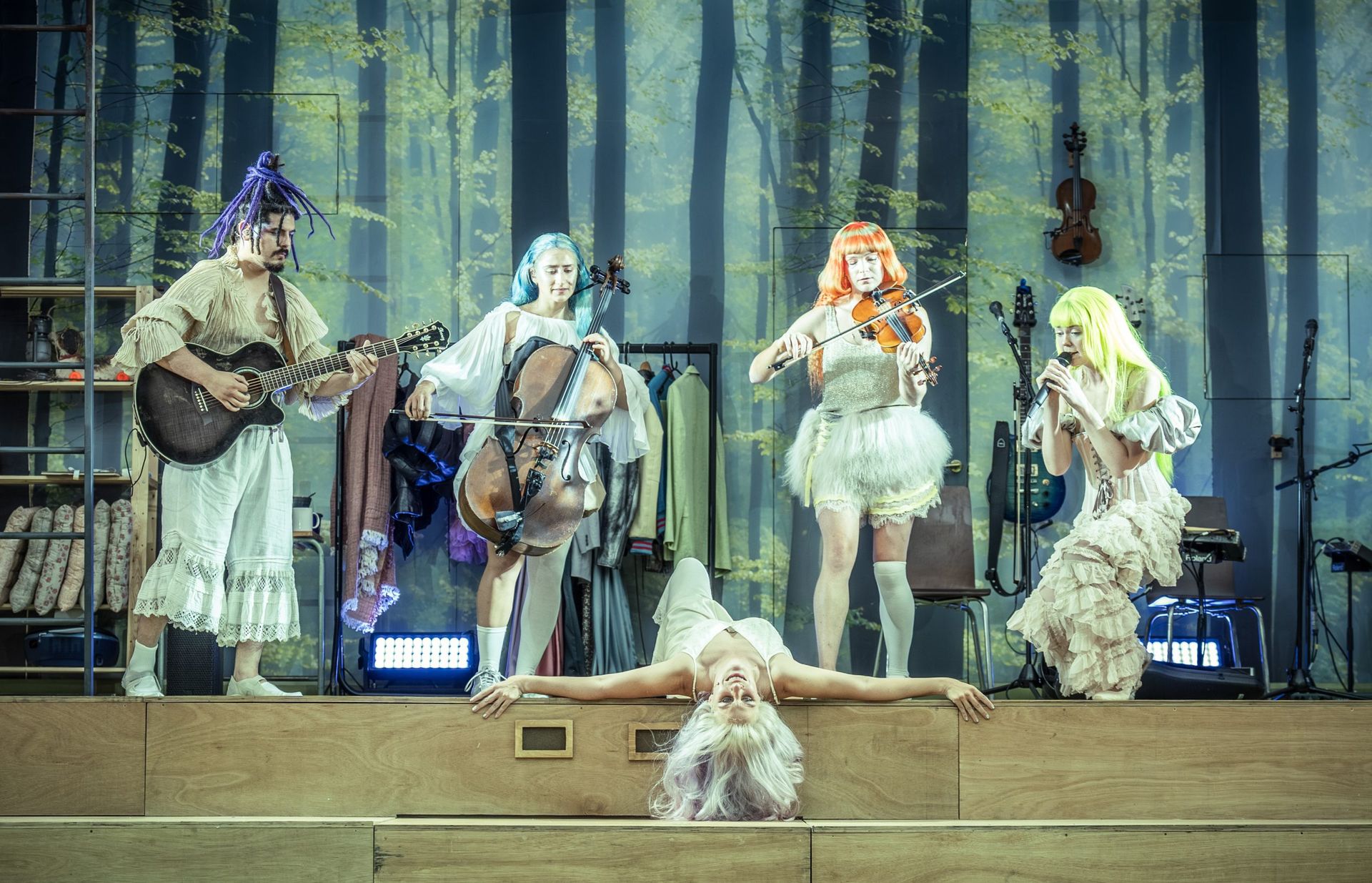
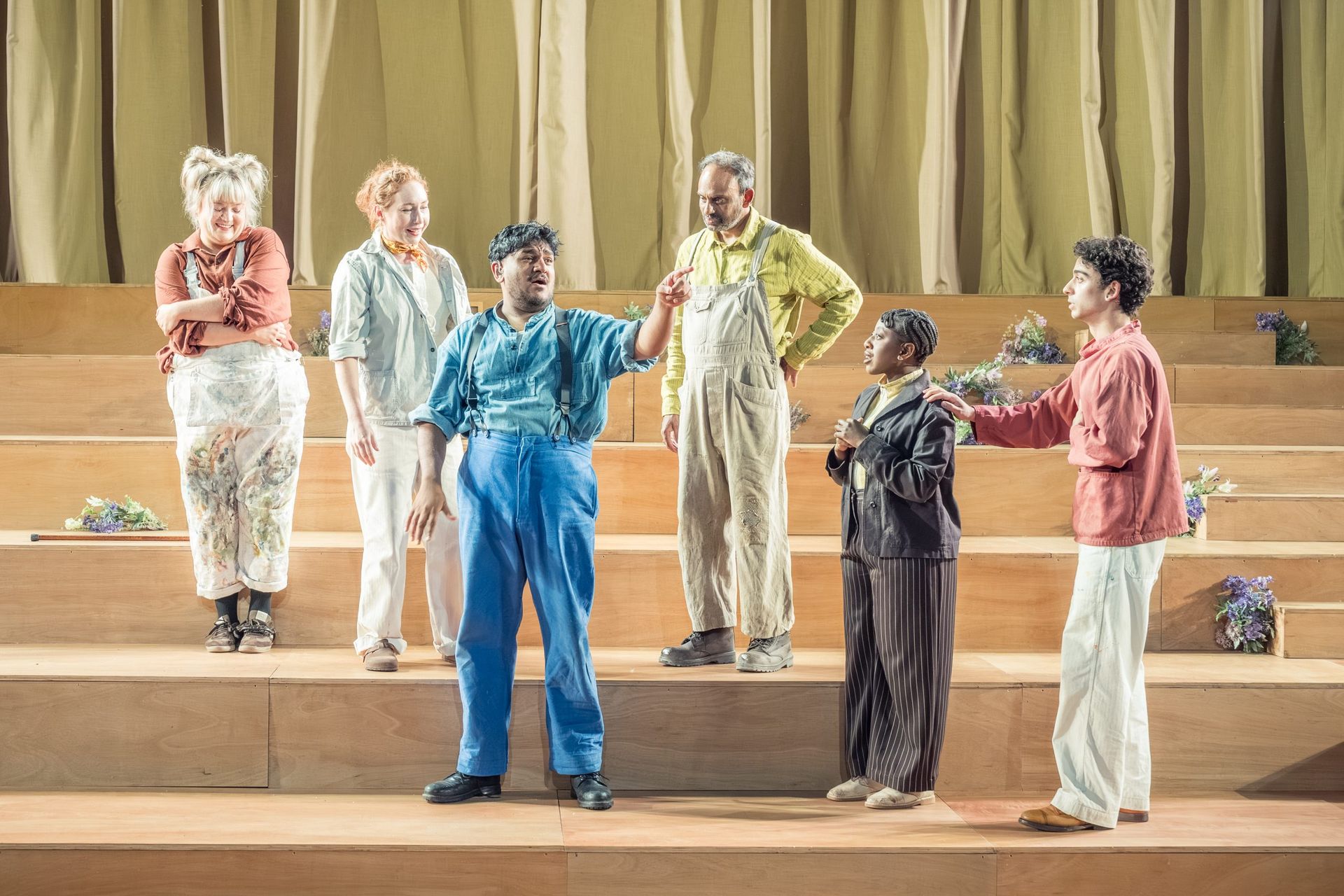
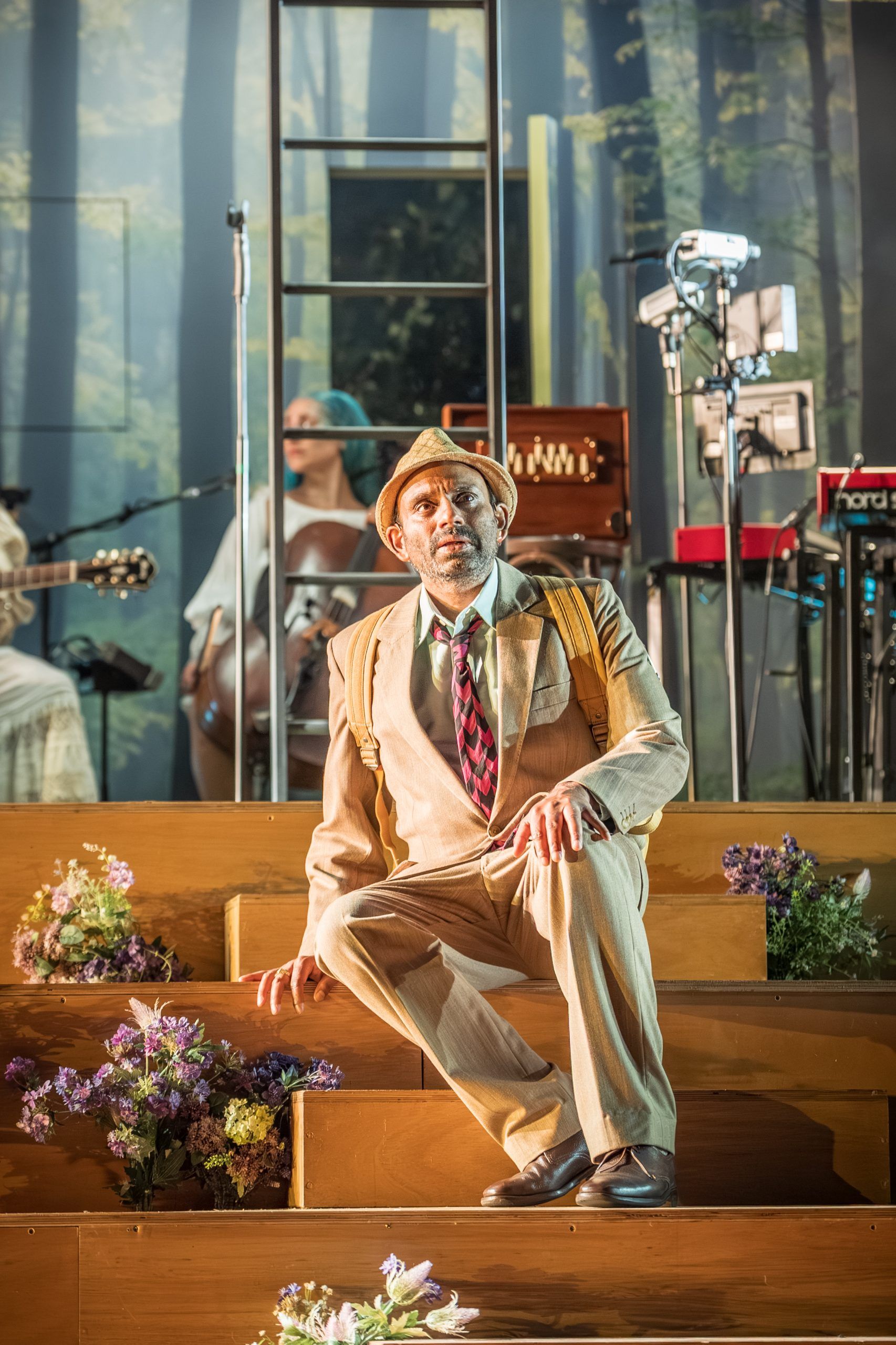
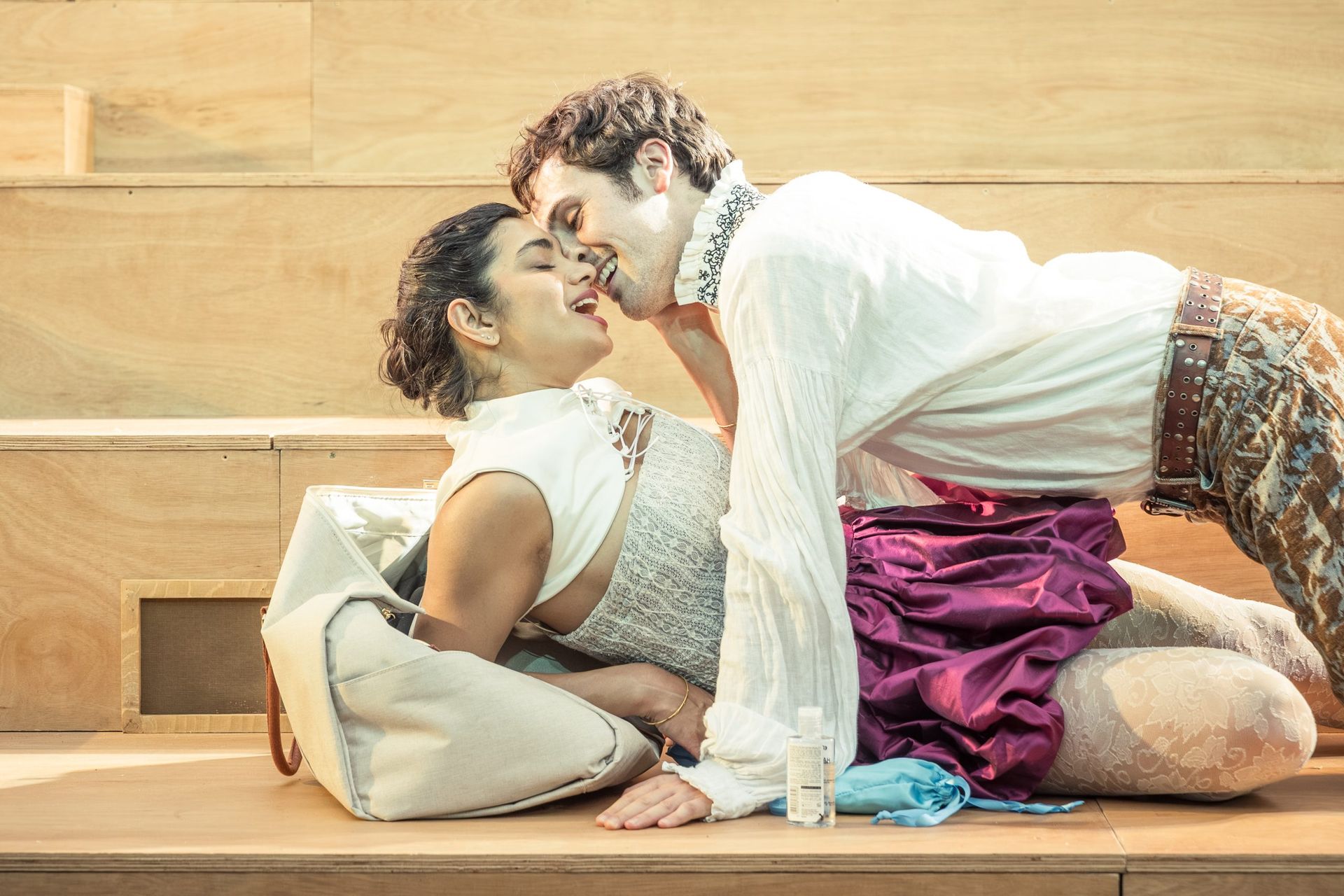
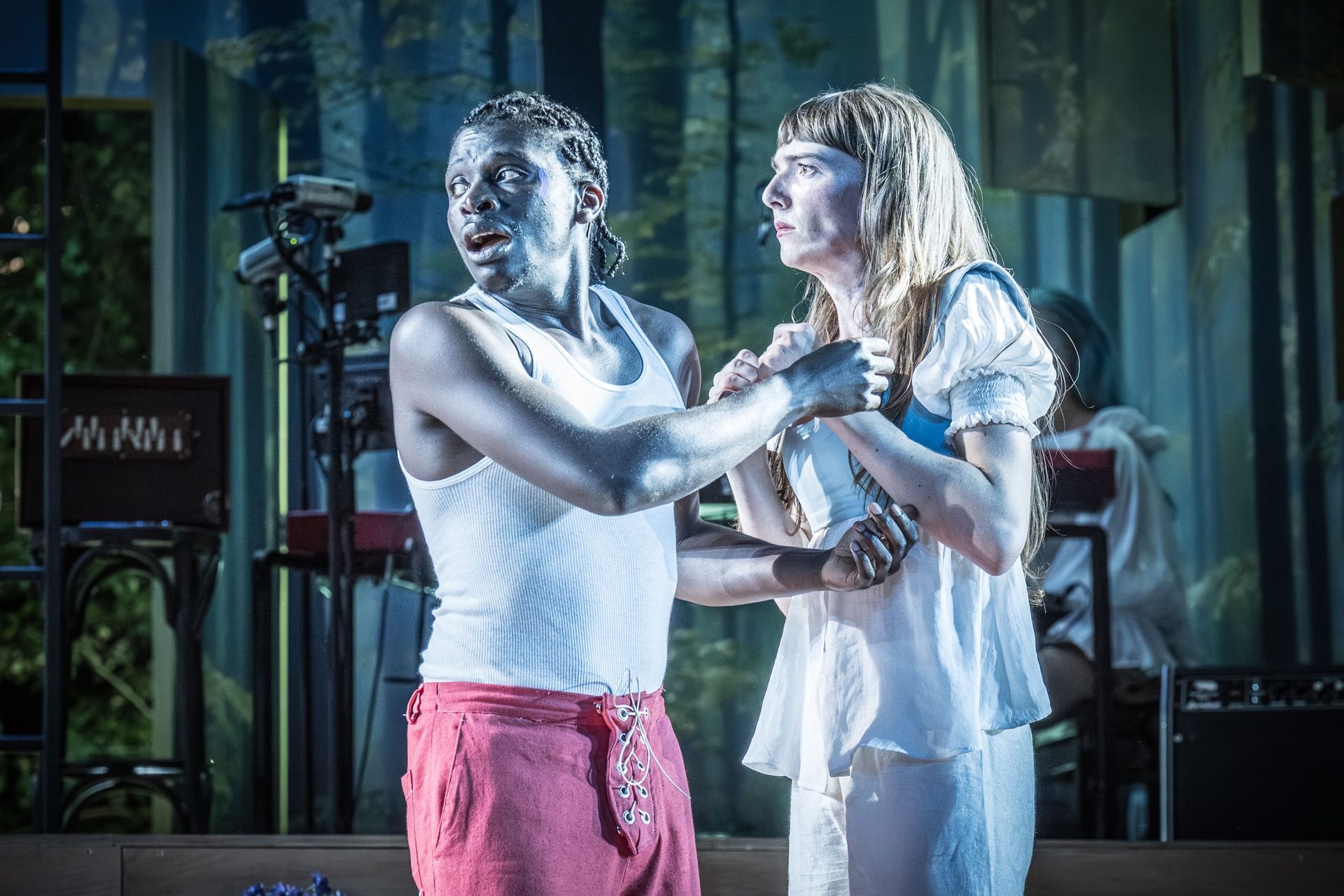
Naomi Dawson’s set begins deceptively simply: a huge wooden structure of steps and panels, with curtains across the back and the words “this green plot” sitting above the action, echoing Peter Quince’s instructions for the mechanicals’ play. It feels deliberately artificial, almost as though a theatre has been built inside the park rather than pretending to be part of it. That choice becomes more interesting as the evening unfolds. Curtains open, panels shift, hidden spaces appear, and what first looked like a fairly plain wooden construction reveals itself as a backstage fairy world, complete with costumes, ladders, trapdoors, and a live fairy band.
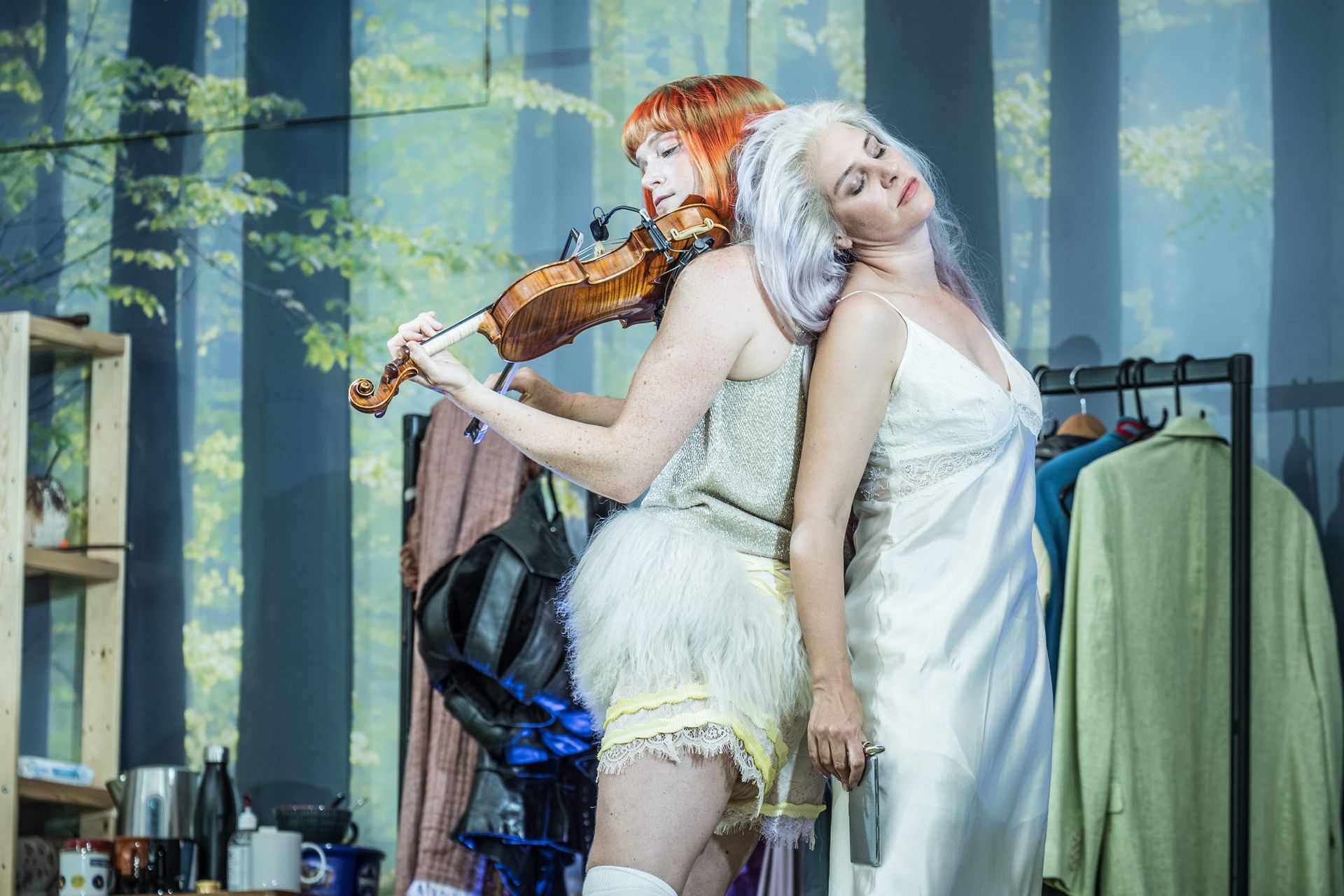
That band is one of the production’s greatest pleasures. Maimuna Memon’s music gives the show a dreamy, folk-rock pulse, somewhere between a woodland gig and an enchanted ritual. The fairies are not delicate little things floating about with wings. They are musicians, singers, watchers, and mischief-makers, weaving the atmosphere live from the back of the stage. At times, Shakespeare’s words slide beautifully into song, giving the play a looseness and texture that feels completely right for this setting.
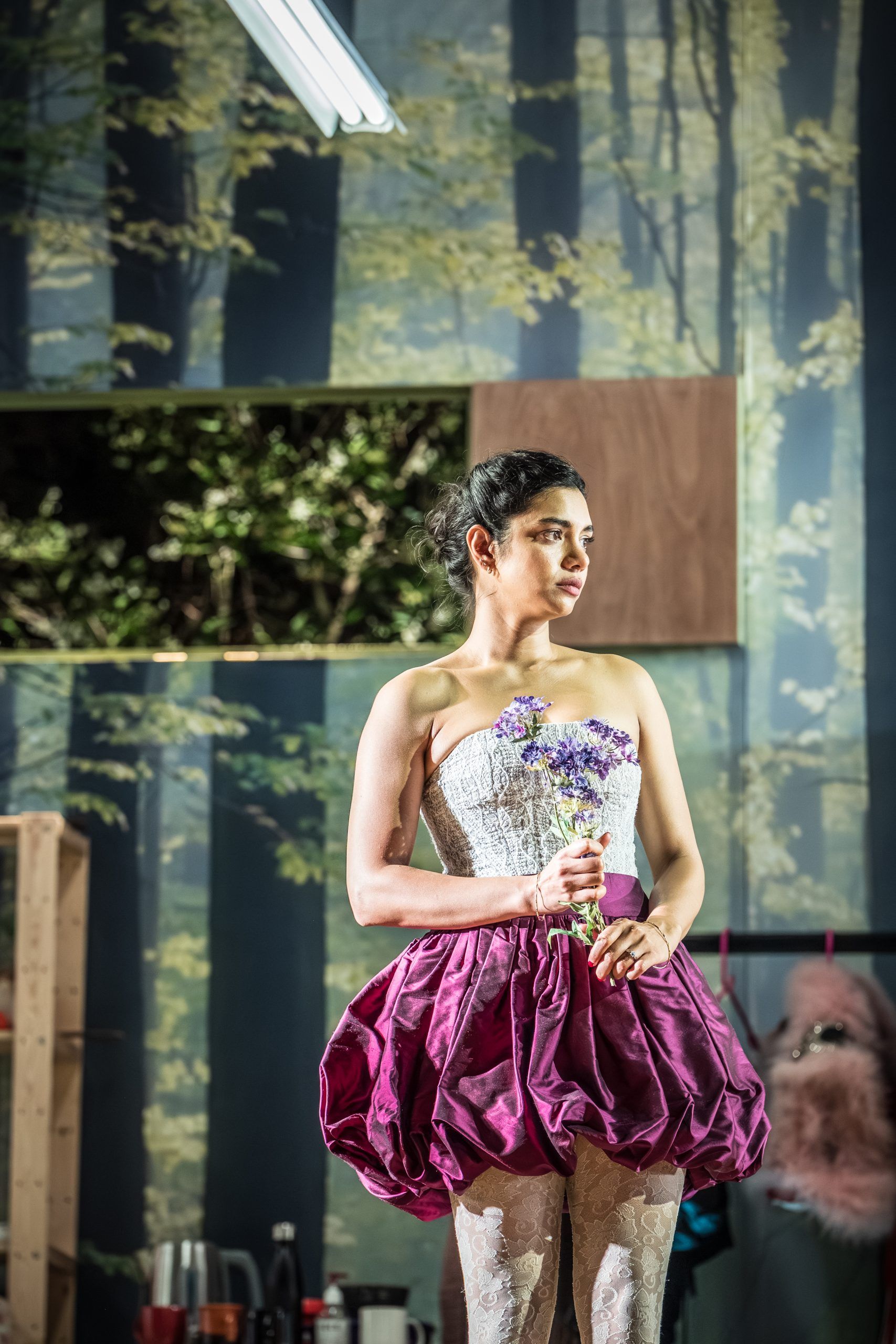
Tomás Palmer’s costumes are equally eclectic. The production plays with white, almost paused versions of costumes, then bursts into colour, texture, lace, shine, and strange fairy glamour. Some of the looks feel modern, some theatrical, some vaguely punk, and some just gloriously odd. It does not all belong to one coherent world, but that feels like the point. This is a dream, after all, and dreams rarely come with a strict design brief.
Banerjee’s approach is light on reverence and heavy on fun. This may bother those who prefer their Shakespeare treated with a little more solemnity, but I found it pretty irresistible. The production understands that A Midsummer Night’s Dream is not only a play about desire, power, illusion, and transformation. It is also very, very funny.
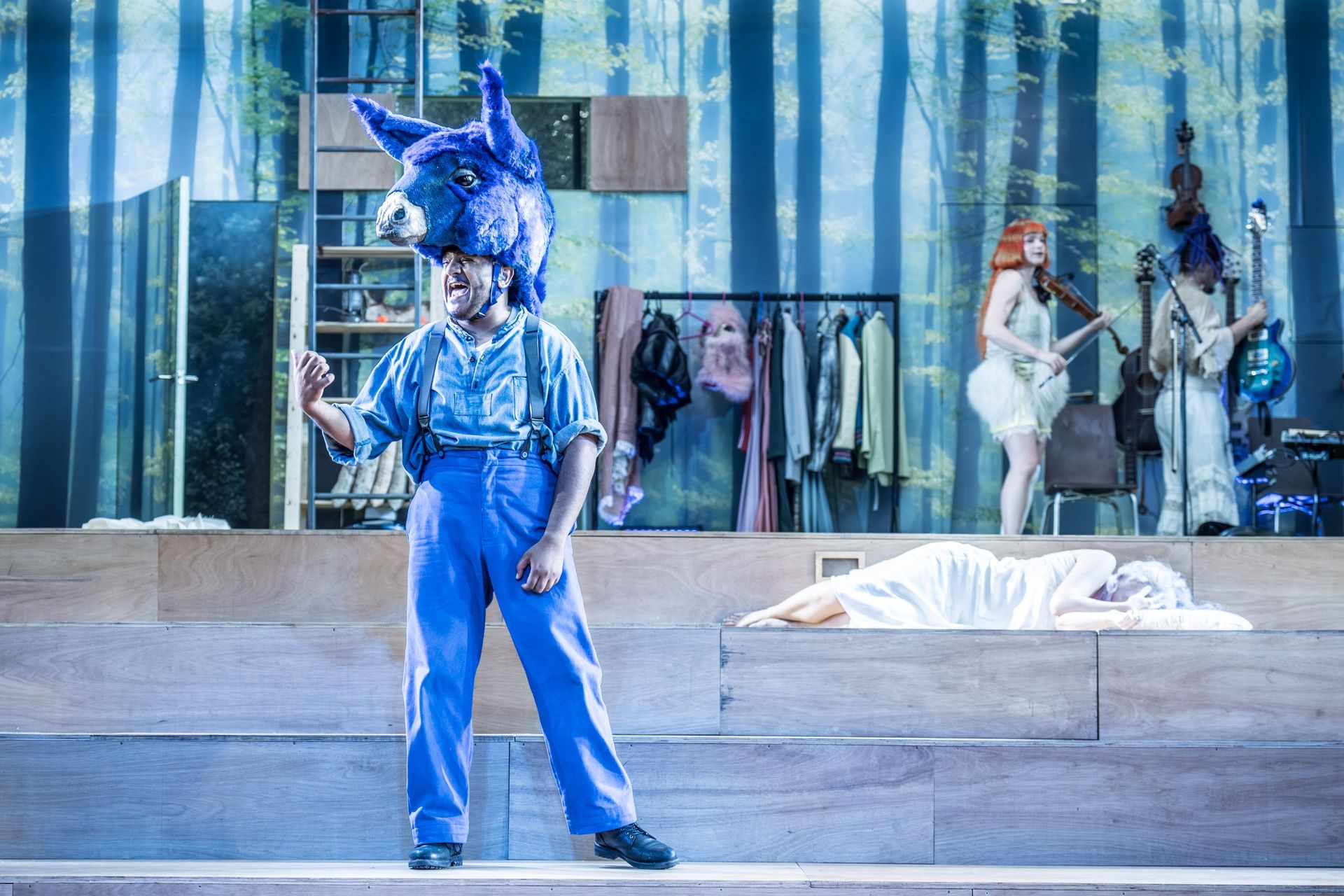
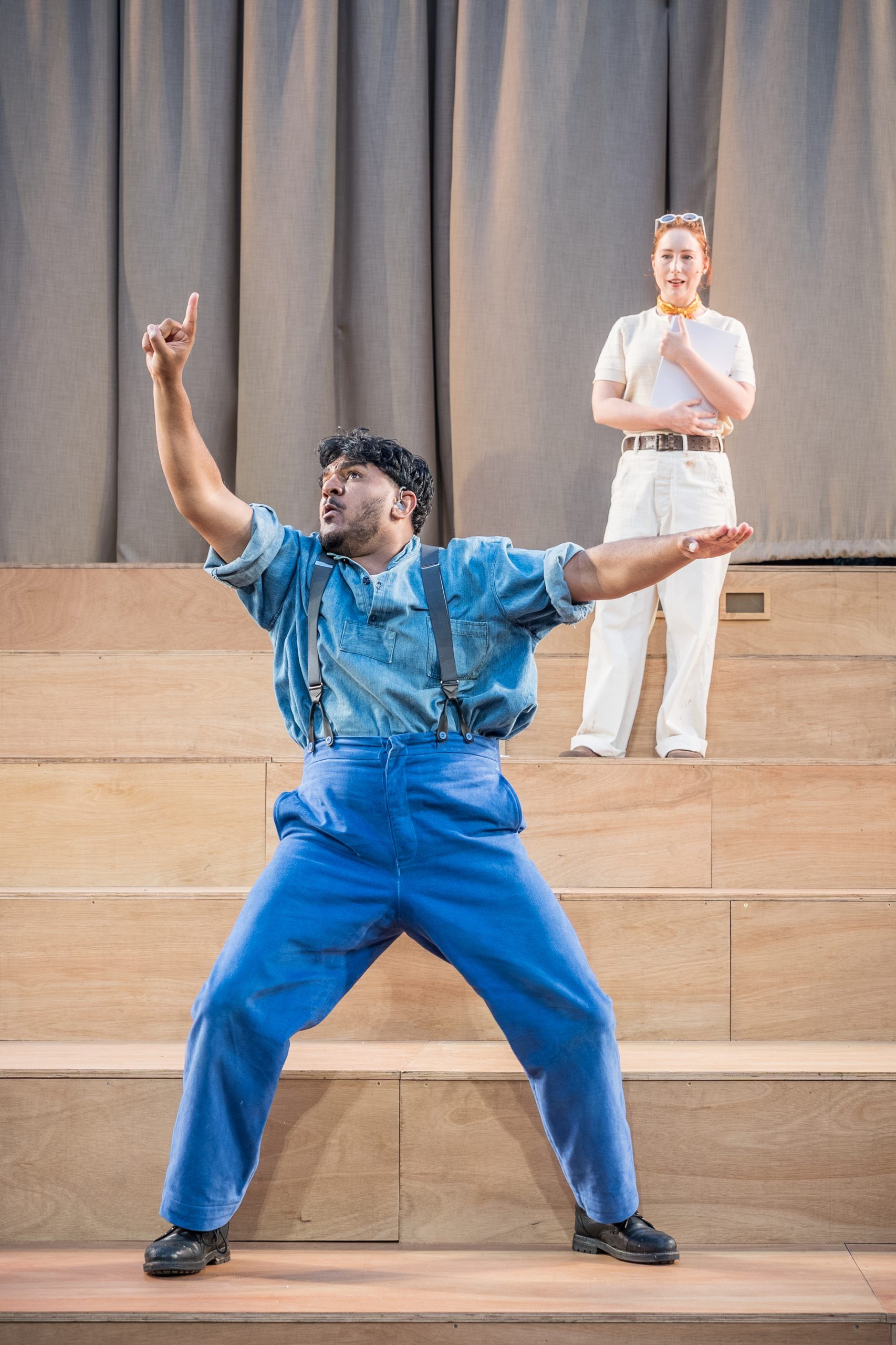
That comedy is nowhere stronger than in Nadeem Islam’s brilliant Bottom. Islam is a Deaf performer, and his use of speech, signing, expression, and full-body physical comedy makes his Bottom feel instantly alive. Bottom can sometimes become a fairly standard comic turn, all bluster and foolishness, but Islam gives him something more joyful. He is overexcited, curious, cheeky, innocent, and deliciously pleased with himself. His physical comedy is exceptional, but what really stands out is how much he communicates beyond the words themselves.
There is a lovely theatrical generosity in the way the production works with Islam’s signing. It is not treated as an add-on or a gimmick. It becomes part of the rhythm of the performance. Later, when Quince speaks for Bottom during the play-within-a-play as Bottom signs, it feels like a natural extension of the world Banerjee has built. It is funny, inclusive, and theatrically satisfying all at once.
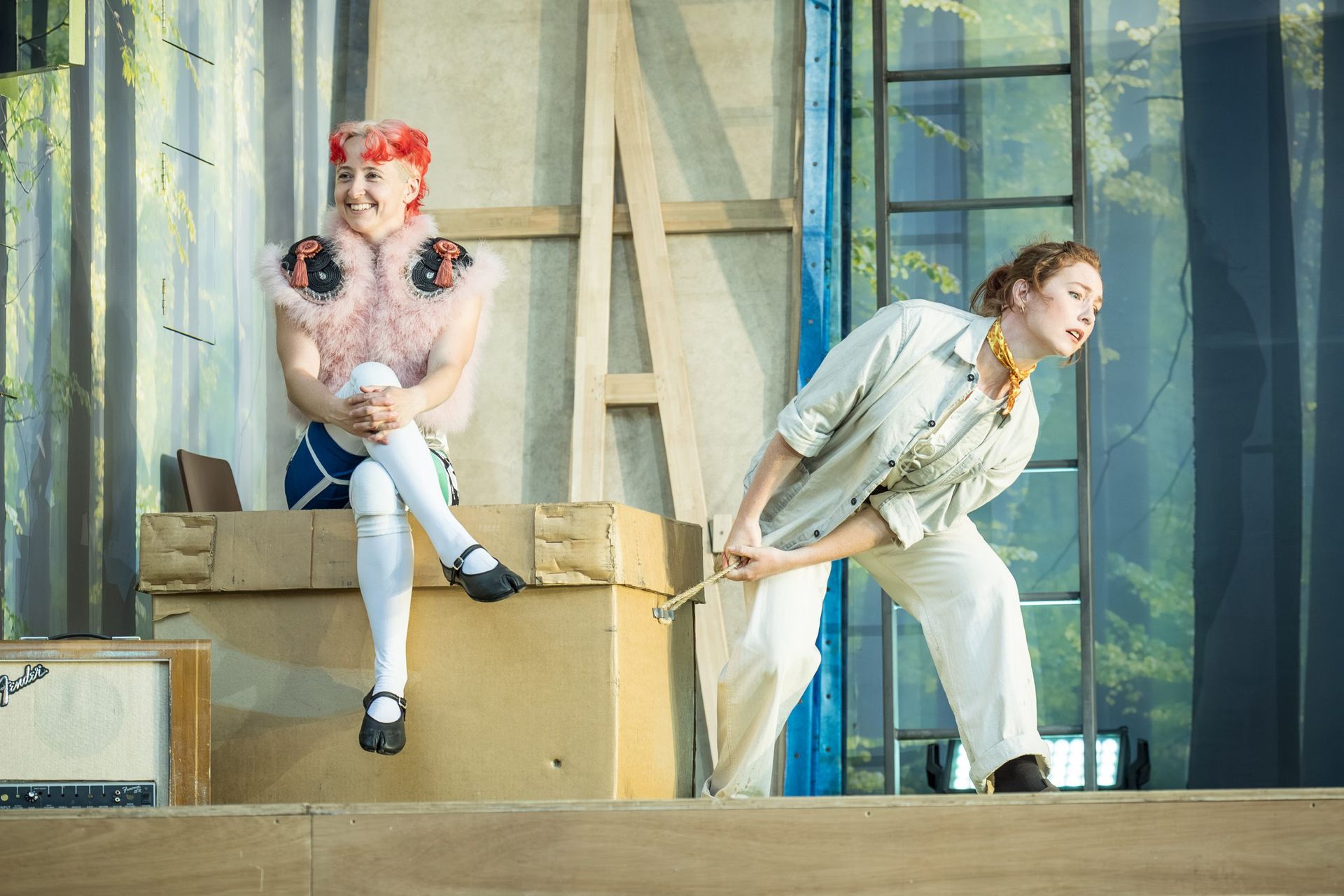
Harriet Gordon-Anderson is great fun as Peter Quince, desperately trying to keep the mechanicals in order while Bottom cheerfully derails proceedings. The whole troupe brings a lot of warmth to the show, and the final performance of Pyramus and Thisbe is played for broad, ridiculous laughs. Evie Jones makes a very funny Snout, especially in the business with the wall, while Neil D’Souza’s Snug is a delightfully dreadful actor in the best possible way. It is silly, affectionate, and knowingly daft, exactly as it should be.
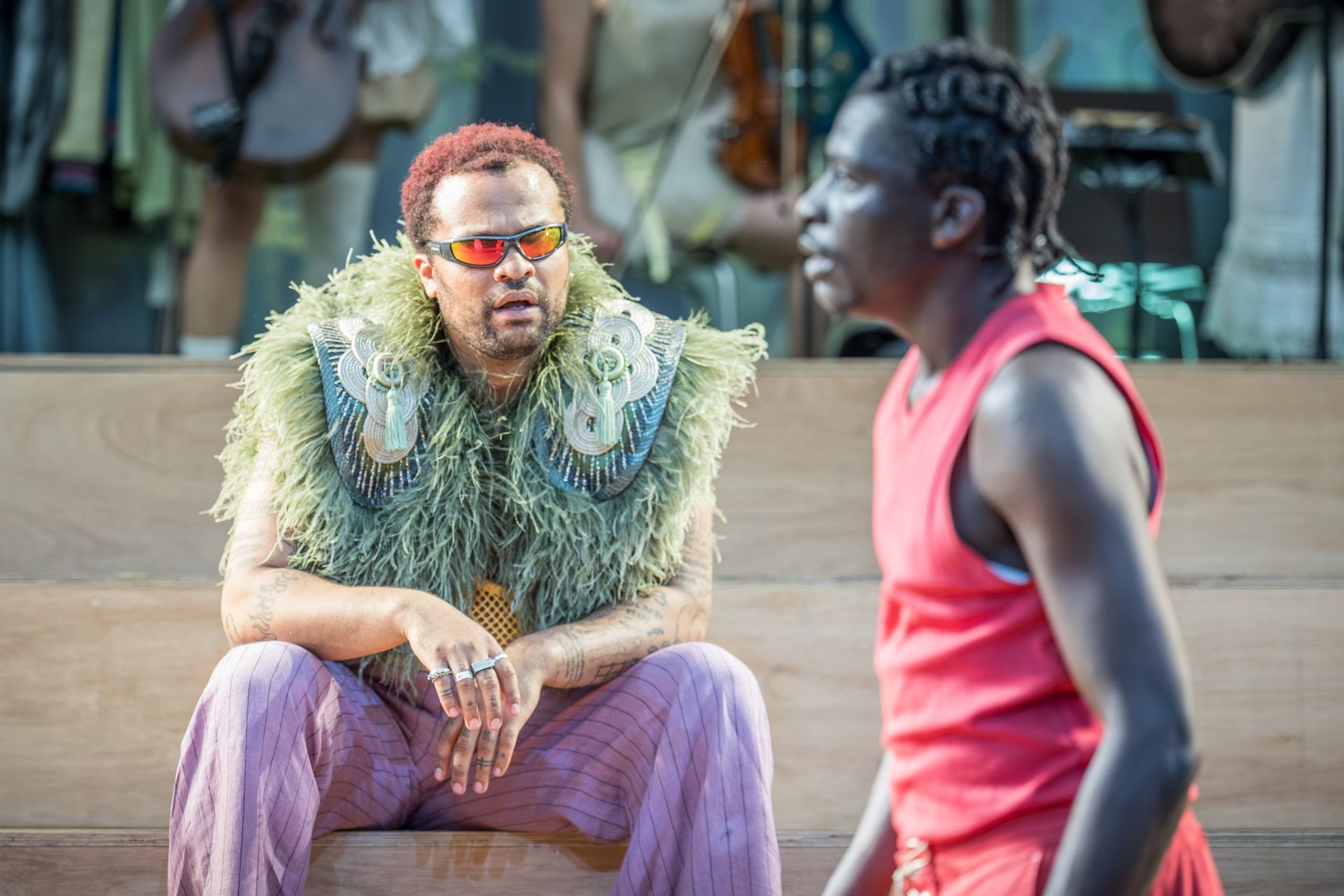
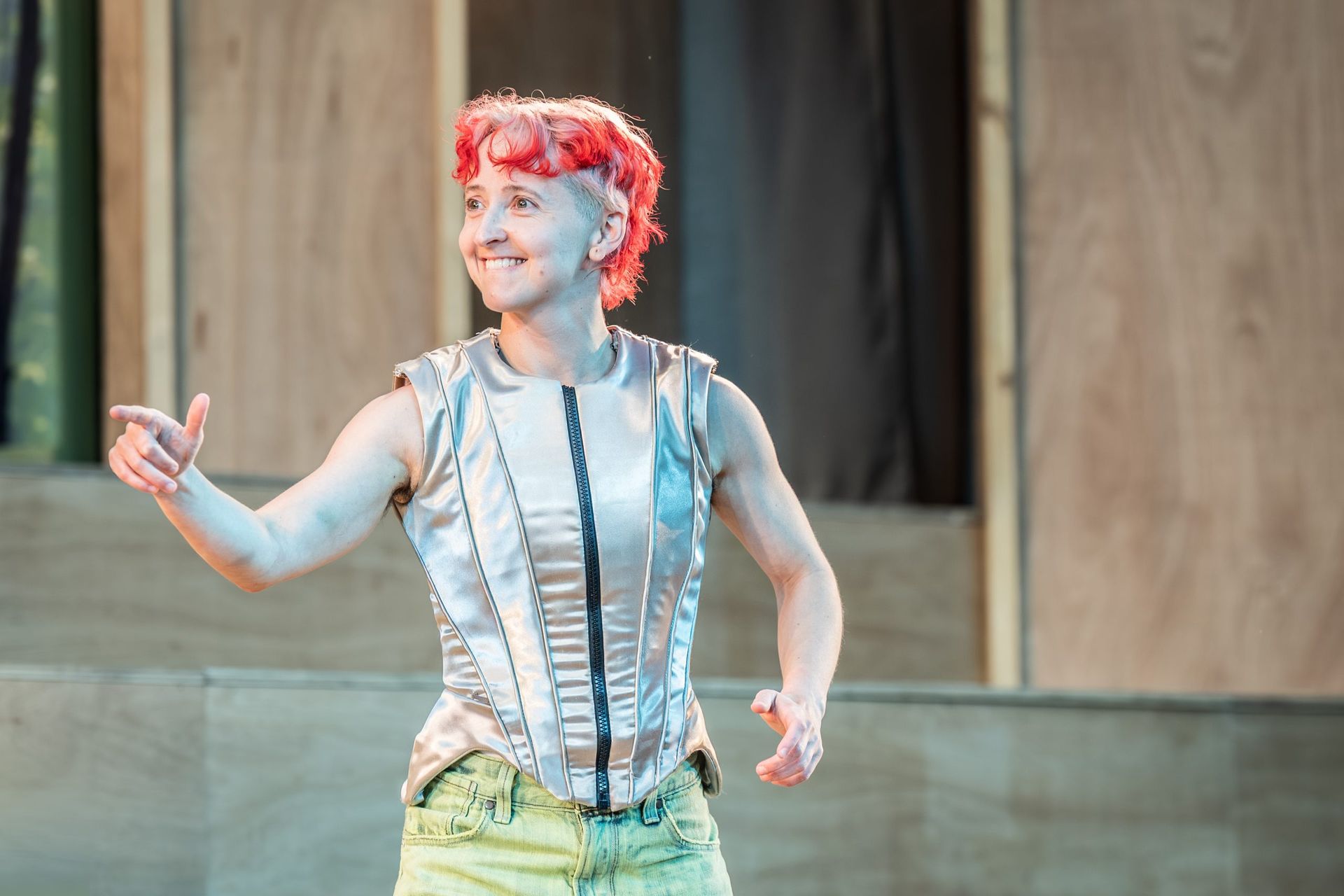
Georgia Bruce is another standout as Puck. Their performance is full of impish energy, mischief, and direct connection with the audience. This Puck feels less like an otherworldly servant and more like the show’s resident chaos manager, dashing about, bending the rules, and having an absolutely brilliant time. Bruce has a wonderful ability to make tiny comic moments land without derailing the play completely. A little fake-ad-lib here, a glance there, a burst of physical silliness, and suddenly the whole production feels lighter on its feet.
There are moments where this looseness risks tipping too far. A few of the contemporary jokes and asides may make Shakespeare purists clutch their programmes a little tighter, and the production does sometimes sacrifice emotional weight for playfulness. However, I thought it was fabulous! On a warm evening in Regent’s Park, with the stage spilling into the real trees around it, the fun feels earned.
Olivier Huband doubles as Theseus and Oberon, with Jenny Rainsford as Hippolyta and Titania. The doubling is always interesting in this play, setting the ordered world of Athens against the wilder fairy realm. Here, the transformation feels deliberately theatrical, with costumes changed in view and identities slipping into each other. Huband’s Theseus is less severe than some, more relaxed and friendly, while his Oberon has the air of a cool, slightly arrogant musician who has wandered out of a fairy rock band and decided to meddle in human affairs. Watching him observe the lovers when he first comes accross them is just so much fun. He seems to be watching the greatest soap opera unfold before him.
Rainsford’s Titania brings glamour and force, particularly when surrounded by her fairy band. Her scenes with Bottom are knowingly ridiculous without losing the strangeness of the enchantment. The image of Bottom, all blue costume and enormous blue donkey head, responding to Titania’s desire with a mixture of bewilderment and delight, is very funny. The fact that Islam keeps his face visible beneath the donkey’s head is a smart choice, allowing every flicker of comic reaction to register.
Among the lovers, Mary Malone makes the strongest impression as Helena. She is witty, sassy, wounded, and genuinely moving. Helena can easily become a joke, endlessly chasing a man who keeps rejecting her, but Malone makes the pain of that rejection feel real. When she believes she is being mocked, the hurt lands. When she is angry, she is properly angry. When she loves, it feels painfully sincere. It is a beautifully judged performance.
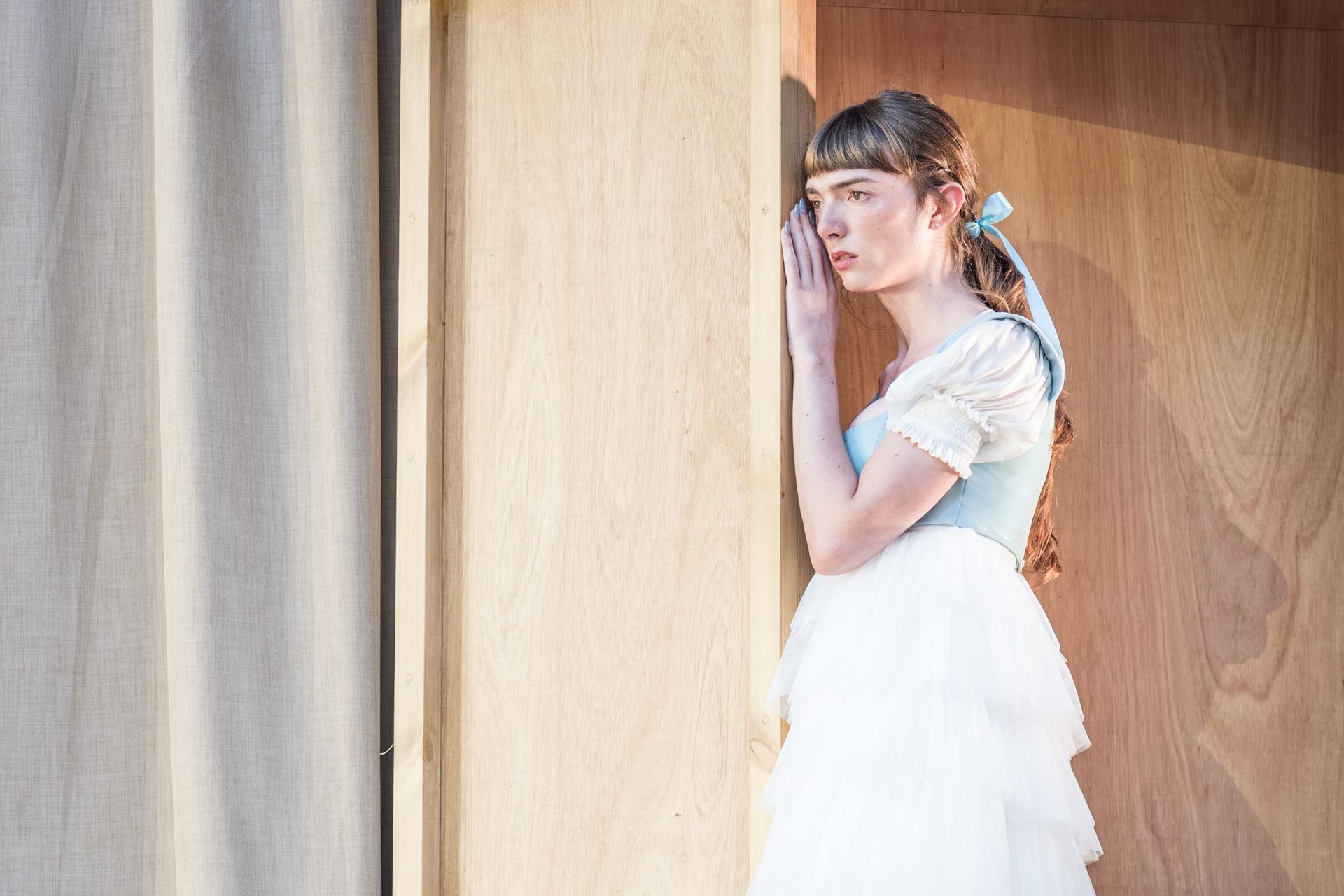
Hiftu Quasem brings a sharp, spirited energy to Hermia, and her early friendship with Helena is given a sweet, modern warmth before jealousy and fairy interference tear everything apart. Misia Butler’s Lysander and Terique Jarrett’s Demetrius both lean nicely into the absurdity of the lovers’ sudden reversals, especially once the spell-induced chaos takes hold. The sparring over Helena is ridiculous in all the right ways, and Jarrett gives Demetrius’s eventual love for Helena a sincerity that helps the ending settle emotionally.
What Banerjee does particularly well is keep the different worlds of the play in conversation. Athens, the forest, the fairies, the mechanicals, and the theatre itself are not cleanly separated. Characters watch from above, vanish into the bushes, emerge from the audience, and use the architecture of the Open Air Theatre as though it has always been part of the forest. At one point, Puck appears from the top of the auditorium steps, calling down to Oberon – ‘Oberon, mate!’ – before racing through the audience and joking about just how many steps there are in this forest. It is a small moment, but it captures the spirit of the production: cheeky, site-specific, and very self-aware.
Max Pappenheim’s sound design helps blur those boundaries further, while Joshua Pharo’s lighting, once the sun has set, brings subtle shifts to a space that already has the magic of the open air on its side. After the interval, the addition of flowers around the stage gives the forest a simple but effective bloom, as though the world has grown stranger while we were away.
Is this the most profound A Midsummer Night’s Dream I have seen? No. There are productions, like Headlong’s recent take, that dig deeper into the darkness of the play, into the cruelty, manipulation, and unease beneath the comedy. This one is more interested in laughter, music, and the glorious stupidity of humans in love… or maybe just the glorious stupidity of humans. Occasionally, that means the emotional danger feels softened. The stakes are not always as sharp as they might otherwise be.
But, I am not sure every Dream needs to be a nightmare. Banerjee has created a production that feels made for a summer evening: funny, inventive, musical, and full of performers who seem to be having as much fun as the audience. It may not satisfy those looking for Shakespeare at his most psychologically intense, but as an open-air celebration of love, confusion, theatre, and mischief, it is a joy.
And honestly, when a production of A Midsummer Night’s Dream leaves you wishing there were a cast album of its incredible music, something has clearly gone very right indeed.
A Midsummer Night’s Dream is at Regent’s Park Open Air Theatre until 18 July 2026.
Book tickets at openairtheatre.com
Words by Nick Barr
Photography by Marc Brenner