Peter Kleinhans spent thirty years in harness racing before music became the main focus. He called races at The Meadowlands, trained and drove horses, went to law school, and worked in Manhattan real estate. Songwriting came later, around 2013, when he picked up a guitar and found it connected naturally with everything he’d been reading and thinking about.
Selections draws from three albums written between 2018 and 2025. The songs cover a lot of ground, from digital addiction and monetary policy to a forgotten colonial uprising and the quiet economic unease of the American Midwest. There’s a consistent thread running through it, an interest in how systems work and how ordinary people end up inside them.
For this 18 Questions, Kleinhans talks about fatherhood, the long road into music, and why he’d rather ask questions than offer answers.
1. What’s the first thing you usually do when you wake up in the morning?
Complain about being exhausted, then go get the baby out of the crib and get him dressed.
2. Your life has taken you through racetracks, law school, real estate, and now music. When did songwriting start to feel like the real centre of it all?
Around 2013. I hadn’t been training horses for a couple of years by that point, and I’d gone deep down the rabbit hole of world events and economics. When I started playing guitar, there was something that felt completely natural about connecting the music to the things I was learning. The two just found each other.
3. Do you approach writing songs more with a storyteller’s instinct or with an analyst’s brain?
Both, and I need both. The storyteller is there to engage the listener’s heart, and the analyst is there to engage the listener’s brain. When you’re writing a song, you’re obviously hoping to make people feel something. But I also want to make people think. I know most people don’t put on music specifically to think about things, but some do, and I write for them too.
4. You studied philosophy and literature before law. Do those influences still sneak into your lyrics?
Absolutely, and it’s made me reconsider regrets I once had about my double major in creative writing and philosophy. At the time, it seemed like the most useless combination imaginable. As a professional credential, it probably is. But as a foundation for appreciating the world and finding language for it, it’s been invaluable.
5. When a new song begins, what usually appears first for you: a lyric, a melody, or an idea you can’t stop thinking about?
An idea I can’t stop thinking about, combined with a sense of chord progression and an implied melody. The idea and the music arrive together, almost like they’re looking for each other.
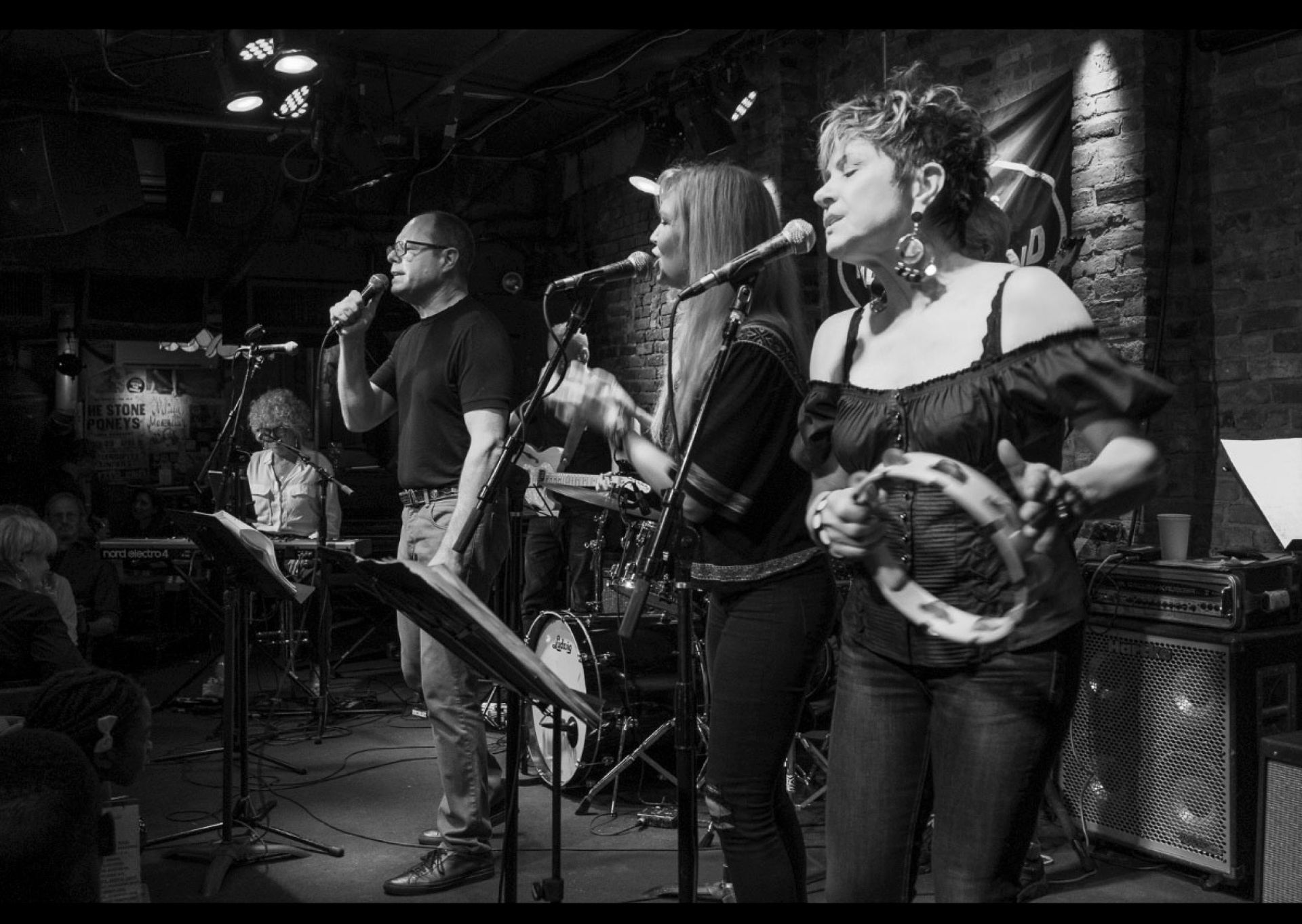
6. You perform regularly in intimate New York venues like The Bitter End. What keeps you coming back to rooms like that?
The satisfaction of connecting with an audience directly, even if it’s a smaller one. And The Bitter End specifically has so much history in its bones. I genuinely feel honored to perform in the presence of all the musicians who’ve stood on that stage before me.
7. Which songwriters first showed you that music could carry big ideas as well as good melodies?
Harry Chapin. “Cat’s in the Cradle,” when I was six or seven. I remember walking home afterward talking to a friend, and I was struck by the realization that I hadn’t known a song could make me think that much. That was the moment something shifted.
8. How do you know when a song is actually finished and ready to share?
When I’m no longer embarrassed to play it for people.
9. Outside of music, what kinds of everyday moments still spark ideas for songs?
Almost anything. A random news story. A moment with my son. Solving a problem with my wife. The impression I get from a stranger on the street, just wondering about what their life must be like. The world is constantly offering material if you’re paying attention.
10. If someone had never heard your music before, which one of your songs would you play them first?
That’s genuinely the hardest question you could ask me, because I don’t feel like I’m a reliable judge of who would respond to what. It really depends on the listener. For friends in finance, I’d probably start with Hyperinflate. For my gambling friends, Dopamine. For anyone interested in larger political themes, maybe Malagasy Uprising. And for the dreamers and romantics, Beneath Two Moons.
11. Your album Selections brings together songs written between 2018 and 2025, but it feels more like a curated journey than a greatest hits record. What made you want to frame it that way?
Partly because I’ve always been learning, and the things that seem important to me change over time. When I first started writing, I probably focused more on relationships than anything else, like most people. But as I started thinking more seriously about the forces shaping everybody’s lives, I realized that was just one realm. Once I stepped back from training horses and announcing races full time, I went on a real intellectual journey to understand the world. The songs on Selections reflect that journey. I wanted different kinds of listeners to each find something that spoke to them specifically.
12. When you put these songs together, did you start to notice recurring themes running through them?
Yes. I realized that one recurring thread is my own love of melancholy and ambiguity. I’m drawn to songs that float somewhere between happy and sad, or between reality and metaphor. Those in-between emotional spaces are where I feel most at home as a writer.
13. “Dopamine” taps into our addiction to instant gratification. What first sparked the idea for that song?
The recognition of how many things in my own life I do for reasons that can’t be explained rationally, that can only be explained by chemicals. Once I started noticing that in myself, I couldn’t stop seeing it everywhere.
14. “Something’s Not Right” hints at a deeper unease in modern society. What inspired that feeling when you wrote it?
Having spent time with people in the Midwest over the years, and then coming back after a long absence and seeing how much their prospects had dwindled and their sense of joy had diminished. At the time, I didn’t think of it as a political observation. It was just something I was witnessing. But it’s clearly rooted in the same underlying forces that led to things like Trump’s election and the widespread disillusionment with institutions that so many ordinary people feel now.
15. “Perv with the Nerve” references the Larry Flynt vs. Jerry Falwell case. What drew you to that story as the basis for a song?
I came across the actual Campari parody ad that Flynt had used to ridicule Falwell, and I found the story behind it absolutely hilarious. The more I researched the case, the richer it became. It’s simultaneously serious and darkly funny, and it felt like exactly the kind of story that deserved a song.
16. Songs like “Hyperinflate” and “Malagasy Uprising” dive into politics and history in ways most pop songs avoid. What attracts you to those kinds of subjects?
Politics and history are subjects that genuinely fascinate me, but I’m not a flag-waving advocate for any particular position. I’d rather look at what’s happening, think about it carefully, and comment on it without trying to convince anyone of anything. I’m just trying to shine a light on places that deserve attention, whether that’s a pattern in our economic system or a single individual on the other side of the world. These are subjects that affect everybody, and yet most of what we hear about them are slogans. Music used to address these kinds of issues all the time. I find it surprising that there seems to be so little of it now, especially about history. I’m just trying to throw stories and data points out into the world and hope that listeners start thinking in their own way.
17. Across Selections, there’s a big question about how we stay human in a world shaped by systems and algorithms. Do you feel music still has the power to push back against that?
I do. And as evidence, I’d just point to my own reaction when I hear a song that genuinely moves me. There’s a song from the nineties, “What It’s Like” by Everlast, that captures an empathy for humanity so directly that it affects the listener regardless of whatever noise surrounds them. Songs like that produce a resonance that’s unmistakable and undeniable. Most of what I’ve heard that is AI-generated or more technically oriented doesn’t produce that reaction, at least not for me. But I believe a lot of people feel the same way. There’s something in real human expression that still cuts through.