For new mothers, the hours spent pumping and nursing can feel like a second full-time job. Between eight to twelve feeding sessions a day and multiple pumping breaks, finding ways to reclaim even a few minutes becomes essential. One of the most common decisions facing breastfeeding moms is whether to invest in a pumping bra or a nursing bra—or both. Each serves a distinct purpose, yet both promise to make daily routines more manageable. This article dives into the pumping bra vs nursing bra debate with a clear focus on hands-free efficiency. Whether you’re looking for a hands-free pumping bra that lets you answer emails while expressing milk, or a nursing bra that makes feeding seamless, understanding the differences will help you choose the right pumping solution for your lifestyle. We’ll break down features, compare performance, and offer a practical guide so you can spend less time fumbling with gear and more time enjoying motherhood.
What is a Pumping Bra? Defining Your Hands-Free Pumping Solution
A pumping bra is a specialized garment engineered with one primary goal: holding breast pump flanges securely against your body so your hands remain completely free. Unlike standard bras, a pumping bra features reinforced openings or built-in slots that grip the flanges in place, creating a stable seal throughout each pumping session. This transforms what would otherwise be a twenty-minute period of sitting still, hands occupied, into productive time for working, eating, caring for your baby, or simply resting.
The concept behind this hands-free pumping bra is straightforward but transformative. Instead of pressing flanges to your chest manually—a task that quickly becomes exhausting over multiple daily sessions—the bra does the holding for you. For mothers who pump exclusively or supplement nursing with regular pumping, this efficiency gain compounds significantly over weeks and months. A reliable pumping solution means fewer interrupted tasks, less physical fatigue in the arms and hands, and a greater sense of control over a demanding schedule.
Key Features of a Quality Hands-Free Pumping Bra
Not all pumping bras deliver the same experience. A quality option starts with durable, breathable fabric that withstands daily wear and frequent washing without losing its shape or elasticity. The access mechanism matters too—look for designs with easy-open clips, zippers, or pull-aside panels that let you insert flanges quickly without a complicated setup process. Proper support is essential; the bra should compress enough to maintain suction but not so tightly that it restricts milk flow or causes discomfort. Adjustable straps and band closures accommodate the breast size fluctuations that are common throughout the postpartum period. Finally, machine washability is non-negotiable given how frequently these bras encounter milk spills and daily sweat.
How Pumping Bras Integrate with Wearable Pumps
The rise of wearable pumps has elevated the pumping bra from a convenience to a necessity. Wearable pumps sit inside the bra cup itself, meaning the bra must provide enough structure and coverage to contain the pump unit discreetly under clothing. When paired correctly, this combination allows mothers to pump while grocery shopping, commuting, or attending meetings without anyone noticing. Brands like Momcozy have developed pumping bras specifically designed to work seamlessly with wearable pump systems, ensuring the cup depth and structure accommodate the pump’s profile. If you use a traditional flange-based pump, ensure the bra’s openings match your flange diameter precisely—a loose fit breaks suction, while an overly tight opening compresses the flange and reduces output. Testing compatibility before committing to a specific bra saves frustration and protects your milk supply.
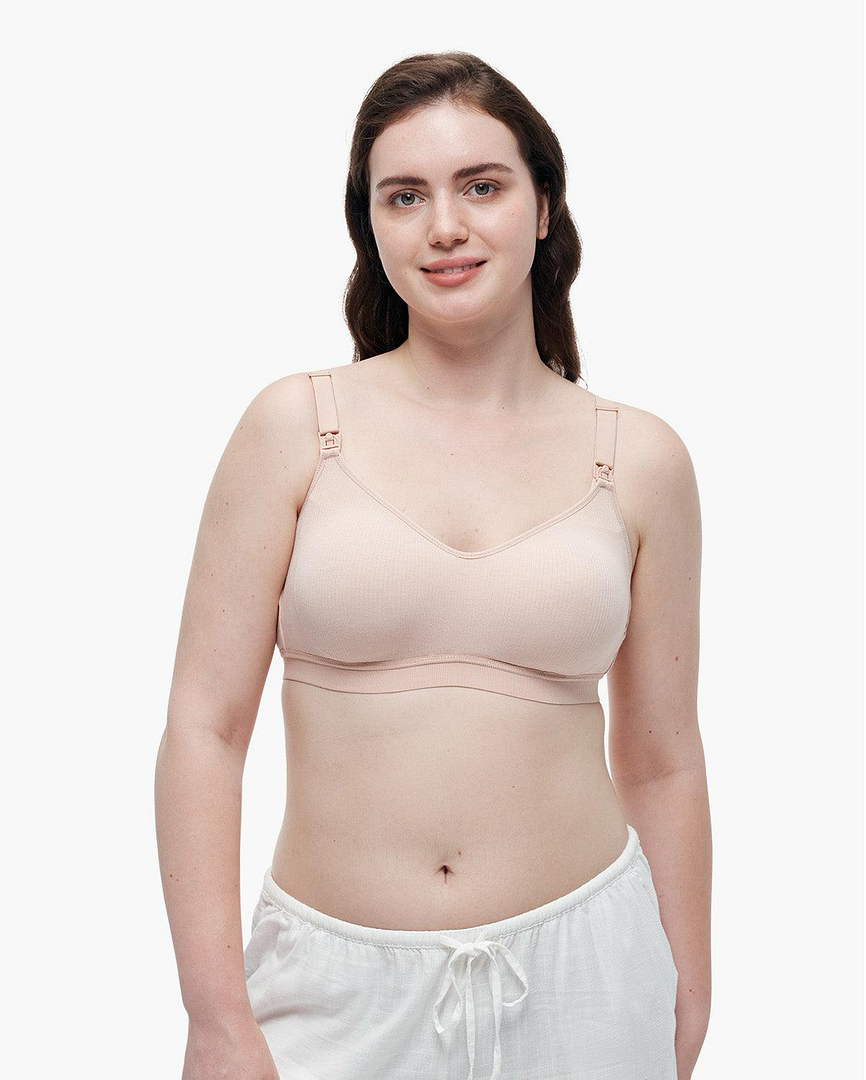
What is a Nursing Bra? Comfort and Accessibility for Breastfeeding
A nursing bra is designed specifically to give breastfeeding mothers quick, one-handed access to the breast without removing the entire garment. Through drop-down cups secured by clips, clasps, or magnetic closures, a nursing bra lets you latch your baby in seconds—whether you’re on the couch, in a restaurant, or pacing the nursery at 3 a.m. The priority here isn’t holding equipment in place; it’s removing barriers between you and your baby so feeding feels natural rather than mechanical.
Where a pumping bra focuses on structural rigidity to maintain flange suction, a nursing bra emphasizes softness, flexibility, and gentle support that moves with your body throughout the day. Most nursing bras use wire-free construction to prevent pressure on milk ducts, which can lead to clogged ducts or reduced supply. The materials tend toward cotton blends, modal, or bamboo-derived fabrics that feel gentle against sensitive postpartum skin and wick moisture away during letdown. Supportive yet forgiving, a well-chosen nursing bra becomes something you barely notice wearing—which is exactly the point when you’re putting it on before dawn and not taking it off until bedtime.
Design Elements that Make Nursing Bras Comfortable
Comfort in a nursing bra comes from deliberate design choices that account for the realities of postpartum life. Seamless construction eliminates irritating seams that dig into swollen or tender breast tissue. Wide, cushioned straps distribute weight evenly across the shoulders, reducing the neck and back strain that accompanies larger, milk-heavy breasts. Adjustable bands with multiple hook-and-eye closures accommodate the rib cage changes that occur as your body recovers from pregnancy—many women find their band size shifts by one or two sizes in the first few months alone. Stretchy cup fabric expands naturally as breasts fill between feedings and contracts after nursing, maintaining a smooth silhouette without requiring you to swap between different sizes throughout the day. Removable padding offers leak protection and shape without adding bulk, and breathable mesh panels in high-sweat areas keep skin dry and reduce the risk of thrush or irritation.
The Role of Nursing Bras in Daily Breastfeeding Routines
In practice, a nursing bra streamlines every feeding interaction. When your baby signals hunger, you unclip one cup, latch, and feed—no pulling fabric over your head, no awkward repositioning. This speed matters because a fussy, hungry infant grows more agitated with every second of delay, making latching harder for both of you. For mothers who nurse in public, the drop-down design pairs naturally with a loose top or nursing cover, allowing discreet feeding without exposing your entire midsection. At night, a sleep-friendly nursing bra with soft pull-aside cups means you can feed in a side-lying position without fully waking up, preserving precious sleep quality. During postpartum recovery, when your body is healing from delivery, the gentle compression of a nursing bra also provides light support that reduces breast movement and associated discomfort. Essentially, the nursing bra removes friction from the most frequent physical task of early motherhood, letting you focus on your baby’s cues rather than your clothing.
Pumping Bra vs Nursing Bra: A Direct Comparison for Hands-Free Efficiency
When you place these two garments side by side, the differences become clear—but so do the overlapping benefits. Both aim to simplify your day, yet they approach the problem from opposite directions. A pumping bra treats your body as a workstation, securing equipment so you can direct your attention elsewhere. A nursing bra treats your body as a source of nourishment, clearing the path between you and your baby with minimal effort. The question isn’t which is objectively better; it’s which delivers more hands-free efficiency given your specific circumstances.
At work or during dedicated pumping sessions, the pumping bra is unmatched. It transforms a passive activity into an opportunity for productivity, letting you type, eat, fold laundry, or hold your baby while milk flows. A nursing bra can’t replicate this because it lacks the structural reinforcement to hold flanges steady—attempting to jury-rig one with hair ties or rubber bands risks broken suction, spilled milk, and reduced output. Conversely, during direct breastfeeding, a nursing bra outperforms because its soft drop-down cups allow immediate skin-to-skin contact. A pumping bra’s rigid openings and thicker construction make latching awkward and can press uncomfortably against a nursing baby’s face.
Cost considerations also differ. Most mothers need two to three pumping bras to rotate through wash cycles if they pump daily, while nursing bras typically require three to four since they’re worn all day. Versatility varies as well—some hybrid designs attempt to serve both functions, but they often compromise on flange grip or cup softness, delivering a mediocre experience in both roles rather than excelling at either.
Efficiency Showdown: Which Bra Saves More Time?
The time savings from a pumping bra are measurable and significant. Consider a mother who pumps four times daily for twenty minutes per session. Without a hands-free pumping bra, that’s eighty minutes spent immobilized—holding flanges, unable to use her hands for anything meaningful. With a pumping bra, those eighty minutes become available for other tasks. Over a week, that’s more than nine hours reclaimed. Over a month of exclusive pumping, you’re looking at nearly forty hours—an entire work week returned to your life. The nursing bra’s time savings are smaller per interaction but equally important in aggregate. Unclipping a cup takes roughly two seconds compared to the ten to fifteen seconds of pulling up a regular bra or removing a shirt. Across ten feeding sessions daily, that difference feels negligible in isolation, but the reduced fumbling means a calmer baby who latches faster, potentially shortening each feeding by a minute or two. That adds up to ten or twenty extra minutes of rest per day—not dramatic, but meaningful when sleep deprivation makes every minute count.
Comfort and Versatility: Balancing Pumping and Nursing Needs
Comfort is where these two garments diverge most sharply. Pumping bras prioritize function over feel. The reinforced panels and tighter compression necessary to maintain flange suction can feel restrictive during extended wear, and many mothers find them too structured for sleeping or lounging. Nursing bras, by contrast, are designed for eighteen-plus hours of continuous wear, using softer materials and more forgiving construction that adapts to your body’s changes throughout the day. If you spend most of your time nursing directly and only pump occasionally, wearing a pumping bra all day creates unnecessary discomfort. If you pump frequently but also nurse, switching between two bras multiple times daily introduces its own friction. Hybrid bras that combine nursing clips with flange-compatible openings offer a middle ground, though they tend to fit less precisely for pumping than a dedicated pumping bra and feel slightly bulkier than a pure nursing bra. The most versatile approach for many mothers is owning both types and assigning each to the context where it performs best—pumping bra during work hours or scheduled pump sessions, nursing bra during direct feeding times and overnight.
Step-by-Step Guide: Choosing the Right Bra for Your Needs as a New Mom
Making the right choice between a pumping bra and a nursing bra—or deciding how to use both—doesn’t require guesswork. A systematic approach based on your actual daily patterns, physical comfort, and practical constraints leads to a decision you won’t second-guess. The following steps walk you through the process from self-assessment to long-term strategy, ensuring your investment in either garment delivers maximum hands-free efficiency where you need it most.
Assessing Your Pumping and Nursing Schedule
Start by tracking your feeding and pumping patterns for three to five days. Write down every instance you nurse directly and every time you use a pump, noting the duration and location of each session. This record reveals your dominant activity. If you’re pumping four or more times daily—common for mothers returning to work, those building a freezer stash, or exclusive pumpers—a dedicated hands-free pumping bra should be your first purchase because the cumulative time savings are substantial. If you nurse directly for most feedings and only pump once or twice, a nursing bra serves you better throughout the majority of your day. Next, identify your biggest frustrations. Are you losing productive time because your hands are occupied holding flanges? That’s a clear signal for a pumping bra. Are you struggling with slow, awkward latch-ons because your current bra is difficult to maneuver? A nursing bra with one-handed clips solves that immediately. Finally, consider where your schedule is headed. If you’re returning to work in two weeks, prioritize the pumping solution now even if nursing dominates your current routine—preparation prevents scrambling later.
Evaluating Comfort, Fit, and Budget
Once you know which type of bra deserves priority, narrow your options through fit and material considerations. Measure yourself accurately, keeping in mind that your size during the first month postpartum likely differs from your size at three or six months. Choose bras with generous adjustability—multiple hook-and-eye rows, stretchy fabrics, and adaptable straps accommodate these shifts without requiring entirely new purchases. If you have sensitive skin or are prone to thrush, prioritize moisture-wicking, breathable materials over synthetic blends that trap heat. Read user reviews from mothers with similar body types and pumping setups to yours; their experience with specific models provides more reliable guidance than product descriptions alone. Regarding budget, consider cost-per-use rather than sticker price. A pumping bra worn twice daily for six months costs pennies per session even at a higher price point, while a cheap option that loses elasticity after a month forces a replacement purchase. Allocate more of your budget toward whichever bra type you’ll use most frequently, and choose a mid-range option for the secondary garment.
Practical Tips for Using Pumping Bras and Nursing Bras Together
For most breastfeeding mothers, the optimal setup involves both bra types assigned to specific contexts. Wear your nursing bra as your default daytime and nighttime garment—it’s comfortable enough for extended wear and ready whenever your baby needs to feed. Switch into your pumping bra for scheduled pump sessions, whether that’s during work hours, after morning feedings to boost supply, or during your baby’s nap times. Keep your pumping bra stored with your pump kit so both are grabbed together, reducing setup time. To extend the lifespan of both garments, wash them in mesh laundry bags on gentle cycles and avoid high-heat drying, which degrades elastic fibers quickly. Rotating between two or three of each type prevents any single bra from wearing out prematurely. As your postpartum journey evolves—perhaps you wean off the pump as your baby starts solids, or you transition from nursing to exclusive pumping—reassess every few weeks. Your bra needs at two months postpartum won’t match your needs at eight months, and staying flexible ensures you’re always using the most efficient tool for your current reality rather than clinging to a setup that no longer serves you.
Finding Your Ideal Hands-Free Bra Setup for Every Stage of Motherhood
The pumping bra vs nursing bra decision ultimately comes down to how you spend the majority of your feeding hours. A hands-free pumping bra excels at turning passive pumping sessions into productive time, reclaiming dozens of hours each month that would otherwise be lost to holding flanges in place. A nursing bra prioritizes comfort and immediate access, making direct breastfeeding smoother and less stressful for both you and your baby. Neither is universally superior—each serves as the ideal pumping solution or feeding tool within its intended context.
Use the step-by-step guide above to assess your unique schedule, comfort needs, and budget before purchasing. Many mothers find that owning both types and assigning each to specific situations delivers the greatest overall efficiency. As your postpartum journey progresses and your routines shift, remain open to adjusting your approach. The right bra setup reduces daily friction, supports your milk supply, and gives you back something every new mother needs more of—time and freedom to enjoy this demanding but fleeting stage of life.