I spend an unhealthy amount of time testing AI video upscaling software. It’s part curiosity, part obsession, and part necessity—because clients always ask the same question: “Is Topaz still the best, or is there a serious alternative now?”
To answer that honestly, I ran a series of controlled tests comparing Topaz Video AI and UniFab Video Enhancer AI, using real footage I regularly work with. My goal wasn’t to crown a winner in every category, but to see whether UniFab could realistically replace Topaz in a professional workflow.
1. Proteus vs Equinox – General-Purpose Upscaling (Urban Footage)
For the first test, I used a 30-second urban street clip—mixed lighting, moving pedestrians, signage, and fine architectural detail.
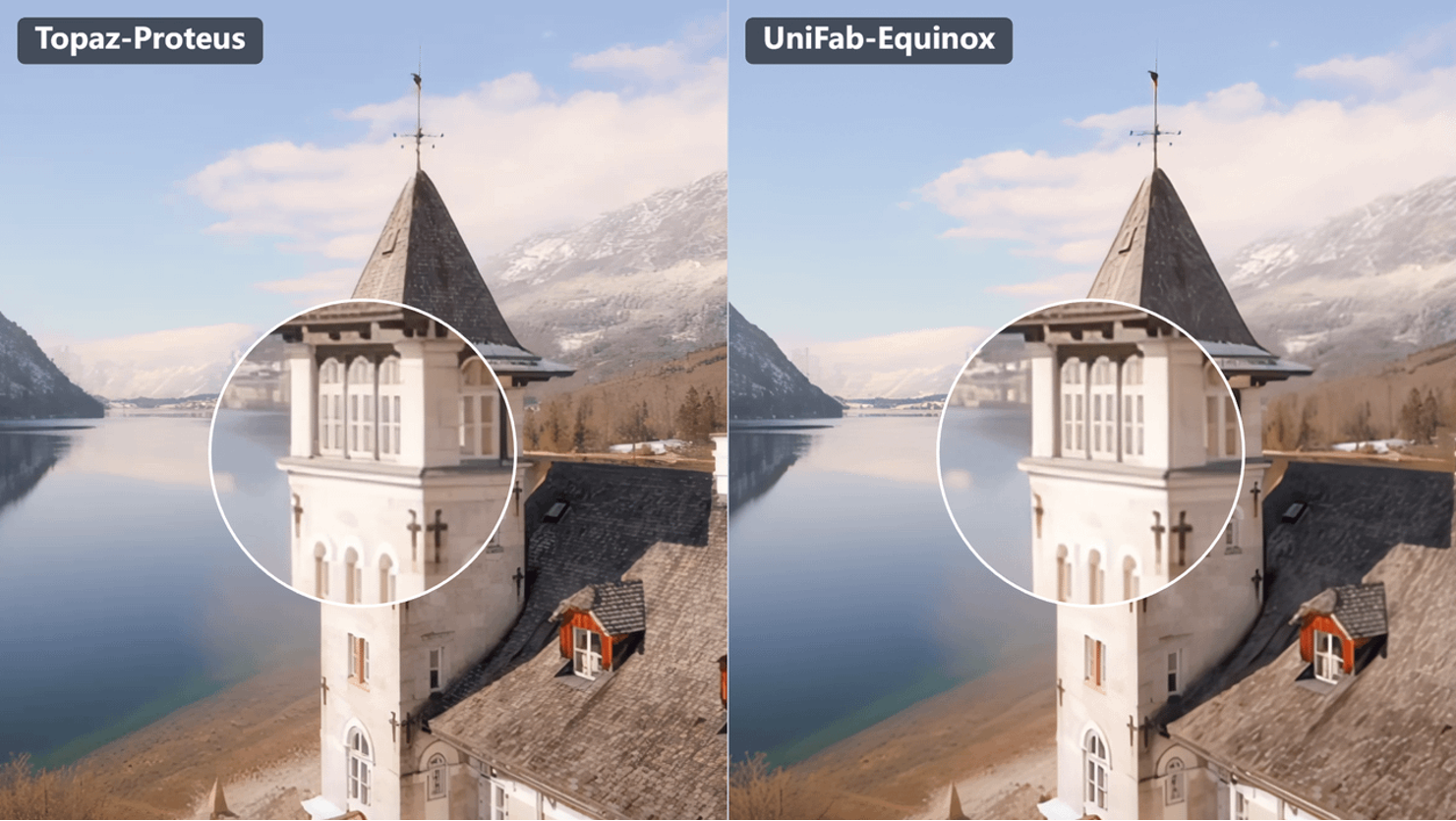
Topaz Proteus remains a strong general-purpose model, but UniFab Equinox surprised me. Equinox offers two distinct modes: Fast Mode and High-Quality Mode, which already gives it an edge in flexibility.
In High-Quality Mode, Equinox produced results extremely close to Proteus: clean edges, stable motion, and well-controlled sharpening. Fast Mode, while slightly softer, was genuinely useful for previews and batch testing. In real terms, this matchup felt like a draw—except UniFab gave me more control over speed versus quality.
2. Rhea vs Vellum – Texture Restoration (Cityscape)
Next, I tested a 30-second cityscape shot, heavy on concrete textures, windows, and subtle gradients.
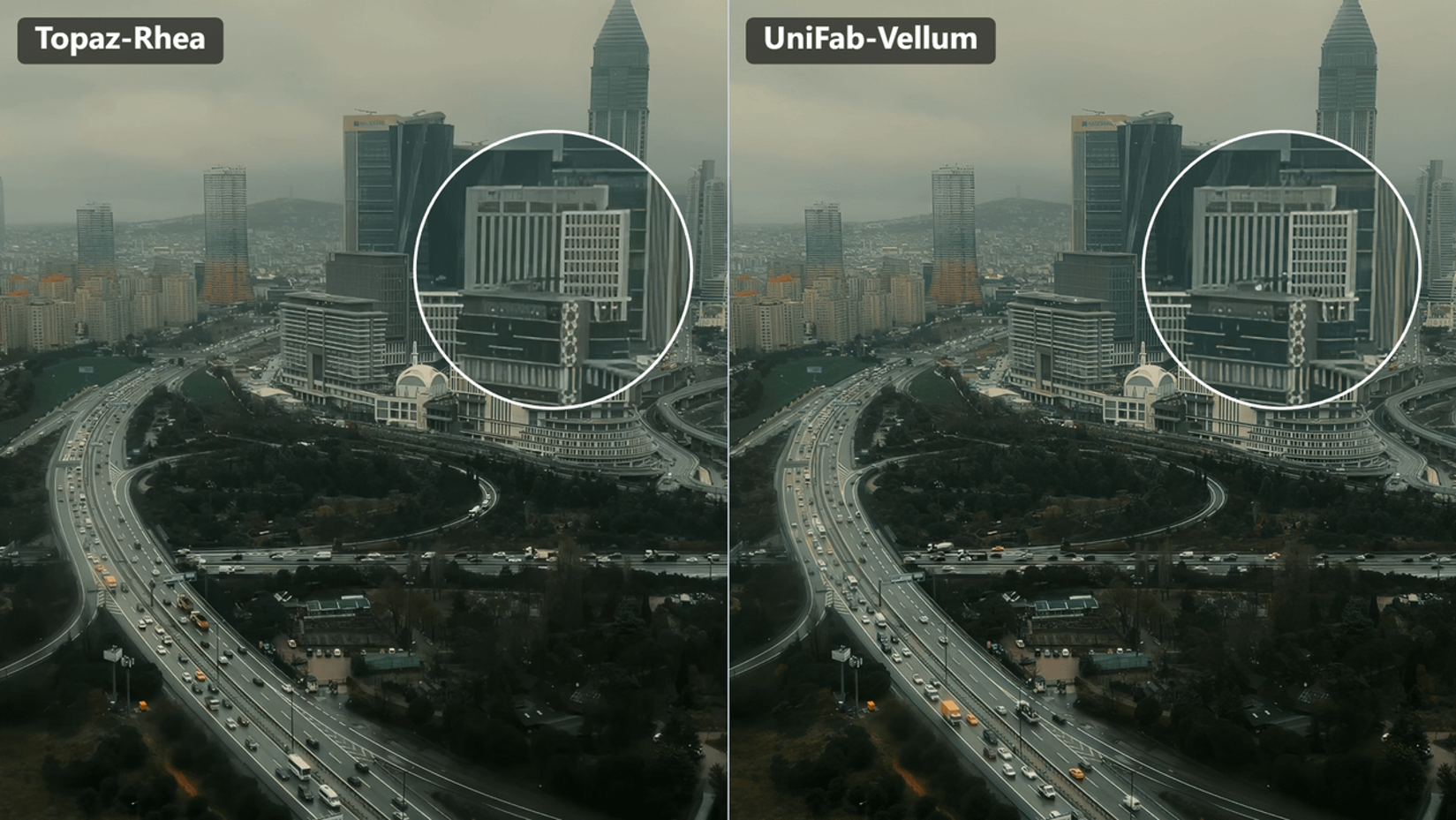
Topaz Rhea is known for texture recovery, and UniFab Vellum delivered very similar results. Brick patterns, glass reflections, and skyline depth were handled almost identically. I had to zoom in and flip between frames to notice minor differences—and even then, it came down to personal preference rather than quality.
This was the point where I realized UniFab wasn’t just “catching up”—it was already operating at the same level for most practical use cases.
3. Gaia vs Kairo – Animation (The Simpsons Test)
Animation is where things changed. I used a Simpsons clip, which is notoriously unforgiving with AI upscaling.
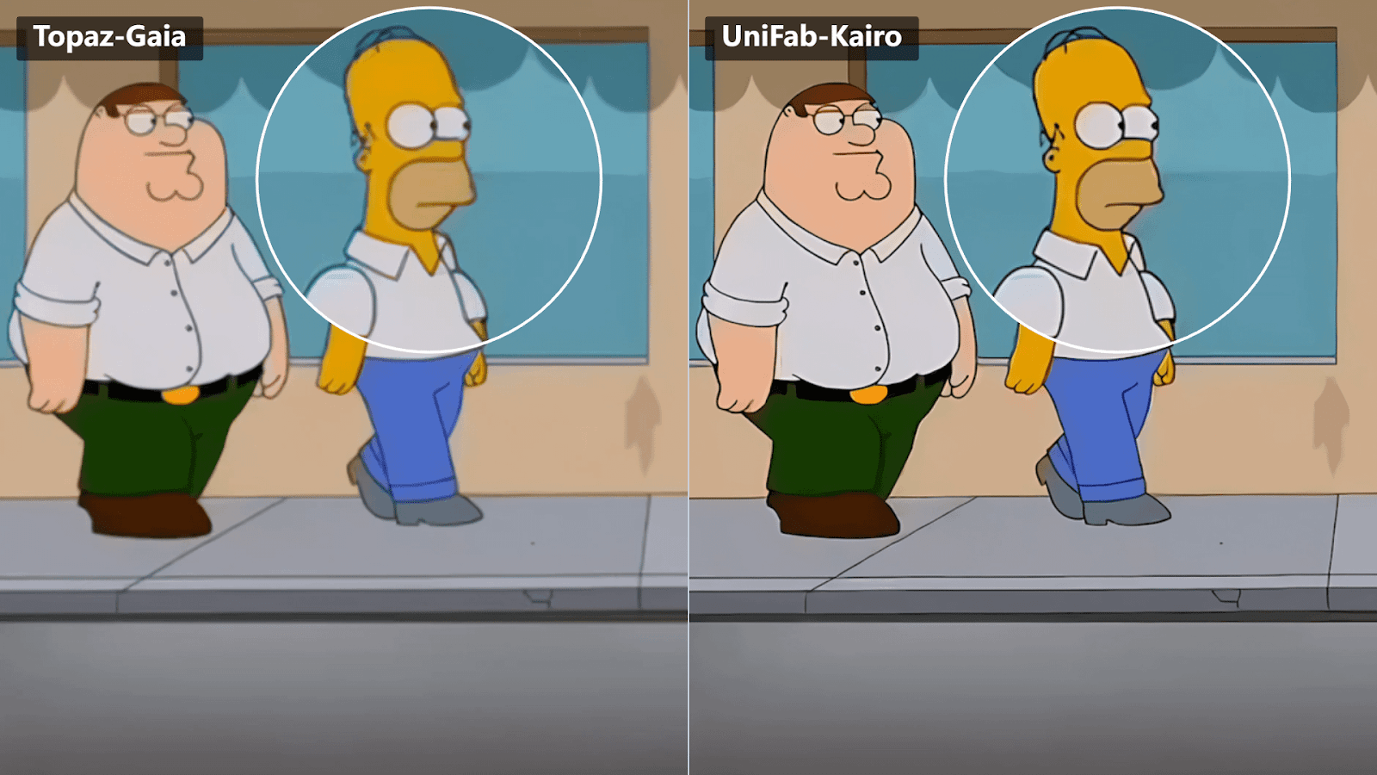
Topaz Gaia did a decent job, but UniFab Kairo was clearly better. Line work stayed cleaner, colors looked more stable, and there was less flickering in flat areas. Kairo respected the original animation style instead of over-interpreting it, which is exactly what you want with anime or cartoons.
This was the one category where UniFab didn’t just match Topaz—it beat it.
4. Starlight vs Titanus – Experimental Territory
These two models aren’t directly comparable, but they represent each company’s most ambitious ideas.
Topaz Starlight uses diffusion-based AI to reconstruct heavily degraded footage up to HD. In my test, it was impressive—but occasionally unpredictable.
UniFab Titanus, on the other hand, felt more restrained and cinematic. It seems geared toward film and television content, producing a cleaner, more polished image with fewer artifacts. Titanus didn’t try to reinvent the footage—it refined it.
Final Thoughts: The Real Surprise
What genuinely shocked me wasn’t just the quality—it was the pricing. UniFab’s lifetime license costs roughly the same as one year of Topaz’s subscription.
Even more surprising: UniFab’s trial has no watermark. That’s almost unheard of in this space, especially when Topaz’s trial does include branding.
If you’re looking for a serious alternative, UniFab Video Enhancer AI is no longer “the cheaper option”—it’s a real competitor. For a deeper breakdown, this Topaz vs UniFab comparison is worth reading.
After years of relying on Topaz, I didn’t expect to say this—but UniFab has earned its place in my workflow.
Content creators exploring other AI-driven production tools may also be interested in ai influencer generator platforms, which apply similar machine-learning principles to automate the creation of virtual social media personalities.