There is a shift happening in how ambitious, creative, style-conscious people think about the good life. For years, the aspiration was more. More experiences, more output, more optimization, more of everything packed into every hour. The new aspiration, quietly gaining ground among the people who set cultural tone, is almost the opposite. It is the luxury of doing less. Of having space. Of a life with room to breathe.
This is slow living, and it is not about moving to the countryside or abandoning ambition. It is about a deliberate editing of life so that what remains is richer, more present, and more intentional. Here is what the new slow luxury actually looks like, and why it is becoming the aspiration of people who could have anything.
The Backlash Against Optimization
The last decade glorified optimization. Every hour was to be maximized, every routine hacked, every moment made productive. The culture celebrated the person who did the most, moved the fastest, and never stopped. For a while, it was aspirational. Then a growing number of people who achieved that pace discovered it was hollow, exhausting, and strangely empty.
The reaction against relentless optimization is the soil slow living grows in. People who have tried the maximized life are increasingly reaching for something else. Not laziness, not the abandonment of ambition, but a more intentional relationship with time in which not every hour has to be filled and not every moment has to produce something.
What Slow Living Actually Means
Slow living is widely misunderstood. It is not about doing everything slowly or opting out of a full life. It is about being deliberate about pace and presence. Doing fewer things with more attention. Protecting space in your life the way you would protect any precious resource. Choosing depth over breadth, presence over productivity, and enough over more.
In practice, slow living looks like a life that has been edited. The unnecessary obligations were removed. The constant low-value busyness cleared away. What remains is a life with white space in it, room for the things that actually matter, and the presence to enjoy them fully rather than rushing through them toward the next thing.
The Paradox of Slow Luxury
Here is the paradox at the heart of the new slow luxury. Achieving a slower, more spacious life in a fast world often requires spending money to buy back time. The person who wants to do less has to actively remove the obligations that would otherwise fill their days. And in a busy modern life, some of that removal costs money.
This is why the new luxury is increasingly about services that return time rather than objects that fill space. The status symbol is shifting from the visible acquisition to the invisible liberation. Not the thing you bought, but the obligation you no longer carry.
Take something as ordinary as laundry. For the person pursuing a slower, more intentional life, the hours spent on a constant, joyless chore are exactly the kind of thing worth editing out. Handing it to a service like poplin.co, which collects, cleans, folds, and returns it, is not about indulgence. It is about removing an obligation that consumes time and attention while adding nothing to a life. The freed hours go toward presence, rest, and the things that actually matter. This is what slow luxury looks like in practice: quietly removing the friction so life has more room in it.
The Aesthetics of Enough
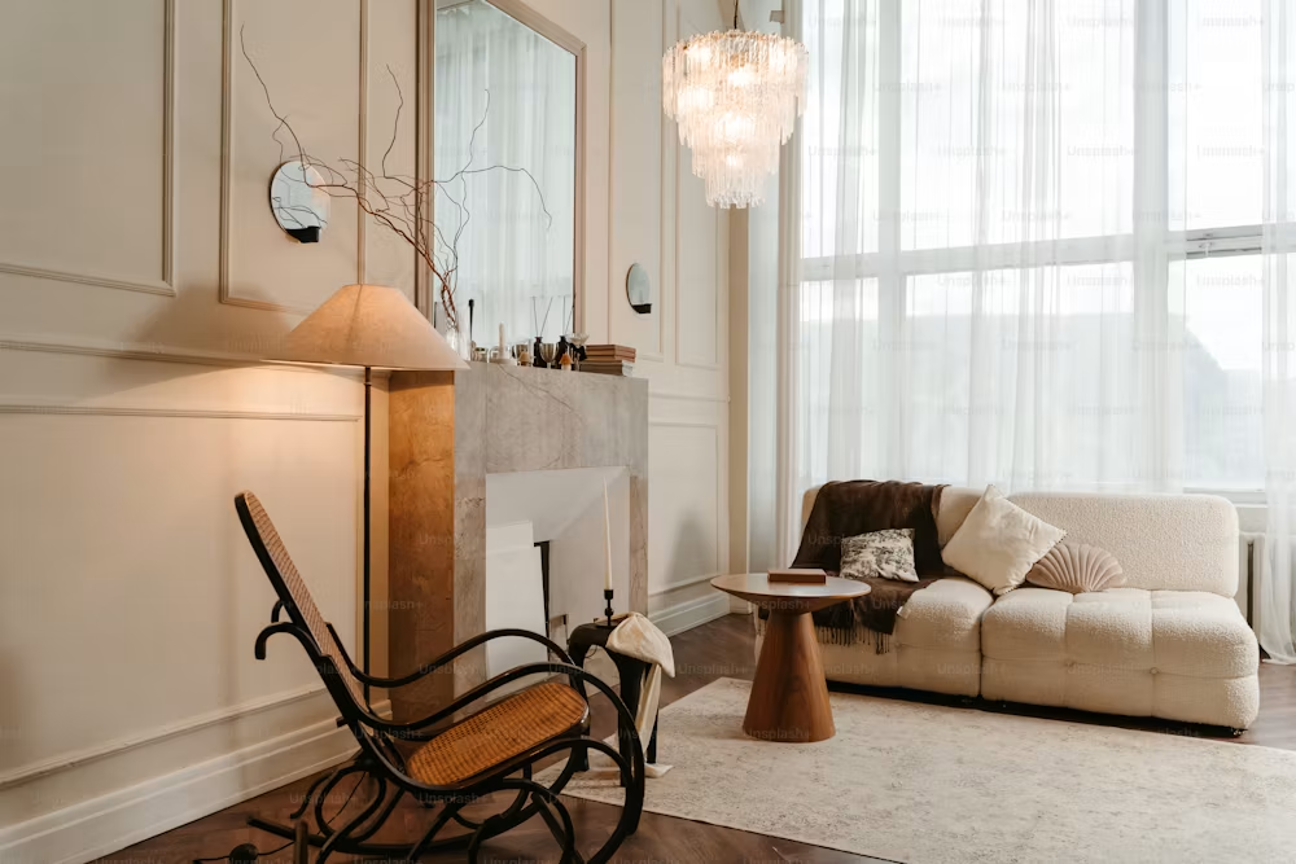
Slow living has its own aesthetic, and it is one that resonates deeply with people who care about style and design. It is the aesthetic of enough. Uncluttered spaces. A considered wardrobe of pieces that last rather than a churn of fast fashion. Meals that are simple but real. A life that has been pared back to what genuinely matters, and is more beautiful for the paring.
This aesthetic stands in deliberate contrast to the maximalism of the optimization era. Where that era celebrated more, slow living celebrates the well-chosen few. Where that era filled every space and every hour, slow living leaves room. The beauty is in the space, the restraint, the sense that everything present was chosen with care.
How to Move Toward It
Slow living is not an all-or-nothing switch. It is a direction you move in, one deliberate choice at a time.
- Start by noticing what fills your time and asking honestly which of it you actually value. Much of what fills a busy life turns out to be obligation without meaning.
- Edit ruthlessly. Remove or outsource the constant, low-value tasks that consume time without adding to your life.
- Protect the space you create. The point of doing less is not to fill the freed time with more busyness. It is to leave room to breathe.
- Choose depth over breadth. Do fewer things, and give them your full attention. Presence is the whole point.
The Small Rituals of a Slower Life
Slow living, for all its philosophical weight, ultimately lives in small daily rituals. It is not an abstract state you achieve once. It is a series of concrete choices, repeated, that gradually change the texture of a life.
It looks like the morning coffee that is actually savored rather than gulped on the way out the door. The meal was cooked and eaten without a screen. The walk taken with no destination and no podcast, just attention. The evening that is genuinely free because the obligations that would have filled it were edited away. None of these are dramatic. Together, over time, they remake how life feels from the inside.
What makes these rituals possible is the clearing that comes before them. You cannot savor the morning coffee if the morning is a frantic scramble. You cannot take the aimless walk if every hour is spoken for. The small rituals of a slower life depend on the larger work of removing the friction and obligation that would otherwise crowd them out. This is why the practical editing, the outsourcing, the saying no, the clearing of the calendar, is not separate from the philosophy of slow living. It is what makes the philosophy livable.
The people who live this way well understand that presence is a practice, not a destination. It is built one savored coffee, one unhurried meal, one protected evening at a time. And it is available to anyone willing to clear the space for it, which is perhaps the most encouraging thing about the whole idea. Slow living is not reserved for those who have escaped to a cabin. It is available in an ordinary busy life, to anyone willing to edit that life down to what actually matters.
Slow Living Is Not the Same as Opting Out
There is an important distinction that the slow living conversation often blurs, and getting it right matters. Slow living is not the same as opting out, dropping ambition, or rejecting a full and engaged life. That misunderstanding puts people off the whole idea, because most creative, driven people have no interest in becoming passive.
The truth is that many of the people most drawn to slow living are deeply ambitious. What they are rejecting is not ambition but the frantic, scattered, always-on version of it that leaves no room for depth. They want to do meaningful work and have a full life, but they want to do it with presence rather than in a permanent blur. Slow living, properly understood, is not about doing less that matters. It is about doing less that does not matter, so that what matters gets your full attention.
This is why editing out the low-value obligations is so central. The goal is not an empty life. It is a life cleared of the clutter of meaningless busyness, so that the ambitious, creative, meaningful pursuits have the space and energy they deserve. A painter needs a clean studio. A person pursuing a full life needs a life cleared of the obligations that crowd out what they actually care about. Removing the friction is what makes the ambition sustainable.
Seen this way, slow living and a driven creative life are not in tension at all. The slowness is what makes the drive sustainable, and the space is what lets the best work emerge. The people who understand this are not choosing between ambition and peace. They are using one to protect the other.
The Deeper Appeal
The reason slow living resonates so strongly with creative, ambitious, culturally attuned people is that it addresses something the optimization era failed to deliver. That era promised that maximizing everything would lead to a full and satisfying life. For many, it led to exhaustion and a strange emptiness instead. Slow living offers a different promise. That a life with room in it, lived with presence and intention, is richer than a life packed to the edges.
In a fast world, doing less is a radical act, and increasingly a luxurious one. The people who have tried having and doing everything are the ones most drawn to it, because they have learned firsthand that more is not the same as better. The new aspiration is not a life that looks impressive from the outside. It is a life that feels spacious and present from the inside.
That is the new luxury. Not more, but enough. Not faster, but present. Not a life packed with everything, but a life with room to actually live it.