What makes you believe something? It might be a sign you pass on the street, a line overheard in conversation, or a story repeated so often that it begins to feel true. Other times, belief arrives without much explanation at all. Those small, often unnoticed moments are where Cynthia Chen’s poetry begins.
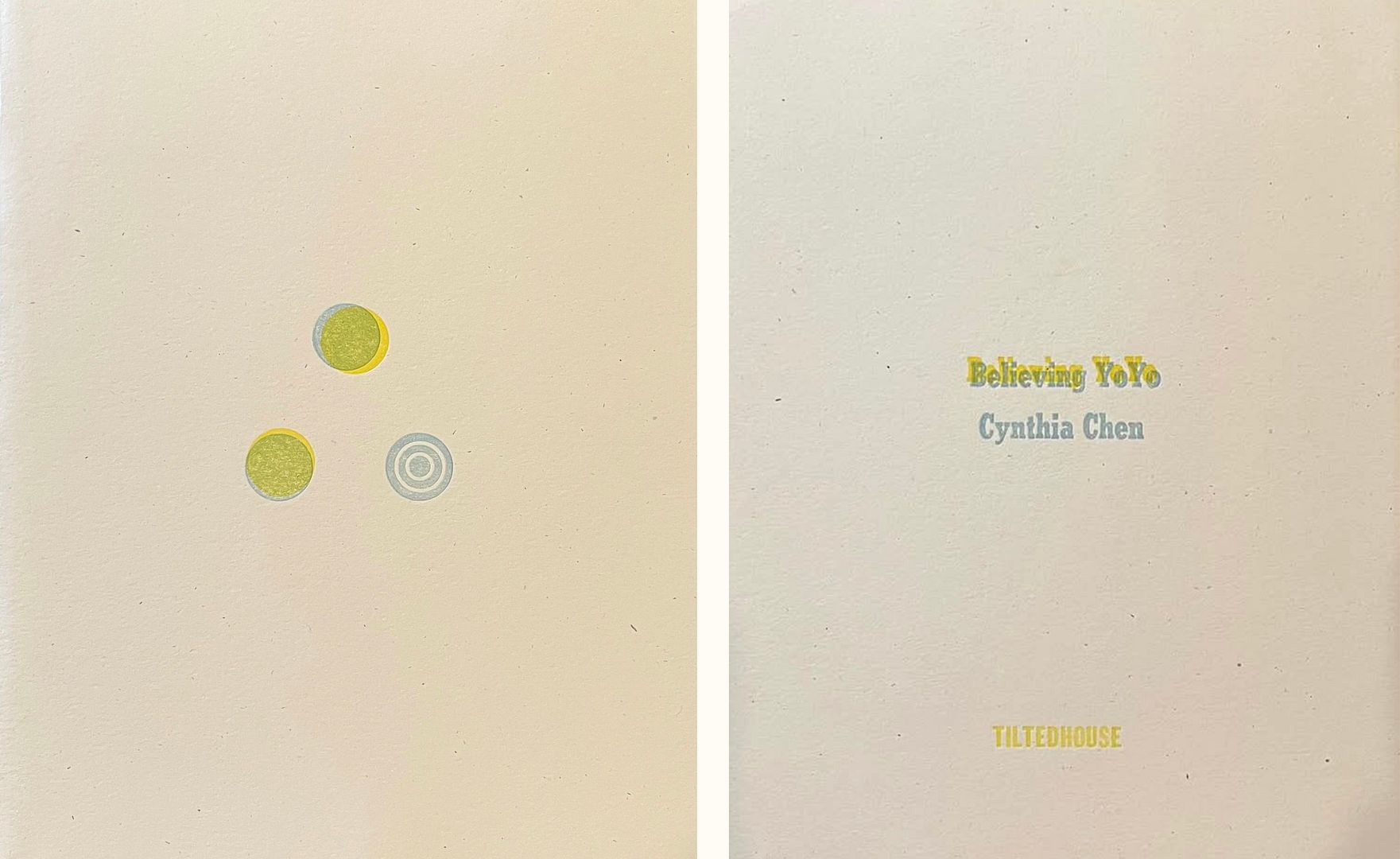
Her recently released chapbook, Believing YoYo, is “an elastic, dialogic, circular book” that opens each poem with the phrase “it is believed” before moving somewhere unexpected. “Believing YoYo explores misdirection as a strategy to challenge our epistemologies, propelling readers into a logic that leaps, spirals, and disorients, circling obsessions with geometry, dialogue, and trivial decisions,” according to Tilted House, the New Orleans-based press that published the book.
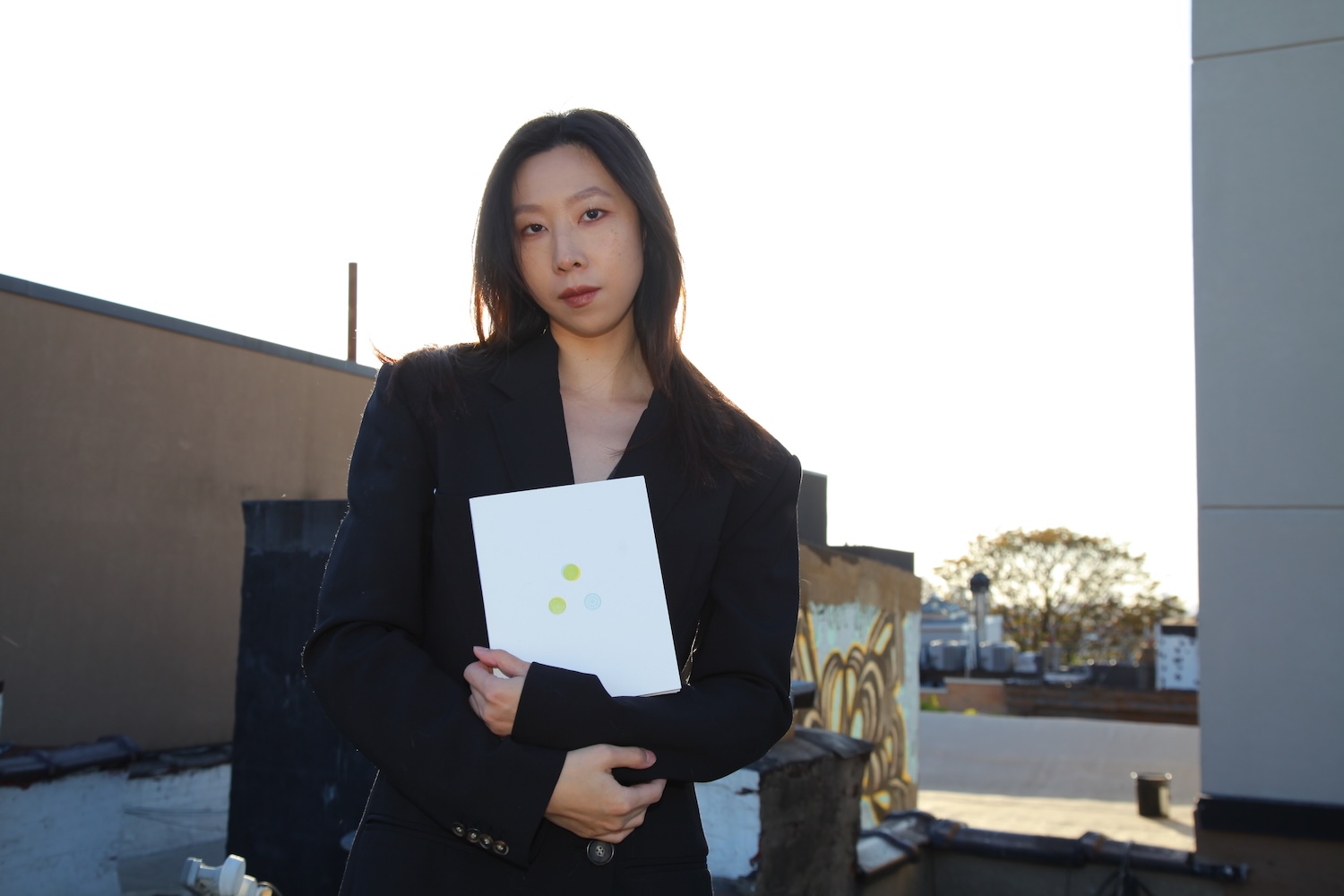
Originally from Shanghai and now based in New York, Cynthia writes across languages, cultures, and literary traditions. Her work has appeared in The Margins, The Common, Epiphany, IMPULSE Magazine, and elsewhere. In this interview, she discusses how writing became central to her life, the relationship between identity and language in her work, the visual ideas behind the book, and what she is exploring next.
When did you first start writing, and how did it become such an important part of your life and work?
I started writing in high school, and poetry stood out quite naturally as it was short but dense. I was a heavy reader then, especially of Japanese literature, both fiction and poetry. I was immediately drawn to the compression of poetic language, how a few lines could hold such a high intensity of feelings and thoughts. That gesture of distillation has since become a critical component of my creative journey and an
attitude toward life—to cultivate the luminosity in ordinary living and to transcribe it through my own language.
How does being an Asian woman shape the way you see the world or approach your work?
Nuance is a significant element in Asian culture and philosophy, and that pursuit of nuance runs through so much of the Asian literature and art that has inspired me: from Yoshimoto Banana to Bing Xin and Chloé Zhao. Writing in my second language as an Asian woman has given me a peculiar kind of distance and estrangement culturally, linguistically, and perceptually, which can be quite generative. My upbringing also instilled an adventurousness in me, an openness to absorbing and embracing the unfamiliar without the need to resolve it.
Why poetry? What first drew you to the form, and what continues to bring you back?
For me, poetry has the most capacity to hold “non-sense”—language that deviates from the obsession with making sense, with enabling efficient communication, with dictating a singular interpretation. That room for play and invention is an incomparable allure for me as someone who loves misfits in life. Both reading and writing poetry give me a kind of liberation that translates into a larger sense of empowerment in life: the acknowledgement that certain things deserve to exist and thrive without “meaning.” Sometimes those revelations are exactly what we need as human beings who have the capacity to be confused, to hesitate, and to wander aimlessly.
How did Believing YoYo begin? Did it grow slowly out of fragments, or did you have a clear idea of the collection from the start?
The overarching framework of “believing” emerged later in the process. Most of the poems in this collection were written in a span of six months, when I was in the momentum of producing a series of wobbly statements and using language to extrapolate them into poetic arguments. When I started arranging them into a collection, I noticed the recurring theme of belief as both a verb and a noun. I then went back and inserted many “it is believed” appendages to reinforce that thread. So the book was a progression of fragmented thoughts and obsessions that gradually constellated into a unified theme.
The book plays with language, logic, and unexpected connections. How have your experiences across languages and cultures found their way into the work?
Writing in my second language, I am committed to a linguistic elasticity that invents new ways of conversing with the environments and the knowledge we hold, often unconsciously. I’m curious about how poetry can carve space for misdirection to be a porous, generative force. While this book turns heavily on surprise and misdirection, it is also my way of examining what it means to hold multiple worlds, registers, languages, and inheritances at once.
Through a poetic framework that treats language as a portal for diagnosis, sensation, and confrontation, my work tries to upend the institutional structures that define what counts as knowledge and what is worthy of attention. More importantly, I hope to produce literary experiences that both resist and acknowledge the gravitational pull of the stereotypical diasporic narrative.
What role did your own visual sensibility play in the book’s design, and what kind of look and feel did you have in mind for it?
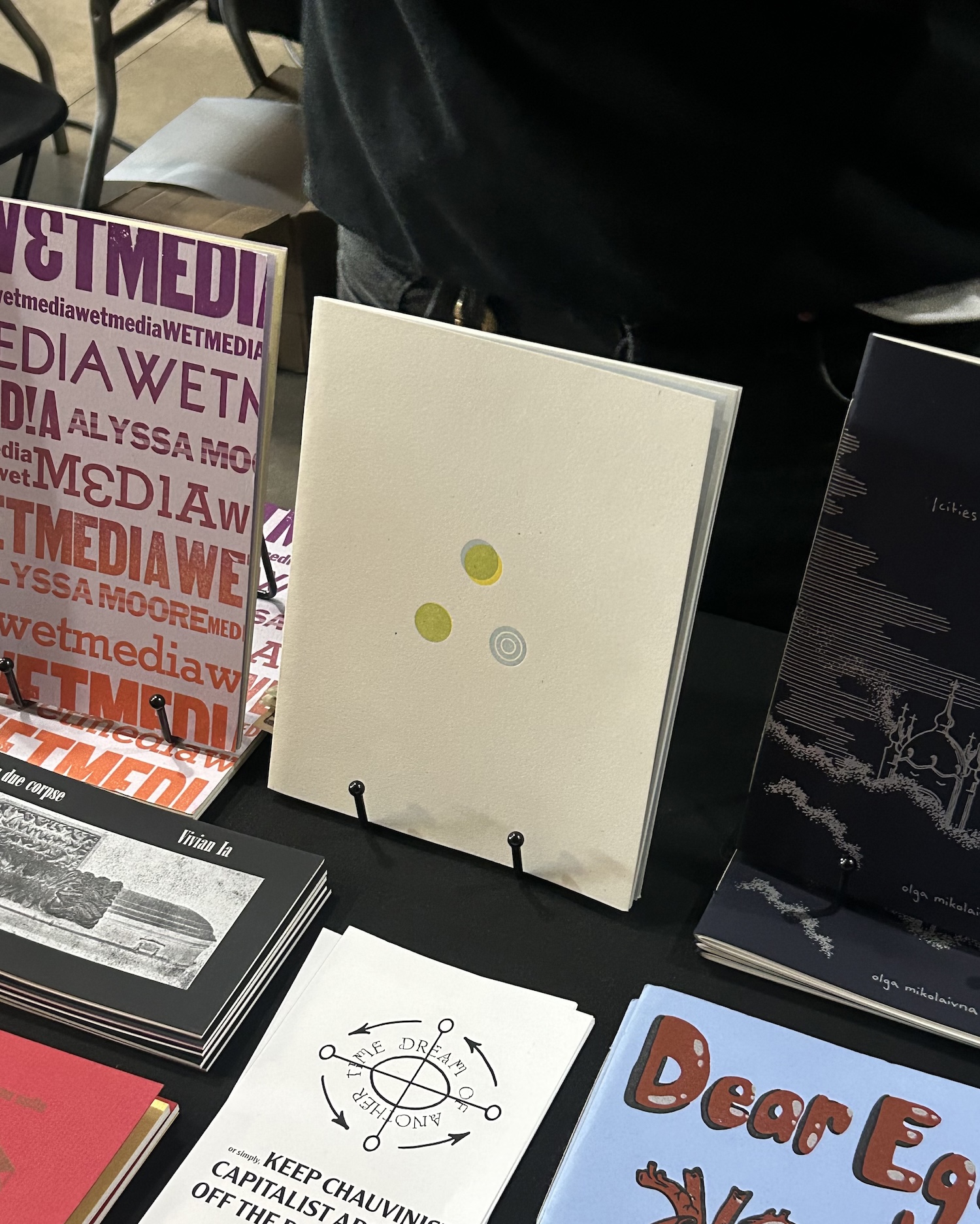
Tilted House Press is known for its delicate letterpress work, run by founder Cameron Lovejoy, so when I first learned my chapbook had been selected, I knew the design would be in good hands. My aesthetic
leans minimalist, and I had a vision of something layered, playful, and capable of holding room for imagination without too many explicit visual anchors. The letterpressed circle symbols were perfect for that idea, and the triangular formations echo a lot of the geographical motifs in the book. I also wanted the paper to feel physically present, with weight and coarseness. I’m very grateful it turned out exactly as I had envisioned, if not better.
When readers spend time with Believing YoYo, what do you hope stays with them?
Curiosity. I’ve always believed curiosity is undervalued, especially now, when access to information and solutions is so quick, sometimes even forced. I think the process of meandering in one’s mind is one of the most treasured experiences. I hope my book can stir that kind of curiosity in readers toward their environments, their routines, their daily interactions. With so much of the world fixated on speeding things up, I hope to create a space and a time where readers can slow down to dedicate some energy to “useless” thinking.
Is there a response from a reader that has stayed with you in particular?
During a reading, an audience member told me my poetry reminded him of Zhuangzi (庄子), the Chinese Daoist philosopher known for his playful parables, paradoxes, and the principle of spontaneous action (无为, wúwéi). While I had never thought about that connection, it shook me to realize how my early education reading those ancient Chinese texts as a child might have left such a profound mark on my writing. Although we work with different languages and forms, the thread was still traceable.

Are there other forms or genres you would like to explore after Believing YoYo?
I have been wanting to experiment with prose poems and vignettes. These blocks of text put more pressure on the whole piece rather than the line. Since my previous writing has been primarily in monostichs, I am excited to work in a different form and to see what new inventions might emerge under a different architecture of language.
What is holding your attention right now, and have you started working on anything new?
Recently I’ve been getting into the less obvious, more distant arenas where language operates, specifically the scientific and mathematical. While I am nowhere near a mathematician, I am bewildered by mathematical languages, which radiate a similar enigma as poetry. My current work-in-progress is a manuscript inspired by the French Oulipo group. While Oulipo used mathematical patterns to produce poetry, I want to see if poetry can enact a kind of mathematical inquiry, working with words in the place of numbers.
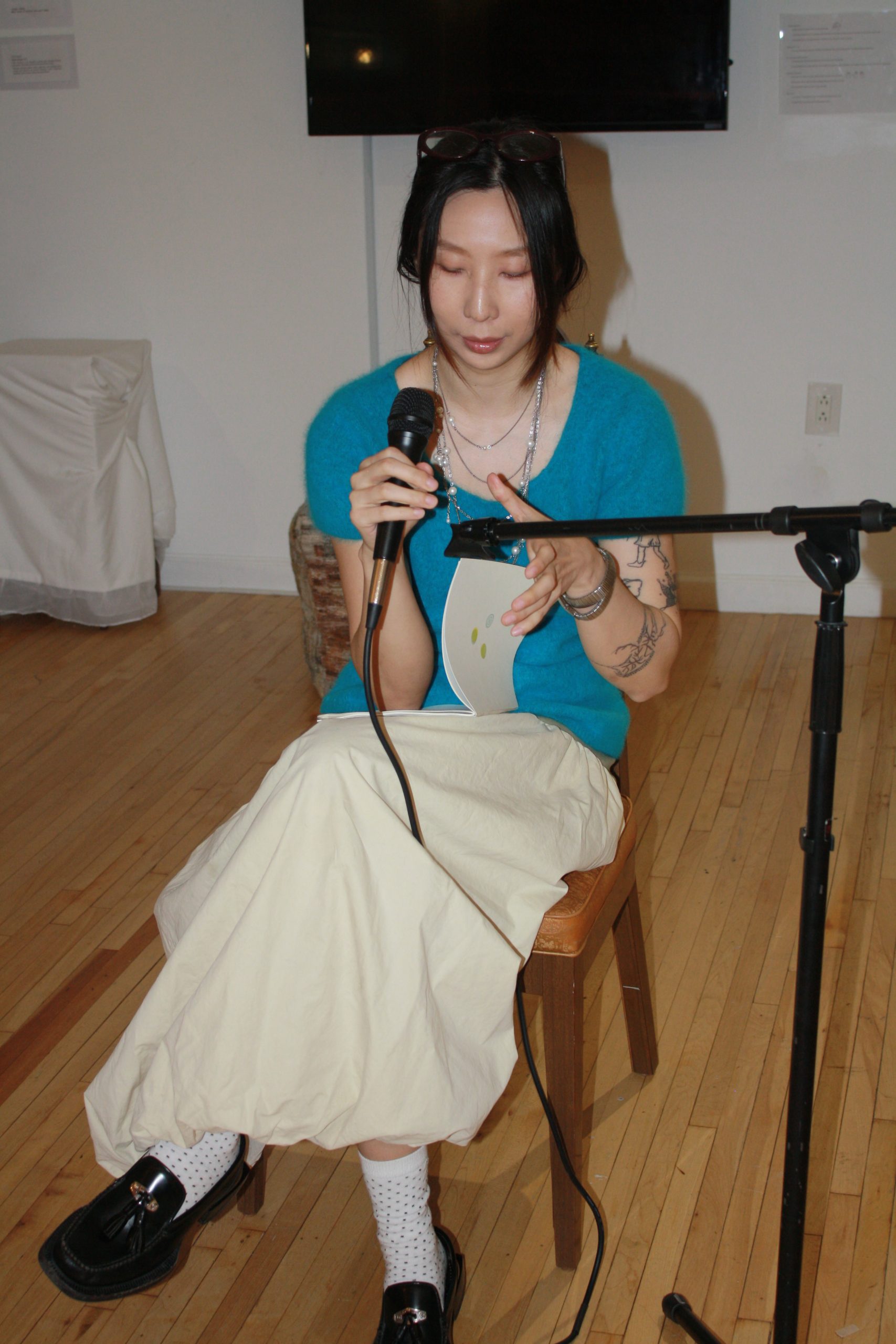
Photo courtesy of Cynthia Chen
Interviewed by Ella Chang