
How Jackets and Shirts Build a More Versatile Menswear Wardrobe
The simplest way to build a versatile menswear wardrobe is to treat the shirt and jacket as a system rather than two separate purchases. The shirt controls comfort, texture, and the level of formality closest to the body; the jacket adds structure, protection, and the final visual statement. When their weight, fit, and purpose work together, a small number of pieces can cover changing weather, casual plans, travel, work, and evenings out.
That idea sits naturally within Woolrich’s long connection to purposeful outdoor clothing. Founded in Pennsylvania in 1830, the brand developed around warmth and utility, while its contemporary identity brings those practical foundations into both urban and outdoor settings. The lesson is broader than any one season: good layering is not about adding more clothes. It is about choosing compatible ones.
Key Takeaways
- Build from light to heavy. A comfortable base and shirt should sit cleanly beneath the jacket without bunching or restricting movement.
- Match the jacket to the conditions. Consider wind, rain, temperature, time outdoors, and whether the day is mainly active, social, or professional.
- Use contrast with restraint. Combine one strong texture, pattern, or silhouette with quieter supporting pieces.
- Check the full outfit in motion. A layered look should remain comfortable when sitting, walking, carrying a bag, or fastening the jacket.
Why Do Jackets and Shirts Work So Well Together
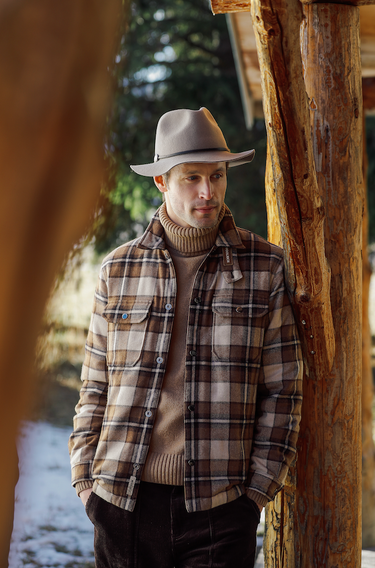
A shirt and jacket create an adaptable two-part framework. The shirt can be worn alone indoors or during warmer parts of the day. The jacket can be added when the temperature drops, the wind rises, or the occasion calls for more structure. This makes the pairing especially useful in transitional weather, when a single heavy garment may be too much and a shirt alone may not be enough.
The combination also allows personality without requiring a complicated outfit. A checked shirt can add character beneath a plain jacket. A solid shirt can calm a jacket with more volume or texture. Even when both pieces are neutral, differences in fabric and proportion create depth.
The best combinations feel intentional but not overworked. They make sense when the jacket is open, when it is fastened, and when it is removed. That last point matters: a strong layered outfit should not depend entirely on its outermost piece.
How Should You Choose the Right Jacket
Start with the role the jacket must perform. A lightweight jacket is useful when the main need is shape and a modest barrier against the elements. A warmer coat or parka makes more sense for extended time outside. An overshirt or shirt jacket occupies the middle ground, adding texture and light coverage without the weight of substantial outerwear.
A practical Woolrich jacket can anchor this system because outerwear should be selected around real conditions as well as appearance. Before choosing, ask four questions: How cold is it likely to be? Will you spend most of the day indoors or outside? Does the outfit need to look relaxed or refined? What must fit comfortably underneath?
Fit should be assessed with the intended layers already in place. If a jacket looks sharp over a T-shirt but pulls across the back when worn over a shirt and knit, it is not serving the planned wardrobe. Check shoulder movement, sleeve length, and the front closure. The jacket should have enough room for useful layers without losing its shape.
Which Shirts Are Best for Layering
The most useful layering shirts have a clear purpose. Lightweight shirts sit comfortably under closer-fitting jackets and work well indoors. Midweight shirts contribute more texture and can be worn open over a T-shirt. Heavier overshirts can function as a middle layer or as light outerwear in mild conditions.
The woolrich shirts collection offers a natural starting point for exploring tops that support this kind of flexible dressing. Rather than choosing only by colour, consider how the collar, fabric weight, hem, and overall cut will interact with the jackets already in the wardrobe.
A collar should sit comfortably beneath the jacket rather than folding unpredictably. The shirt body should be neat enough to avoid excess fabric around the waist, while still allowing natural movement. If the shirt is designed to be worn untucked, its length should remain balanced beneath a shorter jacket. If it will often be tucked, make sure there is enough length for it to stay in place.
How Do You Balance Fit and Proportion
Layering works best when each successive garment has slightly more room than the one beneath it. The base layer sits closest to the body, the shirt follows its line without clinging, and the jacket provides the outer silhouette. Problems arise when a bulky inner layer is forced beneath a narrow jacket or when every layer is oversized in the same way.
Length is equally important. A shirt showing slightly beneath a casual cropped jacket can look deliberate, but a long tail extending far below the hem often makes the outfit appear accidental. With longer coats and parkas, the shirt can remain visually quieter because the outer layer already creates a strong vertical line.
Volume should be balanced across the full outfit. A substantial jacket generally looks cleaner with straight or gently tapered trousers than with an extremely narrow lower half. A lighter, neater jacket leaves more room to experiment with wider trousers or heavier footwear.
How Can Colour and Texture Make Layering More Interesting
Begin with a controlled palette. Navy, charcoal, olive, brown, beige, cream, and black are easy to combine because they allow shape and texture to do more of the work. This does not mean every outfit should be muted. It means colour is easier to use when one item leads and the others support it.
A patterned shirt beneath a solid jacket is one of the simplest formulas. If the jacket is already visually distinctive, choose a quieter shirt. When both pieces are solid, contrast their surfaces: smooth technical outerwear over brushed cotton, structured wool over a crisp shirt, or a matte jacket over a subtly textured top.
Avoid making every element compete. Pattern, strong colour, visible texture, and an oversized silhouette can all create interest, but using all four at once makes the outfit harder to read. One clear focal point is usually enough.
Six Reliable Jacket and Shirt Formulas
- The Everyday City Combination Pair a dark casual jacket with a light solid shirt, straight jeans, and simple leather or suede footwear. The contrast keeps the look clear and adaptable.
- The Weekend Texture Mix Wear a checked or textured shirt beneath a plain field-style jacket. Add chinos or dark denim so the upper layers remain the focus.
- The Transitional Weather System Start with a breathable base, add a midweight shirt, and finish with a lightweight protective jacket. Each layer can be removed as the day warms.
- The Relaxed Evening Look Choose a neat shirt in a deep neutral shade and wear it beneath a clean, minimal jacket. Dark trousers create an outfit that feels polished without becoming formal.
- The Cold Day Combination Use a comfortable shirt beneath a fine knit, then add a coat or parka with enough room through the shoulders. Keep the inner layers relatively streamlined to avoid bulk.
- The Travel Uniform Combine a soft, easy-moving shirt with a jacket that has practical pockets and enough structure to remain presentable after sitting. Neutral colours make repeat wear easier.
How Do You Build a Small Layering Capsule
A useful capsule does not require many pieces. Begin with two jackets: one lightweight option for mild or changeable weather and one more protective option for colder days. Add three shirts with different roles: a light solid shirt, a patterned or textured midweight shirt, and a heavier overshirt. A fine knit can bridge the gap when additional warmth is needed.
Choose colours that can cross-pair rather than locking each shirt to only one jacket. If both jackets work with all three shirts, the capsule already produces six core combinations before trousers, footwear, and accessories are considered.
The most useful test is not whether each piece looks good alone. It is whether every new addition improves several outfits. A garment that only works in one carefully arranged look may be exciting, but it is less valuable to a compact everyday wardrobe.
How Should Layering Pieces Be Cared For
Care begins with the garment label, because fibre content and construction determine the correct method. Avoid assuming that every wool, cotton, or technical garment can be treated in the same way. Follow the specific washing, drying, and professional-cleaning instructions supplied with each piece.
Between wears, allow shirts and jackets to air before returning them to a crowded wardrobe. Brush away surface dust where appropriate, address small marks promptly according to the care guidance, and use supportive hangers for structured outerwear. Rotating garments also gives fibres time to recover and reduces unnecessary washing.
Good care supports both appearance and usefulness. A jacket that keeps its shape and a shirt that remains comfortable are easier to return to season after season, which is the real advantage of building a wardrobe around dependable combinations.
Frequently Asked Questions
Should a Jacket Be Bigger for Layering
It should have enough room for the layers you genuinely plan to wear, but it does not automatically need to look oversized. Try it over the thickest realistic combination and check movement through the shoulders, arms, and chest.
Can a Shirt Be Worn as a Jacket
A heavier overshirt can work as light outerwear in mild, dry conditions. Its usefulness depends on fabric weight, construction, and the weather; it should not be treated as a substitute for protective outerwear when conditions demand more coverage.
Should the Shirt Collar Sit Inside or Outside the Jacket
In most everyday outfits, keeping the collar inside creates the cleanest line. Wearing it outside can be a deliberate styling choice, but it works best when the collar has enough structure and the jacket neckline leaves suitable space.
How Many Colours Should a Layered Outfit Use
Two or three main colours are usually enough. Tonal outfits can use several shades from the same family, while one accent colour can add interest without making the layers compete.
What Is the Most Versatile Jacket and Shirt Combination
For many wardrobes, a neutral midweight jacket worn over a light solid shirt is the most flexible starting point. It can be made more casual with denim and sneakers or more refined with trousers and leather footwear.
A Better Wardrobe Starts with Better Combinations
The value of a jacket or shirt is not limited to how it looks on a hanger. It comes from how easily the piece works with the rest of the wardrobe, responds to the weather, and supports the demands of a real day.
By choosing compatible weights, allowing room for movement, controlling colour and texture, and caring for each garment correctly, men can build layered outfits that feel considered without becoming complicated. The result is a wardrobe with fewer dead ends, more repeatable combinations, and a stronger sense of personal style.



