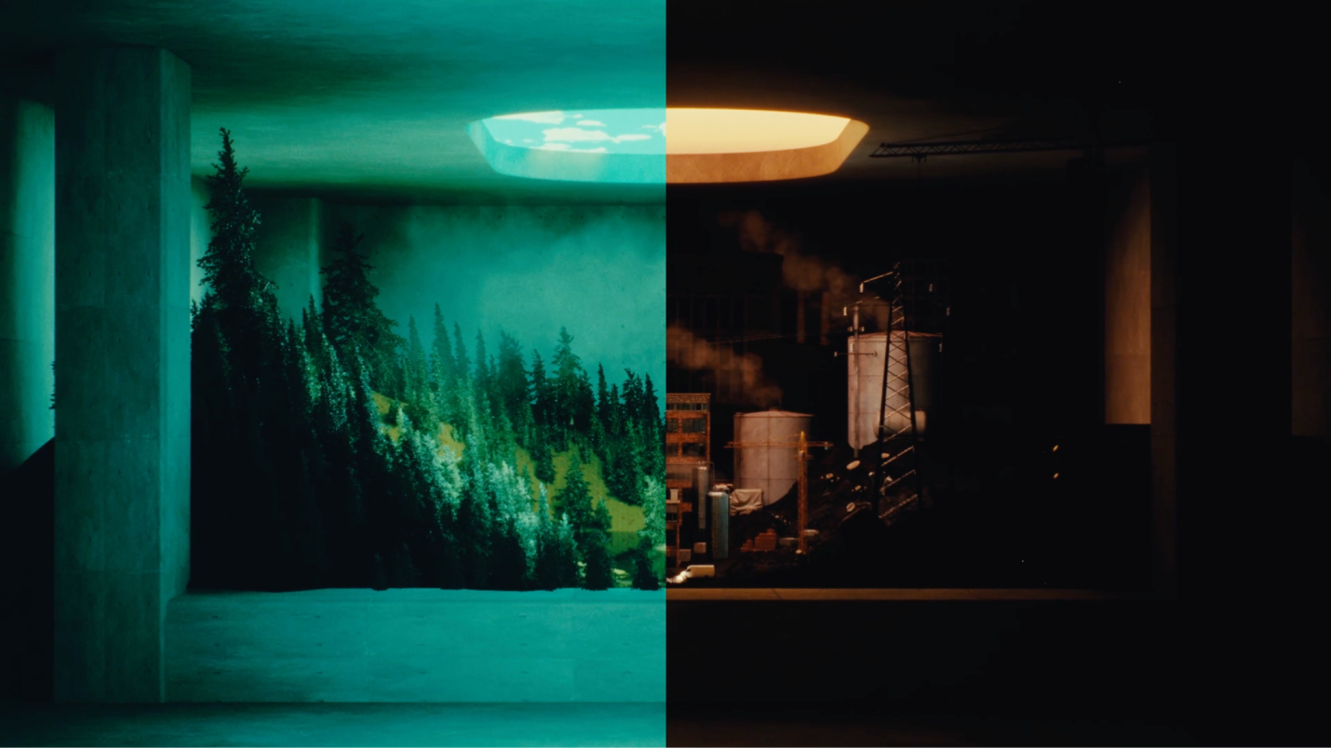
Through his digital video artwork Ignition artist Jingchao Yang presents a poignant commentary on the reshaping of natural landscapes in the face of humanity’s ever increasing need for energy sources. Using a combination of live-action footage and virtual imagery Yang re-creates real-world scenes in a digital microcosm, illustrating large scale problems in small scale environments. Yang adopts a non-anthropocentric perspective, allowing changes in the landscapes to take center stage. There are no people “doing”, simply environments existing – highlighting the inability of nature to fight back against the force of human change.
The visual juxtapositions are accompanied by a soundscape which amplifies the impact of the environmental change pictured. Accompanying the scenes of unchanged nature are sounds of wind, animals, and serene chimes. This then morphs into a slow mechanical rendition of the nursery rhyme “Daisy Bell (Bicycle Made for Two)”, and low-frequency vibrations, evoking a landscape saturated with energy. Yang has corrupted the song into an uncanny and disturbing experience, suggesting feelings of unease, anxiety and apprehension.
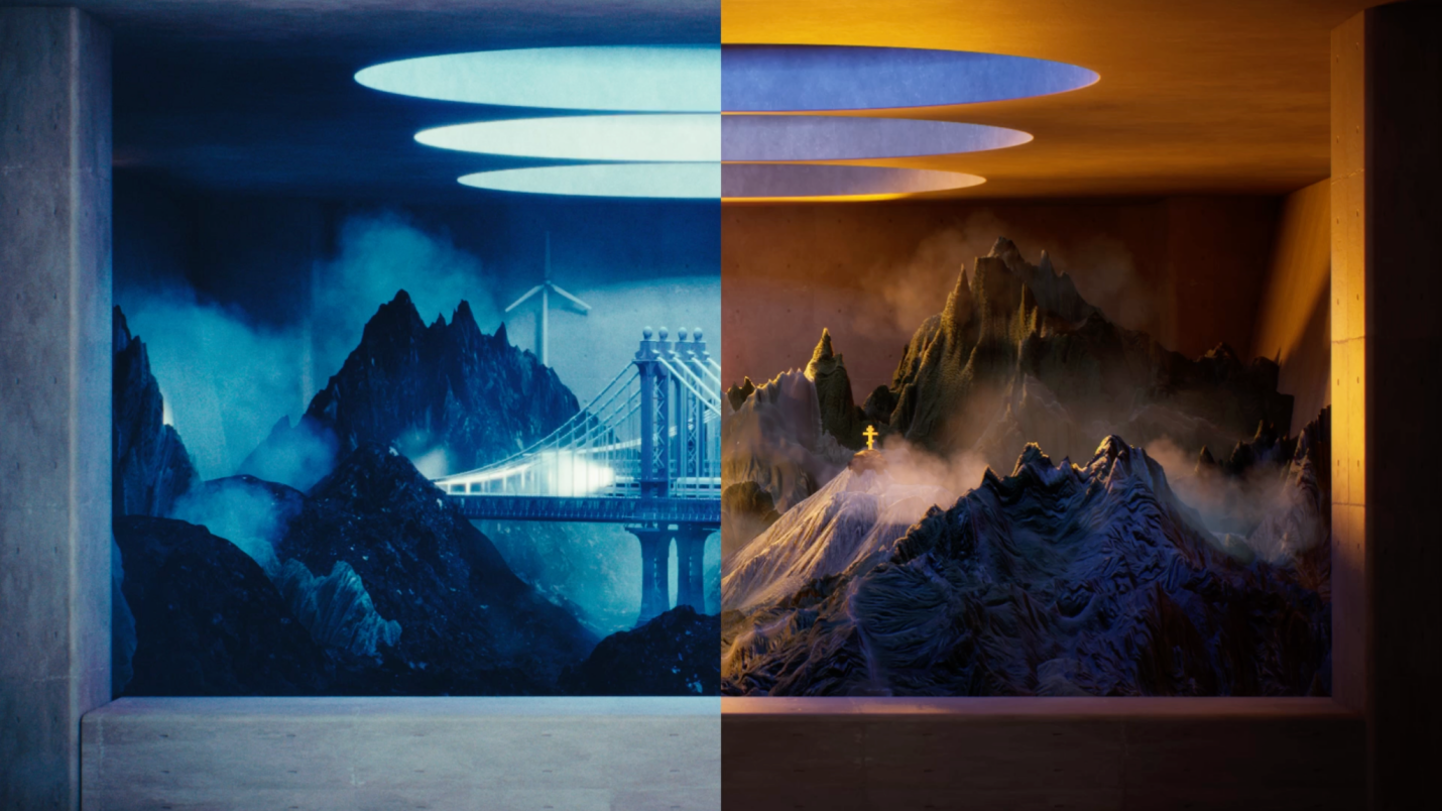
The piece has a four scene structure: a forest, a mountain range, a sea, and a meadow, which have been removed from Earth and inserted into a microcosm representative of wider ecological change. Using this structure and lack of environmental context Yang risks suggesting that these events are one-off occurrences. This risk is also mirrored in the choice of medium, which further removes the events depicted from real-world transformations. However, rather than attempting to include all examples of environmental change, this structure allows Yang to create a focussed and immersive microcosm which combines widespanning transformations into a single experience, amplifying the effectiveness of the piece.
Yang addresses several forms of energy generation and mineral extraction, and the effects of the infrastructure surrounding these processes, which can be divided into those affected by extraction methods, and those affected by generative methods.
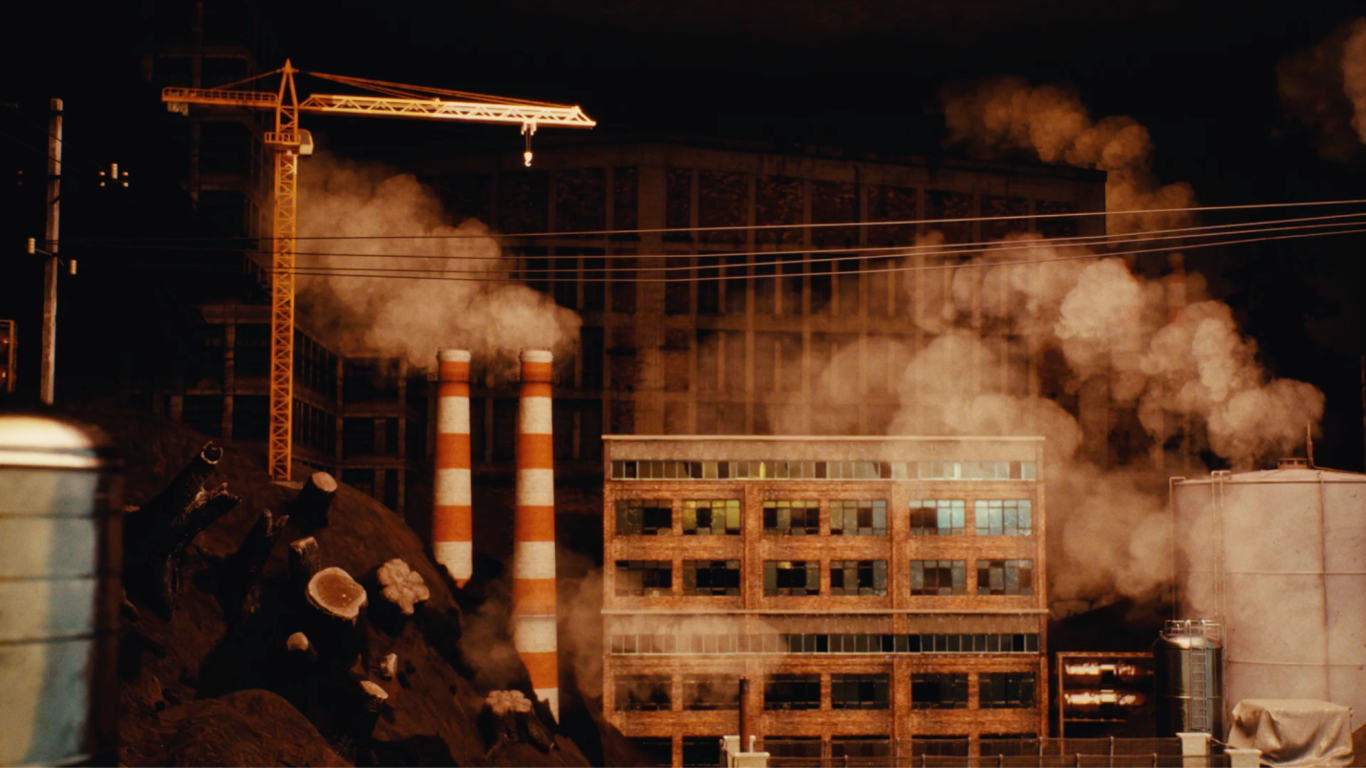
Yang begins investigating extraction methods with a forest which is then morphed into a construction site as society expands; cranes continuously build, while power plants emerge, pumping out smoke and steam. The felled trees become both building material and fuel, representing the early stages of humanity’s pursuit of energy. The final environment is a factory dominated landscape – a field has been surrounded by factories with chimneys pumping out smoke, and pylones with cables. The farm and the factory have been compressed into a shared industrial landscape by the perpetual force of industrialisation.
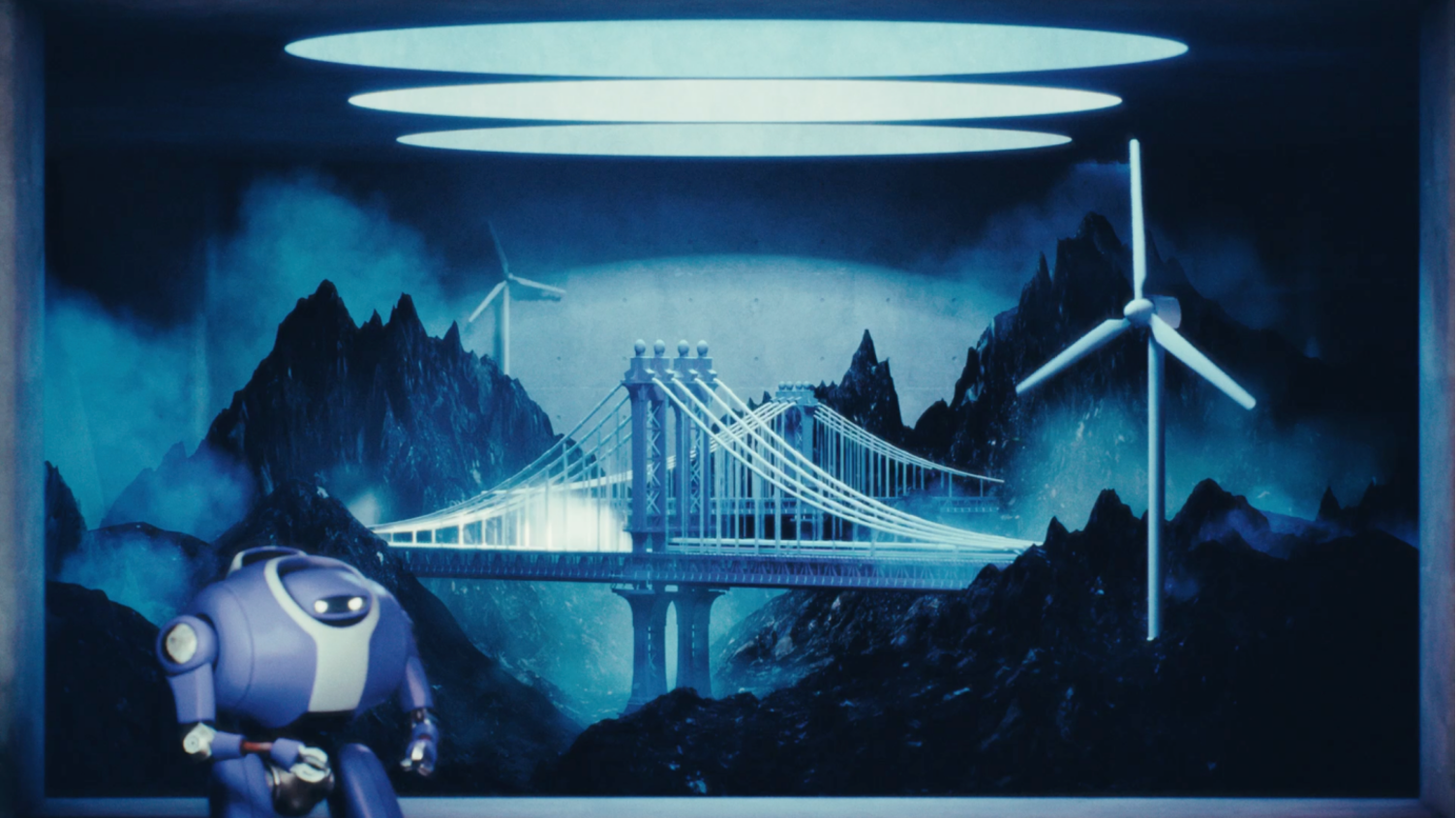
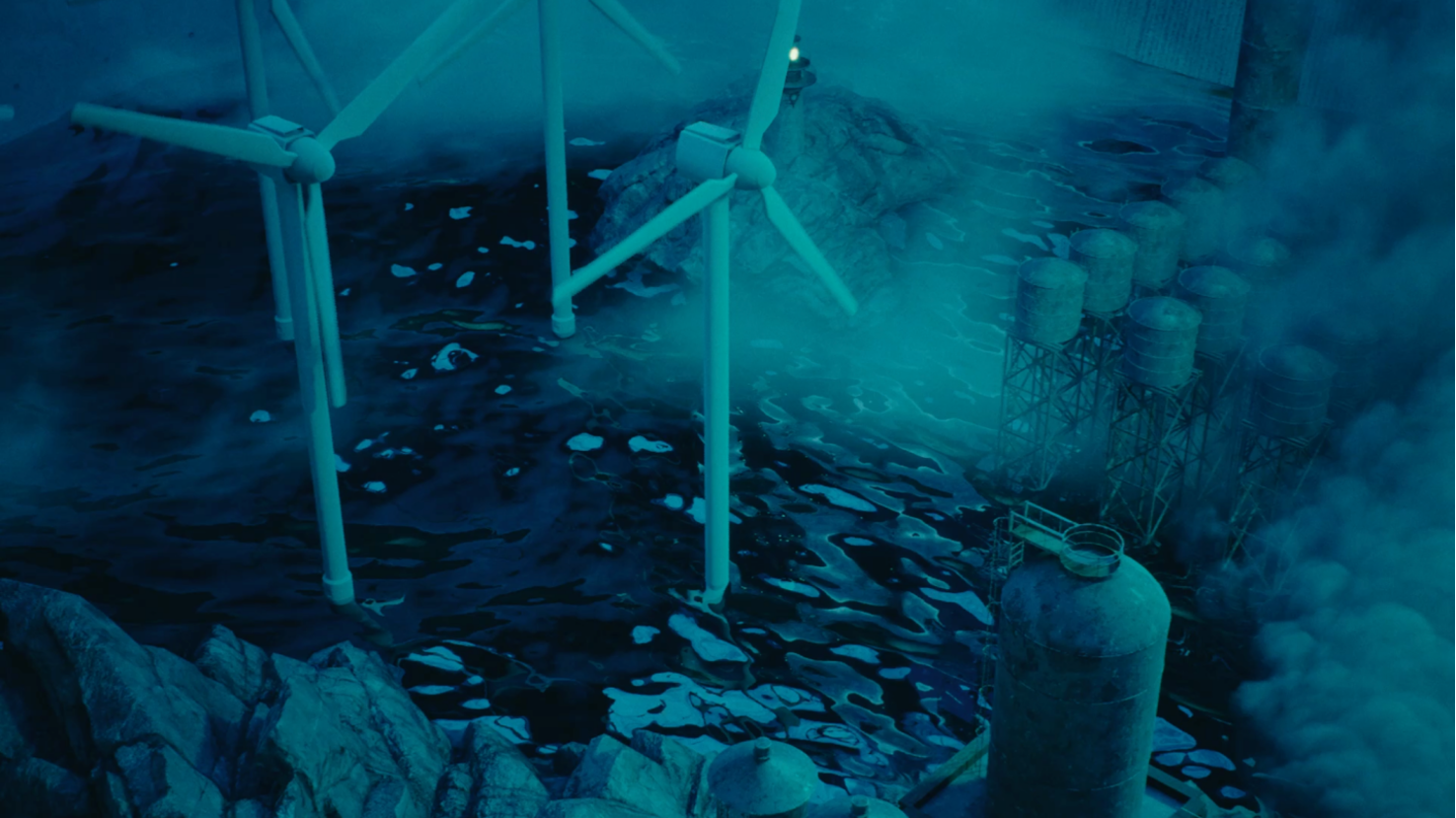
In the second and third environments, Yang presents a controversial critique of renewable energy infrastructure, suggesting that even environmentally conscious forms of energy production can reshape and disrupt natural environments. Peaceful mountains are connected by a bridge and trains, and are dotted with visually dominant wind turbines. The sea is similarly crowded with technological infrastructure beyond the wind turbines themselves. Storage silos and oil rigs surround the turbines indicating humanity’s resistance to moving to renewable resources. Yang illustrates that energy infrastructure cannot simply stand alone, it must also be surrounded by convenience and access – further morphing the natural environment.
Yang ends with a potentially positive note, by reversing his established pattern. In the final scene, the industrial setting fades into a peaceful field. Seemingly hopeful and nostalgic, yet potentially unrealistic, the restored landscape highlights the illusionistic quality of the digital video medium. He is able to project a utopian future onto the industrialised reality, though it is questionable as to whether this can be achieved.

The work utilises visual symbols of the industrial age; factories, wind turbines, and scarred landscapes, to reflect on the potential ecological crises arising from contemporary society’s dependence on energy. Yang suggests that even as societies move away from extractive energy practices, human intervention continues to reshape natural environments. He demonstrates that human impact is not simply the extraction or generation method, but the entirety of the infrastructure surrounding these processes. Yang successfully demonstrates the imbalance between human desire and the ability of natural systems to resist and sustain themselves during and after human intervention.
Top image cridit
Still Image from Ignition 2023, 2:18, image courtesy of the artist