The chef in the rented kitchen has become the quiet choreographer of the slowest, most-considered travel weeks of the year. A meditation from a Tuscan villa.
BY HAUTE RETREATS EDITORIAL · PHOTOGRAPHY BY ARRANGEMENT
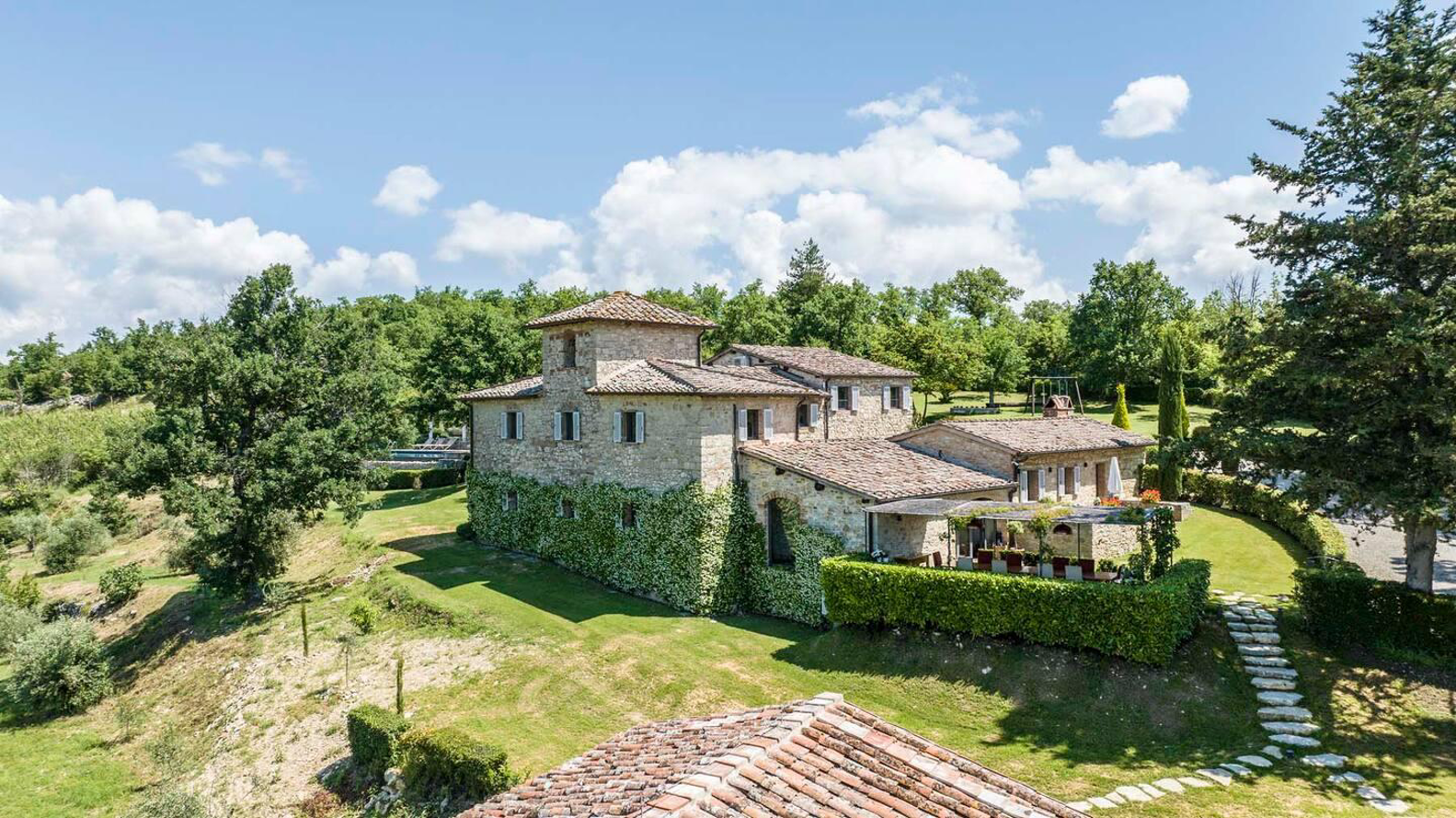
The chef arrives at six. The villa is still in its first quiet — the cypress trees have only just turned silver against the hill behind the house, and the kitchen is a pale, ungilded white waiting for the day’s first gesture. She unpacks two paper bags onto the marble counter without ceremony: a head of escarole still wet from the market in San Quirico, three small zucchini blossoms wrapped in damp newspaper, a half-kilo of borlotti beans, a bottle of olive oil that came from a press her cousin runs outside Pienza. She lights the burner. The water for the morning bread takes seven minutes to come to temperature. By the time the family upstairs starts moving — the youngest grandchild’s bare feet on the terracotta, the slow rasp of the loggia door — there is bread cooling on a rack, eggs warming in a copper pan, and the room smells of yeast and rosemary in a way that no hotel breakfast service has ever quite managed.
This is the first scene. It will repeat itself in different registers across the next seven days, and by the end of the week the family will not remember exactly when the chef arrived on Tuesday morning, but they will remember the bread, and the small precision of those zucchini blossoms, and the sense — difficult to articulate but unmistakable — that someone was paying attention.
Something is happening in the architecture of luxury travel that doesn’t have a marketing category yet. The slowest, most-considered travel weeks now happening in Tuscany, the Veneto, parts of the Cotswolds and the Hudson Valley are not, properly speaking, about restaurants. They are not, either, about resorts. The hotel kitchen has retreated to the background. The Michelin-starred restaurant — the one the concierge would once have insisted on — has become, for a certain kind of traveller, slightly beside the point.
What is happening instead is the private villa chef.
The shift is small in scale and slightly hard to see, but it represents one of the more interesting movements in how the very wealthy now choose to spend a week of their lives. The architecture of a fine restaurant assumes the guest as audience: the food arrives, the wine is poured, the show happens in a sequence governed by other people. The architecture of a private villa with a chef inverts that geometry entirely. The kitchen becomes the centre of the house. The chef becomes the figure who authors the week — its rhythm, its mornings, its turns at small ceremony. The guests become not audience but a kind of cast, moving through scenes the chef has lightly choreographed.
You could call it, if you wanted to be a little grand about it, the new domestic theatre.
The kitchen becomes the centre of the house.
The chef becomes the figure who authors the week.
The job, in practical terms, is much larger than cooking. The chef who works through a private villa rental — the kind quietly arranged by companies like Haute Retreats across Tuscany, the Amalfi Coast, Lake Como, and the more selective Mediterranean addresses — is also a buyer, a planner, an editor, and, in the deepest sense, a curator of the week’s emotional weather.
On the first morning of a stay, before the family is awake, she will already have been to the market. She will already have decided, based on what was actually beautiful that day — the first early figs, a particular fish landed at Porto Ercole the night before — what the family will eat over the coming six dinners. She will know that the youngest daughter is allergic to shellfish, that the mother prefers a glass of white at six rather than seven, that the eldest son brought a friend who is, possibly, beginning to be a partner. She will pace the rhythm of the week so that the largest dinner — the one with all twelve at the long table on the terrace — falls on the Wednesday, not the Saturday, because by Saturday everyone wants something quieter, and the chef has already understood that.
There is real artistry in this. The artistry is not in the foam on the plate, which there will not be any of. The artistry is in the choice to not put foam on the plate. It is in the bread that becomes a quiet running thread of the week — Monday’s loaf is the same recipe as Thursday’s, but by Thursday the family knows it as theirs. It is in the late-afternoon decision, made in conversation with no one in particular, that the next night’s dinner should probably be on the lower terrace and not the upper one, because the wind has shifted.
When this works, you do not particularly notice it working. When it works, the week feels, mysteriously, like the most relaxed week the family has had in a year. The chef has authored that feeling, mostly invisibly.
What is interesting, culturally, is why this category has emerged at this particular moment. The simplest explanation — that the very wealthy are tired of restaurants — is true but incomplete. The deeper story is that the very wealthy, like the rest of us, have been adjacent to something approaching an authentic crisis of attention. The restaurant evening, the hotel weekend, the carefully sequenced concierge itinerary — all of these promise experience but deliver, increasingly, a kind of curated frictionlessness that no one actually wanted. You arrive, you are served, you are removed. The next morning you board a plane.
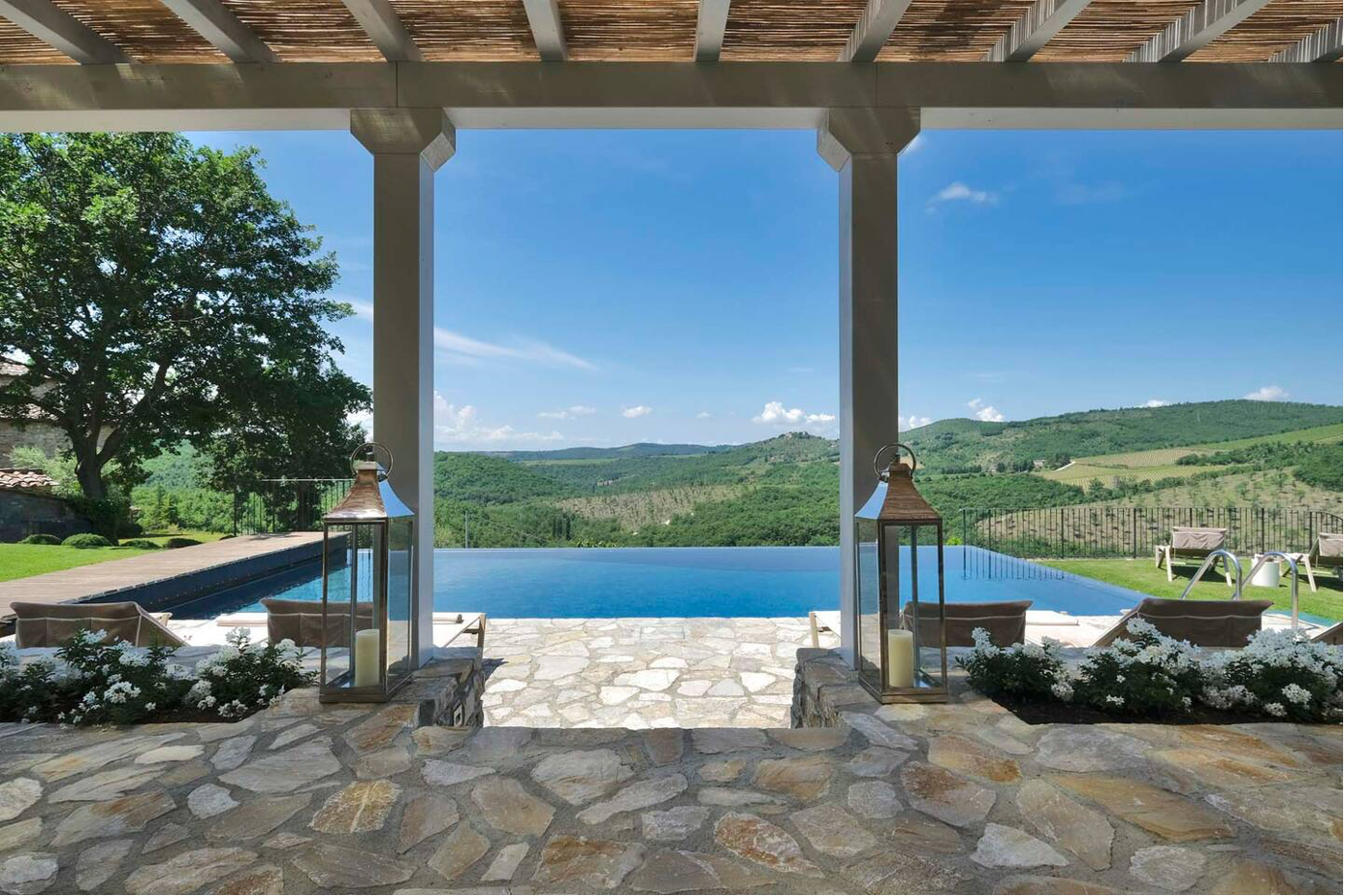
The private villa with a chef offers something different. It offers slow time, which is more or less impossible to buy by the hour. It offers presence, which is even harder to source. It offers, above all, the experience of being cooked for in a room you can stand still in — a kitchen with a fire and a table and a view, where the meal is not a transaction but the central daily event of a week that has been allowed, for once, to unfold at its own pace.
That is what the new domestic theatre is for. Not foam. Not stars on a guide. Just slow time, the gift of someone’s attention, and the very old, very simple matter of a meal in a beautiful room.
On the last evening, the chef puts a single plate in the centre of the long terrace table. It is, by design, slightly less elaborate than Wednesday’s was — a whole branzino, salt-crusted, the skin black and matte in the candlelight; a bowl of late-summer beans; the bread. The family is loud at the other end of the table. The youngest grandchild has been put to bed and brought back down again twice. The chef stands for a moment in the doorway, watching, and then turns back to the kitchen. There is one last small thing to bring out, a bowl of figs in honey she had not promised. She is the only one who knows.
By the time the family leaves on Sunday morning, she will already have been at the next villa, three valleys over, for two days.
Haute Retreats · founded 2016 · curates fully-staffed villa rentals across 83+ destinations.
Private chefs are arranged across Tuscany, the Amalfi Coast, Lake Como and the wider Mediterranean.
Named Best Luxury Villa Rental in the World · Luxury Lifestyle Awards 2024–2026.
hauteretreats.com