There was a time when engagement rings followed a pretty familiar visual script. One clear stone, one expected silhouette, one kind of sparkle that signaled tradition. Even if you did not know the technical terms, you probably recognized the look right away.
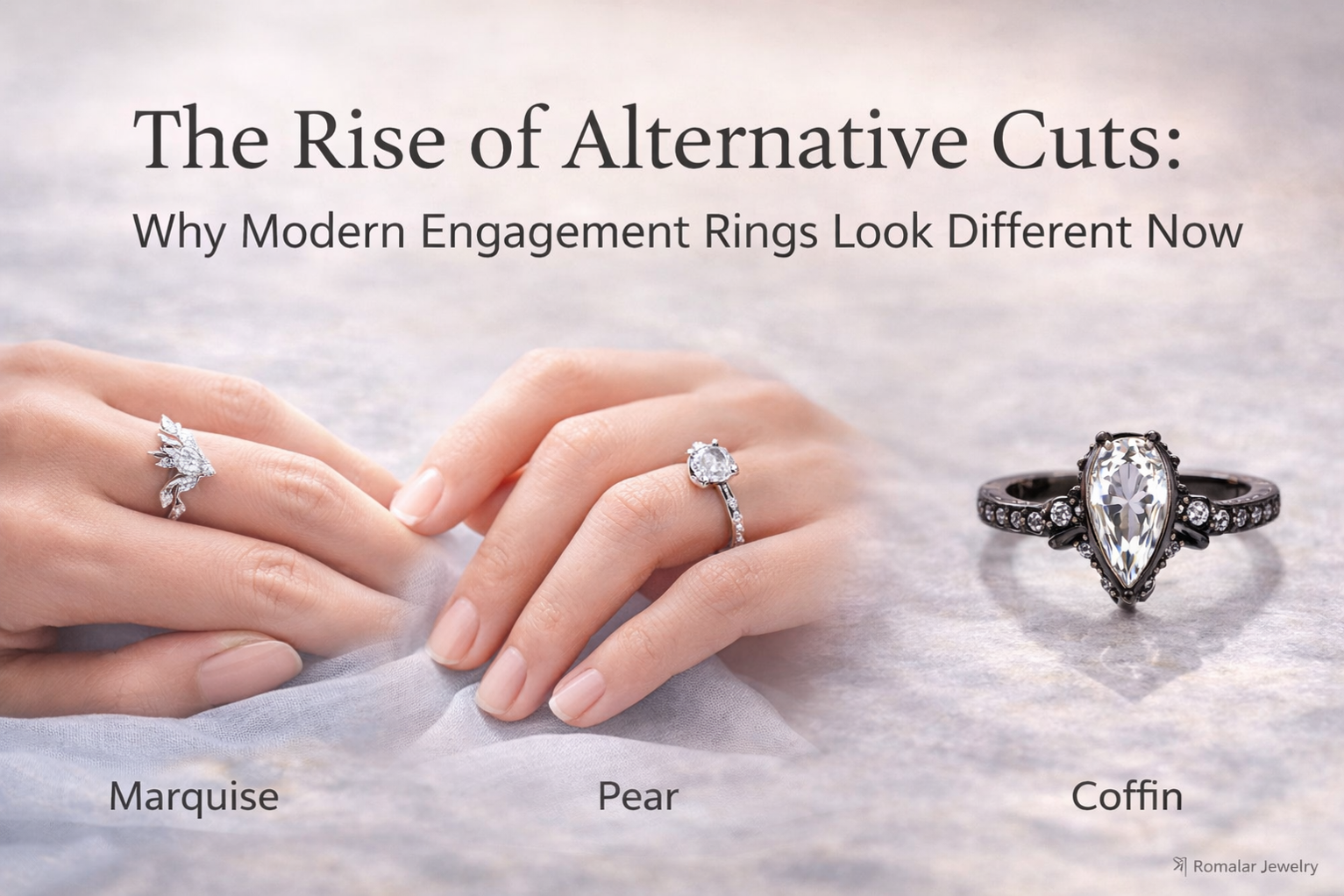
That script is changing.
Modern engagement rings are starting to feel more like personal style pieces. Shapes are sharper, silhouettes are more intentional, and the ring is no longer always trying to fit neatly into one category called “classic.” Instead, it is often trying to say something more specific. Sometimes it feels soft and romantic. Sometimes it feels bold and design-forward. Sometimes it simply feels different from the default.
One of the clearest signs of that shift is cut.
Why cut is becoming the style statement
When people talk about rings, they often focus on stone type—diamond, lab-grown diamond, moissanite, or gemstone. But the cut is often what changes the overall feeling of the ring first.
A round cut usually reads timeless. An oval can feel elegant and slightly modern. But once you move into shapes like marquise, pear, hexagon, or coffin cut, you are no longer just choosing a stone. You are choosing a silhouette.
That choice feels much closer to fashion.
It works the same way clothing does. A sharply tailored blazer gives off a different impression than a soft cardigan, even if both are beautiful. In the same way, the shape of a stone changes the tone of a ring before anyone notices the smaller details.
Marquise, pear, and coffin: the new “it” shapes
Marquise has been gaining attention because it sits in an interesting space between vintage and modern. It feels romantic, but not overly delicate. It also elongates the finger, which gives it a sculptural effect on the hand.
Pear is popular for a different reason. It is familiar enough to feel approachable, but it also has a directional line that feels more editorial than traditional. Styled one way, it can look soft and dreamy. Styled another, it can feel bold.
Coffin cut, meanwhile, is a statement shape. It does not try to blend in. It is sharp, graphic, and immediately recognizable, which makes it especially appealing to people who do not want their engagement ring to look like everyone else’s.
These cuts do not feel like a passing novelty. They feel more like part of a broader shift in taste. More people want a ring that matches their wardrobe, their aesthetic, and their sense of self.
Why moissanite appears so often in fashion-forward rings
Moissanite has become a popular choice within this shift because it supports the style side of ring design so well. It is bright, photographs beautifully, and gives buyers more freedom to experiment with silhouette and setting.
Many people choose moissanite because they want strong sparkle while keeping more flexibility in the overall design. That flexibility makes it easier to explore elongated cuts, sculptural bands, vine motifs, clusters, and other details that might feel harder to justify under a more rigid idea of what an engagement ring is supposed to be.
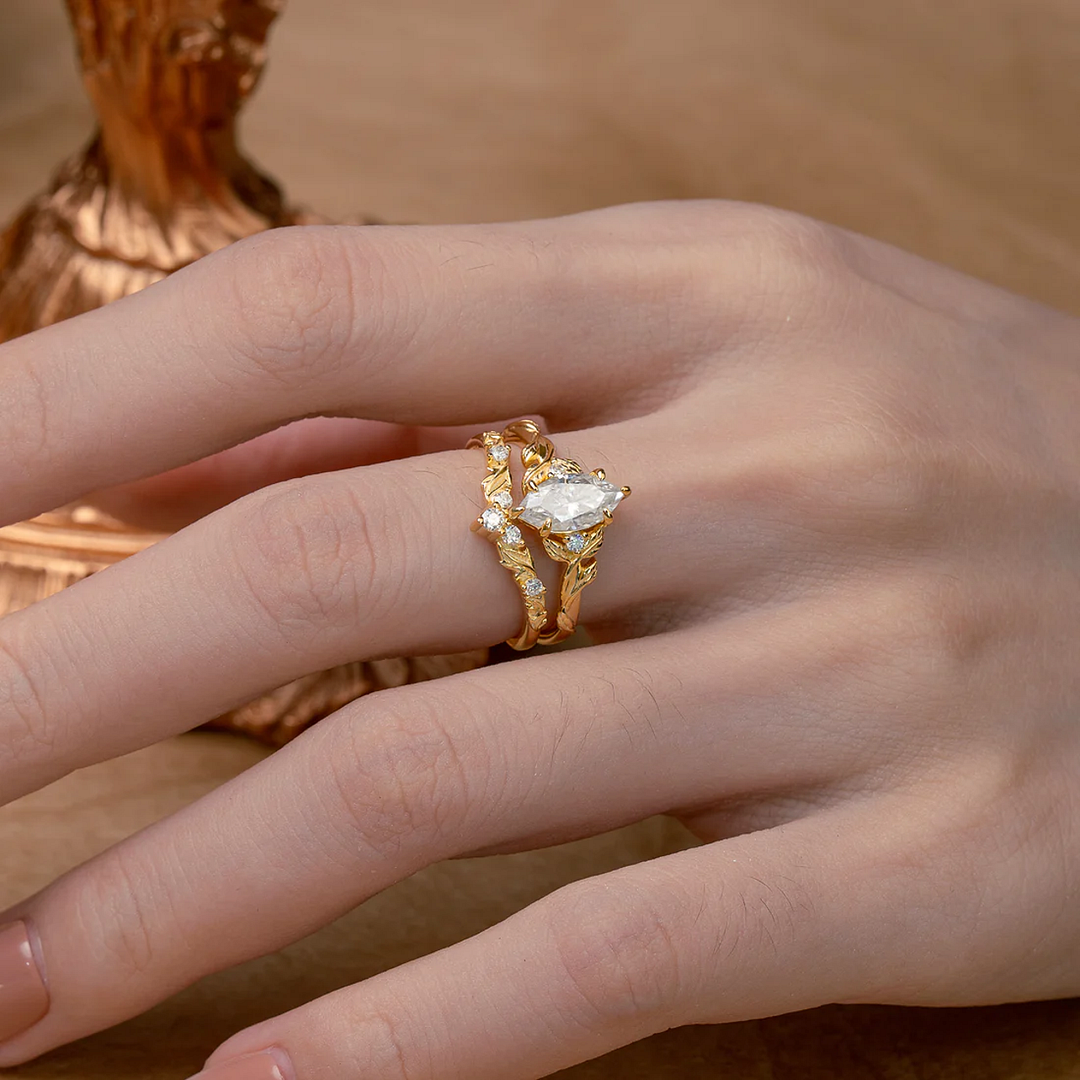
A moissanite engagement ring set is a good example of how this looks in practice. The cut feels elongated and romantic, while the setting adds texture and personality, so the ring feels more like a style piece than a template.
The setting is part of the fashion now
In older engagement ring culture, the setting was often treated like background. Now it feels much more central to the look.
Nature-inspired bands, clusters, and mixed-stone layouts are gaining attention because they feel more personal. They also feel more like jewelry someone would choose for themselves, not just jewelry they are expected to wear.
That shift matters. The engagement ring is moving closer to the world of everyday styling. People want a ring that looks right next to their nails, their denim, their winter coat, and their summer photos. They want it to feel like part of their visual identity.
And once someone finds a cut they love visually, it still helps to think about setting height, daily comfort, and how bold they want the ring to feel on the hand.
Visual culture changed how people shop
This is not only about trend cycles. It is also about exposure.
People spend time every day looking at interiors, fashion shoots, jewelry styling, and product photography. Even if someone would not call themselves “a design person,” that kind of visual input shapes taste over time. People learn to notice when something feels generic and when something feels chosen.
Alternative cuts are one of the clearest ways to make a ring feel chosen.
How to choose an alternative cut without getting overwhelmed
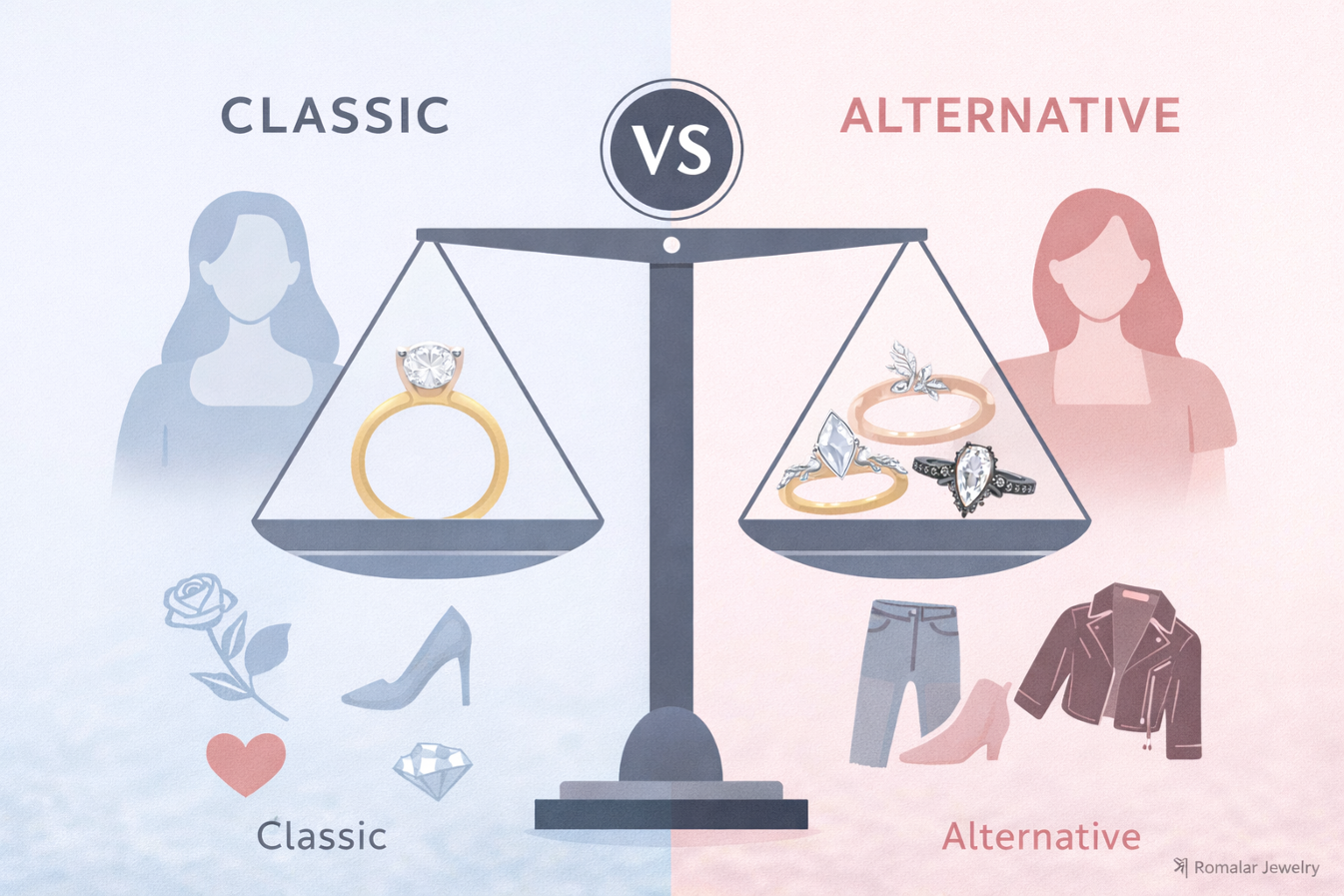
If you love the look of alternative cuts but do not know where to begin, it helps to choose your overall style direction first:
- Soft romance: marquise, oval, or pear with delicate details
- Bold and modern: coffin, hexagon, or clean architectural silhouettes
- Vintage energy: marquise, three-stone layouts, or intricate bands
- Nature-inspired: leaf motifs, vine details, or organic cluster designs
Once you know the direction, it becomes much easier to compare designs without getting lost in endless options.
Looking through a curated selection of moissanite rings can help because it shows how the same stone type can look completely different depending on the cut and setting.
Some shoppers also find it easier to compare styles when category pages are organized clearly instead of mixing everything together. Romalar Jewelry is one example of a brand that groups moissanite designs in a way that makes it easier to compare silhouettes such as marquise, pear, and coffin cuts without endless scrolling.
The takeaway
Engagement rings are becoming less about following one visual tradition and more about expressing personal style. Alternative cuts are rising because they give people a kind of visual language to show what feels right to them.
A ring is still symbolic. But now it is also a style decision. And for a growing number of couples, that is exactly the point.