Family style has moved beyond holiday cards and one-off celebrations. Coordinated dressing now appears at resort breakfasts, birthday lunches, summer festivals, airport departures, and relaxed weekends when a family simply wants to look connected. The appeal is visual, but it is also emotional: clothing becomes a shared language that can express belonging without requiring everyone to wear the same silhouette.
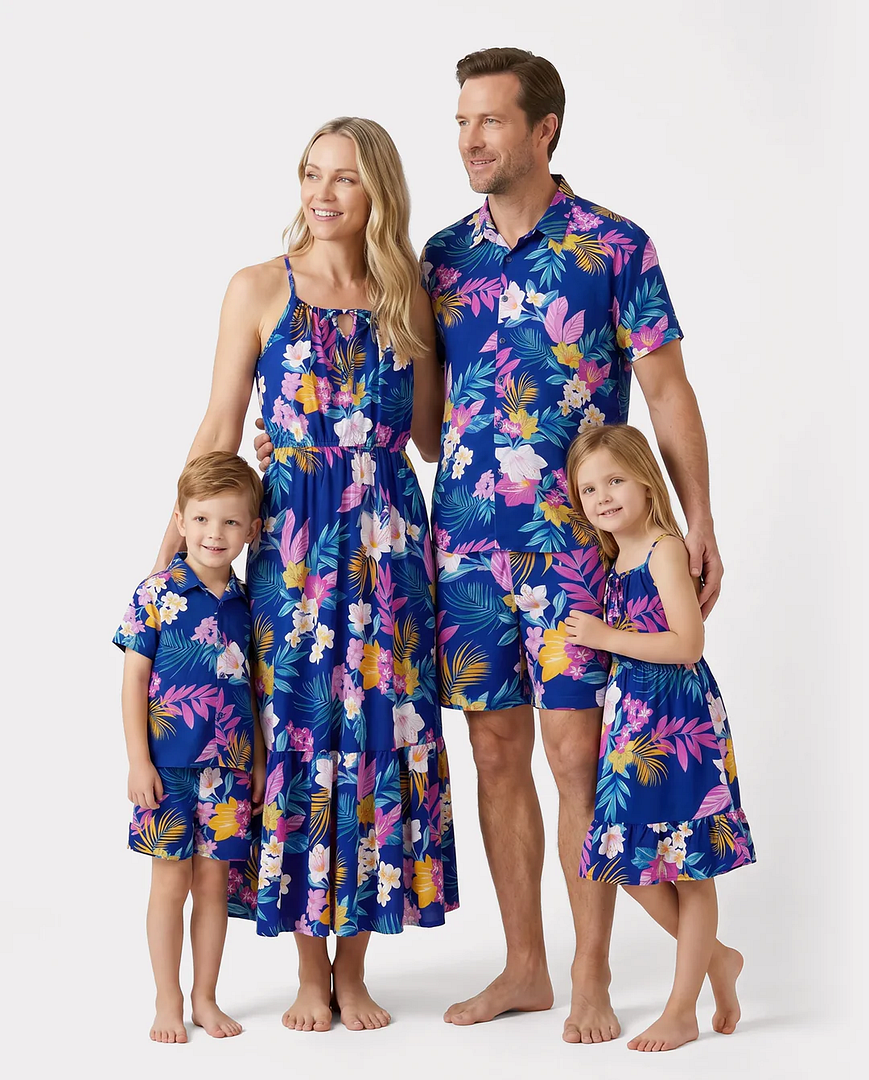
What makes the trend feel contemporary is its flexibility. A mother may choose a flowing dress, a father may prefer a printed shirt, and children may wear scaled versions that support movement. The link can come from a deep-blue ground, a tropical motif, or one repeated accent color. Rather than creating a uniform, the family builds a small wardrobe story in which every person contributes a different shape.
This shift places coordinated family dressing within lifestyle fashion rather than novelty styling. It can reflect travel plans, personal taste, celebrations, or the mood of a season. The strongest looks are memorable in a photograph, yet practical enough for lunch, sightseeing, or an evening walk.
Why Family Style Has Moved Beyond Special Occasions
Earlier versions of coordinated dressing were often reserved for Christmas mornings, formal portraits, or themed parties. Those moments still matter, but families now live much of their visual lives in ordinary settings. A shared look may appear during a weekend away, a beach day, or a casual gathering where the clothes need to feel natural rather than ceremonial.
That everyday visibility has changed the design brief. Garments must work while people are walking, carrying bags, supervising children, eating outdoors, and moving between warm and cool spaces. A coordinated idea succeeds when it supports those realities instead of demanding constant adjustment. The trend has become more useful because it has become less rigid.
How a Shared Look Became Part of Family Lifestyle
Coordinated clothing offers a way to make a shared experience feel intentional. Families already plan trips, activities, meals, and celebrations together; a connected palette can give those moments a visual identity. A repeated print may link separate garments without erasing age, role, or personality.
The look also works best as a collaborative decision. Older children can choose their footwear, adults can decide how strongly to repeat the print, and younger children can keep simpler shapes. The family is not presenting one identical image. It is showing how several individuals can interpret the same idea.
Why Tropical Prints Bring Energy to Group Dressing
The renewed interest in matching outfits becomes especially visible in tropical styling. Botanical patterns contain several colors, shapes, and levels of contrast, so one person can wear the full motif while another uses a shirt or shorts set that repeats only part of it. The print carries enough information to connect the group even when the garments differ.
Deep blue is a useful base because it gives bright leaves and flowers definition, works with neutral footwear, and can move from daytime into evening more easily than a very pale ground. It also allows adults to keep the look polished while children retain the playful energy of the pattern.
The effect still needs editing. Let the print lead, then limit accessories to natural textures, simple sandals, understated trainers, or one solid-color layer. Too many competing details can turn a considered fashion choice into a theme costume.
A Deep-Blue PatPat Design Creates a Vacation Mood
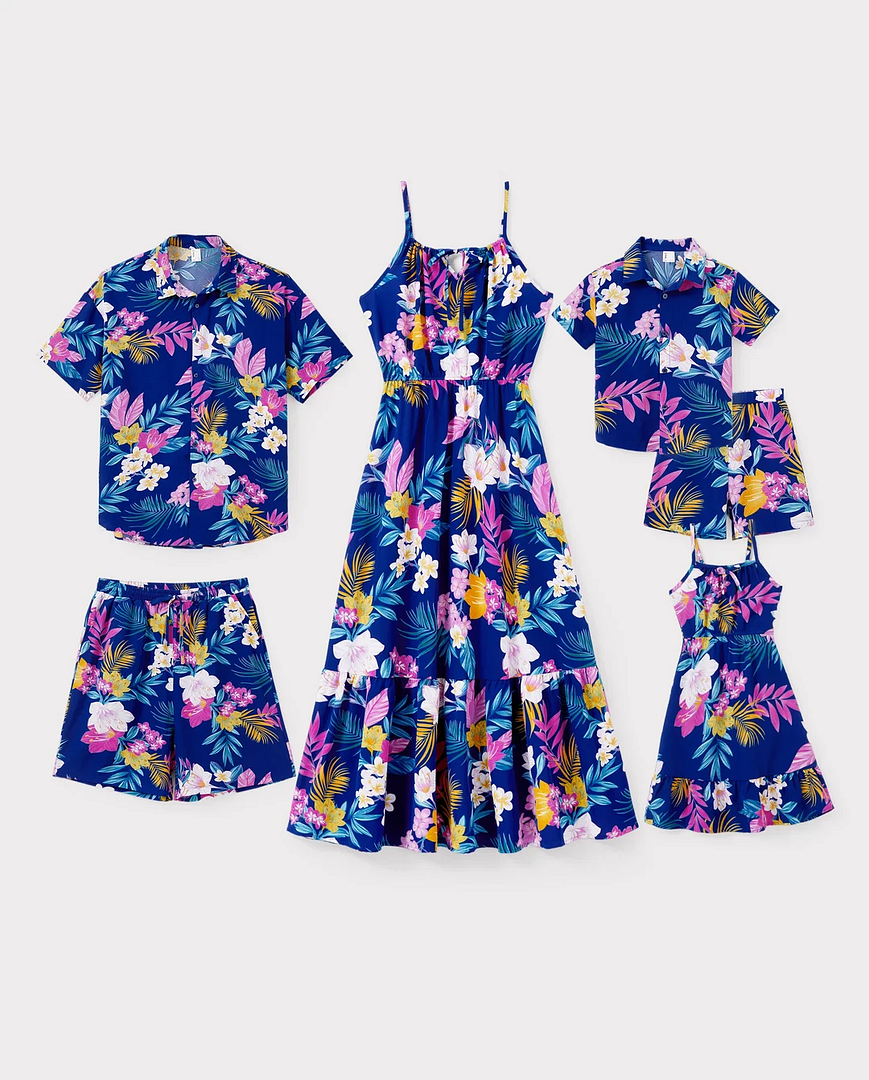
PatPat currently lists the featured design as Matching Family Tropical Outfits Deep Blue. The product page displays options for women, girls, boys, and men. Its visual direction combines a tropical floral strap dress with short-sleeve shirt-and-shorts looks, allowing the same vacation mood to appear through different garment types rather than one repeated cut.
The page lists an 85% polyester and 15% spandex composition and describes the fabric as lightweight and soft. Its care guidance calls for a cold-water machine wash, low-temperature ironing, and no bleach. Those details belong to this exact page and should not be generalized to every tropical or family-coordinated item.
The design is shown as out of stock, so availability must be checked before publication or purchase. Shoppers should also confirm the selected wearer, size, quantity, product contents, current price, and return eligibility. A group photograph shows the styling concept, but it does not automatically mean every garment pictured is included in one selection.
Building One Palette Without Erasing Personal Style
Start by identifying three colors: the dominant background, the brightest accent, and one neutral. In a deep-blue tropical print, navy or cobalt can anchor the group, a floral shade can provide energy, and tan, white, or black can quiet the accessories.
Each person can then interpret the palette differently:
- One wearer carries the full print.
- Another repeats the background color in a simpler piece.
- A third chooses neutral accessories.
- An older child adds one personal detail that does not compete with the group.
This approach keeps the family connected without making everyone appear styled by the same hand. It also makes the clothing easier to wear separately later because each garment already has a relationship with solid pieces in the wardrobe.
Why Comfort Matters More Than a Flawless Photograph
Most of a coordinated outfit’s life happens between photographs. Children sit on the ground, adults carry bags, and everyone may move through heat, wind, or air-conditioned spaces. Fabric information, fit, length, and care requirements therefore matter as much as the pattern.
Try every garment before the event and test ordinary movement. Check whether arms lift comfortably, waistbands remain settled, hems allow easy walking, and a light layer can be added without hiding the main design. Product-specific measurements should guide the size choice; familiar labels or a child’s age alone cannot guarantee fit.
Repeat wear provides another useful test. A shirt that later works with plain trousers or shorts has value beyond the group moment. A tropical dress that can be restyled with a cardigan or simple sandal becomes part of an individual wardrobe rather than a souvenir of one photograph.
How Photography Changed the Way Families Coordinate
Everyday photography has made people more aware of how a group reads as a whole. Unrelated prints, competing logos, or clashing color temperatures can create visual noise, while one controlled palette gives the image a clear focal point. This does not mean every family photograph requires professional styling. Small decisions can make an ordinary image feel more composed.
When choosing matching family outfits for pictures, consider the setting before adding accessories. A beach background already contains sky, water, sand, towels, and movement. A strong tropical print may need little more than simple footwear and tidy layers. In a quieter indoor location, one repeated accent color can help the group stand out.
The best images also leave room for spontaneity. A connected palette can hold the frame together even when children are moving, people are looking in different directions, or the pose becomes informal. The clothes create continuity; the family supplies the character.
What Makes Coordinated Style Feel Editorial
Editorial styling depends on hierarchy. One element leads, several details support it, and everything else is reduced. For a tropical group, the print should be the leading element. Shoes, bags, jewelry, and hair accessories can support the palette without repeating every flower or color.
Proportion creates sophistication as well. A longer dress can balance a larger motif, while a child’s smaller frame may benefit from fewer accessories. Men’s and boys’ shirt-and-shorts combinations can echo the same pattern while creating a different visual weight from the dresses.
Avoid adding props simply to intensify the theme. Straw hats or woven bags can work when they suit the occasion, but several novelty details at once may make the clothes feel costume-like. One well-chosen texture often communicates the setting more effectively.
Why Travel Keeps the Trend in Motion
Travel creates shared visual environments. A resort dinner, coastal walk, or family reunion brings everyone into one setting, and a related palette can make that setting feel part of the memory. The clothing becomes one layer of the experience rather than the reason for it.
The same principle works for celebrations. A birthday lunch or anniversary gathering can use color to connect generations without imposing a strict dress code. One motif can be interpreted according to each person’s comfort, age, and preferred silhouette.
Frequently Asked Questions About Family Coordination
Does Everyone Need to Wear the Same Print?
No. A modern approach can mix full-print garments with solid pieces drawn from the same palette. The relationship should be visible without becoming identical.
How Can a Tropical Family Look Avoid Feeling Overly Themed?
Limit accessories, keep footwear simple, and let one print carry the concept. Natural textures or one solid layer are usually enough to complete the styling.
What Should Shoppers Verify Before Ordering?
Check the exact product name, family-member option, size chart, composition, included pieces, quantity, care instructions, inventory, and current policies. Add each needed item deliberately rather than assuming a group image represents one bundle.
Why the Trend Lasts Beyond the Camera
The rise of coordinated family style reflects more than a desire for polished pictures. It shows how fashion can give a shared experience a visible identity while respecting the people inside it. The strongest looks connect through color and print, then allow silhouette, accessories, and attitude to vary.
For the featured PatPat design, families should review the current product page, compare actual measurements with the appropriate size chart, and confirm each wearer’s selection separately. When a tropical dress or shirt set can return to an individual wardrobe after the trip, the trend stops being a one-day performance and becomes part of a stylish family lifestyle.