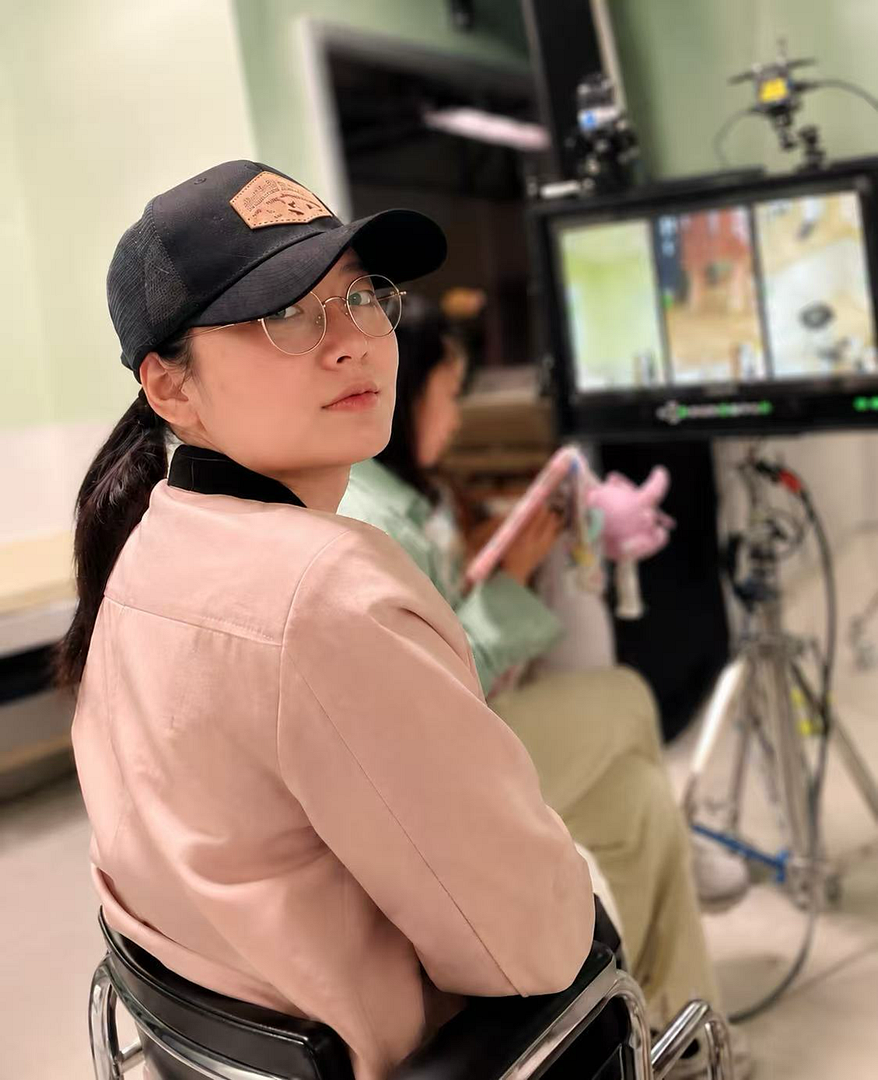
Digital entertainment is seeing a new video format: the “vertical drama,” a short-form, mobile-first series characterized by rapid emotional pacing, has emerged as a cultural phenomenon. Among the producers helping shape this cultural and technological shift is Jingyi Li, whose work has focused on adapting Chinese short-form storytelling and vertical drama production models for American mobile audiences.
Li, a producer, writer, and director with a background spanning the Shanghai Theatre Academy and the Savannah College of Art and Design, first encountered the format in late 2022 while interning at COL Group, where she observed early efforts to adapt Chinese IP-driven short-form content for North American viewers.
“I quickly realized the real innovation was not the vertical screen itself, but the storytelling rhythm,” Li says. “Vertical dramas rely on fast emotional escalation, clear character desire, and highly efficient audience engagement. It completely changed the way I thought about pacing.”
The success of the vertical drama in the U.S. has been exponential. It was originally viewed by the American industry as an “experimental,” or a “niche” format, but has since attracted significant investment and mainstream media coverage, recently landing in the spotlight of outlets like The New York Times, Rolling Stone and Variety. According to Intel Market Research, the North American vertical drama market was valued at $1.2 billion in 2024 and is projected to grow from $1.35 billion in 2025 to $2.45 billion by 2031.
Platforms such as GoodShort, DramaBox, ShortMax, and DreameShort have helped transform vertical dramas from a niche mobile format into a rapidly growing digital entertainment category, creating demand for producers who understand both platform-driven audience behavior and fast-paced serialized production.
As vertical dramas expanded into the U.S. market, producers capable of bridging Chinese storytelling structures with American production systems became increasingly valuable. Li emerged as part of an early generation of producers helping localize and produce vertical dramas for North American audiences. While the storytelling logic of Chinese vertical dramas, centered on cliffhangers and intense emotional stakes, is highly effective, Li notes that these models or formulas cannot be simply “translated” for U.S. audiences.
“It is not simply about translating language, but about adapting storytelling rhythm, visual expression, and production workflows,” she explains. “I often had to rethink performance style, dialogue rhythm, and visual language so the stories could feel emotionally intense while remaining believable for a North American audience.”
“At the same time, vertical dramas operate under highly compressed production schedules, so producers must balance speed, production value, and audience performance simultaneously,” she adds. “Many projects require constant creative and operational decision-making across development, filming, post-production, and final platform delivery. I think my strength has been understanding how storytelling, production workflow, and audience engagement all connect within a cross-cultural production system.”
Her responsibilities extended beyond production management to include evaluating which stories were suitable for production, shaping creative development, guiding localization strategy, recommending key casting and director choices, determining where and how a project should be produced, overseeing post-production, and preparing finished series for platform launch. In the high-velocity world of vertical dramas, where audience feedback and retention metrics can quickly shape creative decisions, Li’s work reflects how the producer role has expanded beyond logistics into creative strategy, audience awareness, and full-cycle production oversight — from assessing whether a script can emotionally hook mobile audiences to ensuring the final series is creatively polished, platform-ready, and positioned for release.
“In traditional productions, creative and operational roles are often more separated, but vertical dramas have compressed those boundaries,” Li notes. “The role of the producer in vertical dramas has become far more creative, as production timelines are highly compressed and audience feedback cycles move extremely quickly. As a producer, I often have to make creative and production decisions simultaneously.”
As an in-house producer, Li constantly had to consider both production value and audience performance. She helped determine whether projects were suitable for production, evaluate creative feasibility, assemble directors and creative teams, and shape projects that could emotionally connect with audiences while maintaining strong visual quality and emotional consistency. In the vertical drama industry, success is measured very directly through viewership, retention, and audience engagement, so producers are expected to help shape projects that can emotionally connect with audiences while maintaining strong visual quality and emotional consistency.”
She describes a process where producers are involved from initial script development and casting to final color grading and platform delivery; often serving as the sole stabilizing presence throughout a project’s lifecycle.
“As a producer, I am involved throughout the entire creative process,” said Li. “In many ways, the producer may be the only person involved throughout the entire lifecycle of a project. In traditional productions, creative and operational roles are often more separated, but vertical dramas have compressed those boundaries.”
This hands-on approach has yielded significant results. Her projects have resonated deeply with digital audiences, garnering millions of views. A Blind Date with My Mr. Meant-to-Be, one of the series Li worked on for GoodShort, reached over 22 million views on the platform.
Other projects, such as the LGBTQIA+ series Sneak Me in Your Closet My Prince, reached 6 million viewers, fostering dedicated fanbases that actively lobby for sequels. “This series is incredibly popular with the vertical short drama audience; we have a lot of fans loving it and asking for season 2 and season 3,” she said.
Looking ahead, Li believes the vertical drama industry is poised for further structural shifts, particularly through the integration of AI-assisted production. She anticipates that these tools will allow creators to produce more ambitious visual storytelling at a scale that traditional systems often cannot match.
For Li, the success of the format is indicative of a broader transformation in audience behavior. “Vertical dramas reflect a larger transformation where entertainment is becoming increasingly mobile-first, emotionally immediate, and serialized,” she says.
Li’s role has involved helping bridge those two systems in practical ways to make vertical drama series feel natural to its growing American fanbase. “I place a strong emphasis on localization, because many details that work naturally in Chinese cultural contexts; whether dialogue rhythm, character dynamics, humor, performance style, or visual presentation, cannot simply be copied directly into North American productions,” she said. “The emotional structure itself is often universal, but the way emotion is expressed and understood culturally can be very different. As the industry continues to globalize, I think producers who understand both storytelling logic and the practical realities of cross-cultural adaptation will become increasingly important.”
As vertical dramas continue moving across markets, Li’s career reflects the growing importance of producers who can translate not only language, but also storytelling systems, production workflows, and emotional expression across cultures.
Words Tom Oakley