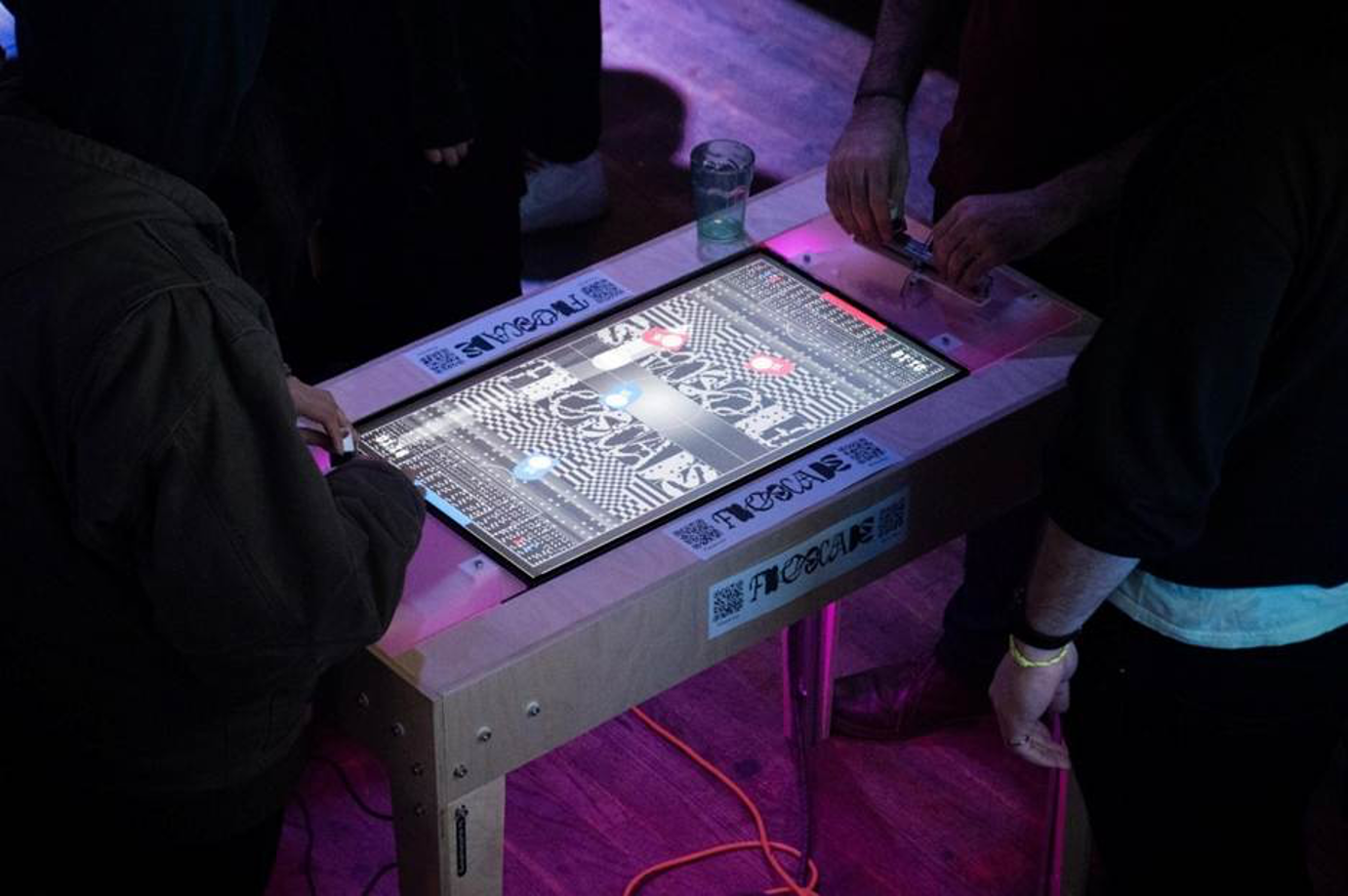
As the world anticipates the 2026 World Cup for a collective celebration of soccer, one DIY arcade game Fooscade is ready to slide, spin, and score on a global stage.
This unique football game has taken the gaming community by storm with its innovative finger-based controllers and retro aesthetics. The brainchild of Hong Hua, a Japanese-born Chinese multidisciplinary designer and creative technologist, and Yixuan Liu, a Brooklyn-based visual designer and creative technologist, Fooscade has been making waves at major gaming events and has even gone viral, with press outlets, locally and abroad, abuzz with excitement.
So, how did Fooscade come to be? According to Hua, the idea was born out of experimentation with different types of controllers.
“One day, I was wondering how a slider might stack on top of a rotary knob. That combination created a surprisingly expressive interactive gesture,” he explains. “From there, it felt natural to map that gesture into a simple, Pong-like game mechanic, and to merge the idea of foosball and arcade into the name Fooscade.”
Hua led the interaction design, controller prototyping, and development of the game system, while working closely with Liu on the visual elements.
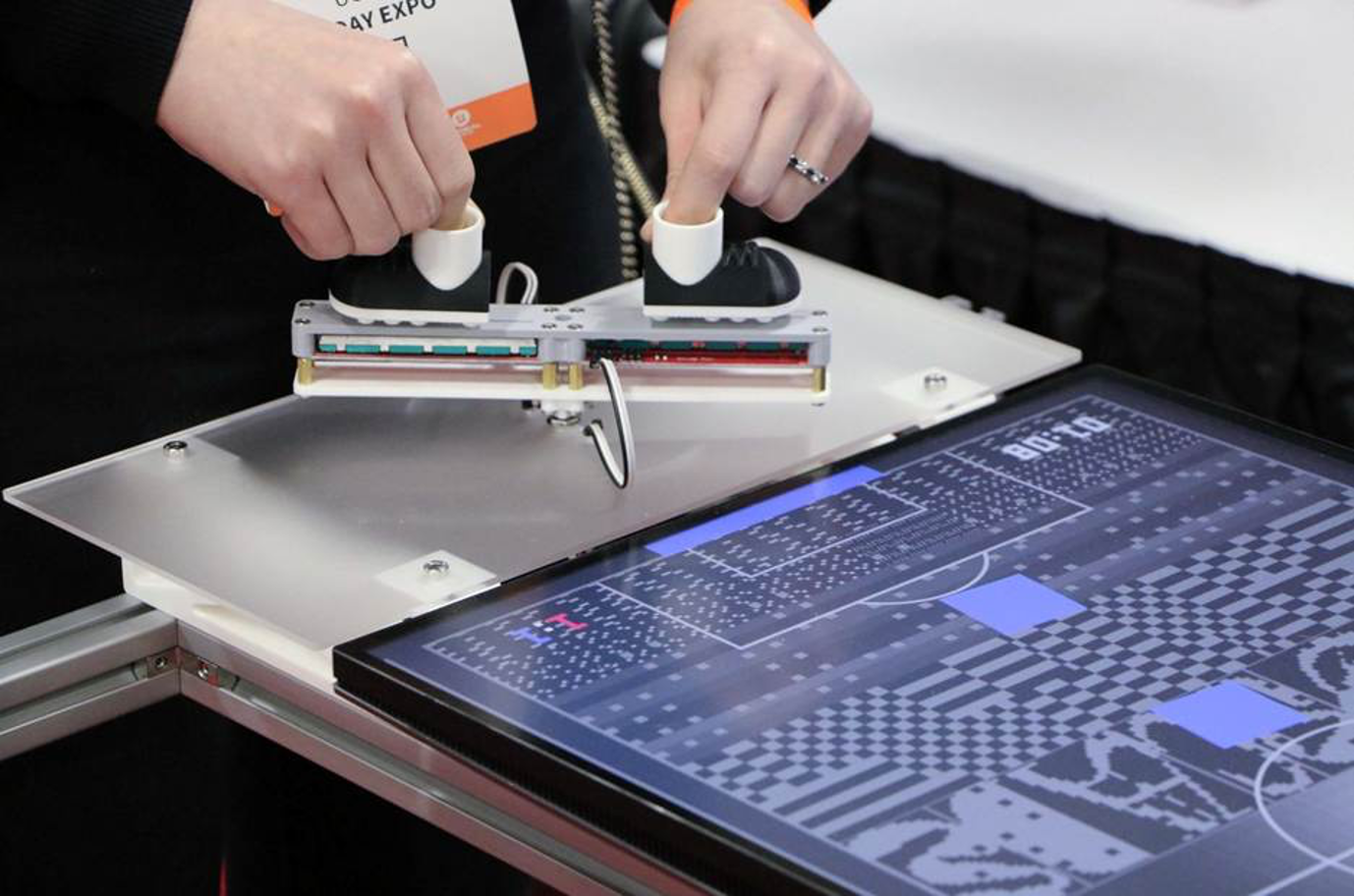
The result is a game that blends classic Pong and foosball with innovative finger-based controllers, using mini football boots for fingers to slide and spin on a device, mimicking real footwork to score goals on a digital pitch. Players control their own player’s digital cleats to maneuver a virtual ball on a digital board, aiming to outscore opponents in fast-paced, two-minute matches. The retro-esque late-1990s, early 2000s-inspired aesthetics add to the game’s charm, making it a visually stunning experience.
But Fooscade is more than just a game – it’s an experience. The broader goal, according to Hua, was to explore the intersection of tangible interaction and social gaming. “Instead of focusing on technical complexity or spectacle, we concentrated on designing an experience that naturally invites participation and conversation,” he says. “We wanted to create something different from the ground up, like building a fully custom controller to rethink how physical gestures could open up new possibilities for gameplay. We wanted all of this but without losing sight of what makes a game immediately engaging.”
Hua, a semi-competitive soccer player himself, knew that soccer is arguably the most successful game mechanic in the world. However, when you try to convert an 11-on-11 multiplayer sport into a controller-based digital game, you often introduce significant onboarding friction.
“With Fooscade, we intentionally avoided the full rule set,” he explains. “Instead, we borrowed the physical gesture of soccer and paired it with a simpler, more intuitive, and familiar game mechanic like Foosball.”
Hua adds: “The goal was to create an experience with essentially no learning curve, where players can immediately compete and have fun.”
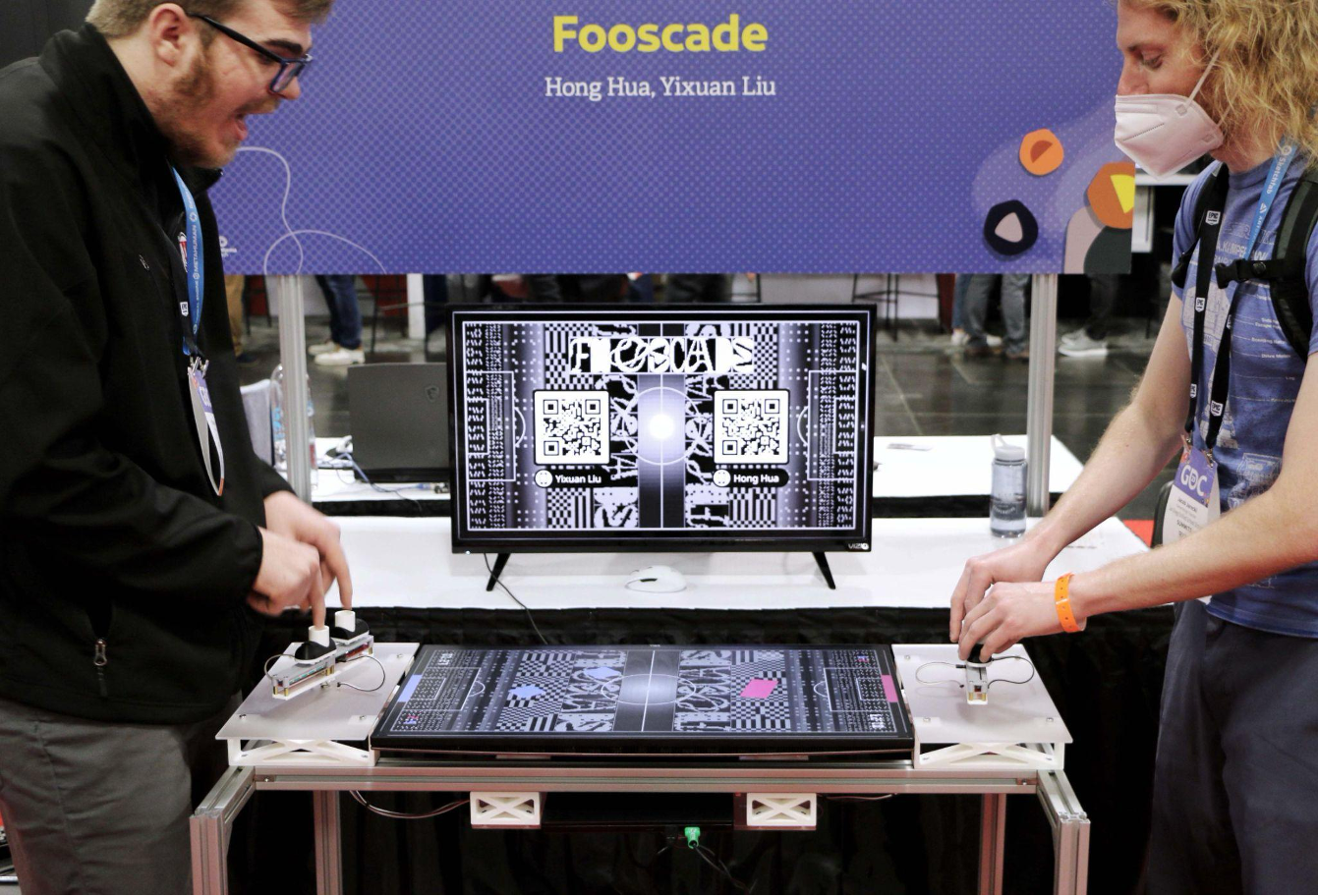
The response to Fooscade has been overwhelming. At recent events like Game Developer Conference 2023 in San Francisco, which saw over 28,000 attendees, and the 2024 Super MAGFest in National Harbor, which saw over 30,000 attendees, thousands played the game and more watched and cheered them on. The game’s viral success has been reported by press outlets like Game Developer, Designboom, and Yanko Design, as well as Japanese and Thai media praising its “effortless fun,” while viral social posts celebrated its “retro future” aesthetic.
But what makes Fooscade so special? According to Hua, it’s the game’s ability to connect people and create a sense of community through nostalgia. “At events, people could grab a drink, walk up to the table, play a quick two-minute match, and immediately understand it,” he says.
“The intuitive quality of the experience, the essence of play, are something we’re often missing in today’s creative landscape,” adds Hua. “Fooscade didn’t need to be framed as ‘advanced’ to feel innovative. It resonated because it met people where they were and invited them in. It’s simple.”
As the 2026 World Cup approaches, Hua sees this as an opportunity to reintroduce Fooscade on a larger scale, since it first launched in 2023. “Rather than simply producing another standalone table, like we did at the Game Developer Conference and Super MAGFest, I’m interested in exploring partnerships and site-specific installations that could connect Fooscade to public spaces, cultural venues, or with brand activations,” he says. “Framed this way, the project becomes less about a single object and more about how alternative, physical gameplay can participate in large-scale cultural moments.”
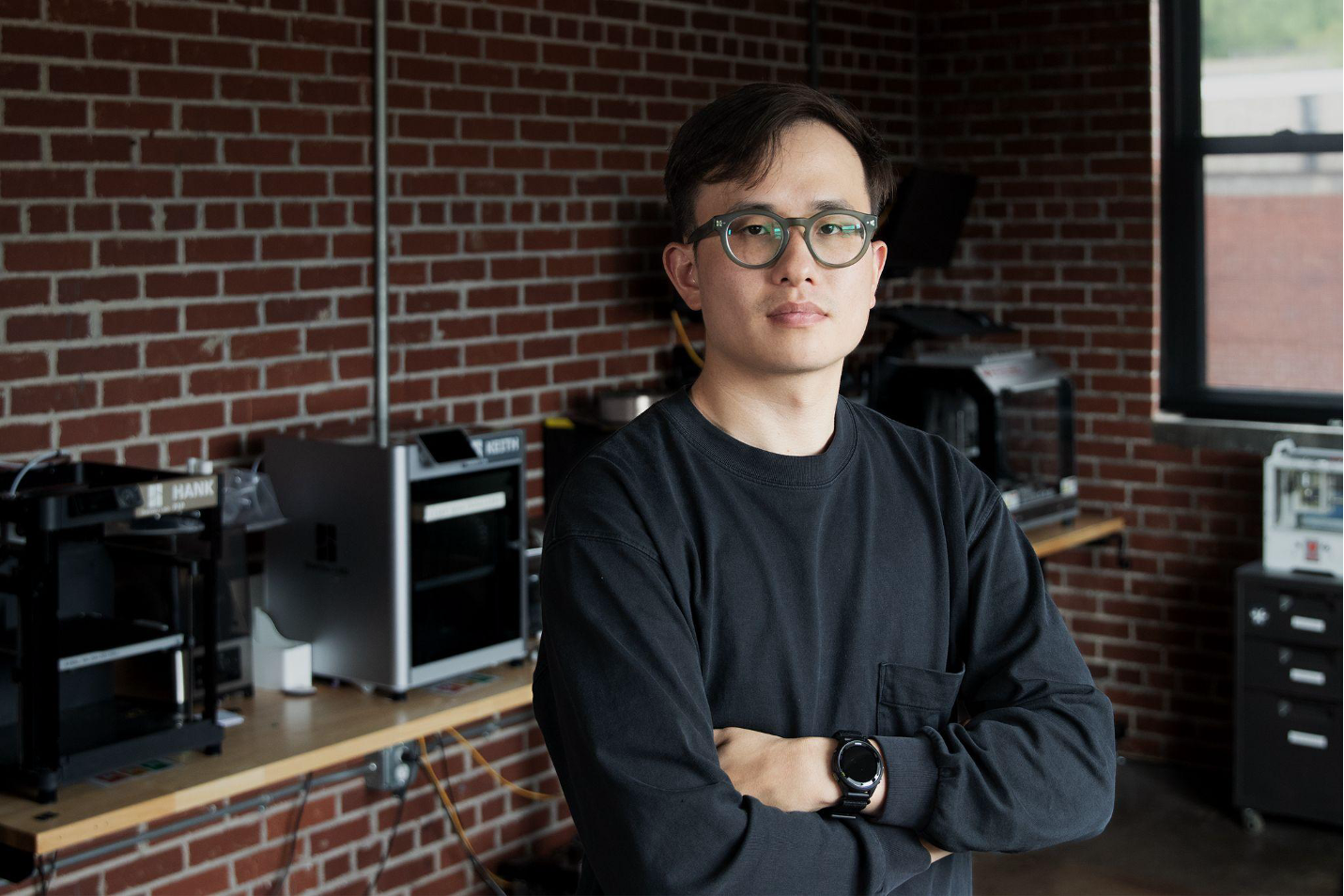
Hua’s background in industrial design and his current focus on creating playful, innovative, and educational interactive experiences have undoubtedly contributed to Fooscade’s success. Holding a bachelor’s degree in industrial design from Tsinghua University and a master’s degree in design and technology from Parsons School of Design in New York City, Hua continues to engage in academia as a part-time faculty at Parsons and has guest lectured at Carnegie Mellon University and Cornish College of Arts, too.
Currently, Hua works as an experience designer at Deeplocal, building interactive installations for clients like Google, Microsoft, and LinkedIn. His previous experience working with Smart Design, St. Joseph Studio Workshop, and The Future Lab, which have shaped his approach to innovation.
Creating Fooscade was no small feat. Alternative-controller games—those with custom hardware—face “high barriers to public deployment,” Hua noted, citing the costs of fabrication, logistics, and maintenance. As a multidisciplinary designer with an industrial design background, he saw an opportunity to rethink these systems. “Modularity is the key,” he explained. Hua is now developing a “modular arcade framework” to standardize custom-hardware games, making them more accessible for museums, event spaces, and pop-up installations.
The game’s universal appeal is no accident. Soccer is a global lingua franca, and Fooscade taps into this poignant cultural thread. As the 2026 World Cup—a U.S.-Mexico-Canada co-hosted event—approaches, Hua is eyeing big opportunities. “Imagine Fooscade in a stadium concourse, a cultural festival, or at a pop-up event in Miami,” he said, musing on partnerships with tech companies, brands, or municipalities. “It’s not just a game anymore—it’s a platform for connecting people through play.”
Hua’s vision extends beyond viral moments. “The right collaboration could turn Fooscade into a global celebration of soccer,” he said. “This is the 2026 World Cup’s moment to reinvent how we engage with this sport.”
Fooscade feels like a manifesto of sorts: a call to return to the tactile, the social, and the spontaneous. “In today’s world, we’re too focused on ‘advanced’ tech,” Hua said. “Innovation isn’t about being cutting-edge. Sometimes, it’s about remembering why we play.”
By Penny Black
Published December 22, 2025