
People love a good “we met, we fell in love, we got married” story. And sure, that part can be sweet. But if one of you holds a different passport, the real plot twist often starts after the wedding.
Here’s a quick reality check: in 2024, about 304 million people lived in a country other than where they were born. That’s roughly 3.7% of the world. So, cross-border couples are not rare anymore.
Still, nobody warns you about the boring, messy stuff. The forms. The waiting. The “Why can’t I add you to my health plan yet?” phone calls. The moment you realize you have two governments in your relationship, and both love paperwork.
Let’s talk about what actually happens.
The wedding is the easy part
A wedding can be a big party, a quick civil signing, or both. But when passports differ, the question becomes, “Will our marriage be recognized where we plan to live?”
That’s where couples hit their first speed bump. Depending on the country, you might need:
- Birth certificates (sometimes new ones, not your dusty childhood copy)
- Proof you’re not already married
- Certified translations
- Apostilles or legal stamps
- Extra appointments at local offices that close at 2 PM for no reason
Two ceremonies? Yep, sometimes.
A common setup is civil first, party later. The civil one makes it legal. The party one makes it feel real. Some couples do a courthouse wedding in one country, then a second ceremony for family in the other country. It’s not “extra.” It’s often just the simplest way to keep everyone happy and keep the marriage valid in the places that matter.
If you’re planning a wedding across borders, a solid bridal service can help with the event side so you don’t drown in logistics.
The visa clock starts the next morning
This part surprises people: getting married does not magically give someone the right to live or work in your country.
Most places have a process for spouse residency, but it can take time. In the U.S., for example, the government issued 47,579 K-1 fiancé(e) visas in fiscal year 2024. That number alone tells you how many couples are dealing with paperwork before they even share an address.
If you go the spouse route (again, using the U.S. as a clear example), the median timeline for some key forms can sit around many months to over a year, depending on where you apply and what you file.
So yes, you can be fully married and still be stuck in “we live in two countries” mode.
The part nobody likes: proving your relationship is real
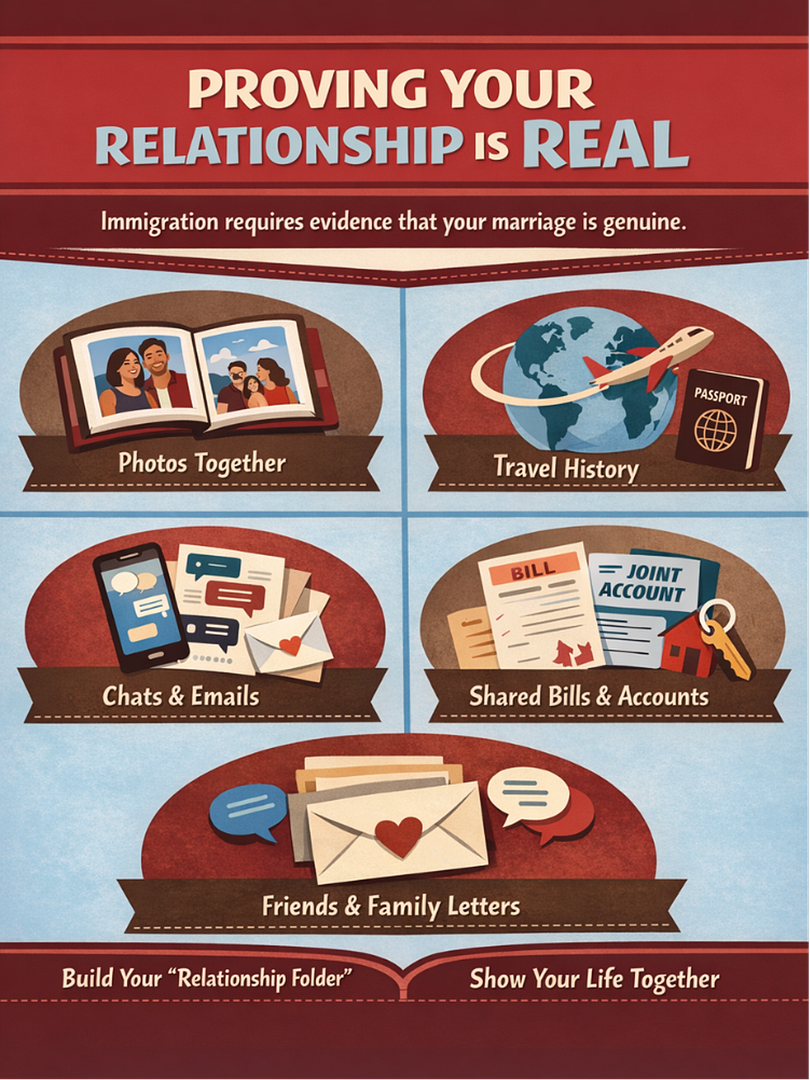
Most immigration systems want proof your marriage is not just a quick shortcut. That usually means:
- Photos over time (not only wedding pics)
- Travel history
- Chats, call logs, emails
- Shared bills, shared lease, shared bank account (if possible)
- Letters from friends and family in some cases
It can feel weird to build a “relationship folder,” but it saves stress later.
Family culture shows up in tiny ways
People expect “culture clash” to look dramatic. In real life, it’s usually small stuff:
- How often you call your parents
- What counts as “being on time”
- Whether you talk problems out loud or go quiet
- How holidays are done (and whose holidays “win”)
And food. Food is never just food.
A lot of couples do fine once they name the pattern: “In my family, this means respect.” Then you stop assuming the other person is rude or cold or controlling. You see it as a habit, not an attack.
You might feel lonely even when you’re happy
Moving countries can be exciting, but it can also mess with your identity. One spouse often becomes “the newcomer,” which can mean fewer friends, fewer jokes that land, a job gap, language stress, or missing big family moments back home.
Meanwhile, the local spouse may feel pressure to fix everything. They can’t. What helps more is a steady routine: a favorite café, a gym class, weekly calls with friends back home, and time to build a new circle.
How to make it less stressful
You don’t need to do everything alone. You just need a plan.
A simple checklist that helps
- Decide where you’ll live first (and what visa path fits that plan)
- Start a shared document folder (scans of passports, certificates, proof of address, photos)
- Budget for fees, translations, travel, and surprise costs
- Pick one “paperwork day” a week so it doesn’t eat your whole life
- Get advice from a pro when it feels confusing
And if you want ideas, guides, and real-world tips that focus on the practical side of planning love across maps, you can peek at LandlockedBride. Sometimes it’s easier when you see how other couples handled the same issues.
The honest ending
Marrying someone from another country is not just a cute story. It’s love plus admin. It’s waiting rooms plus big feelings. It’s learning how to be a team when the rules are not built for you.
The good news is simple: once you get through the early chaos, most couples settle into normal life. You still argue about dishes. You still laugh at dumb shows. You just do it with two sets of relatives, two sets of holidays, and a shared ability to handle hard stuff together.
And honestly? That part is pretty cool.
About the author. Peggy Bolcoa is a marriage & family therapist and relationship writer who focuses on modern love, cross-cultural couples, and the real-life details people skip when they tell the “how we met” story.