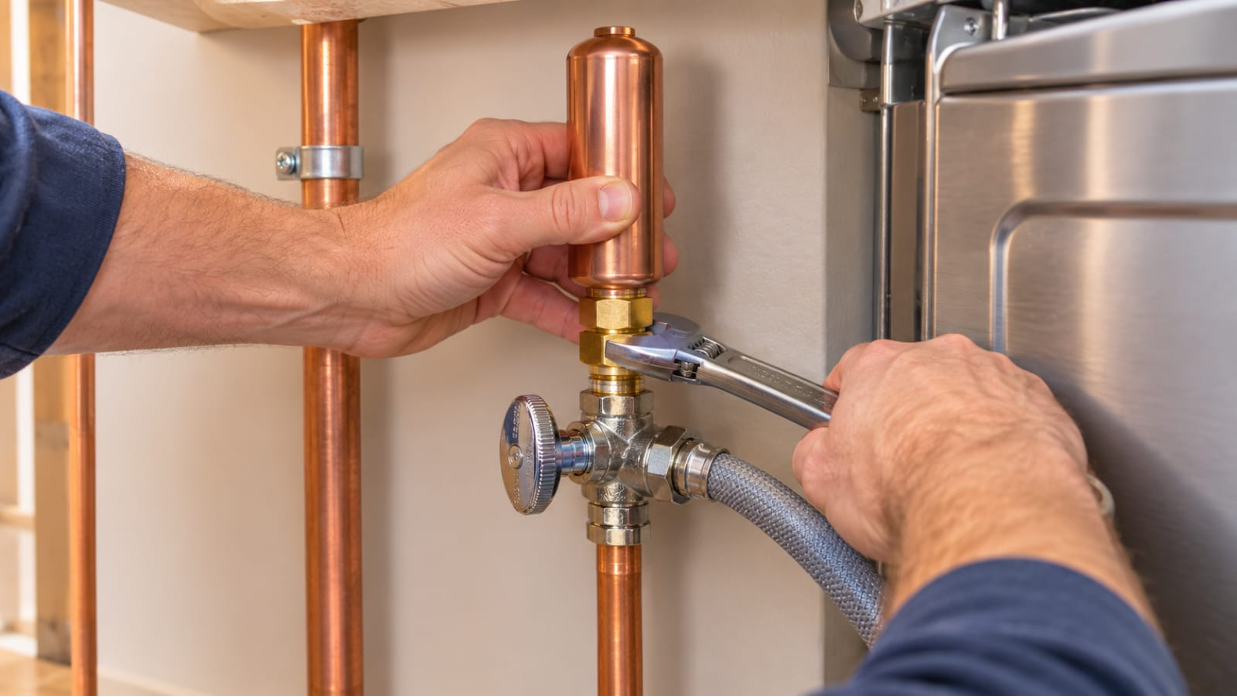
A sudden banging or knocking noise coming from your plumbing pipes can be more than just an annoying household disturbance. It may be a sign of a plumbing issue known as water hammer. This problem often occurs when water flowing through pipes stops or changes direction suddenly, creating pressure that travels through the plumbing system.
Over time, repeated pressure surges can put unnecessary stress on pipe connections, valves, fittings, and appliances. Fortunately, there is a practical plumbing solution that can help prevent this problem: a water hammer arrestor.
Understanding how this small but important plumbing component works can help homeowners protect their plumbing systems, reduce unwanted noise, and avoid potential repair costs. Whether you are renovating a bathroom, upgrading a laundry room, or improving your home’s water supply system, learning about water hammer protection is a useful part of responsible home maintenance.
What Is a Water Hammer in Home Plumbing?
Water hammer is a pressure surge that happens when moving water suddenly stops or changes direction inside a pipe. Because water has momentum, an abrupt interruption can create a shock wave that travels through the plumbing system.
This pressure change often produces a loud banging, knocking, or vibrating sound behind walls, beneath floors, or near plumbing fixtures.
Common situations that can cause water hammer include:
- A washing machine valve closing quickly.
- A dishwasher suddenly stopping its water supply.
- A faucet being turned off rapidly.
- A solenoid valve shutting down an appliance.
- Loose or poorly supported plumbing pipes moving when water flow stops.
Although occasional pipe noises may not indicate serious damage, repeated water hammer should not be ignored. Persistent pressure shocks can gradually weaken pipe connections and contribute to leaks.
What Is a Water Hammer Arrestor?
A water hammer arrestor is a plumbing device designed to absorb sudden pressure surges inside water supply pipes. It helps reduce the shock waves created when flowing water stops abruptly.
Most modern arrestors contain a sealed chamber with a movable piston or diaphragm and a compressed air or gas cushion. When a pressure surge occurs, the moving piston or diaphragm compresses the air cushion, absorbing much of the energy that would otherwise travel through the plumbing system.
In simple terms, it works like a shock absorber in a vehicle. Instead of allowing sudden pressure changes to travel throughout the pipes, it provides a controlled space where the pressure can be absorbed.
These devices are commonly installed near washing machines, dishwashers, faucets, and other fixtures with quick-closing valves.
How Does a Water Hammer Arrestor Work?
The working principle of a water hammer arrestor is relatively simple but highly effective.
When water moves normally through a pipe, the arrestor remains inactive. However, when a valve closes suddenly, the water’s momentum creates a pressure spike.
The arrestor responds by allowing water pressure to move its internal piston or diaphragm. This movement compresses the air chamber, absorbing some of the sudden energy.
Once the pressure stabilizes, the piston or diaphragm returns to its normal position, allowing the device to function again when another pressure surge occurs.
Unlike older air chambers that can gradually become waterlogged, properly designed sealed arrestors are generally maintenance-free and do not require periodic refilling.
Why Is a Water Hammer Arrestor Important for Home Improvements?
During home improvement projects, homeowners often focus on visible upgrades such as modern faucets, stylish bathroom fixtures, new kitchen cabinets, and energy-efficient appliances. However, improving the plumbing system behind these upgrades is equally important.
Installing a water hammer arrestor can provide several benefits.
1. Reduces Plumbing Noise
One of the most noticeable benefits is quieter plumbing. Repeated banging and knocking sounds can make a home uncomfortable, especially when appliances operate at night.
An appropriately installed arrestor helps absorb sudden pressure changes and reduces these noises.
2. Protects Pipes and Connections
Repeated pressure surges can place additional stress on pipe joints, fittings, and valves. Reducing these shocks helps protect plumbing components from unnecessary mechanical stress.
3. Helps Protect Household Appliances
Modern washing machines and dishwashers often use fast-acting automatic valves. These valves can create sudden changes in water flow.
Installing suitable arrestors near appliance connections can help reduce the pressure shocks associated with their operation.
4. Supports Long-Term Plumbing Reliability
A properly designed plumbing system should operate smoothly without repeated pressure shocks. An arrestor can be a useful addition when renovating older plumbing or installing new water-using appliances.
Where Should a Water Hammer Arrestor Be Installed?
Placement is important because the device needs to respond effectively to pressure surges.
Common installation locations include:
- Washing machine connections: Near hot and cold water supply valves.
- Dishwasher connections: Close to the appliance’s water supply connection.
- Kitchen sinks: Near quick-closing faucet valves where water hammer occurs.
- Bathroom fixtures: Near problematic supply lines connected to fast-closing valves.
For the keyword water hammer arrestor, homeowners should understand that installation location, pipe size, water pressure, and the type of plumbing fixture all influence performance.
A qualified plumber can determine the most appropriate location and select an arrestor that matches the plumbing system.
Signs Your Home May Need a Water Hammer Arrestor
Not every plumbing noise indicates water hammer, but certain symptoms can suggest that pressure surges are occurring.
Look for these warning signs:
- Loud banging sounds when turning off faucets.
- Knocking noises when a washing machine fills or stops.
- Vibrating pipes after appliances finish using water.
- Repeated pipe movement when valves close.
- Sudden thumping sounds inside walls or ceilings.
If these symptoms continue, have the plumbing system inspected. High water pressure, loose pipe supports, worn valves, and other problems can also cause similar noises.
An arrestor may help, but it is important to identify and correct the underlying cause.
How Much Does Water Hammer Arrestor Installation Cost?
The total installation cost depends on the arrestor type, plumbing accessibility, local labour rates, and whether existing pipes need modification.
A basic appliance connection arrestor is generally less expensive than a more complex installation involving concealed pipework.
Homeowners should consider the following factors when budgeting:
- The number of arrestors required.
- The type and size of the plumbing connections.
- Whether existing fittings need replacement.
- Accessibility of the water supply pipes.
- Professional plumbing labour charges.
For a home improvement project, it is sensible to obtain quotes from qualified plumbers before purchasing equipment. Choosing a suitable, properly rated device is more important than simply selecting the cheapest option.
Can You Install a Water Hammer Arrestor Yourself?
Some washing machine arrestors are designed for straightforward installation at accessible threaded water supply connections. Homeowners with basic plumbing knowledge may be able to install these products by following the manufacturer’s instructions.
However, installations involving soldered copper pipes, concealed plumbing, or modifications to permanent water lines are better handled by a licensed or qualified plumber.
Before any installation, turn off the water supply and follow the product’s instructions carefully. Check for leaks after restoring the water supply.
If banging continues after installation, have a plumber check the water pressure, pipe supports, and valves.
Water Hammer Arrestor vs. Traditional Air Chamber
Traditional air chambers are short vertical sections of pipe that trap air to cushion pressure changes. However, over time, water can enter these chambers, reducing their effectiveness.
Modern sealed water hammer arrestors use a piston or diaphragm to separate the air cushion from the water.
This design generally offers more consistent performance and requires less maintenance.
For many modern residential plumbing systems, manufactured arrestors are a practical solution, provided they are correctly sized and installed.
Final Thoughts
Water hammer may seem like a minor plumbing inconvenience, but repeated pressure surges can place unnecessary stress on pipes, fittings, and household appliances. Installing an appropriate arrestor is one way to make a home plumbing system quieter and more reliable.
Homeowners planning kitchen renovations, bathroom upgrades, or new appliance installations should consider water hammer protection as part of their overall plumbing improvements. Identifying the source of unusual pipe noises, checking water pressure, and seeking professional advice can help prevent larger problems in the future.
A well-maintained plumbing system is an important part of a comfortable, functional, and long-lasting home.
Frequently Asked Questions (FAQs)
1. What is the main purpose of a water hammer arrestor?
Its main purpose is to absorb sudden pressure surges caused by quickly closing valves. This helps reduce banging noises and protects plumbing components from repeated pressure shocks.
2. Does every home need a water hammer arrestor?
No. Not every home experiences water hammer. However, properties with repeated pipe-banging noises or appliances with quick-closing valves may benefit from installing one.
3. Where is the best place to install a water hammer arrestor?
It is generally installed close to the valve or fixture responsible for creating the pressure surge, such as a washing machine, dishwasher, or other quick-closing water supply connection.
4. How long does a water hammer arrestor last?
A quality sealed arrestor can last for many years. Its lifespan depends on product quality, operating conditions, water pressure, and installation quality.
5. Can a water hammer arrestor stop all plumbing noises?
No. It is designed specifically to reduce pressure surges. Noises caused by loose pipes, worn valves, pumps, or other plumbing problems may require different repairs.
6. Is a water hammer arrestor expensive?
Many standard appliance connection models are relatively affordable. However, professional installation costs vary depending on the plumbing layout and accessibility.
7. Does a water hammer arrestor require maintenance?
Most modern sealed piston or diaphragm arrestors require little routine maintenance. Nevertheless, homeowners should check for leaks and have malfunctioning devices replaced when necessary.
8. Can high water pressure cause water hammer?
High water pressure can make water hammer more noticeable and increase stress on plumbing components. Checking and regulating excessive water pressure may help reduce the problem.