Your skin barrier is the outermost layer of your epidermis, scientifically known as the stratum corneum, and it functions exactly like a brick-and-mortar security wall. The bricks are your skin cells, called corneocytes, while the mortar is a rich matrix of lipids, ceramides, and fatty acids that lock moisture in and keep environmental irritants out. When this microscopic shield is functioning perfectly, your complexion looks plump, hydrated, and resilient.
There are over 230 million people globally dealing with chronic skin conditions that directly compromise this delicate shield. For the average person, a damaged barrier does not always manifest as a medical condition; instead, it shows up as sudden tightness, persistent redness, burning when applying gentle products, or unexplained breakouts. If your face feels stripped after washing, your protective shield is actively sounding the alarm.
Modern lifestyles constantly challenge this defense system. Frequent air travel exposes your face to ultra-low-humidity cabins that rapidly siphon moisture from your skin, while rapid climate shifts force your cells to adapt too quickly. The most common culprit behind a broken barrier is the aggressive overuse of active ingredients like retinoids and chemical exfoliants. Stripping away your natural lipids in pursuit of a faster glow eventually leaves the underlying tissue raw and completely defenseless.
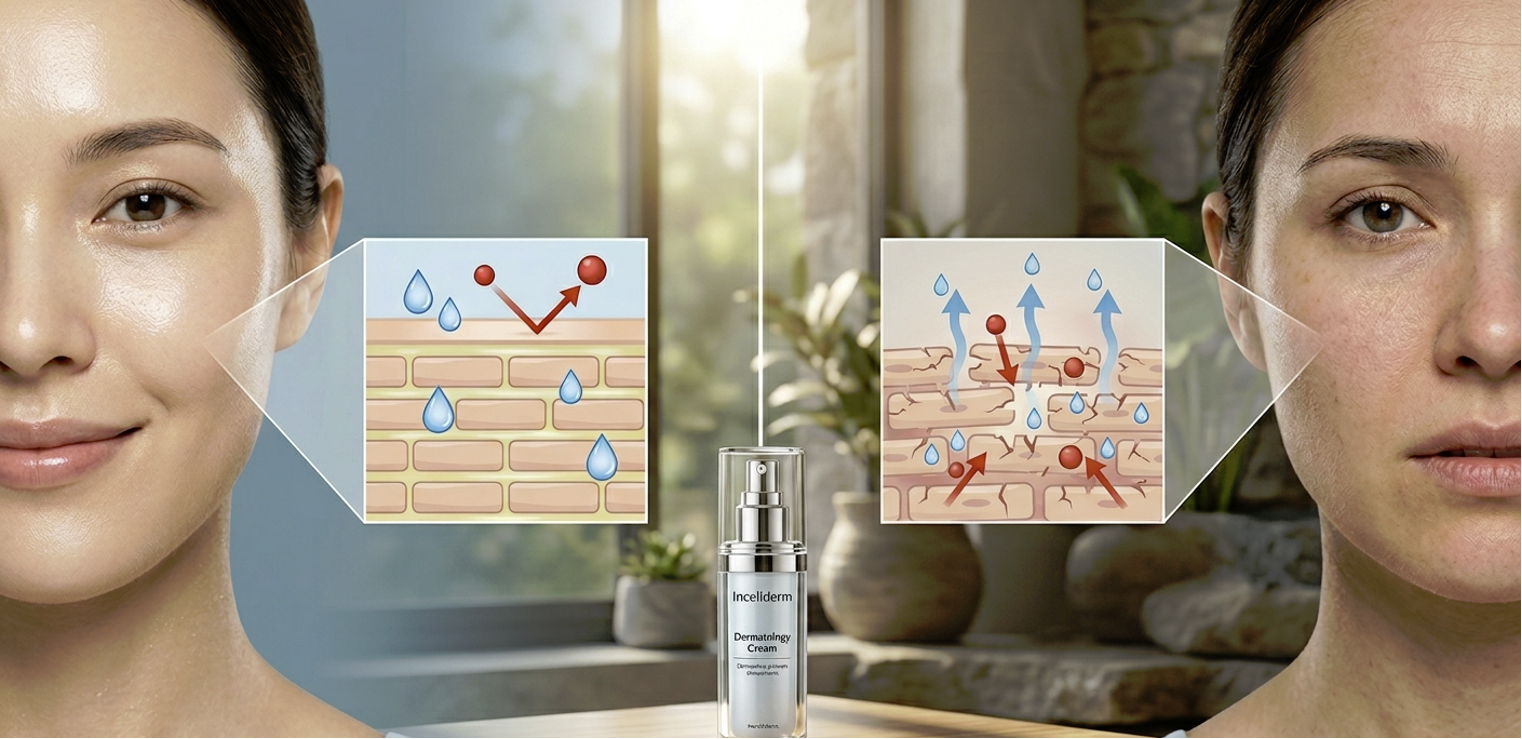
Image Source: Google Gemini
How To Identify A Compromised Barrier
Good skincare can be part of your move towards intentional wellness, so it’s important to know that when your cellular wall crumbles, the immediate consequence is transepidermal water loss, a process where internal hydration literally evaporates into the air. This structural breakdown leaves microscopic gaps in your skin matrix, allowing everyday environmental factors like pollution, wind, and tap water to trigger inflammation.
Recognizing the shift from temporary dryness to structural damage is crucial for mapping out a recovery plan. A healthy lipid shield keeps irritants that cause contact dermatitis out, but a broken one welcomes them in, turning your standard skincare routine into a source of stinging and discomfort.
To safely identify if your lipid wall is failing without causing further irritation, look for these specific warning signs:
- Persistent flaking and localized redness that does not improve with standard heavy oils
- A noticeable stinging or burning sensation when applying simple, fragrance-free hydrating serums
- Unexpected acne flare-ups occurring alongside dry, tight, and rough surface texture
If you notice these symptoms, immediately pause your chemical exfoliants, physical scrubs, and high-strength retinoids. Continuing to apply resurfacing acids to an open, inflamed lipid wall prolongs the cellular damage and can lead to hyperpigmentation. Giving your cells a temporary break from aggressive stimulation allows the natural cellular turnover process to focus entirely on structural reinforcement.
Selecting Formulations For Deep Cellular Repair
Fixing a broken barrier requires moving past simple, heavy creams that just sit on top of your face. True recovery requires biocompatible ingredients that mimic the natural lipid structure of your skin, physically melting into the gaps of your stratum corneum to rebuild the cellular mortar.
Look for topical formulas built around a healthy mix of ceramides, cholesterol, and free fatty acids, which represents the exact ratio your tissue needs to restore its sealing capabilities. Adding squalane and panthenol helps soothe immediate irritation while stopping further moisture loss.
When your tissue is highly reactive, incorporating an ultra-restorative formula by choosing to shop Incellderm Dermatology Cream can provide the deep, targeted hydration necessary to accelerate recovery. This specialized formulation delivers intensive moisture while reinforcing your natural defenses, making it an excellent anchor for a stripped-back, recovery-focused routine. Because damaged skin is incredibly vulnerable to new irritants, always patch-test any new therapeutic cream on your inner forearm or jawline for 24 hours before applying it to your entire face.
Moving Beyond Passive Skin Occlusion
The beauty industry is experiencing a massive shift away from aggressive chemical resurfacing toward dedicated, science-backed formulations for microbiome health and barrier protection. For years, the standard solution for a dry face was slugging, which means slathering a heavy petroleum jelly over the skin to lock in moisture. While occlusion creates a temporary physical shield, it does not actually repair the underlying biological cellular structure.
Modern dermatological science relies on lipidomics engineering to actively encourage the skin to heal itself from within. Incorporating advanced peptide complexes helps stimulate the natural structural lipid enzymes within your tissue, creating a responsive cellular network rather than a passive, suffocating layer of oil. This approach ensures your skin can adapt to environmental stress on its own over time.
Repairing your skin barrier requires patience, consistency, and a willingness to simplify your routine. By focusing on biocompatible lipids, avoiding harsh triggers, and prioritising cellular health over aggressive exfoliation, you can restore your skin to a balanced, comfortable, and radiant state. For more deep dives into optimizing your daily skincare routine, along with a range of lifestyle, entertainment, and beauty coverage, stay right here on our site.