The useful part of the trend is a more deliberate approach to everyday choices. Here is how to keep it practical.

Softmaxxing is an internet term for improving your appearance through everyday grooming, styling and habits rather than cosmetic procedures. Think of a haircut you can maintain, clothes that fit comfortably and a routine you can repeat. It is an informal label, not a medical programme or a proven formula for attractiveness.
That distinction matters. A beauty trend becomes much less useful when a manageable experiment turns into a list of supposed flaws. The best starting question is specific: what would make getting ready easier, or help you feel more like yourself?
Start with a friction point, not a face rating
Choose something you notice in ordinary life. Perhaps your fringe needs constant rearranging, your favourite jacket pulls at the shoulders, or your morning routine takes longer than you want. Each problem suggests a practical decision. A numerical beauty score does not tell you whether to book a trim, change your parting or take a jacket to a tailor.
Write down one outcome you can recognise. “A hairstyle I can finish in ten minutes” is more useful than “look perfect”. It gives you a way to decide whether the change helped without inspecting every feature in a photograph.
Make your first experiment reversible
Try the low-commitment version before making a larger change. Pin hair to approximate a shorter length, test a different parting, or wear an outfit with a different neckline. Take a moment to notice how it feels when you move, work and leave the house.
A mirror can help with the overall effect, but a photograph should not become the sole judge. Use similar lighting and camera placement if you compare options. Otherwise, you may be responding to a brighter image or a more flattering angle rather than the styling change itself.
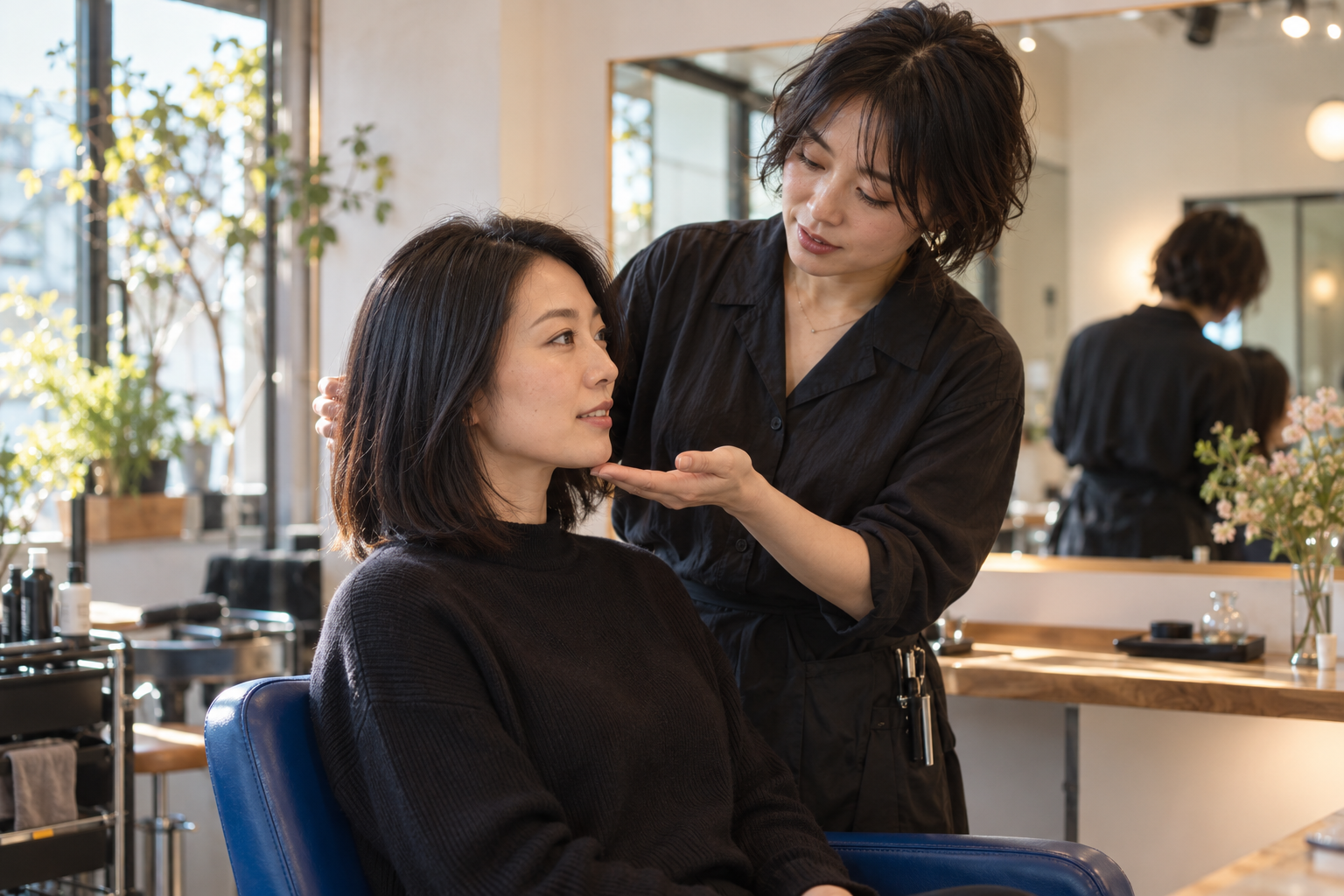
For a haircut, bring a small set of references to a stylist. Include what you like about each one and how much maintenance you will accept. A style that only works after a professional blow-dry may be the wrong choice for your actual week.
Keep skincare deliberately simple
A complicated shelf is not a prerequisite. The American Academy of Dermatology recommends a basic approach built around cleansing, moisturising and sun protection, and notes that effective products do not have to be expensive. It also warns that using several products can irritate skin.
If a concern is persistent or uncomfortable, seek appropriate professional advice rather than treating a trend checklist as a diagnosis. Softmaxxing does not make aggressive or painful practices safer simply by putting them under a gentler name.
Separate personal style from a universal ideal
Two people can choose completely different looks and both get what they want. One might prefer a sharp cropped cut; another might want soft volume and longer hair. The relevant question is whether a choice suits your preferences, hair and daily life.
The same applies to clothing and makeup. You do not need to replace your wardrobe or hide every visible sign of ordinary skin. Begin with pieces you already wear, identify what you reach for most often and consider one adjustment that makes them easier to use.
If you want a starting framework, GlowUp Face’s softmaxxing guide organises the topic into everyday areas to consider. Treat any checklist as a menu: choose what is relevant and leave the rest.
Use a two-week experiment
Pick one styling change and one routine change. Record the time or cost involved, then try them during a normal fortnight. Do not add five more tasks halfway through because someone online presents another “essential”.
At the end, ask three questions: did this solve the original problem, was the upkeep reasonable, and do I want to continue? You may keep both changes, keep one or discard them. Discarding an awkward routine is useful information, not failure.
There is no required finish line. A successful softmaxxing experiment can be as ordinary as a cut that falls into place, a jacket that fits and a morning that feels less rushed.