You probably already wear SPF every day. Most people reading this have a skincare routine built around preventing UV damage. Serums, moisturisers with built-in protection, maybe a dedicated sunscreen you reapply before lunch. But here’s the blind spot: come summer, you’ll spend hours at the beach or the pool with most of your body completely uncovered. All that discipline on your face, and then nothing on the 80% of skin below your neck.
That’s the gap UPF swimwear fills. equatorsun, a UK brand that specialises in sun protective swimwear, was started by someone who was diagnosed with melanoma. Their entire range is UPF 50+, which is the highest rating a fabric can achieve, blocking over 98% of UV radiation. No chemical treatments, no gimmicks. The protection is engineered into the weave of the fabric itself. It’s the kind of brand that exists because its founder learned the hard way what UV damage actually does, and that story sits behind every product they sell.
But before you shop, it helps to understand what UPF actually means and why it matters more than most people realise.
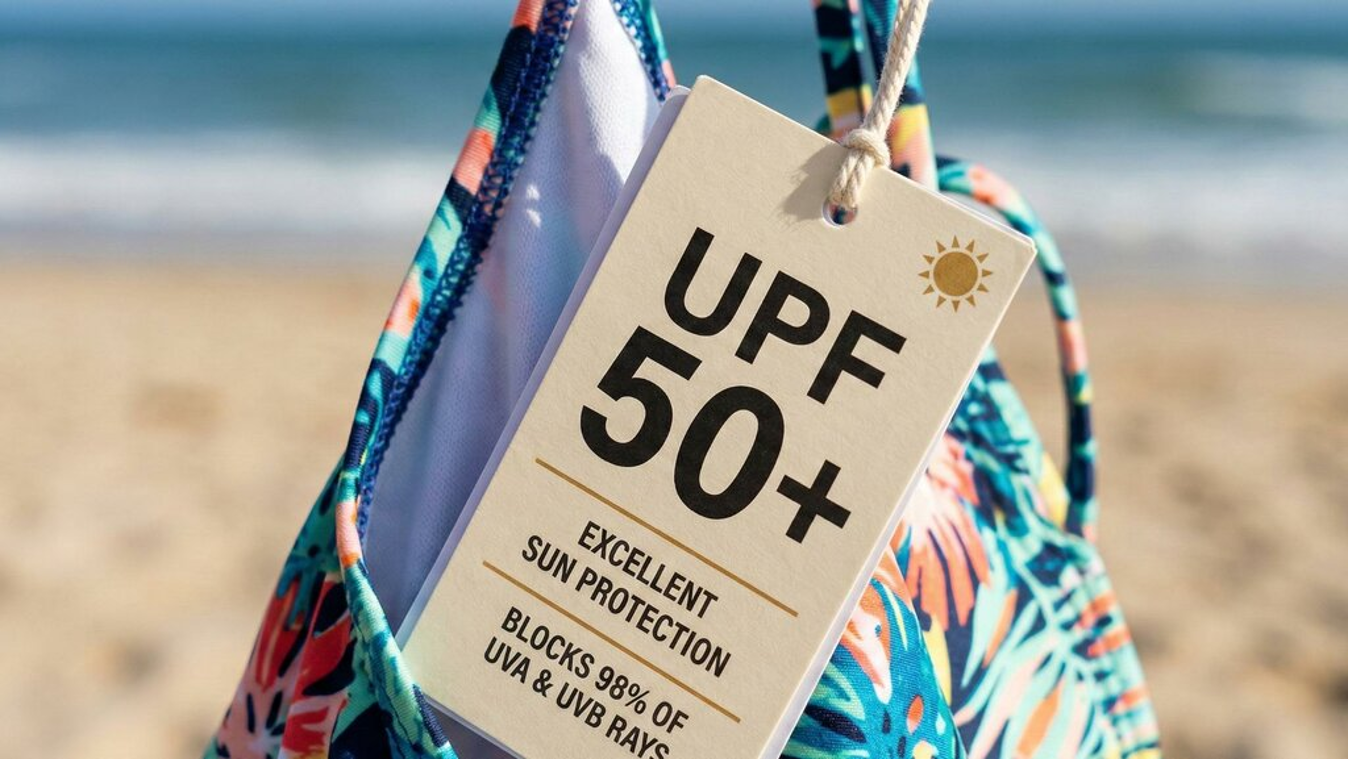
UPF vs. SPF
Most people assume SPF and UPF are interchangeable. They’re not. SPF applies to sunscreen and measures how long a product delays UVB-induced skin reddening. UPF applies to fabric and measures how much total UV radiation, both UVA and UVB, passes through the material.
A UPF 50+ rating means less than 2% of UV gets through. To put that in perspective, a regular white cotton t-shirt sits around UPF 5, and that drops further when it gets wet. UPF 50+ fabric, by contrast, blocks over 98% of UV rays consistently. It doesn’t need reapplying. It doesn’t wash off in the water. It works the same on hour five as it does on hour one.
Chemical vs Structural Sun Protection
There are two ways manufacturers achieve a UPF rating, and the difference between them is significant.
Some brands apply chemical UV-absorbing treatments to the fabric surface. These work initially, but they degrade. Every wash, every swim in chlorinated water, every hour in the sun chips away at the protection. After a season of regular use, you could be wearing something that no longer delivers what the label promised.
The better approach is structural. This means the UV protection comes from the fabric itself: the density of the weave, the type of fibre, the construction technique. Nothing is sprayed on or soaked in. The fabric physically blocks UV radiation the same way a wall blocks light. This kind of protection doesn’t fade, doesn’t wash out, and doesn’t have a shelf life. The garment protects your skin for as long as the garment holds together.
When you’re comparing UPF swimwear, ask how the rating is achieved. If a brand can’t tell you, or if the answer involves chemical finishing, you’re buying something with an expiry date.
It’s Not Just for Kids (But Especially for Kids)
UV damage is cumulative. Every sunburn, every prolonged exposure without protection, adds to your lifetime risk of melanoma and accelerates photoaging in ways that no retinol will undo. If you’re someone who already thinks carefully about skin health, UPF swimwear is a logical next step. It covers the one situation where most people abandon their usual caution entirely.
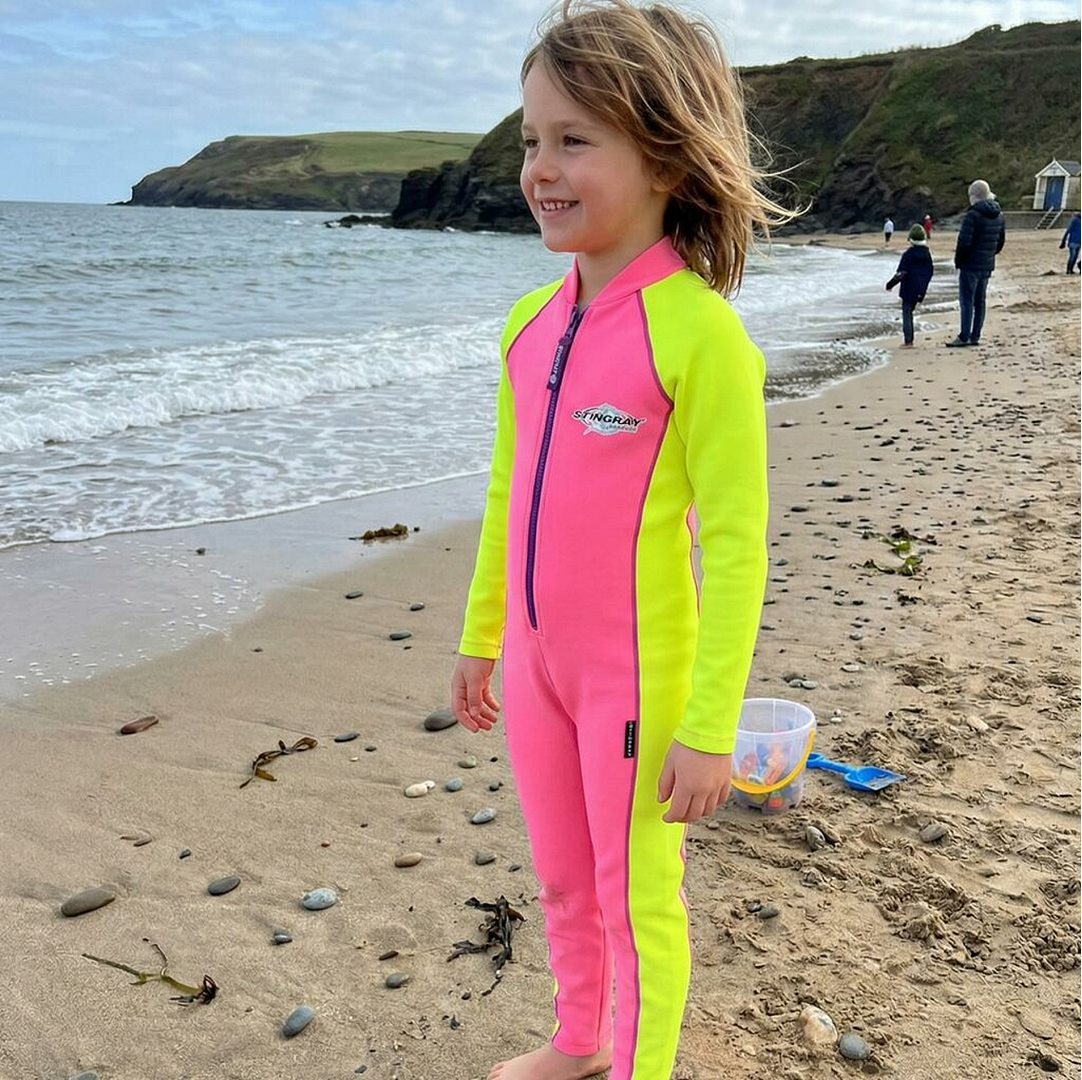
That said, children need this more urgently than adults do. A child’s skin is thinner, burns faster, and a single severe sunburn before the age of 18 significantly raises their melanoma risk for life. Anyone who has tried keeping sunscreen on a toddler near water knows how that goes. UPF 50+ swimwear solves the problem by making the protection part of what they’re wearing rather than something you have to chase them around to reapply. If you have young ones, thisguide to UV swimwear for children is worth a read. It covers what to look for at each age, from babies through to older kids.
What to Look For When Buying
Coverage. This one is straightforward. The more skin a garment covers, the less you’re relying on sunscreen to fill in the gaps. Long-sleeve rash vests, swim leggings, high necklines. Modern UPF fabrics are lightweight, quick-drying and built with four-way stretch, so full coverage doesn’t mean feeling restricted.
Chlorine resistance. If you swim in pools regularly, cheaper fabrics will stretch out, fade and lose their shape within weeks. Chlorine-resistant materials hold their fit and their protective properties through repeated exposure. This is the difference between a one-summer purchase and something that lasts.
Fit. Loose fabric gaps and shifts, which lets UV through. A snug, comfortable fit keeps the material consistently against your skin, which is where it needs to be to do its job.
Testing standards. Look for products tested to recognised standards. The Australian and New Zealand standard (AS/NZS 4399) is the most rigorous in the world for UV protective textiles. If a brand has that certification, the UPF rating on the label means something.
UPF Swimwear Doesn’t Replace Sunscreen
This isn’t an either/or situation. You still need SPF on your face, your hands, the backs of your feet, and anywhere else the fabric doesn’t reach. What UPF swimwear does is remove the biggest weakness in most people’s approach to sun protection: those long hours near water where the majority of your skin has no defence at all. Water reflects UV and intensifies exposure, which is precisely the moment you need protection most and precisely the moment most people have the least.
If you’ve spent years building a skincare routine around preventing UV damage, extending that logic to what you actually wear in the sun is the obvious next move.