

Money is moving electronically in developing economies in different ways. In Iraq, people are no longer required to physically go to banks to make payments and transact. Similar trends are happening in other continents like Africa, Latin America, and Asia. The International Monetary Fund (IMF) has reported that expanding broadband connectivity, changing preferences to transact electronically and financially, including governments’ plans to digitize financial systems, are the main drivers of the uptake of digital finance systems.
The preference by customers to use digital payment systems has crossed over to other entertainment and online activities. The sports and betting industry is no exception. Convenience and the instant nature of digital finance systems give customers an edge to easily and quickly effect transactions in the football betting (Arabic: مراهنات كرة القدم) industry. The use of mobile money in Iraq gives customers the opportunity to transact in a cashless manner. The system is preferred because customers no longer need to transact using cash to pay for various services.
Digital Payments Are Reshaping Everyday Entertainment
Financial technology (fintech) may offer solutions for banking the unbanked. Bank branch visits may no longer be the only means to receive and make payments. Payments may now be initiated and received through wallets, and money may be transferred electronically across different locations. The use of mobile banking may no longer require a major behavioral change for customers who are accustomed to using a smartphone for other activities.
Interactive entertainment has blurred the lines between work and play. Many users of the popular online game Aviator utilize digital payments for convenience when transacting within the game. Users of mobile wallets are argued to be more comfortable with digital financial transactions and may be more accepting of such transactions across different financial platforms. Online gaming represents the digital financial ecosystem utilized by and benefiting customers, service providers, and vendors.
Mobile Technology Is Changing Financial Access
Mobile phones have the potential to revolutionize financial systems in the developing world. Phone users no longer require a computer or a bank branch to access their financial account. Customers can use mobile money to make financial transactions through basic feature phones.
According to the World Bank’s Global Findex 2025, the number of adults in low- and middle-income countries who had a financial account increased to about 75% in 2024. Mobile money services contributed to the increase, especially in financial services where the traditional banking system is lacking.
Increased mobile money services in Iraq have helped provide financial access to younger populations. Services that are designed and developed in the Middle East, especially if they offer Arabic language versions and user interfaces, have a higher potential to succeed in Iraq.
Everyday Payments Encourage Regular Use
Getting customers to open accounts is easy. Keeping customers is harder. Accounts become valuable when they facilitate customers’ everyday spending.
Activities might include:
- Making payment transfers to relatives.
- Receiving payment deposits.
- Buying goods from retailers.
- Purchasing products from online and local retailers.
Each activity builds the customer’s comfort level with digital payments. From a merchant’s perspective, the wider the range of payment options accepted, the more convenient it is for customers to make payments. It is important for payment service providers to position themselves to capture opportunities, e.g., convenience payments, in the mainstream of customers’ spending.
Iraq’s Financial Sector Is Moving Toward Digital Payments
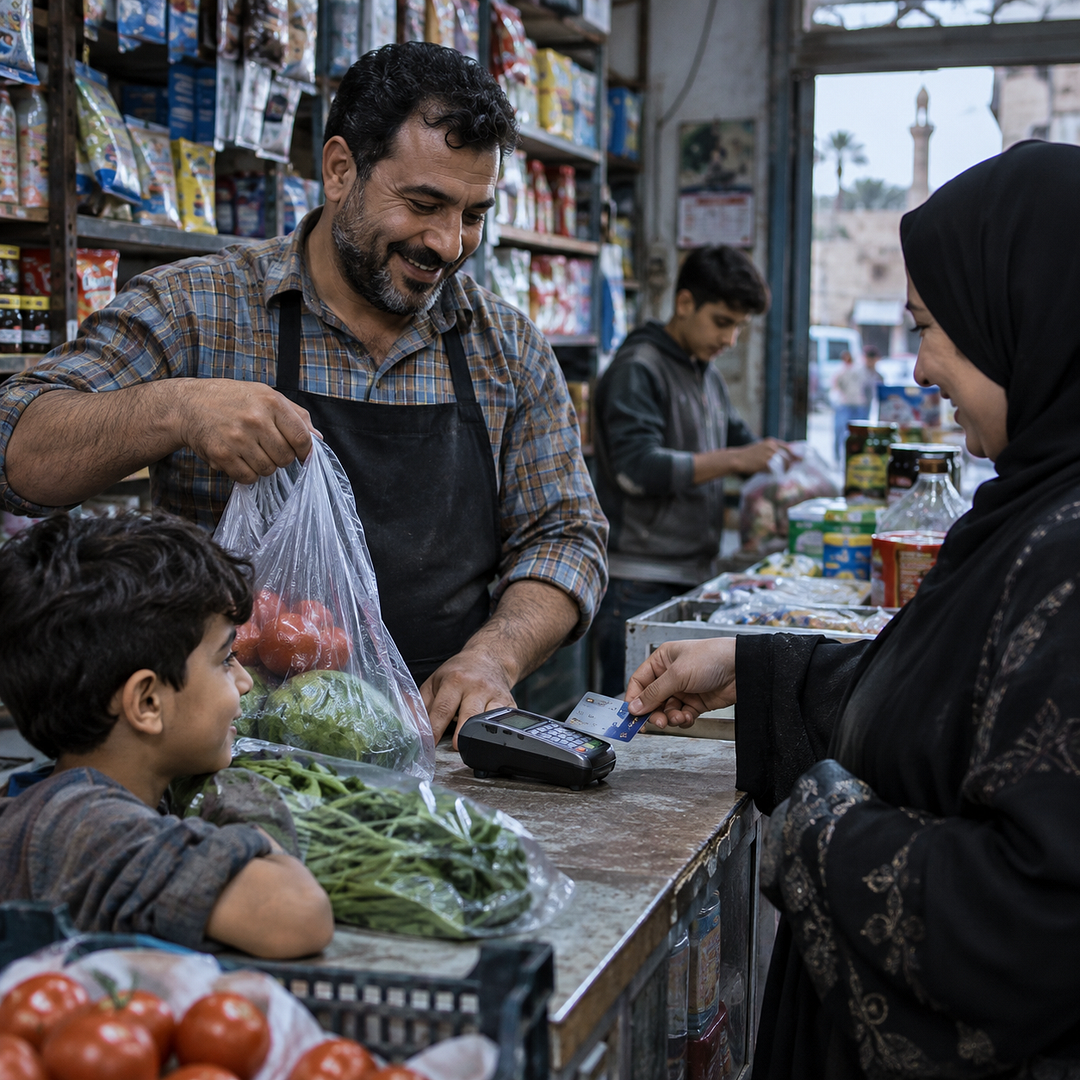
Iraq provides an illustrative case study for alterations to financial systems as a result of higher levels of policy and investment capital. The Central Bank of Iraq has initiated a program to build a more robust electronic payment and banking system. Moreover, the program outlines various services and methods for providing financial system access and use remotely.
In 2025, the Iraqi government released its National Financial Inclusion Strategy (2025-2029) to encourage greater usage of electronic payments, increase the number of financial accounts, and enhance financial service access and use by high-commission and hard-to-reach populations and small businesses.
The above-mentioned strategies have been effective. Traders and service providers have begun to abandon cash-only and carry businesses and adopt the use of payment terminals to improve their daily business and financial management.
| Digital financial service | Main purpose | Everyday benefit |
| Mobile wallets | Store and transfer funds | Convenient personal payments |
| Banking applications | Manage accounts remotely | Easier access to banking |
| Payment terminals | Accept electronic purchases | Faster retail transactions |
| Online payment gateways | Process website payments | Support for digital commerce |
| Electronic bill payments | Settle regular expenses | Less need for office visits |
Services interconnect and enhance each other. A customer may receive wages in her bank account. She may then send a portion of that money to a digital wallet. From her digital wallet, she may pay a merchant.
Small Businesses Are Helping Digital Finance Grow
Most small businesses are naturally resource constrained, and digital payment systems provide opportunities to improve financial management at low cost.
E-payment solutions are well suited for small businesses in Baghdad and other urban centers of Iraq. Merchants who accept digital payments can serve customers who prefer not to carry cash. Providers of digital payment solutions offer merchants analysis tools to help prepare financial records.
Adoption of digital payment solutions by business owners has similar benefits for customers as well. For instance, the use of such solutions by online retailers makes it easier for them to serve customers outside of their communities.
The use of digital payment systems provides a competitive edge to retailers in other provinces by improving the payment processing capacity of retail businesses.
Better Records Create Business Opportunities
Electronic records of financial transactions can be used to provide evidence of financial transactions for businesses. Financial institutions can analyze an applicant’s business credit history and sales records to evaluate business financing requests.
There are several operational advantages of accepting electronic payments:
- Electronic transactions facilitate accounting. Business owners can analyze and summarize sales records.
- Electronic payments facilitate collections. Funds owed to the business can be electronically transferred.
- Online payment transactions give customers more payment options.
- Business owners can estimate their cash flow and plan for large expenses.
When a business grows and expands, the records can be used to assist with other business decisions such as staffing and investing.
Government Support and Consumer Confidence
Governments can accelerate shifts toward electronic payments by adopting digital payment systems in their own agencies.
In Iraq, ongoing reforms in the electronic payment system are geared towards improving the collection of state revenue. These reforms can facilitate the improvement of financial management and internal controls in the public sector and enhance payments and transfers among government agencies.
Partnerships between public bodies, the banking sector, and technology firms can foster innovation in the financial services sector and improve customer experience. Ease of use and convenience in opening and using financial accounts can generate trust in and attract new clients to the financial services sector.
Financial Education Shapes Long-Term Growth
Not everyone figures out how to use financial apps immediately. They sometimes require instruction to gain insight into the most basic elements, like how to transfer money and manage their passwords.
There is the potential to create very simple instructional materials in Arabic. There has been an emphasis on the role of demonstration in improving customers’ ability to make cashless payments. One of the most effective teaching methods has been members of the older generation using the expertise of younger relatives to teach them how to use various online payment methods.
It is important that payment methods and systems used for electronic transfers work smoothly so customers can gain faith in and use the services.
A More Connected Financial Future for Iraq
The rise of digital finance provides financial services in more convenient ways. Electronic payments facilitate business activities. The merger of the mobile telecommunication industry and the financial sector provides banking services in more convenient ways. Countries are investing to enhance their financial and payment infrastructures to provide more convenient financial and payment services to their citizens.
Iraq has the opportunity to implement similar projects to advance the use of digital payments in day-to-day activities. Increased digital connectivity between banks, payment service providers, merchants, and public offices can make digital financial transactions a common practice.
The goal of all these projects is to enhance the way people control their financial resources. User-friendly digital financial and payment services may contribute to the development of formal financial systems and activities.