
(Source)
Most sneaker customisation conversations start with colourways, silhouettes, and limited releases. The laces are an afterthought, swapped out only when the originals fray or the aglets crack, and usually replaced with whatever came closest in the drawer or on the peg at the nearest sports store.
That habit leaves one of the easiest and most cost-effective personalisation options sitting unused. Laces change the entire character of a shoe without altering the shoe itself. The same silhouette reads completely differently with flat white laces versus rope laces in an off-white or cream, with a coloured lace that picks up a secondary detail on the upper, or with a contrasting black lace on a clean white trainer.
For anyone serious about how their footwear looks, browsing sneaker laces across different materials, widths, and finishes is one of the highest-return customisation moves available. The price difference between a mediocre swap and a genuinely considered one is negligible. The visual difference is not.
Why Laces Shape How a Shoe Is Perceived
(Source)
Laces occupy a significant portion of the visual real estate on most sneakers.
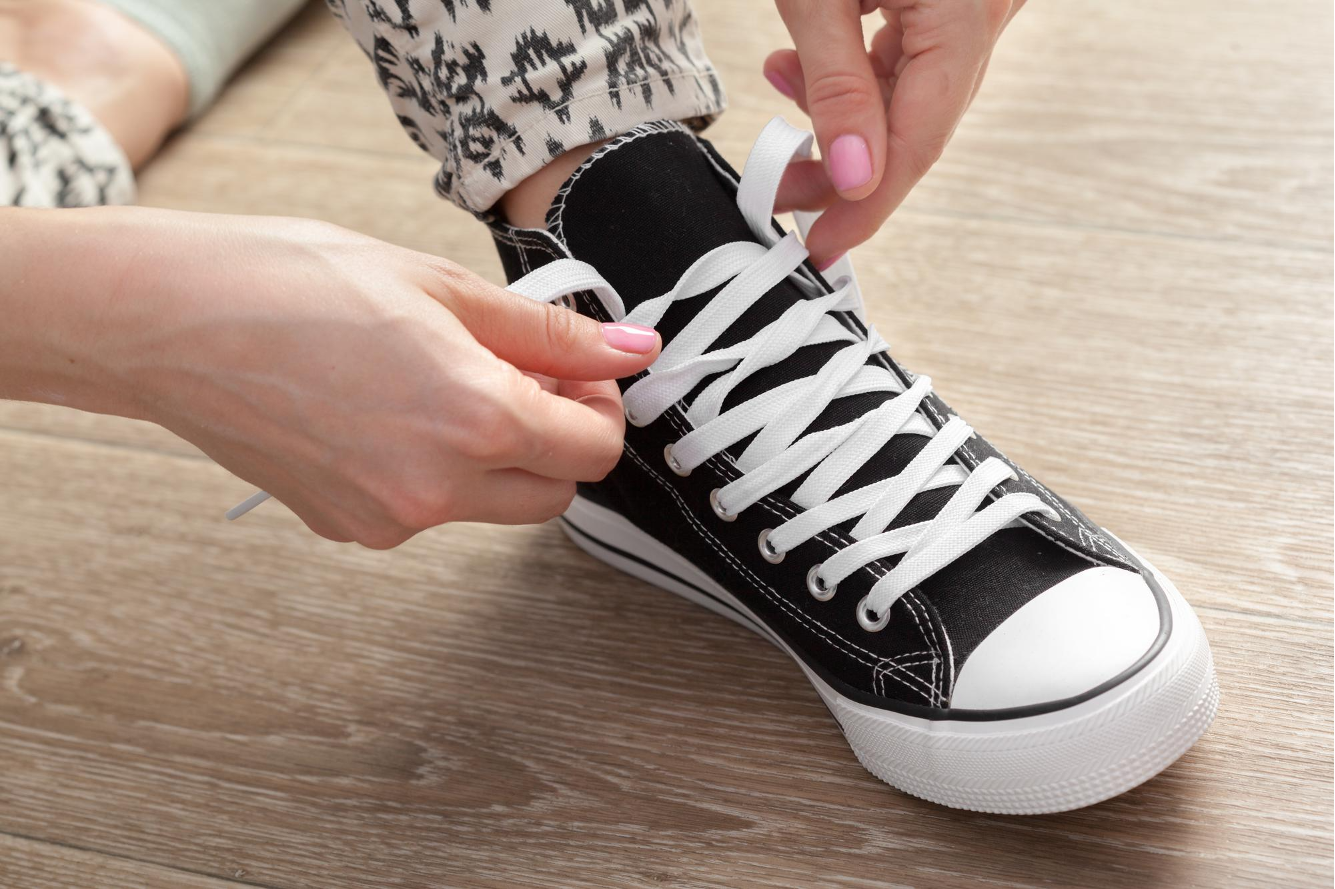
On a low-top trainer, the laces run across the entire vamp of the shoe and are visible from every angle. On a high-top, they extend further and frame the silhouette from ankle to toe box. The width, texture, and colour of the lace interact with the eyelets, the tongue, and the upper material in ways that either unify the shoe’s design or create visual noise.
A flat lace in a matching or complementary colour tends to clean up a shoe’s profile and reads as intentional. A round lace on the same shoe lifts and textures the look, adding dimension. A rope or braided lace in a contrasting colour shifts the aesthetic entirely, pulling the shoe toward a more casual or heritage register depending on the silhouette.
These are not subtle distinctions. They are the difference between a shoe that looks considered and one that looks like it came out of the box and was never touched again.
Materials and What They Signal
Lace material is where function and aesthetics intersect most directly.
Flat woven polyester laces are the standard on most production sneakers. They are durable, easy to tie, and stay flat under tension. They suit clean, minimal aesthetics and read as polished when kept in good condition. Cotton laces have a softer, slightly more textured surface that works particularly well on canvas silhouettes and heritage runners where a softer look is consistent with the shoe’s origins.
Rope laces, typically cotton or poly-cotton, have a round cross-section and a braided construction that gives them a chunkier, more tactile appearance. They are closely associated with classic basketball silhouettes and casual trainers, where a retro reference works. Oval laces sit between flat and rope in profile and have become a popular choice for adding visual interest without committing fully to the heft of a round lace.
Waxed laces have a smooth, slightly stiff finish that holds a knot exceptionally well and gives a clean, slightly elevated look. They are popular on dress-adjacent trainers and leather silhouettes where a refined detail reinforces the overall direction of the shoe.
Length and Fit
Getting the length right is the functional requirement that underpins every aesthetic decision.
A lace that is too short cannot be tied properly and visually means, with an undersized bow that looks rushed. A lace that is too long produces an overhang of excess that is either tucked awkwardly into the shoe or left to trail, neither of which works aesthetically or practically.
Lace length is determined by the number of eyelet pairs on the shoe. A shoe with six eyelet pairs typically takes a 45 to 55 inch lace, depending on the lacing method. Seven or eight pairs move toward 60 inches. High-tops with ten or more eyelet pairs may require 72 inches or beyond.
The lacing pattern itself also affects the appropriate length. Straight-bar lacing uses less lace than standard criss-cross for the same number of eyelets. Display or museum lacing on collector shoes uses even less. If you plan to change the lacing style, account for this before ordering.
When to Change Your Laces
There are four situations where a lace change makes an obvious difference.
When buying a used or vintage pair where the existing laces are worn, yellowed, or mismatched. When a colourway on the upper calls for a specific lace tone that the stock lace does not deliver. When you want to shift a shoe’s register without investing in a new pair, and when the original laces have simply reached the end of their usable life, a like-for-like replacement is warranted.
In all four cases, the investment is minimal, and the change is immediate. It is one of the few modifications you can make to a sneaker that requires no skill, no tools, and no irreversible decisions.
The lace is the last detail most people think about, and when deliberately changed, one of the first things others notice.