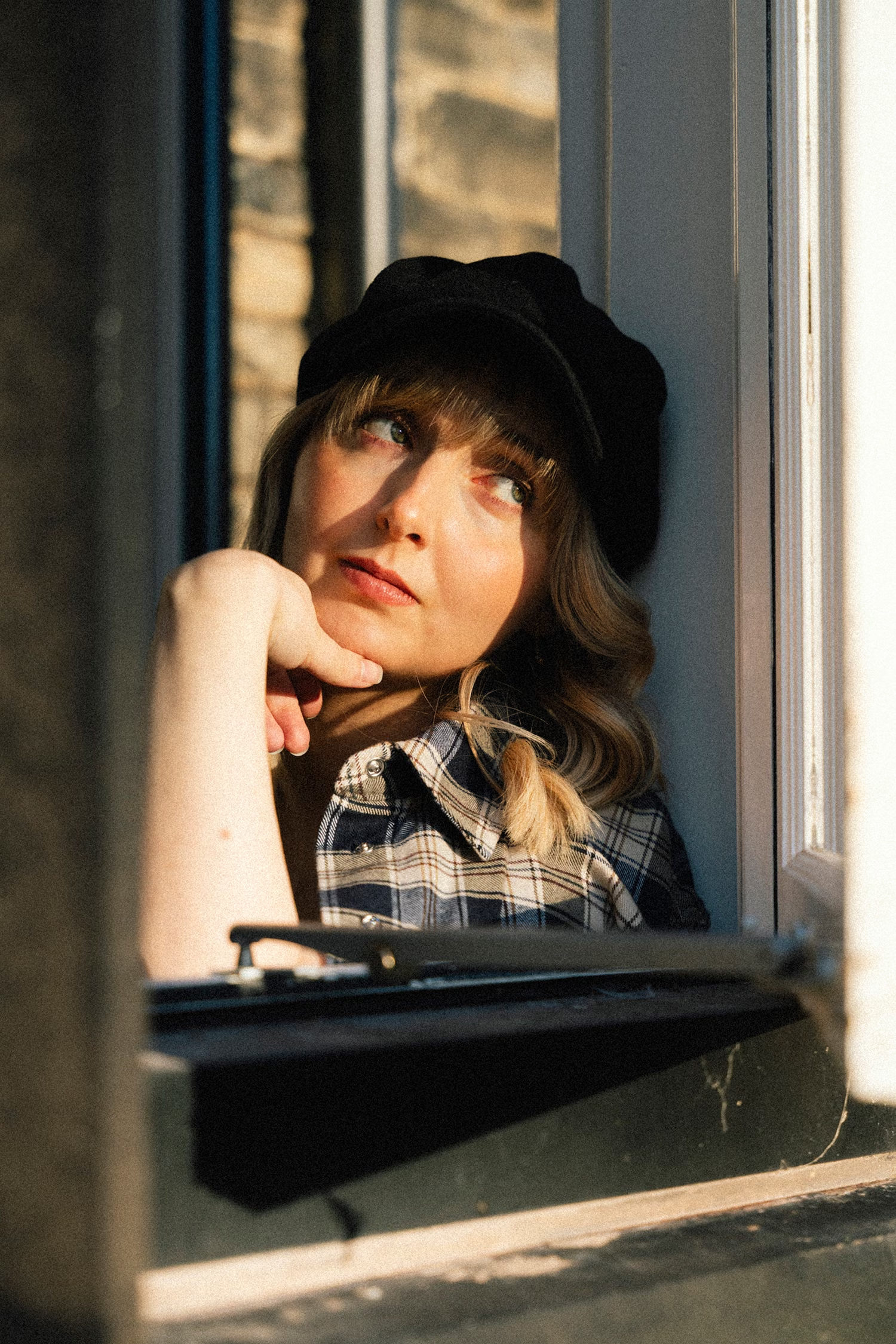
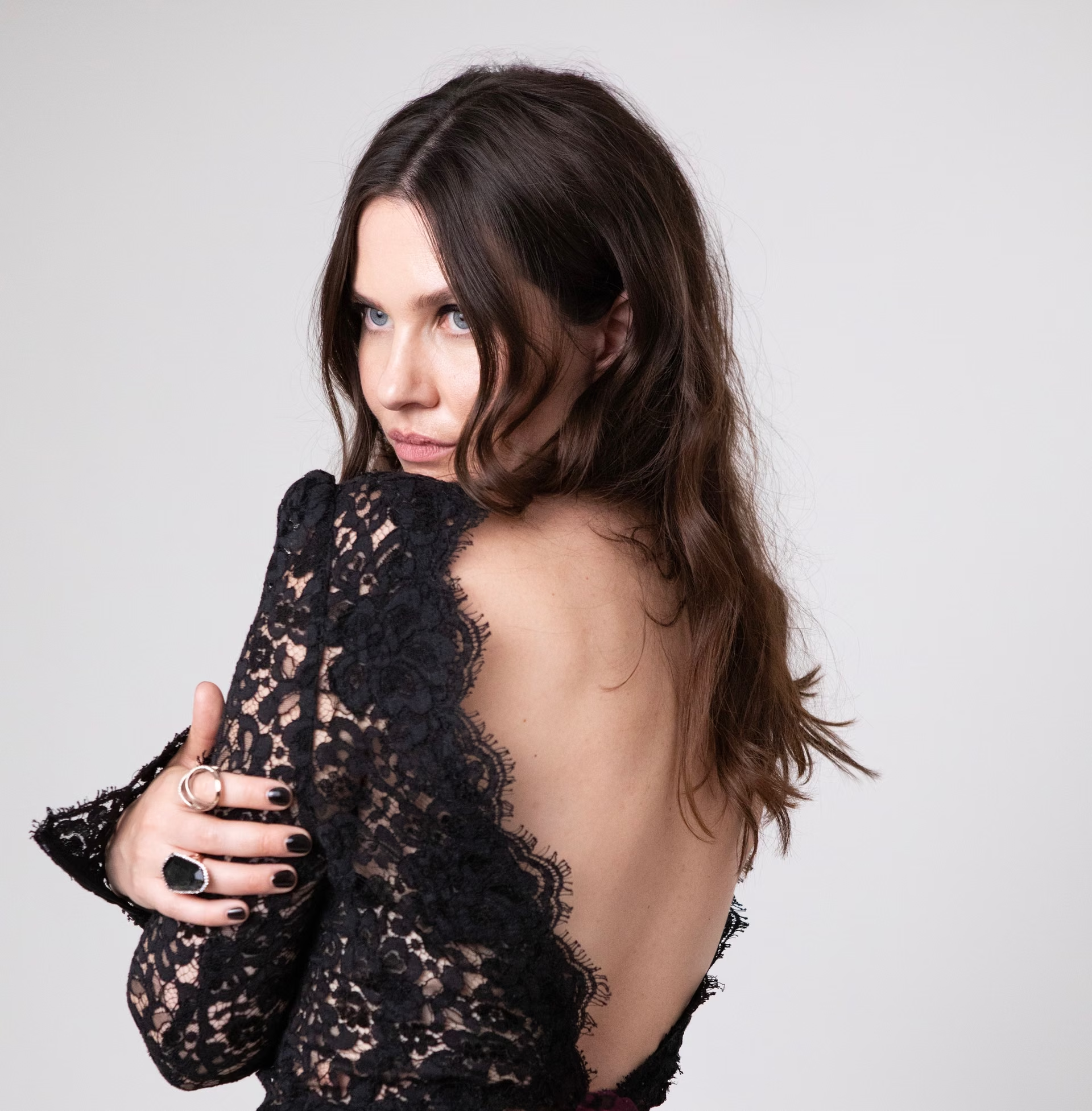
After years fronting the Swedish Grammy-nominated Josefin Öhrn + The Liberation, performing everywhere from Glastonbury to Berlin’s Berghain, the pandemic brought her life on the road to an abrupt halt. As her twenties drew to a close, Öhrn found herself entering an unfamiliar chapter in her life. Out of that period of uncertainty came Cherry, her debut solo album and arguably her most personal work to date.
Leaving behind her everyday life in London, she immersed herself in the recording process at Svenska Grammofonstudion in Gothenburg alongside producer Kalle Gustafsson Jerneholm. The record also brings together an impressive cast of collaborators, including Bobby Gillespie, Anton Newcombe, Andy Bell and Björn Yttling.
While traces of her psychedelic past remain, Cherry leans into hazy dream-pop, nostalgic melodies and a warmer, more intimate sound. Unrequited love unfolds on “Cherry Tree”, the intoxicating rush of a new romance takes hold on “Electrified”, while “The Real Thing” examines the illusion of connection in the dating app era. Elsewhere, “Shoreline” explores cultural identity and the complicated feeling of not quite knowing where home is.
For someone who admits to being naturally private, writing so openly meant stepping outside her comfort zone. Inspired by the lyrical honesty of Joni Mitchell and Carole King, Öhrn wanted to capture the complexities of womanhood, desire and relationships without compromising her sense of strength or independence.
In her 18 Questions with 1883 Magazine, Josefin Öhrn discusses rediscovering her femininity, the emotional awakening behind Cherry, navigating modern romance and why she no longer feels the need to be one of the boys.
1. What’s the first thing you usually do when you wake up in the morning?
Put on music. I listen to a lot of music. My Spotify Wrapped listening hours were wild, haha.
2. Where do you feel most connected to yourself creatively?
I think, as a creative person, it’s not a choice. It’s just the way I am. So, it’s always there, but if I were put in a very stagnant, square, uncreative world, I don’t think I would be very pleased, you know.
3. What’s something people often misunderstand about you?
I think that in my family we speak quite calmly, and with English not being my first language, maybe I come across as quite shy or fairy-like. There is an element of that, for sure. Being a Scandinavian artist, I mean, nature and mystery are inevitable, but I think that once people get to know me, they see that alongside that integrity, there’s an independent, courageous side.
There’s also the Law of Jante in Scandinavia that affected me growing up. Even saying that sentence about my qualities makes me feel like I’m boasting, which is culturally frowned upon in Sweden. Alexander Skarsgård has talked about that. There’s an interview where Skarsgård talks about being in his home in Sweden and hiding his trophies.
4. Do you find inspiration more in music itself or in the world around you?
Actually, both. I have thought about that through the years, and I’m really an ambivert. I find great inspiration from the world around me: in art, nature, cities and people. But melodies come from a space within myself.
5. What’s one record you’ve never stopped coming back to?
There are many. But one that I will listen to over and over again is Nina Simone’s Silk & Soul. There’s no one like her.
6. When was the last time something completely surprised you?
Probably this summer, in July.
7. What’s a small everyday ritual that helps keep you grounded?
To find beauty in life.
8. If you could relive one moment from your career just to experience it again, what would it be?
I think it would be playing Glastonbury. It was special.
9. Cherry is your first album released solely under your own name after years fronting Josefin Öhrn + The Liberation. What did you want to express through a solo record that you could not have explored in the same way with the band?
I’m sure I could have expressed that with the band too. We created so many beautiful things together. It was more just how things unfolded. The pandemic stopped us from touring, and we all went off doing other stuff.
10. You have described Cherry as “a document of endings and awakenings.” What was ending in your life when you began writing it, and what new part of yourself was beginning to emerge?
My twenties were ending, and during the pandemic, when I started writing these songs, it was the first time since I was 23 that I wasn’t playing gigs, touring, etc. The whole music industry had shut down, so it became a new, unknown chapter in my life, exploring new sides of myself.
11. The record is more direct and intimate than your previous work, with your voice placed firmly at its centre. Did that emotional openness come naturally, or did you have to push past a degree of fear to reach it?
Yes, I’m a pretty private person, so I had to step out of my comfort zone.
12. You left your everyday life in London behind to live and record at Svenska Grammofonstudion in Gothenburg. How did that physical distance affect the songs, and did returning to Sweden reconnect you with a different side of yourself?
I think it made me see the songs more clearly by having some distance from my everyday life. It’s like when you’re on a plane or a high mountain and you get that vast perspective on your life.
And I reconnected when I worked with my amazing producer, Kalle Gustafsson Jerneholm. We were so in sync and work really well together. He is really talented.
13. “Cherry Tree” captures the bittersweet experience of loving someone who can never truly be yours. Was the song written while you were still inside that feeling, or did you need distance before you could understand it?
It was written when it was still pretty raw. I was in it. I sometimes find that writing music is a good way for me to process what’s happening in my life, internally and externally.
14. “Electrified” explores the almost intoxicating rush of a new romance, with Bobby Gillespie appearing on backing vocals. What do you remember most vividly about the emotional state that inspired it, and how did Bobby’s presence change the track?
I think Bobby made the song more cinematic. I’ve always loved the character in his voice.
15. Anton Newcombe appears on the dreamlike “Lose Yourself”, while Andy Bell and Björn Yttling also contributed to the album. What did you look for when choosing your collaborators, and was there a moment when one of them took a song somewhere completely unexpected?
I had the honour of working with people I really admire, who are very talented musicians and songwriters. Björn Yttling added some very creative synths and percussion to “Dreaming of You”, which made the song much more playful and dancey. I loved that.
16. On “The Real Thing”, you explore dating apps, love bombing and the projections people place onto one another. Do you think modern dating has made it harder to recognise something genuine, or has it simply exposed behaviours that were always there?
A bit of both, I think. I think dating apps and social media have given us the illusion of being more connected to others, but I think people feel less of a genuine sense of belonging today. I could be wrong.
17. “Shoreline” reflects on growing up in Sweden, having family in France and Belgium, and spending the past decade in London. How have those different cultures shaped your identity, and where feels most like home to you now?
I think they have shaped me a lot. I can see very Swedish things in myself, like having a lot of integrity and being a feminist. From the Belgian and French sides, I can see that appreciation for art, the beauty of life and existentialism.
And my time here in London has definitely shaped me. The feeling that nothing is stagnant and this pulse of “anything can happen”. It can be a very creative, bustling place. I’ve met so many amazing people here.
But where feels most like home now? That’s a very good question. I don’t know, actually.
18. You have described this chapter as a kind of second adolescence, filled with freedom, desire and heightened emotion. What has that freedom taught you about yourself, and what do you hope listeners discover about you through Cherry?
I’ve always liked the lyrics of Carole King and Joni Mitchell, how they express the complexities of being a woman, and of love and relationships. I was hoping to capture some of that on Cherry.
When I started out recording and touring in my early twenties, the music scene, especially in my genre, was still very much male-dominated, so I tried to be one of the boys, haha. I wore big fishtail parkas, hiding my face behind my hair and stuff.
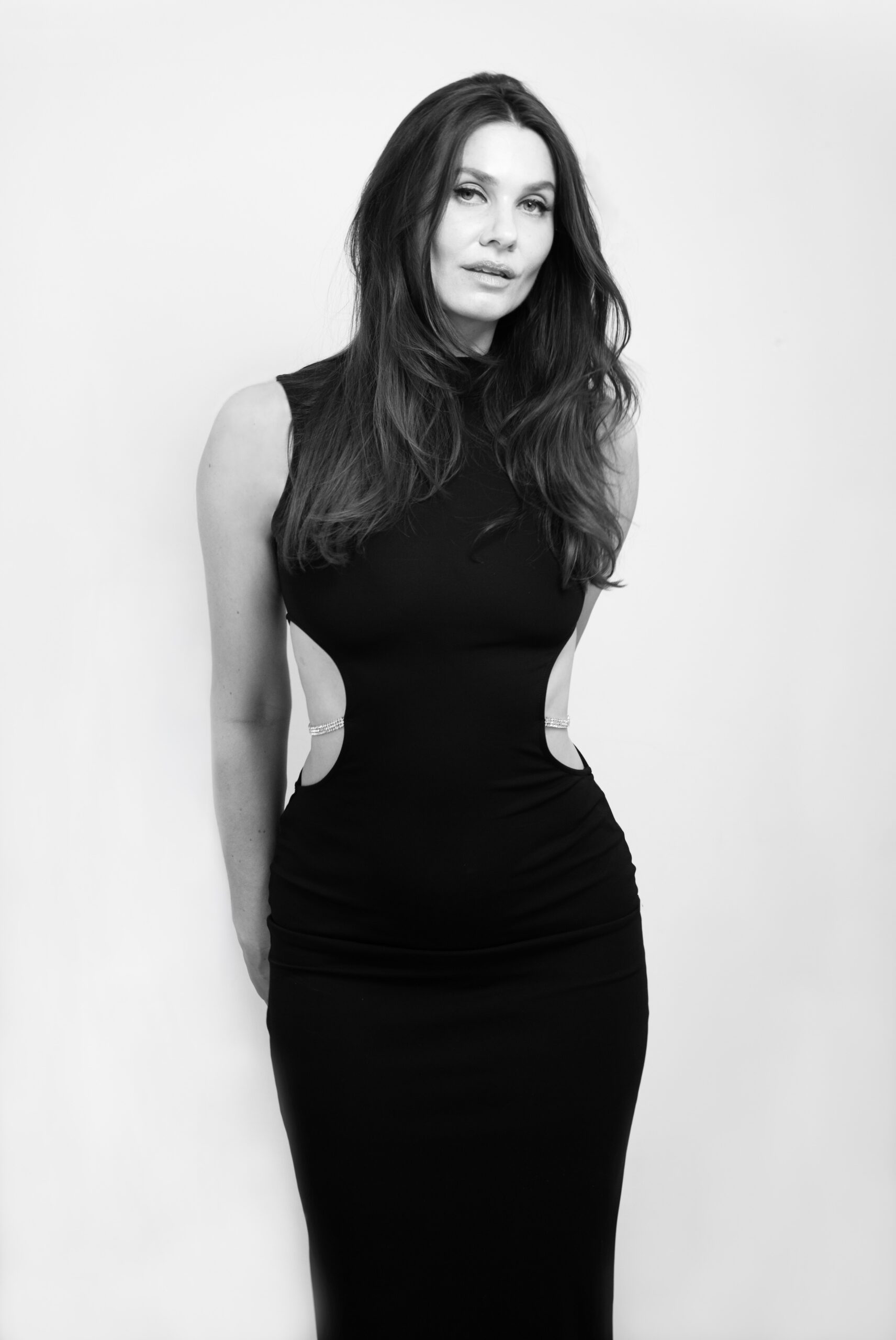
But with time, I wanted to embrace my femininity. Being feminine and sensual doesn’t make you less strong. That felt so clichéd. I was instead inspired by Helmut Newton’s women: sexy and strong at the same time. And I also come from a long line of powerful women.
Cherry is out now, follow via @josefin_ohrn