Modern digital devices capture a constant stream of images. Yet, many significant personal memories exist only as physical photographs. These prints, often stored in albums, undergo material degradation. Their colors fade, surfaces acquire scratches, and creases form. This deterioration threatens the permanent loss of historical and personal records.
The good news? Saving those pictures is now easier than you might think. Thanks to artificial intelligence, the complex art of photo restoration has been packed into simple mobile apps. In 2025, this technology isn’t just advanced—it’s something anyone can use.
We’ve tested the top apps out there to save you the hassle. Here are our three favorite picks for this year, perfect whether you’re rescuing a single, cherished portrait or tackling an entire box of family history.
1. Renew Old Photos: The All-in-One AI Powerhouse

Renew Photo provides professional-grade photo restoration through a widely accessible application. This comprehensive tool integrates multiple advanced AI features within a simple interface. It effectively addresses various forms of damage, from physical tears and color fading to general blurriness.
The core technology reconstructs missing or severely damaged sections of a photograph. It also enhances facial details with precision and can apply realistic colorization to black-and-white images.
This AI-driven process operates swiftly while consistently yielding high-quality results. The final restored images achieve a resolution suitable for high-quality printing and long-term archival preservation. Over one million families have successfully used the application to recover their cherished pictures.
Key Features:
- Restore Heavily Damaged Photos: Expert scratch, tear, and reconstruction tools.
- Bring Color to Memories: Realistic, automatic black-and-white colorization.
- Create Print-Ready HD Images: AI face sharpening and resolution enhancement.
- Bring Portraits to Life: Generate realistic animation from still photos.
- Effortless and Private: A secure, one-tap process with no skill required.
Best For: A comprehensive, user-friendly toolkit for every type of photo restoration, from simple colorization to complex reconstructions.
2. RetroFix: The Memory Saver for Damaged Photos
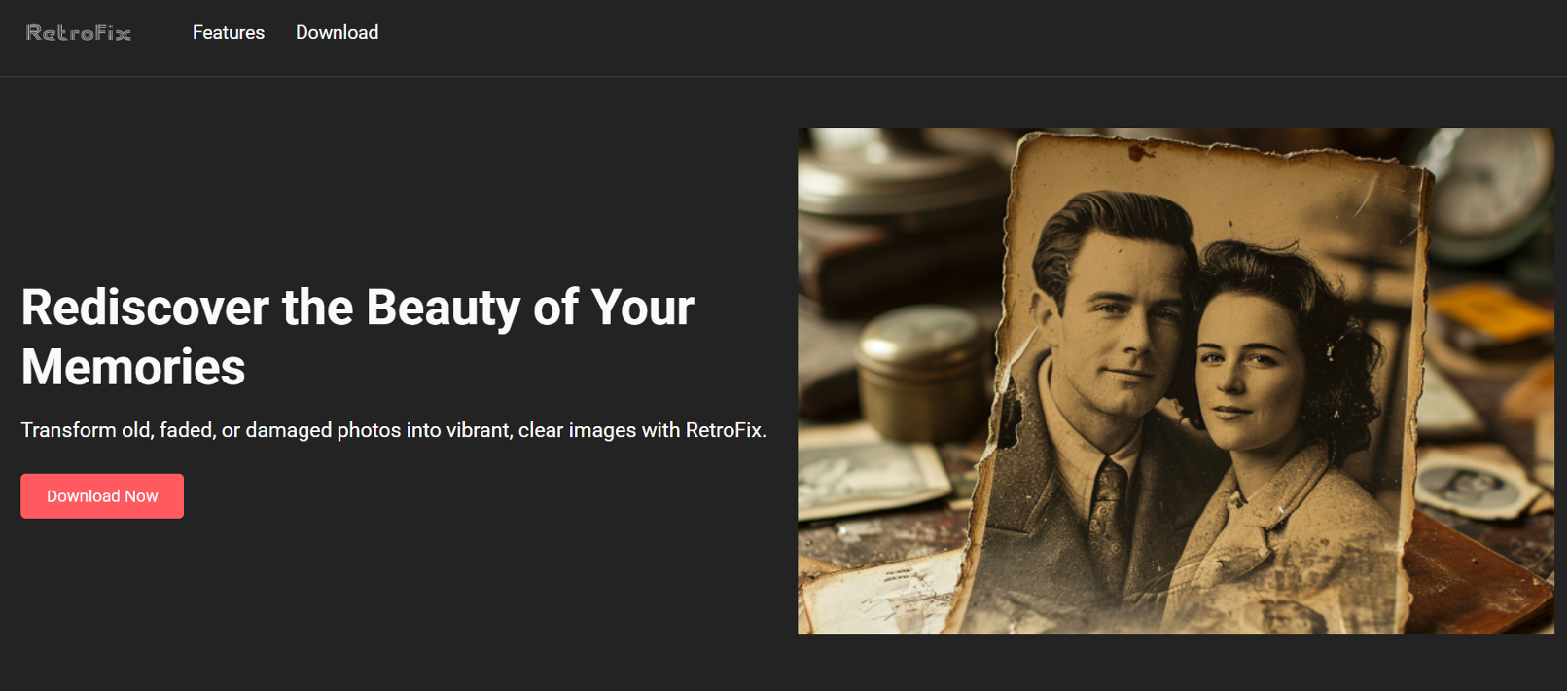
RetroFix is a mobile application that employs artificial intelligence to restore old photographs. It automatically corrects common forms of deterioration such as fading, physical tears, and other damage.
This process works for both color and black-and-white images. The tool caters to users who wish to improve their photos without engaging with complex editing programs.
Downloading the application is free and provides access to its essential features. For full functionality, a subscription unlocks the complete set of advanced restoration tools.
Key Features:
- The AI-powered restoration clears away years of blur, noise, and damage with a single tap.
- Its automatic colorization feature intelligently adds realistic, natural color to black-and-white photographs.
- The tool corrects lighting and enhances detail, which fixes dark or washed-out photos and sharpens hidden clarity.
Best For: RetroFix is ideal for restoring sentimental family photos and colorizing heritage images. Its straightforward interface and striking before-and-after previews make it perfect for quick, satisfying results, especially if you’re comfortable using subscription-based mobile apps.
3. Remini: The Detail King for Modernizing Old Photos

Remini provides effective photo restoration through advanced AI technology. It enhances faded, damaged, or low-quality images, frequently achieving clarity superior to the original.
A core capability is restoring severely compromised photographs. The AI actively removes scratches and visual noise. It also reconstructs lost details, sharpens blurry faces, and repairs physical damage. This process works across diverse image types, including faded portraits and damaged wedding pictures, by precisely analyzing and rebuilding visual data.
The technology excels with group photographs. It identifies and enhances individual faces within a blurry shot, rendering each one in high definition. This specific function is invaluable for historical family photos, where clarity for every person is essential.
Key Features:
- Erase scratches, tears, and stains without harming the original photo’s character.
- Sharpen blurry faces and bring faded features back into focus.
- Clean up grainy or faded images for a clearer picture.
- Increase the resolution significantly while keeping the result looking natural.
- Intelligently enhance every face in a group photo, not just the main subject.
Best For: Achieving stunning clarity and professional-quality results from damaged, blurry photos
How to Choose the Right App for You in 2025
To select the ideal photo restoration app in 2025, first evaluate the photograph’s condition. Simple automated tools handle minor fading and scratches. Significant damage, like tears or missing sections, requires a powerful AI capable of advanced inpainting.
Next, assess your technical skill. Choose apps with one-click automation for a hands-off process. If you prefer detailed control, select a tool that integrates robust AI with manual editing features.
Finally, establish your budget and platform. Decide between a subscription model with continuous updates or a single-purchase license. Also, determine if you need the convenience of a mobile application or the superior processing power of desktop software.
Matching the app to your photo’s needs, your skill level, and your financial constraints will identify the most effective solution.
Conclusion
Contemporary photo restoration applications provide a robust and accessible solution for recovering degraded images. These tools operate directly on mobile devices, offering a straightforward process for users to address common issues like blurring and physical damage.
They can effectively introduce significant clarity, apply vibrant color correction, and even generate subtle facial animations. Individuals can now rehabilitate cherished personal photographs regardless of their initial condition. This capability makes it feasible to recover a wide range of pictorial memories with minimal effort.