Bethel Park gets weather that arrives fast and leaves quietly. A front pushes through in the late afternoon, drops an inch of rain and a round of hail, and by evening the sky has cleared, and everything looks the way it did that morning. Most homeowners take that at face value. The trouble is that storms rarely finish their work on the day they arrive. They open a path, and the real damage follows over the weeks and months afterward, moving from the outside of the house toward everything holding it up.
Roof Damage That Hides in Plain Sight
Wind does not need to tear a roof apart to compromise it. A gust that lifts a shingle and sets it back down has already broken the seal that bonded it to the course below, and from the ground that roof looks perfectly normal. Hail works the same way, stripping the granules that shield the asphalt without leaving a mark visible from the driveway.
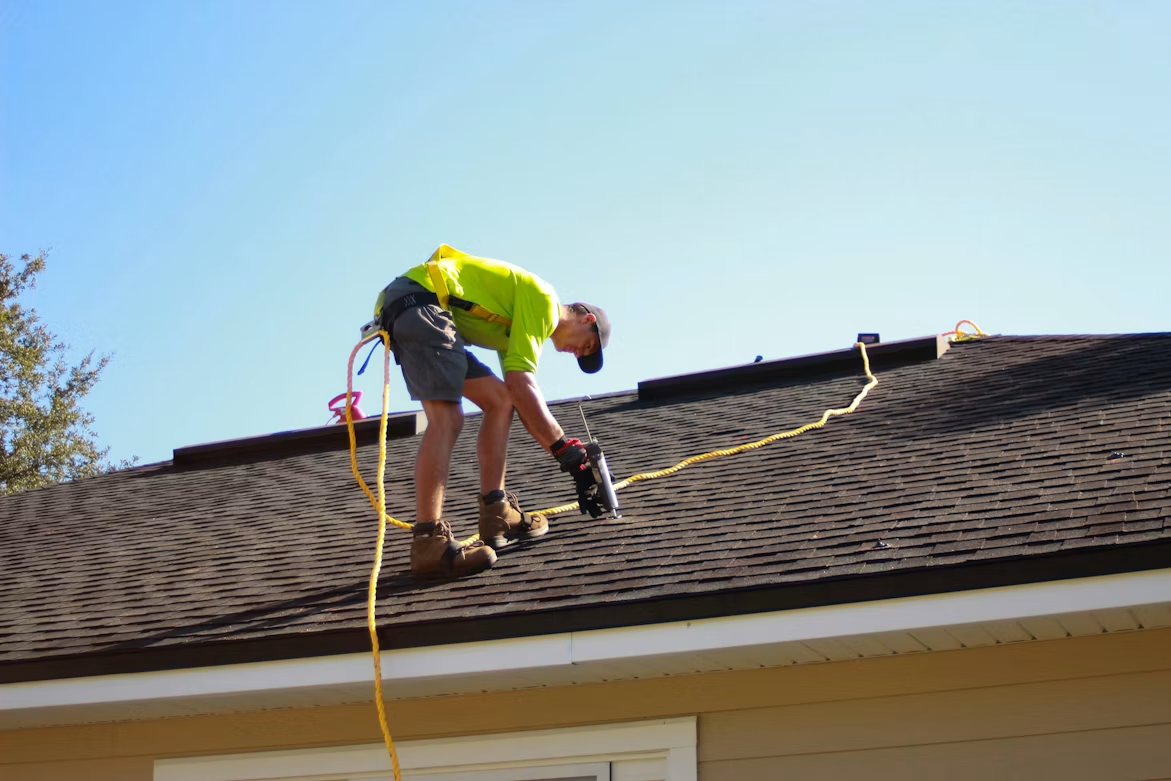
What follows is a slow accumulation. Water finds the unsealed edge during the next rainfall, wicks under the shingle, and reaches the underlayment. Left alone, that path widens with every storm until the roof decking begins absorbing moisture rather than shedding it, and a repair that would have taken an afternoon becomes a full roof replacement. Having a local Bethel Park roofing company inspect the roof after significant weather gets the damage identified while it is still confined to the surface, because a proper roof inspection finds the lifted shingles, compromised flashing, and granule loss that nobody sees standing in the yard. Emergency roof repair matters here too, since tarping a compromised section of roof overnight stops the next rainfall from doing more harm than the original storm. Roofers handling storm restoration also document the roof damage for the insurance adjuster, which shortens the gap between finding the problem and getting the roof fixed.
Water Moves Sideways Before It Moves Down
There is a persistent assumption that a leak appears directly beneath its entry point. Water rarely cooperates that neatly. It travels along rafters, follows the slope of the decking, and pools where framing members meet before it ever announces itself.
That lateral movement explains why ceiling stains show up in rooms that sit nowhere near the actual breach, and why the stain is almost never the beginning of the problem. By the time discoloration reaches drywall, moisture has already spent time in the cavity above, saturating insulation and settling into wood that was designed to stay dry. The visible mark is the last stage of a process rather than the first sign of one.
When Wet Wood Stops Being Strong Wood
Framing lumber holds its load because it is dry. Introduce sustained moisture and the material changes character, softening around fasteners, losing the grip that holds joints tight, and giving fungal growth the conditions it needs to begin breaking down fiber.
The effects compound in a particular order. Rafters lose stiffness first, which shows up as a subtle dip in the roofline that most people attribute to the age of the house. Decking follows, going spongy in patches and no longer providing a solid base for anything fastened to it. Where roof framing transfers weight into exterior walls, prolonged saturation can carry the problem down into the top plate and the studs below. None of this happens quickly, which is exactly why it goes unaddressed until a repair estimate arrives with a number nobody expected.
Attic Conditions Tell You Early
Anyone wanting to understand what a storm actually did has one reliable vantage point, and it requires nothing more than a flashlight and a ladder. The attic sits directly beneath the damage and shows evidence long before the living space does.
Look at the underside of the decking for dark staining, which indicates water has been present repeatedly rather than once. Check whether insulation is compressed or discolored in patches, since wet insulation flattens and stays flat. Run a hand along rafters near the ridge and at the eaves, feeling for softness. Daylight visible through the boards means an opening exists, and any musty smell means moisture has been in the space long enough to support growth. A ten-minute look after a significant storm is the cheapest diagnostic available to a homeowner.
The Damage That Follows the Water
Structural harm gets most of the attention, but water rarely stops at the framing. It saturates insulation, which loses its thermal performance permanently once compressed, and it moves into wall cavities where it meets drywall, paint, and anything stored against an exterior wall.
Energy costs climb as insulation fails, usually gradually enough that nobody connects the increase to a storm from two seasons earlier. Interior finishes suffer next, with paint lifting near the ceiling line and drywall tape releasing along seams. Air quality declines as growth establishes itself in dark, damp cavities. Each of these repairs carries its own cost, and each traces back to the same unsealed shingle that nobody addressed when addressing it would have been simple.
Deciding Between a Patch and a Replacement
Not every storm requires a full replacement, and treating every event as a crisis wastes money. A single damaged section on an otherwise sound roof with years of life remaining is a straightforward repair, and pretending otherwise serves nobody.
Age changes the calculation considerably. A roof approaching the end of its service life will keep producing new failure points, and repeated repairs on that roof amount to spending steadily without gaining anything durable. Widespread granule loss, multiple compromised areas, or any visible sagging tilts the decision toward replacement, since the underlying material has already given up. Ask for photographs of what was found, a written explanation of the cause, and a clear account of what each option addresses. A contractor who explains the reasoning rather than pushing a single answer is giving you what you actually need.
What to Do in the Week After a Storm
The window between damage occurring and damage compounding is generous if you use it. Most of what matters can be handled within a few days of the weather clearing.
Walk the perimeter of the house and look for shingle fragments, displaced flashing, or granules collected at the base of downspouts. Photograph anything unusual with the date attached, since documentation submitted early carries more weight with an insurer than documentation assembled months later. Check the attic. Clear the gutters, because a blockage forces water back under the roof edge and undoes whatever the shingles were doing correctly. Then arrange a professional inspection rather than relying on your own assessment from the ground, since the failures that matter most are precisely the ones that stay invisible from there.