Leah Harvey and Kosar Ali are telling me about a lunchtime karaoke session at a school in Peterborough, and I’m getting a little emotional. Pupils were getting up to sing, teachers were joining in, and members of the cast were invited to take part. Both actors remember the atmosphere: young people being encouraged to put themselves forward, share something, and feel good about it.
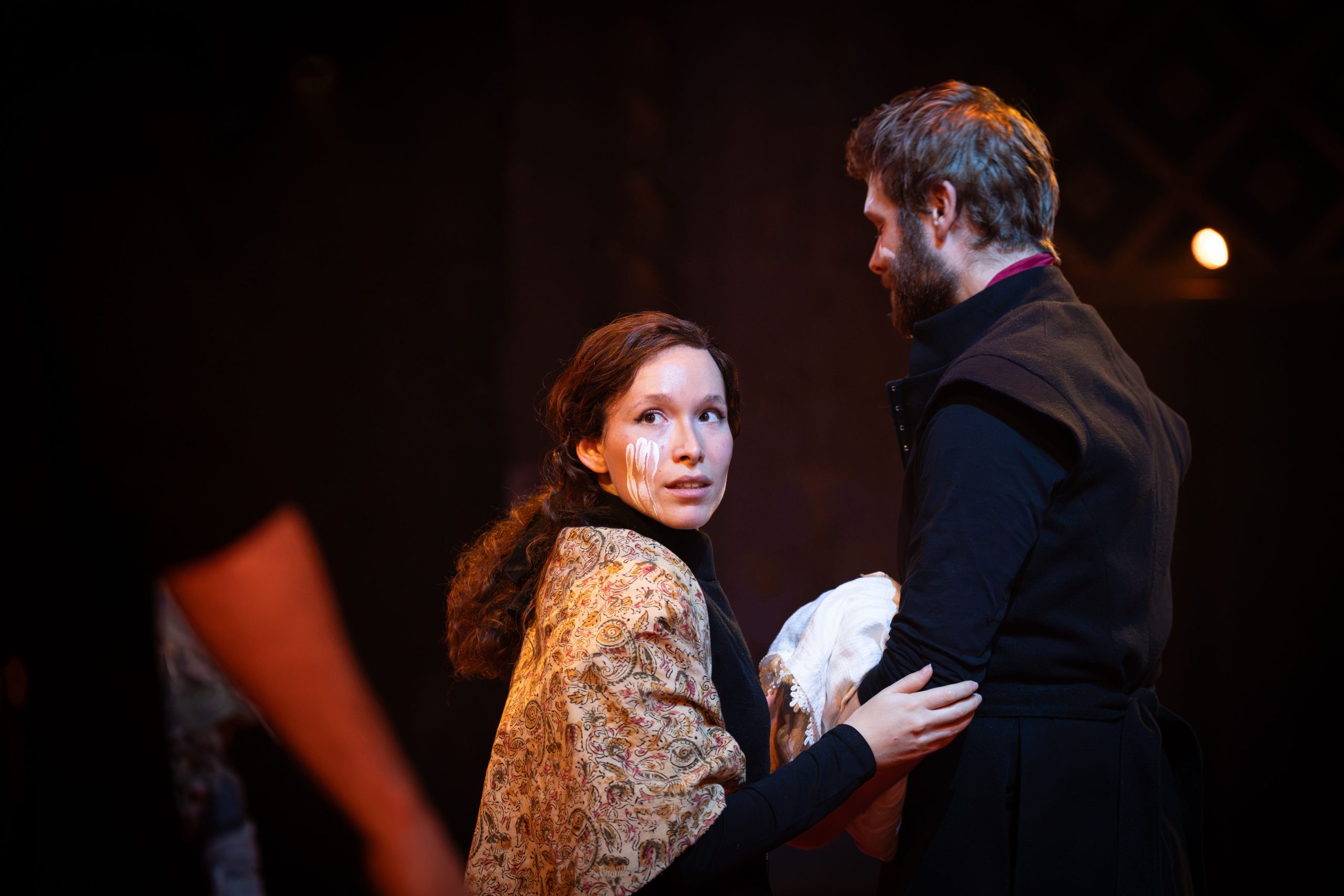
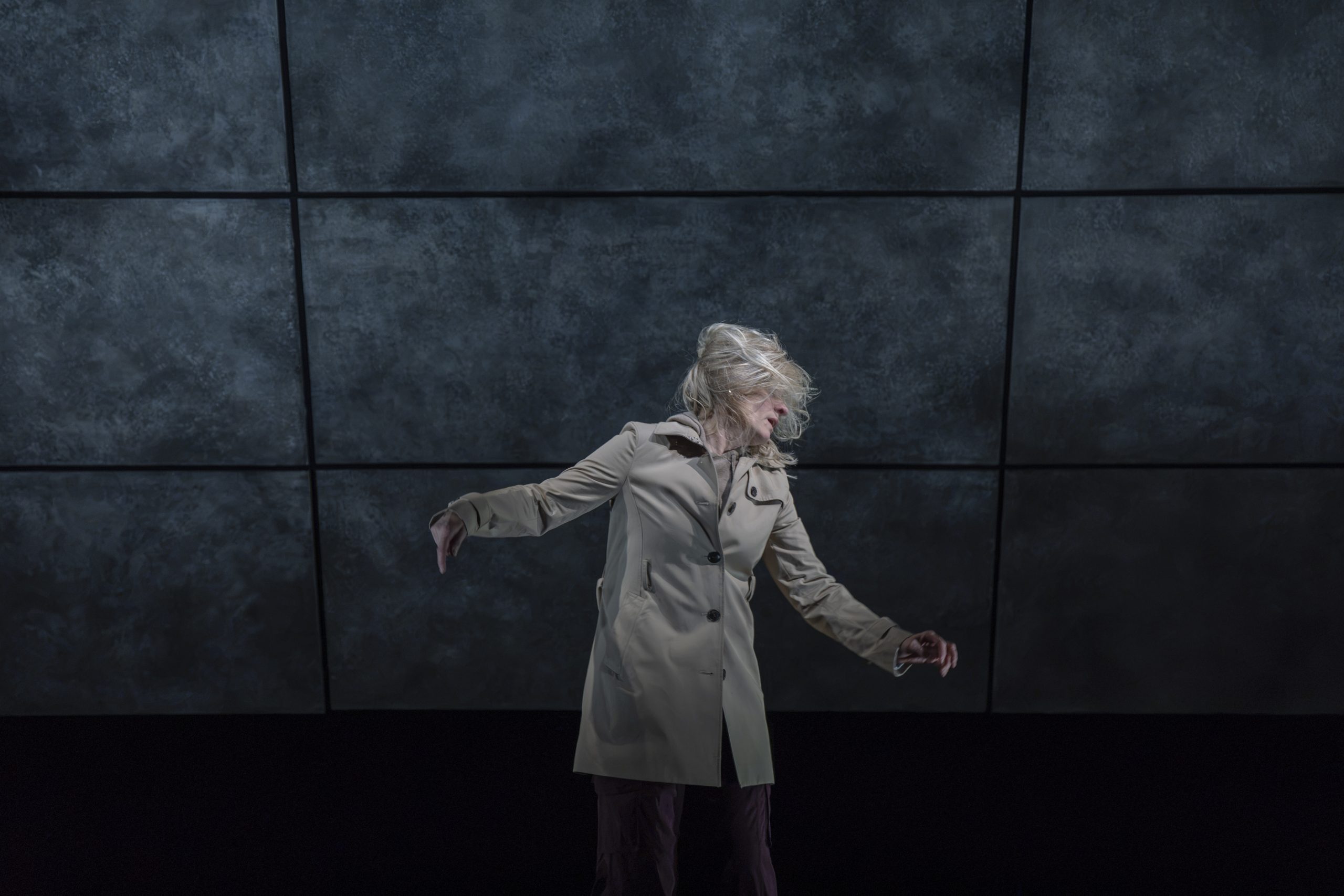
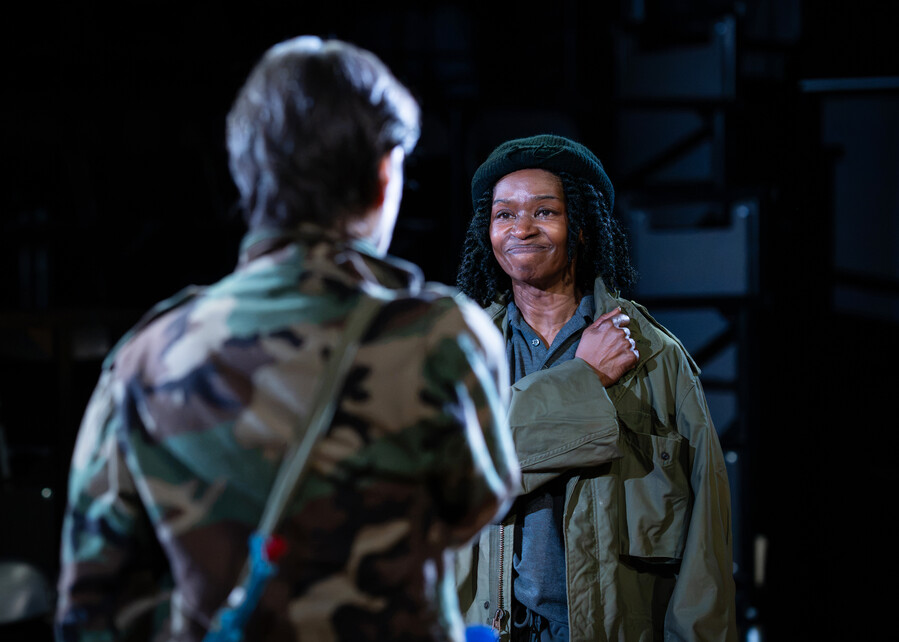
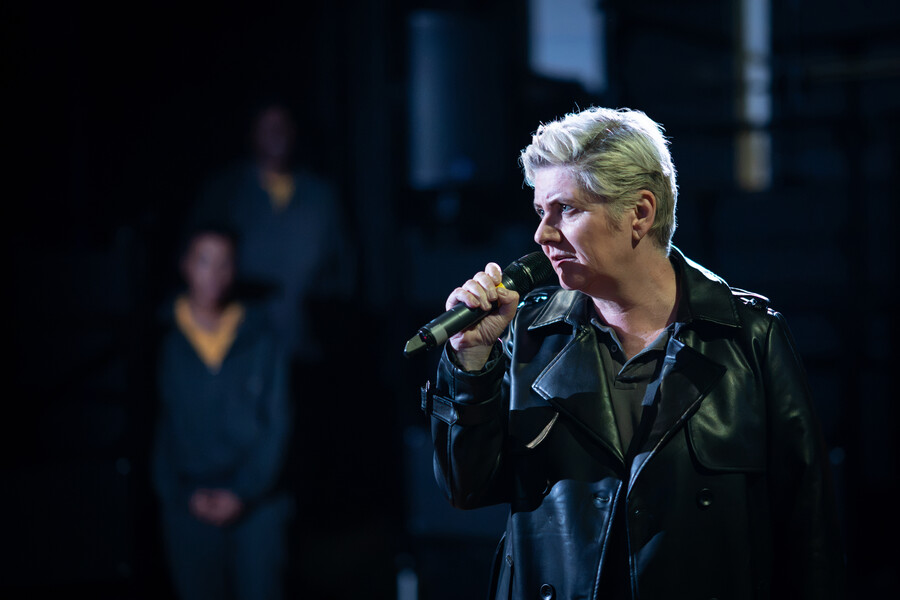
They have been travelling across England with First Encounters: Julius Caesar, the RSC and KPPL Productions’ revival of Phyllida Lloyd’s Donmar production. Harriet Walter (Silo) returns as Brutus, Leah plays Mark Antony, and Kosar takes on Calpurnia, Metellus Cimber, and Pindarus. Within the production, a group of women in prison perform Shakespeare’s play, bringing their own experiences to its questions about power, freedom, and justice.
For Leah, known for playing Salvor Hardin in Foundation, this is a return to a company that helped shape their career; for Kosar, whose breakthrough in Rocks earned her a BAFTA nomination, it’s her first time performing Shakespeare. Alongside acting, Kosar is developing her work as a writer and director, with a Somali folklore horror feature in development with BBC Film. As we chat, they’re generous with each other, quick to laugh, and thoughtful about what happens when theatre reaches people who haven’t traditionally been taught that it belongs to them.
You’ve spent the past month performing in schools across England. What has really stayed with you?
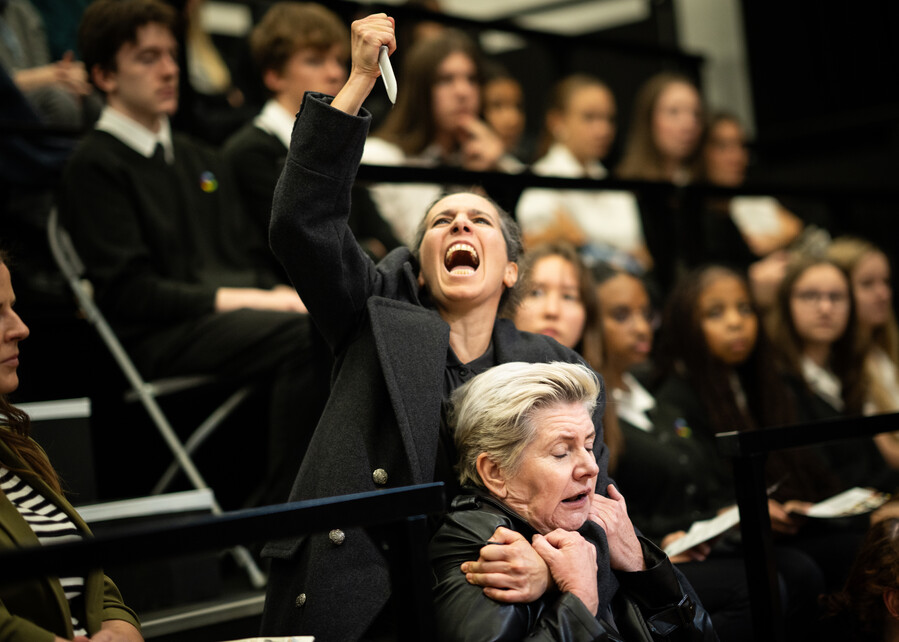
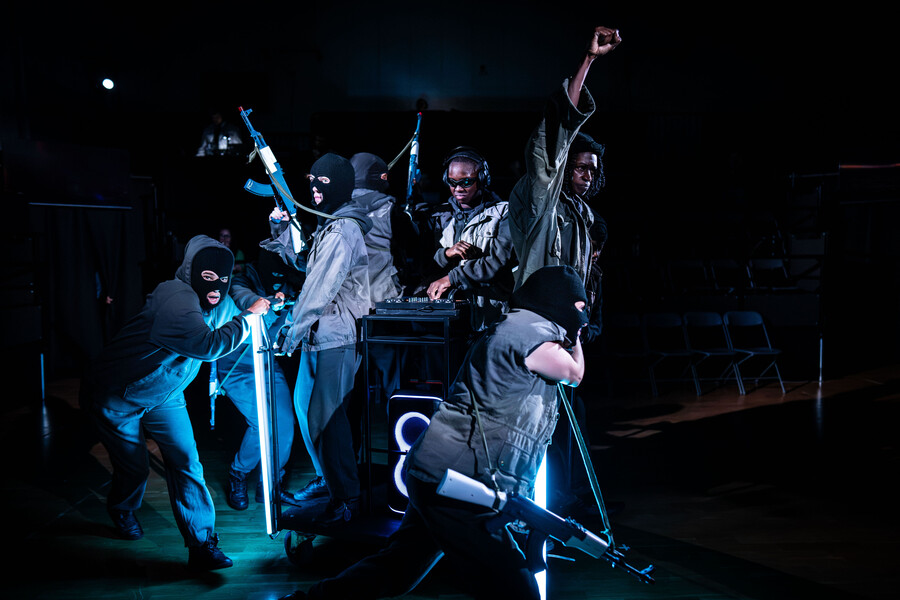
Kosar: The way the young adults have been receptive to the play has been really special. Especially when we get to Caesar’s murder and Brutus’s death, they feel so with us. There’s this silence in the room that you just can’t beat. They go from chatting and nudging each other to complete silence. It’s really satisfying. We open in a very untraditional way, dancing and bringing them into the space. From the beginning, it feels like they’re thinking, ‘Okay, we can trust you guys.’
Leah: In Peterborough, we had the opportunity to sing with the students. It set a precedent for the camaraderie, teamwork, and ensemble feeling we were going to create with the schools. They do a karaoke-type thing at lunchtime. Students get up and sing, even one of the teachers, and they asked a couple of our cast to join in. When I was at school, there was an embarrassment linked to standing up in front of everyone and putting forward a talent. Here, they were celebrating that boldness and making it normal.
Kosar: The atmosphere and community made me emotional. School should be a safe environment where kids can express themselves fully, and it felt that way.
Leah, you joined the Shakespeare Trilogy straight out of LAMDA in 2016. What has returning ten years later felt like?
Leah: Before this job came up, I felt like I’d come full circle and landed at a refresh point. Coming back with the lessons I’ve learnt, knowing more about myself, I feel a little like I’ve stepped out of school again and I’m back as a student, learning what on earth is going on. Personally, it feels like a restart. Professionally, it’s like coming home. I’m relearning beautiful things from the first time, sharing those lessons with newer members like Kosar, and understanding what the project actually gave me ten years ago.
It means more every time it comes up. This is a community, and it’s continued over those ten years. Each new member comes in for a particular reason, and it’s exciting to see what they bring.
Kosar, how was it joining a company with that much shared history?
Kosar: I was really nervous because this production has a legacy. I’d never done Shakespeare before, so I thought everyone might be wondering who hired me! But it felt natural. Nobody was saying, ‘This is the way to do it.’ It was about what we could add this time and how we could have fun. Everyone is silly and cheeky. I feel lucky to have come into this process and learnt so much from these women.
You’ve both done substantial screen work. How does returning to theatre feel different?
Leah: There’s an epicness to theatre that also exists in television and film, but onscreen it’s often created in post-production. In theatre, it’s a relief to fully engage with that scale and the space, although it can be difficult to get back into after screen work. It feels the same, but really, really different. I can’t think of a more eloquent way to say it!
Kosar: That’s the perfect way to say it. You’re on at all times, and it’s happening. With film and television, you do it, you leave, and later you see what you were making. In theatre, you’re completely in the process. It can be overwhelming, but it’s rewarding.
Leah: The audience makes such a difference. Some students come back six or seven times, as often as they can. Connecting with them and discovering what they offer the show keeps you on your toes.

Young audiences don’t necessarily respond like people who go to theatre regularly. Has that taken some adjustment?
Kosar: We get used to performing for people who come to theatre a lot.
Leah: Who know the rules.
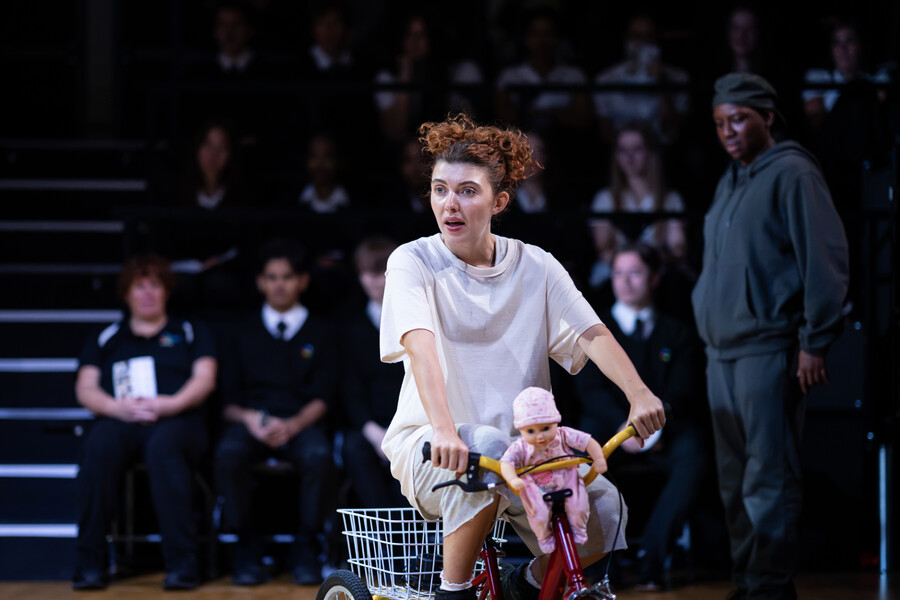
Kosar: Exactly. When a response doesn’t fit that box, I can think they’re not enjoying it. Actually, they’re vocal. They’re engaging with their peers to digest the play together. I’ve come to really enjoy listening out for that.
Leah: There’s a bit where we’re all on the floor, with war happening around us. I love hearing them whisper about what’s going to happen: ‘Oh my gosh, Cassius! Oh my gosh, Brutus!’ They’re so funny.
Kosar: Afterwards, their reflections are incredible. Every place contributes something different, but there’s a shared understanding of power and dictatorship. In Bradford, a primary-school pupil talked about mob mentality and its relationship with media, and how people can believe something without understanding why. I was standing there thinking, ‘My God, you get it.’ Social media gives young people access to the world, but they’re also aware of things they shouldn’t have to be aware of at that age.
Kosar, your three characters have very different relationships with power. Which has challenged you most?
Kosar: This is a cheating answer, but all of them! They have different social rankings, but they’re all complicit in playing into power while not having much themselves. Calpurnia is Caesar’s wife, at the highest level of Roman society, but she’s a woman. She warns him that he’s going to die, and he doesn’t really listen.
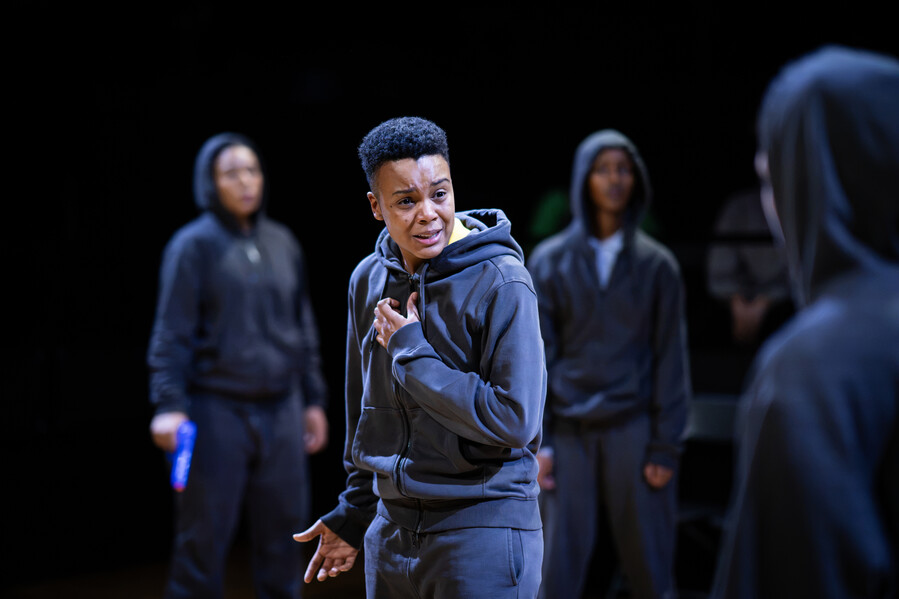
The challenge has been finding differences beyond gender: demeanour, mannerisms, personality, and what power means to each of them. Moving from playing a woman to playing a man has been harder than I expected. I’m still figuring it out.
Leah: Students have singled out how well Kosar does those changes. It’s literally five seconds, and she comes back as a different character. Nobody questions it. This takes work. We try to give students a sense of that in the post-show talks. Just because someone does something well doesn’t mean it comes easily.
How do you make that switch in five seconds? Is there something you say to yourself?
Kosar: You don’t even want to know! I go backstage, put on my jacket, and I’m repeating, ‘Yo, yo, yo.’ I’m channelling my brother and my friends from Forest Gate. They’re relaxed, and all they say is ‘yo’. I’ll ask my brother how he is, having not seen him for ages, and that’s what I get. It helps me get into it.
Leah: I’m going to do that to you onstage and see if I put you off.
Kosar: No, you won’t!
Leah, how has returning to the production as Antony changed your understanding of the play compared with your first time around?
Leah: In rehearsals, I kept asking questions about the prison context and how we made it consistent. Phyllida asked what I’d thought was happening the first time. I said, ‘Phyllida, I was running backstage between characters, picking up a guitar, dropping a prop, putting on a hat!’ I didn’t have time to follow everyone’s emotional journey.
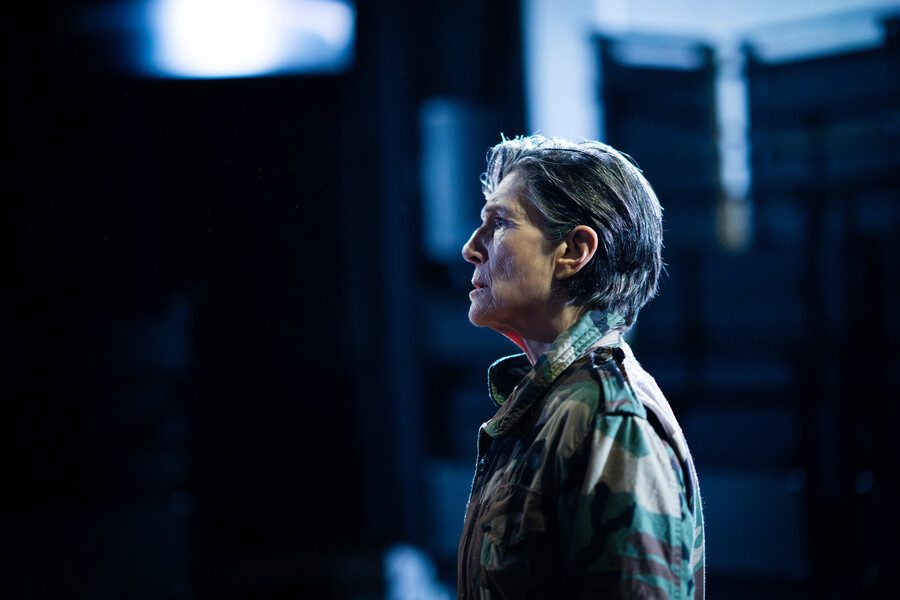
There’s a lot going on with Antony. He isn’t one-track. Sometimes he can be played as a vehicle for revenge, without those ebbs and flows in his inner life. I’ve enjoyed finding the nuance and recognising the work my predecessors did in this version. I particularly think of Jade Anouka, who played Mark Antony in the 2016 production, because I watched and heard her every night. If I’m doing a fraction of what she did, I’m happy.
Kosar: You’re doing more than a fraction. He’s one of my favourite characters because, underneath the revenge, he’s heartbroken. He’s lost someone he had a connection with. For me, a lot of it is about love. The way you balance the sensitivity, love, anger, and grief is captivating. Sometimes I’m watching and thinking, ‘Oh no, I’m meant to be acting!’
How do you keep the famous funeral speech alive, rather than just delivering something everyone knows?
Leah: By being present and drawing on all the different parts of grief and anger. It’s easy with that speech to regurgitate it, so I’m always trying to actually speak to the crowd. Phyllida kept reminding me to speak to the audience. At first, that was hard because I’m surrounded by castmates whom I love and who feel safe. But reaching out to the audience makes it fresh.
A couple of nights ago, I told Harriet that her lines sounded like she’d said them for the first time. That’s an acknowledgement of the work. Everyone onstage is on their own journey with that challenge.
You’re also playing prisoners performing Shakespeare. What has working with the women at HMP New Hall brought to that?
Leah: We met an incredible group of women and worked with them. We’re dedicated to representing them, the circumstances that might bring someone into that position, and the potential within each person. Having prison characters helps establish the group’s relationships and gives us another way into Shakespeare’s characters. My character introduces the play, sharing a little of her story and why we’re doing it. It bridges the gap between the audience and that world. But meeting the women feels almost separate from the production. It’s a life experience I’ll never forget.
Kosar: Working with them and Rachel Frank has been profound. There’s so much stigma around people in the criminal justice system, especially women. These women are bright, smart, and funny. Some are poets, some are actors, and some should be directors, the way they were directing us! Those conversations and their talent have filtered into our performances and relationships. We hold those women with us. That work is the heart of the play.
Why is the prison setting so central to this production?
Leah: The original idea was to redress the balance of gender roles in theatre. Harriet felt she had more in common with Brutus than some of the female characters available to her. At the time, an all-female Shakespeare was considered radical. Harriet had a connection with Clean Break, which works with women affected by the criminal justice system through theatre. Setting it in a women’s prison gave a context to the casting and brought attention to a community people often don’t think about.
That work is in the bones of the project. Taking it into schools opens another conversation. Some pupils might never have considered that community; others might have relationships with women in prison.
Kosar: I asked ‘why prison?’ when I joined. But the play is about power, control, marginalisation, and violence. There are connections with these women’s lives. When Phyllida and Harriet first explored the play with women in prison, they found real understanding and recognition.
Leah, in 2016 you said you hoped diverse casts would be the norm in ten years. How does the industry compare with what you imagined?
Leah: Wow, I don’t even remember saying that! Things have changed. You’re more likely to see people from different backgrounds in projects where they wouldn’t have been present before, and often it isn’t questioned. But a lot needs to happen behind the scenes to maintain that change and nurture people entering spaces where they haven’t historically been represented.
I value the different journeys people have taken to get here. There’s so much diversity in those journeys, and I love that. I see improvement, but there’s more work to do. I can’t sit back and think it’s finished. Supporting each other and demanding change is continual work.
Kosar: Leah articulated it perfectly. I don’t want to be negative Nancy, but I am negative Nancy on this one! We have more global-majority people in these spaces, but bringing someone into the room isn’t the end of the work. It just feels like people want to buy the plant. The plant looks really pretty, but then they don’t want to water it. Sometimes it feels like a poster assignment. A white woman and I playing the same character will bring different things, and a different world will open up. People need to be open to that and do the work. I don’t like the idea that it’s ‘brave’.
It shouldn’t take bravery.
Leah: Why do you have to be brave to be a regular human being?
Kosar: Why should investing in an artist feel like a risk because they’re different from what you’ve seen before? I don’t feel we’re fully there, but I do have hope. Working with this company, including people who write and direct, and thinking about them becoming the next generation in these spaces is refreshing.
What difference do you hope this experience makes to how young people see themselves and what’s possible for them?
Leah: I hope that, among all the people we’re performing to, this becomes an everlasting memory for some of them. Something that influences a positive decision they make later. I have memories of experiences where I thought, ‘I’m going to do this because I saw that.’ I hope this is that experience for someone. Sharing what we’ve learnt, leaving an impact, and hopefully improving society in the process. That’s my hope.
Kosar: I don’t have a specific expectation that someone watches the play and their life changes. Access to the arts is uneven. Leah and I both grew up in Newham, and I didn’t have these experiences at school. Sometimes they’d put A Christmas Carol on BBC iPlayer on a Friday at Christmas, and that was it. Shakespeare felt completely separate from me. It wasn’t for me or people from where I came from. I thought we wouldn’t understand the language.
I want young people to know it is for them. The arts are for everyone. They might find a connection, a means of expression, or freedom, even if they never work in the industry. I’ll never forget seeing my first play at 17 – Jamie Lloyd’s Cyrano de Bergerac with James McAvoy. I didn’t know what was happening half the time, but I felt it, even when I couldn’t articulate it. I’d entered this realm of imagination. Every young person should have the chance to experience that.
Following its tour of schools across England, First Encounters: Julius Caesar plays at The Other Place, Stratford-upon-Avon, from 5 to 28 November 2026.
Find out more and book your tickets at rsc.org.uk
Words by Nick Barr
Photography by Helen Maybanks