
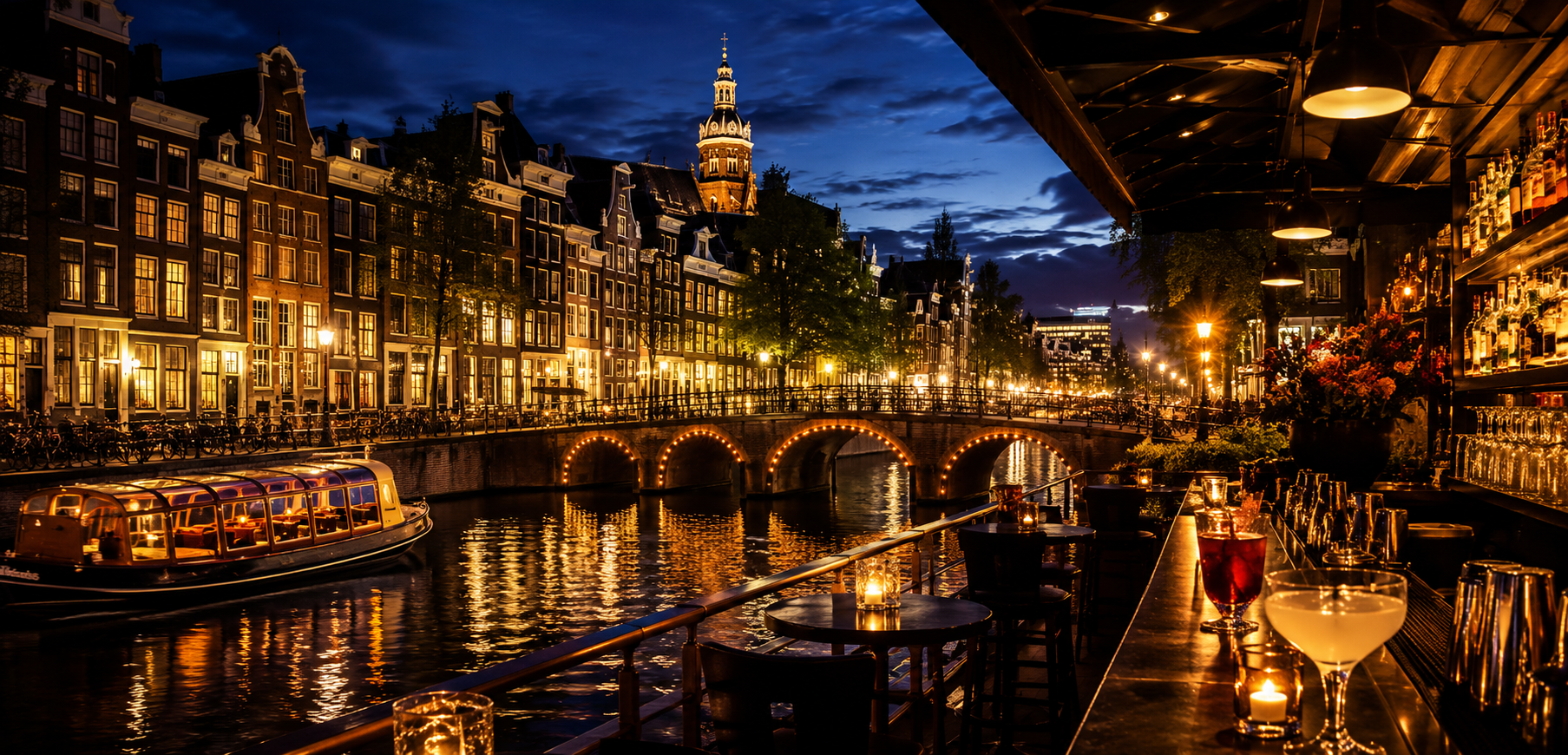
Amsterdam after midnight feels like a second city layered over the first. The canals remain calm, bicycles still cut through narrow streets and old facades hold their familiar shape, but the social rhythm changes. Restaurant tables empty into bars. Small music rooms fill. Queues form outside clubs hidden beneath towers, behind unmarked doors or inside buildings that once served another purpose.
What makes the city’s nightlife compelling is how many versions of the night can exist at once. One crowd is moving toward techno. Another is listening to jazz. Elsewhere, people are watching drag, finding a quiet cocktail or crossing the water toward a warehouse event.
The night keeps changing because Amsterdam gives it room.
Midnight Is a Transition, Not an Ending
In many cities, midnight feels like the final stage of an evening. In Amsterdam, it often marks the moment when plans become more interesting. Dinner has ended, early drinks have loosened the group and everyone must decide whether to stay comfortable or follow the energy somewhere else.
That transition is central to the city’s appeal. A night can begin in a brown cafe, move through a listening bar and end on a dance floor without feeling disconnected. The scene also stretches far beyond the most familiar central squares.
Amsterdam Noord, West and other districts have become essential to the wider scene, offering spaces that feel more experimental, industrial or locally focused. The official city guide highlights everything from former churches and repurposed schools to rooftops and unconventional performance spaces.
Variety Keeps the Scene Alive
Amsterdam is internationally associated with electronic music, but reducing its nightlife to techno misses the point. House, drum and bass, hip-hop, jazz, funk, Afrobeat, Latin sounds, live bands and experimental performances all shape the city after dark. The range means visitors do not need to force themselves into a single definition of a real Amsterdam night.
Follow taste rather than reputation. A famous venue can disappoint when the programme is wrong, while a small room with the right crowd can become the highlight of the trip. Artists, promoters and collectives keep testing new formats, which prevents the scene from becoming a museum of its own reputation.
Music Matters More Than Spectacle
Some nightlife destinations are built around bottle service, visible status and highly controlled presentation. Amsterdam often works differently. The strongest rooms are usually focused on sound, community and atmosphere.
The city still has glamour, but it appears in less predictable forms: a precise light installation, a performer transforming a small stage or a DJ building tension over several patient hours.
Amsterdam’s club culture has long been connected to experimentation, identity and social freedom. The City Archives has described local clubs as spaces where generations formed friendships, explored identity and found relief from everyday pressure.
The result is nightlife that can feel culturally important without becoming self-serious.
Small Rooms Often Create the Biggest Memories
Large events deliver scale, but Amsterdam’s smaller venues often create stronger emotional intensity. In a compact bar or basement, the line between performer and audience becomes thinner. People notice the selector, the sound, the lighting and each other.
These spaces allow scenes to develop their own language, regular crowd and sense of belonging. Visitors can feel included, but they should understand that not every night exists primarily for tourists. Following house rules and avoiding treating strangers as entertainment creates a more genuine experience.
Nightlife Goes Beyond Clubs
An unforgettable Amsterdam night does not require a dance floor. Late museum programming, canal-side drinks, comedy, live music, cabaret, cinema, tasting menus and intimate performances can all carry the evening past midnight.
This broader definition suits couples, solo travellers and groups with different energy levels. The city makes it possible to build a night with contrast rather than compromise.
Some travellers also consider private companionship and search for Escorts in Amsterdam when planning their evening. That choice sits within a wider nightlife economy, but discretion, legality, consent and personal safety should remain central. A private arrangement should never replace basic judgment about identity, boundaries or secure transport.
The Unwritten Rules Shape the Experience
Amsterdam nightlife often looks relaxed, but the strongest venues take behaviour seriously. Respect for staff, performers and other guests matters. Consent is not optional. Taking photographs may be discouraged or prohibited. Dress codes can be flexible, yet event-specific rules still apply.
The city itself treats night culture as socially and culturally important, while also recognising pressure around safety, accessibility, space and neighbourhood impact. Its Night Vision places night culture within long-term municipal planning rather than treating it only as entertainment.
Visitors contribute to that culture through small choices. Keep noise down when leaving residential streets. Use official transport options. Do not block bicycle paths. Know your limits. A good night should not create a bad morning for everyone nearby.
The City Never Offers the Same Night Twice
Amsterdam after midnight depends on timing. Weather changes the streets. A DJ changes the room. A spontaneous conversation changes the route. A venue that felt quiet on one visit can feel electric on another.
That unpredictability is the point. The city gives people enough structure to plan, then enough freedom to abandon the plan.
Travellers looking into Escorts in Amsterdam, ticketed club nights, private parties or late performances should organise the practical details early. Reservations, transport and venue rules are easier to handle before drinks begin. Once those basics are covered, the evening can remain open.
By the time the first trams begin returning and pale light reaches the canals, the city has shifted again. Crowds thin, music stops behind closed doors and bakery lights begin replacing club lights. Amsterdam does not exactly sleep. It changes tempo, waits a few hours and prepares to become another version of itself.



