Brain workouts for kids do not have to mean apps, flashcards, or expensive programs. What researchers keep confirming is that the strongest daily inputs for a child’s attention and memory are already built into ordinary moments – the drive to school, the dinner table, the walk to the store, the ten minutes before bath. Small, deliberate additions to those moments can meaningfully strengthen the brain circuits behind focus and recall, without adding a single item to a busy calendar.
What follows is a practical guide to what to do – grounded in developmental neuroscience, easy to try today, no equipment required.
What Focus and Memory Actually Are, Briefly
Children develop attention and memory not by sitting still and being lectured, but by using both skills across many small challenges. Neuroscientists group these skills under the umbrella of executive function, and evidence going back decades shows they mature slowly – into the mid-twenties. The practical upshot is that focus and memory are not fixed traits a child either has or does not have. They are capacities that grow in response to daily practice, especially practice that is playful and reasonably challenging.
Two mechanisms are worth knowing about. Memory strengthens through active recall – pulling information out of the brain rather than reading it back in. Focus strengthens through repeated practice at directing attention toward one thing while filtering out another. Every activity in this guide draws on at least one of these mechanisms.
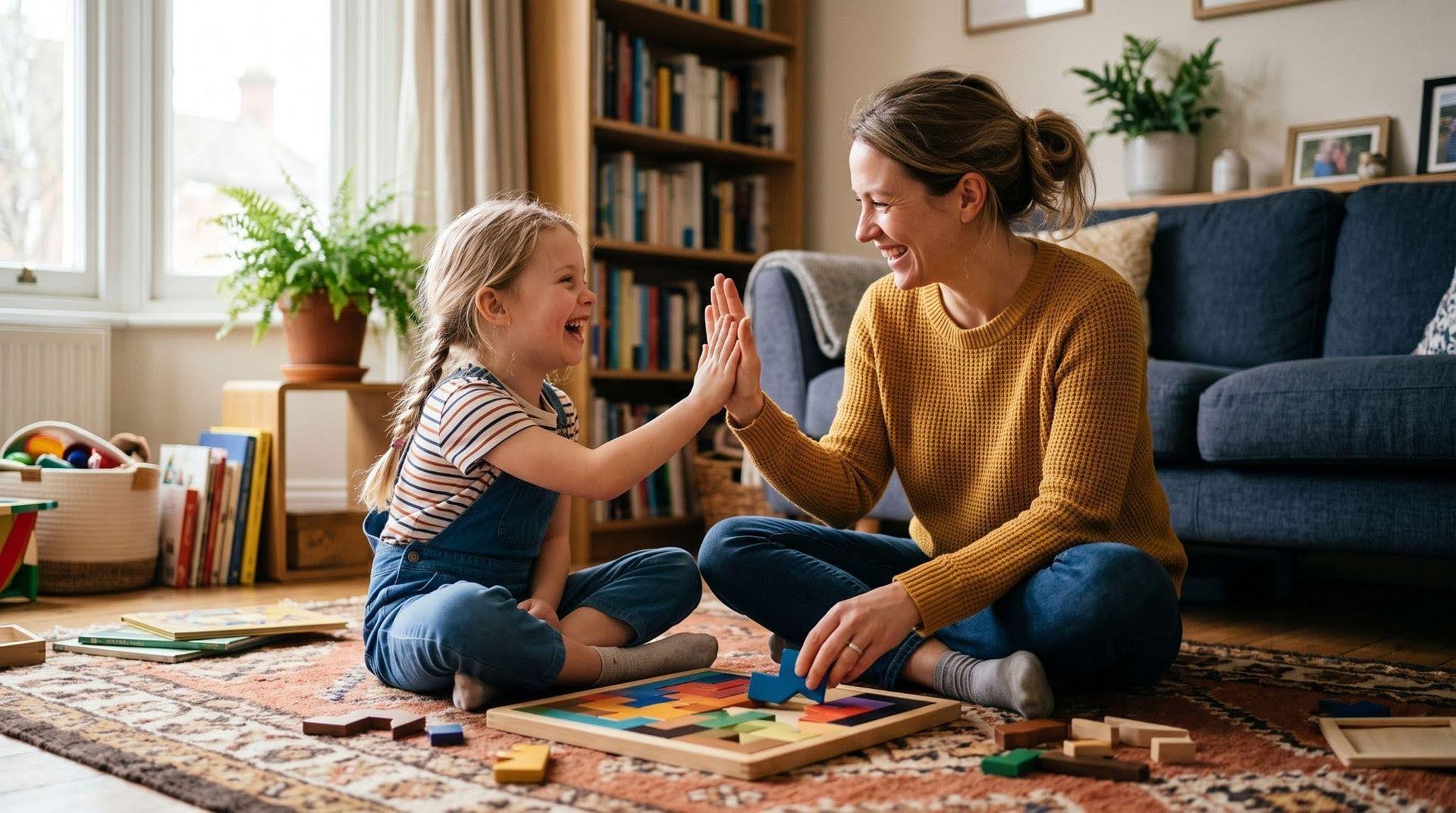
Ordinary Moments Already Doing the Work to Improve Kids’ Focus and Memory
Here are 5 ordinary times in a child’s day, and small brain-strengthening activities that fit inside each one.
The Morning Routine
Getting dressed, brushing teeth, packing a bag: this stretch of the day is heavier on sequencing and self-organization than it looks. Instead of narrating every step, try naming just the first one and letting the child recall what comes next: “Shoes on. What comes after that?“
A 4-step recall – shoes, coat, backpack, water bottle – is a real working-memory task, and doing it daily builds the sequencing skill that underlies both academic performance and independent living. If a step gets missed, resist the temptation to fix it. Let the child notice and correct it.
The Drive or Walk to School
Short trips are a natural setting for a memory or reasoning game. Try a category challenge: name five things you might find in a kitchen, five animals with tails, five foods that are green. Or a memory game: say a short sequence of numbers or animals, then have the child repeat it backward. Start with three items for younger children, five or six for older ones. This is a version of the digit span task researchers have used for decades to measure working memory – and it strengthens the very system (i.e. kids’ brain) it measures.
For a fresh challenge, try a description game. Describe an object without naming it and let the child guess. Then swap. Descriptions force the brain to hold the target in mind, generate features, and match them to language – three tasks at once.
Around the Table
Mealtime is one of the most underused brain-training windows in a family’s day. Two simple additions do a lot.
The recall question: “What did you have for lunch today?” or “What is one thing you learned this morning?” Such retrieval questions strengthen memory more than re-reading or re-hearing information ever will – this is the core principle behind the testing effect, one of the most well-established findings in cognitive psychology.
The observation game: quietly pick something at the table without saying what – a fork, a napkin, a saltshaker. Give three clues, one at a time, and let the child guess. Ten seconds of focused attention on your voice, which is precisely the skill they will need to bring to a classroom the next morning.
The Trip to the Store
Errands are unusually rich brain workouts. Give the child a short list of three or four items to remember without writing anything down. Ask them to find one specific item on a shelf. Add a small mental math task at checkout: “If a pack of grapes costs four dollars and we buy two, how much have we spent?”
Every one of these engages working memory, attention, and, for the older child, arithmetic. What looks like errand-running is an unusually broad brain workout when structured with a small challenge attached.
The Bedtime Hour
The transition to sleep is when the brain is uniquely open to reflection – and reflection strengthens memory. Ask two questions before lights out.
“What is one thing you did today?” A simple recall.
“What is one thing that surprised you today?” A harder recall requiring the child to review the day rather than just report a fact.
Together, both take under a minute. Done consistently, they build the metacognitive skill of noticing what one’s own attention landed on – a skill closely tied to sustained focus. For a deeper look at how to help children focus, these evening reviews are one of the more effective daily levers because they slow the child down at exactly the moment their nervous system is preparing to consolidate memory in sleep.

What Actually Matters
Three principles are worth carrying into any of the above:
- Playful challenge, not pressure. Brain workouts work when they feel like games. The moment they feel like tests, engagement drops, and the benefit drops with it.
- Slightly harder than yesterday. The child who can recall three items today should be asked for four next week. Growth needs a small stretch – not a plateau, and not a cliff.
- Regular beats intense. A quick game three days out of five will build more capacity than an intense session once a fortnight. Duration matters less than the rhythm.
For families who prefer a structured plan to trying to remember all the possible moments, guided daily brain workouts for kids from Leaply can put the practice on autopilot – an age-matched sequence delivered one step at a time. What matters is that a small challenge shows up tomorrow, and again the next day, and again the day after that.
Notice which activities land with your child, or grandchild, or the young person in your care. Do those. Drop the rest. Over weeks – not days – the shift shows up quietly. A longer stretch of kid’s focus at the table. A clearer memory of yesterday’s outing. A story told in order without prompting. That is what everyday brain workouts to strengthen kids’ focus and memory actually look like once they become part of the day.